Christianism Watch

An evangelical student burns down an Episcopalian church for its theological waywardness. Money quote:

Cleveland said Lussier confessed to robbing the Christ Church and setting fire to both houses of worship. He also allegedly admitted to sending threatening letters to three churches in his hometown. He was charged with two felony counts of third-degree burglary and a count of third-degree arson, a felony.

"He didn’t think they were following the Bible the way they thought they should," Cleveland said. "He holds to the principle, but he said he went about it in the wrong way."

Why has this not been national news? This really was a church-burning. Does it have to have racial overtones to make the news?

My Moral “Relativism”

A reader of the book offers this critique:

You haven’t broken any new ground in discovering that "doubt" is a permanent fixture of the Christian life. St. Paul told the first Christians what you have gone to such great Tcscover_26 lengths to discover – that we will never know God fully here on earth. We must make do with sufficient but incomplete glimpses, most powerfully seen in the life of Christ:  "Now I see dimly, but then face-to face." This is a day-to-day reality for every Christian who has ever tried to walk the walk, and the idea that the orthodox, the evangelical, the fundamentalist, as you like to put it, is immune from doubt is absurd. Do you have any evangelical friends? Ever been to there church picnics? Ever sat in a small bible study and listened to there fears and doubts? Doubt is everywhere and we wouldn’t be human without it.
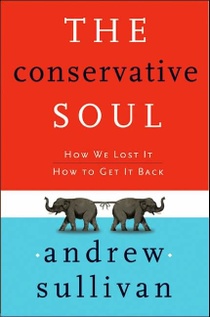
You quote Benedict XVI for the proposition that the individual conscience takes a back seat to papal authority. The statement you cite was made in response to the argument that a Nazi executioner acting according to an ill-formed conscience would be blameless. Ratzinger’s conclusion regarding the interplay between conscience and authority is quite different. He approves of this statement by Cardinal Newman: "I shall drink ‚Äì to the Pope, if you please, – still to conscience first and to the Pope afterwards." Ratzinger concludes:

"The true sense of this teaching authority of the Pope consists in his being the advocate of the Christian memory. The Pope does not impose from without. Rather, he elucidates the Christian memory and defends it.  For this reason the toast to conscience indeed must precede the toast to the Pope because without conscience there would not be a papacy. All power that the papacy has is power of conscience."

You and Ratzinger agree that conscience is preeminent. But Ratzinger believes that the conscience must be formed by the truth – an objective categorical truth; whereas you believe that conscience is purely subjective. And that idea of the preeminence of the subjective conscience is the heart of your argument.

This is, indeed, an argument close to the core of the book. But my reader misunderstands my point. I go to great pains to insist that skepticism is not the same as moral relativism. A relativist believes that there is no truth as such, no objective moral reality. A skeptic may affirm, as I do, the notion of an objective truth – but insist on the weakness of the human mind to know it fully. And so, in practical life, we eschew the moral certainties of fundamentalists.

Ratzinger’s view of the conscience is that if it contradicts the Pope, it is not a real conscience. I disagree. And, yes, this does mean living in the knowledge that we do not know everything, and believing that the source of faith is always a mystery, not a transparent truth. This requires the nerve of living in a world without an easily accessible objective truth. Some possess this nerve; others don’t; still others see that nerve itself as a sin, or as a rejection of God. I think it is an intelligent person’s best option in the modern world. And I rest my cautious, doubt-ridden politics upon this fragile foundation – convinced merely that it less fragile than all the others.

The Carnage

The latest news from Iraq is even grimmer:

The number of Iraqi civilians killed in sectarian violence last month has reached a new high of more than 3,700, a report for the United Nations said today. Despite the Iraqi Government’s commitment to address human rights abuses, the influence of armed militia is growing, and torture continues to be rampant in the country, the report by the UN Assistance Mission for Iraq (UNAMI) said.

The civilian death toll for October was 3,709 – the highest to date – according to the UN figures. The report also said that more than two million have fled their homes since the US invasion to escape the rising sectarian violence. "Hundreds of bodies continued to appear in different parts of Baghdad handcuffed, blindfolded and bearing signs of torture and execution-style killing," the report said. "Many witnesses reported that perpetrators wear militia attire and even police or army uniforms."

Tragically, the "government" we have instituted cannot meaningfully represent all Iraqis, because the sectarian divisions, deeply exacerbated by the anarchy of the last three years, have become too deep. The goverment forces themselves – police and military – are increasingly indistinguishable from sectarian militia forces. The Maliki faction is indistinguishable from the Sadr militia. We do not even know at this point which Iraqi faction is capable of delivering order, or where. Which Shiites have actual control of the streets in the South? Which Sunnis can deliver stability in Anbar? Torture and murder have become endemic. We can retrain as many Iraq soldiers and policemen as we want, but it’s no use if we are merely training them to be more skillful in a civil war. That’s our fundamental dilemma.

We have only one lever over Iran and Syria – and it is – paradoxically – the chaos we have unleashed. Those regimes do not want to see Iraq completely disintegrate. So a policy of drawing down troops, redeploying to Kurdistan, and waiting to see who emerges from the hideous process of ethnic cleansing and civil war is just about the only option we have left. Iran and Syria will have to ensure that a regional conflagration doesn’t tear their entire neighbor apart. That is both a blessing for them – how profoundly they would have loathed a democratic Iraq – but also a curse. It means that both neighbors have to worry about instability spreading from outside to within. This is the silver lining of the Iraq failure. And it is a very slim one.

Romney’s Double Standard

The Massachusetts governor has described John McCain’s federalist position on gay unions as "disingenuous." But what is Romney’s position on abortion? Here it is:

The federal system left to us by the Constitution allows people of different states to make their own choices on matters of controversy, thus avoiding the bitter battles engendered by ”one size fits all" judicial pronouncements. A federalist approach would allow such disputes to be settled by the citizens and elected representatives of each state, and appropriately defer to democratic governance.

As Jon Rauch puts it, "So there’s room for moral variance on whether to slaughter unborn children, but not on whether to marry gay couples." I think Mitt Romney needs to clear this up, don’t you? Why is he not in favor a federal constitutional amendment to ban all abortions?

Mormons and Christians

A reader writes:

I’m sure I won’t be the only one to correct you on this, but Romney is a Christian by any meaningful definition of the word. All Mormons are Christians.  Christ is unquestionably the central figure of the faith; in fact, the official name of the church is "The Church of Jesus Christ of Latter-Day Saints."  Some other Christians have decided that because Mormons have a different view of the Trinity, spend a lot of time talking about church founder Joseph Smith, and believe that each person has the potential for godhood, they are not Christians. Ask any Mormon if he or she is a Christian and they will say yes. Who gets to decide this important question: Mormons themselves who profess a profound belief in Christ or exclusionary Christianists who want to denigrate the faith of others?

I say this as an atheist ex-Mormon who really doesn’t give two cents about the underlying theology, but it still bothers me every time I see this trope coming from some quarters that Mormons aren’t Christians which apparently gets picked up and passed on without a second thought.  And it’s something people need to get right as I’m sure it will be discussed ad nauseam once Romney’s campaign gathers steam.

I take the reader’s point. But Muslims also revere Jesus. And the inspiration for Mormonism’s radically innovative understanding of the message and life of Jesus – Joseph Smith’s "discovery" – is so alien to mainstream Christianity (and so transparently loopy) that I don’t consider Mormons Christians. This is not to say I don’t support their religious freedom or their right to play a full part of American politics and society. But they’re not Christians as I understand Christianity.

“Staggering Rudeness”

A reader writes:

As a UK citizen but Canadian resident who travels frequently to the US on business I, and many like me, have basically avoided travelling to the US since 9/11 because of the staggering rudeness and general militarism encountered at the border. I have been pulled out of the line and made to wait for hours in an airless room, not allowed to go to the bathroom, etc. It’s pretty standard stuff.

However, travelling to LA last week it seemed as if a veil had lifted. The line-ups were still there, but the border guys were joking. One, a former Mexican wrestling champ, told me I should write a movie about hispanics working border patrol. The guns seemed to have disappeared. Perhaps it is too much to associate it with the results of the midterms, but there was a palpable feeling of what I can only describe as relief. For the first time since 9/11 I felt that a long nightmare might be about to end.

I had the same experience a couple of months ago at one of those mom- and-pop border crossings in Vermont but I got the strong impression seventy year old Jim and Bob had never gotten too caught up in the madness in the first place.

The Mormon Question

Mitt Romney will surely provide a fascinating glimpse into the Christianist mindset in the coming two years. He will be the candidate for the Christianist right, but he’s not a Christian. And many Christianists may well recoil at the man’s Mormon faith. In fact, the latest Rasmussen poll shows that 53 percent of evangelical Christians would not even consider voting for a Mormon president. That’s more than the 43 percent in the general population. So this emerges as a delicious irony: a candidacy made possible by sectarian politics could subsequently be made impossible by the same forces. I’m sorry if I have little sympathy for Romney’s plight. Live by fundamentalism; die by fundamentalism.