Quote for the Day I

"I’m generally not against what Bush is doing in principle, but I am totally opposed to the way he has gone about it. As I’ve said a thousand times before, think long term people. You might be one of the Kool Aid drinkers who thinks that George W. Bush has the light of God shooting out of his asshole, but what is going to happen the next time a liberal Democrat gets elected? What are you going to say when President Hillary decides to spy on the American people, and uses Bush as a precedent? I imagine all of these self-styled ‘conservatives’ are suddenly going to remember that old Constitution thing from way back.

Freedom and liberty are, at least in my mind, not negotiable, no matter which party is in power. The right in this country is split. On the one hand there are people like me who still give a shit about the concepts of limited government and individual liberty, and then there’s the other side, for whom making sure queers can’t marry and getting Adam and Eve into science class ranks a close second to blindly supporting anything a president does, provided he has an R after his name," – blogger Lee at Right-Thinking from the Left Coast.

Torture and Conservatism

A reader writes:

I find it strange that the complaints of your alleged apostasy center principally around your opposition to torture.  I was unsurprised by the initial right-wing silence on the torture issues, and the minimization of Abu Graib seemed predictable.  Either version of denial imply a deep regret but a characteristic unwillingness to criticize a Republican administration.  But now we’re getting complaints that you’re not sufficiently pro-torture, as though the Republican party is proudly the party of torture.  It seems mere rationalization has transformed into something something else, as though rationalization wasn’t enough anymore.

Is this typical human nature?  Is the emotional solution to tolerating horror the eventual embrace of it?

First silence. Then denial. Then support of the insupportable. Then vilification of the dissenters. The pattern is as old as time.

Email of the Day

A reader writes:

The far right has finally sunk to the level of Soviet propaganda. Just as Stalin had photos altered to remove those who had been shot or sent to the gulag for thoughtcrime, Mark Levin has erased your support for the Iraq war because you are guilty of thoughtcrime. In your case, the thoughtcrime is holding the United States’ conduct in war to a higher standard than that of Ba’athist Iraq.

I was also told by someone present at the Ramesh Ponnuru/Laura Ingraham discussion at Aspen that two other conservatives are now regarded as suspect by the ruling Republican intelligentsia: George Will and David Brooks. I imagine William F Buckley Jr, who has pronounced the Iraq war a failure, is also no longer a conservative in good standing. The attitude of people like Ponnuru and Ingraham and Levin is indeed Stalinist in form, if not content. But when you have to defend a massive increase in government spending and power in the name of conservatism, this kind of newspeak is necessary.

Suskind Again

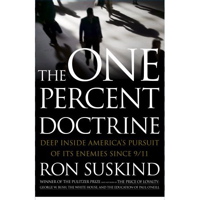
We have two competing narratives of the Bush administration out there. We have the court stenographer, Bob Woodward, and we have the dissident chronicler, Ron Suskind. His book, "The One Percent Doctrine," really is a must-read. Two things in particular stuck out for me. Suskind has CIA sources saying that, as part of the torture devised by Bush and Rumsfeld for Khalid Sheik Muhammed, Onepercent they threatened to harm his wife and children if he did not talk. KSM told the interrogators to go ahead and kill his family, if necessary. I find it telling that the president, in this instance, became the moral equivalent of a mafia boss, committing what is clearly a violation of the Geneva Conventions, even if his motives were good ones. KSM is a disgusting, evil, Jihadist mass murderer. But he gave up no useful intelligence under this sort of tactic and succeeded in reducing the president of the United States to an evil thug, threatening violence against innocent children. One recalls the following exchange between John Yoo and Doug Cassel at Notre Dame law school:
"Cassel: If the president deems that he’s got to torture somebody, including by crushing the testicles of the person’s child, there is no law that can stop him?

Yoo: No treaty

Cassel: Also no law by Congress — that is what you wrote in the August 2002 memo…

Yoo: I think it depends on why the President thinks he needs to do that…"

Suddenly you see that Yoo’s endorsement of evil had real life effect.

The second fascinating and completely convincing narrative is about the remarkable decision of Muammar Ghadafi to give up his entire WMD program. At the time, the president credited it to the psychological impact of the war to depose Saddam. He claimed it scared Ghadafi into compliance. Back in the days when I  trusted president Bush’s words, I echoed this analysis. It was a lie. I apologize to my readers for echoing it. It turns out Ghadafi had been entrapped by careful intelligence work long before the Iraq war was launched. The timing of the announcement was choreographed coincidence.

In the last few years, I have gone from lionizing this president’s courage and fortitude to being dismayed at his incompetence and now to being resigned to mistrusting every word he speaks. I have never hated him. But now I can see, at least, that he is a liar on some of the gravest issues before the country. He doesn’t trust us with the truth. Some lies, to be sure, are inevitable – even necessary – in wartime. But when you’re lying not to keep the enemy off-balance, but to maximize your own political fortunes at home, you forfeit the respect of people who would otherwise support you – and the important battle you have been tasked to wage.

Marriage In Massachusetts

A reader comments on the accelerating social impact of the reform – on heterosexuals:

What the Herald doesn’t mention is that many Massachusetts companies had domestic partner benefits for both heterosexual and gay couples, and many of those have been terminated on the grounds that everyone can get married. Gay marriage has not only put financial pressure on heterosexual couples to marry, but it has created social pressure as well. "Why aren’t you married?/When are you getting married?/You should get married" became a socially acceptable comment even in the most liberal of circles, and those opinions started getting air time. At my former employer the first year of gay marriage, I felt like we had some sort of wedding shower every other week – the gay couples got married and then all the straight ones started planning weddings too.

And so marriage as an institution is strengthened by this, rather than weakened. As I have said now for almost two decades, anyone who really cares about marriage and the family should back the inclusion of gay couples. It’s the true pro-family position.

The Lieberman Question

Joe Gandelman weighs in:

Just as the Republican party in recent years has shrunk the size of its tent, some Democrats seek to shrink the size of theirs, too. You‚Äôd think that in 2006 ‚Äî a year when it appears that with a semblance of party unity, cohesive message, and careful organization – the Democrats could take back one or more houses of Congress, what do we see? Some Democrats declaring Lieberman and his kind as the first priority political enemy. Dilemma: if Lieberman trounces them in the primary, how does he get their votes during the election? And if they beat Lieberman, how will Democrats get the votes of the so-called Reagan Democrats (which in some cases were JFK Democrats)?

The Courage of Restraint

Georgewashington

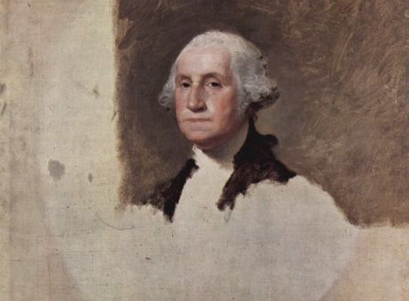
Peter Berkowitz has a typically elegant and insightful review-essay up at RealClearPolitics. It’s about the elitist democrats who created the American constitution. Peter grapples with the paradoxes of "gentlemen revolutionaries" and notes one aspect of them in particular:

[Historian Gordon] Wood concedes that there was something unlikely in Washington’s attainment of heroic stature in his own lifetime. He was not a learned man, he was not a military genius, he was not a great orator, and he was not a brilliant statesman. Rather, "he became a great man and was acclaimed as a classical hero because of the way he conducted himself during times of temptation." Washington stunned the world a first time after leading the Continental Army to victory. Even as many of his countrymen would have welcomed a military dictatorship under his command, and to the astonishment of Europeans who could not conceive of a victorious commander doing anything other than seizing political power, Washington resigned his commission and returned to his beloved Mount Vernon. He stunned the world a second time, and for a similar reason: After having twice won election to the office of what many in the United States and Europe were prepared to view as a constitutional monarch, Washington announced that he would not seek a third term as president of the United States. In both of these acts of splendid renunciation, Washington confirmed his own public virtue as well as the principles of popular sovereignty and liberty under law for which his soldiers had fought and bled and died.

This capacity for restraint, for embracing the limits of power rather than its ends, is at the core of constitutional democracy (and, I would argue, conservatism, properly understood). I wish our current leaders grasped it better. Sharing power is often more powerful than trying to size and horde it. Trusting the constitution is often wiser than feeling the need to bypass it.