Quote for the Day

Uk1

"Nothing you do, however many of us you kill, will stop that flight to our city where freedom is strong and where people can live in harmony with one another. Whatever you do, however many you kill, you will fail," – Ken Livingstone, the mayor of London, in a rare moment of moral clarity, a year ago today, in the wake of Islamist terror.

Londoner Johann Hari writes a poignant 7/7 memorial essay here.

Ponnuru Is Right

A reader remonstrates:

With respect to you, Ramesh Ponnuru is right. You truly believe in civil liberty. You take an educated approach to the Constitution, not a strained view that would lump off the 14th amendment. You oppose Christianism. You either lack the partisanship or the gullibility to swallow what the Bush administration continually sells.

In today’s political landscape, that makes you a liberal. Did you think that just because you support capitalism and oppose wacky elements of the left, from Foucault to Fidel supporters, that therefore you were a conservative? No, sorry, that really has nothing to do with the practical divides today.

I’m for balanced budgets, low taxes, cuts in entitlements, welfare reform, more military manpower, privately run healthcare, free speech, religious liberty, a stronger commitment to Iraq, and gun rights. I’m against affirmative action, federally-funded abortion and embryonic stem-cell research, protectionism, hate crime laws, the Medicare prescription drug program, pork barrel spending, torture, an untrammeled executive, and censoring anyone anywhere to appease Islamist extremists. And, according to Ponnuru, no "serious" conservative regards me as a conservative any more. What does that tell you?

Email of the Day

A reader writes:

I just read Ramesh Ponnuru’s remark about you:

"Since another panelist had quoted one of his sermons as evidence of intra-conservative strife, I also observed that I know no serious conservative who considers him a conservative. I am prepared to believe that there are a few misguided conservatives, unbeknownst to me, who do consider him a fellow conservative. But even if that’s true, it would not change the fundamental accuracy of my statement that Sullivan’s pronouncements are not good evidence of intra-conservative strife."

It just occurred to me that if you modify Ponnuru’s statement to replace "conservative" with "Delta Lambda Phi", it could have been made by a snooty sorority girl.

K-Lo has the paddle; and Jonah has the keg. Now I finally know the true meaning of Rush Limbaugh.

Rationality and Marriage

The key argument of the New York Appeals Court is that it is not prima facie irrational to keep civil marriage exclusively for straights because the consequences of their irresponsibility extend to a third party, children. Civil marriage, in other words, is an incentive to behave better for the sake of kids. But what of civil marriages without kids? The "rational" standard is a very low one, of course. And the best case to be made is that because it’s just easier to have kids accidentally in a straight relationship, then straights need the incentive more than gays. But what of those straight couples who are past menopause or sterilized? In New Jersey, for example, there’s a pending court case that rests in part on this distinction. A reader explains:

In New Jersey, we have a ‘domestic partnership’ rule that allows two people of either the same sex, or of opposite sex over age 62, to enter into domestic partnership together. The DP provides some ‚Äì but not most ‚Äì of the rights of marriage. Presumably, an opposite sex couple over age 62 is allowed to enter into a DP because of this same issue articulated in the NY ruling ‚Äì like gay couples, heterosexual couples over age 62 are unable to produce any unintended offspring.

However, in New Jersey, an opposite sex couple over age 62 can also enter into a marriage. There is nothing in NJ law that prevents opposite sex couples over age 62 from getting married, as there is for gay people. So the NY reasoning would fail in NJ, because the logic of the NJ legislature has not been consistent in regards to children: either opposite sex couples over 62 and gay couples should only be able to enter into a DP, or both sets of couples should be able to either enter into marriage or a DP. Since children are not an issue in either case, the only reason to not allow gay people to marry but allow people over 62 to marry would be irrational discrimination against gay people.

Then there’s the question of gay couples with children. It seems to me that if children are the standard, then civil marriage should rationally apply only to those with kids, gay or straight, and civil unions should apply to everyone else. Everyone gets a civil union license at first (unless they already have kids) and can upgrade to a civil marriage license after and only after they have reproduced or adopted. That’s the truly rational policy from the NY decision.

As for Georgia, it’s important to note that the court has ruled that gay couples are not only barred from civil marriage, they are barred from any legal protections whatever. Georgia wants its gays like it once wanted its blacks: segregated from integration into "normal" families, even if they have been born into them. And, yes, many thought that was rational for a very long time as well.

(My anthology on the arguments – legal, moral, historical, religious and constitutional – for and against marriage rights for gay couples can be found here.)

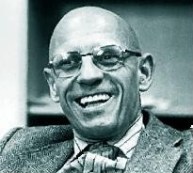
In Defense of Foucault

A reader writes:

You write about Foucault as if he’s not worth reading because the political consequences Michelfoucault of some of his ideas have been pernicious. It’s not that such consequences should be ignored – I think the academy would be a more serious place if Foucault had less influence – but I’m not sure what I lost, for example, by reading Discipline and Punish and History of Sexuality Vol. 1 with an open mind, particularly after having read Nietzsche a few weeks before, and Hegel before that, and then reading Derrida a few weeks later, and then Edward Said’s Orientalism, etc., etc., etc. (it was a class on philosophy for historians). Would I have been better off not reading Foucault? Was I deluding myself that he was offering an interesting perspective, and that my understanding of, say, Nietzsche was deepened by reading him?

You write about it as if it’s all just part of the academic culture wars, and if we cede too much ground to those insidious Frenchmen than we’ll have betrayed our side and its solid, Anglo-American values. It seems anti-intellectual to me. I would expect better of you. Have you read much Foucault? Didn’t you find that he said anything interesting? Wasn’t his writing powerful enough that reading it was at least profitable for you in the sense of having to contend with a deep but flawer thinker?

The writer makes a good point. I have, of course, read Foucault. The second chapter of "Virtually Normal" is largely devoted to his influence on our understanding of homosexuality and its attendant politics. I certainly think he’s worth reading. What concerns me is that he and his increasingly incomprehensible disciples became almost the only source for the profilerating "queer studies" departments and programs for American students in the 1990s. So many young gay and straight minds were subjected to his prose as the first way to think about homosexuality. Plato, Whitman, Proust, Wilde, Disraeli, Lincoln, Forster, Auden: you would never have read them in any decent course in a university on gay studies. Compared to these giants, Foucault is a midget. He was also an early enthusiast for the Iranian Islamist regime. When you see pictures of gay teenagers hanging in Iran, it’s worth remembering that Foucault loved this regime. There is no greater symbol of what his nihilist leftism leads to.

Sticking It To Cruise

912_tomcruise_7

Great news! The South Park episode banned in Britain and pulled by the cowards at Viacom is up for an award:

One of the Emmy nominees for best animated program is the episode of "South Park" that’s said to have angered Tom Cruise and Isaac Hayes. The episode called "Trapped in the Closet" implies that Cruise is gay and makes fun of Scientology.

There is a God. And he isn’t Xenu.

Putin Watch

Anne Applebaum tells it like it is in the current Spectator in London (sub req). Money quote:

By attending the G8 summit this month in St Petersburg, Illarionov said, Western leaders will show their approval of ‘the nationalisation of private property, destruction of the rule of law, violation of human rights and liquidation of democracy’.

She’s right, of course, as she often is (and has long been what Ramesh Ponnuru calls an "hysteric" on the Bush torture policy). But Hitch nails the Bush-Putin love-in more brutally here:

Out of a thesaurus of possible nominations, one would have to select George Bush’s remarks about Vladimir Putin as the stupidest utterance of his entire presidency. Impressed beyond words by the fact that Putin was wearing a crucifix that had belonged to his mother and was thus a man of faith, our chief executive then burbled like a schoolgirl and said that he had looked into the man’s eyes and knew he was the one to trust. (I have not checked, but surely someone can discover how many times Putin has worn that crucifix since. It could be a sort of emblem of the fatuity of the "faith-based.")

Since then, Putin has been noticeable for his efforts to protect Saddam Hussein, Kim Jong-il, the Iranian mullahs, and the Sudanese racist cleansers from any concerted action by the United Nations and has instructed his troops in Chechnya to behave in a manner that would cause a storm of international outrage if emulated by coalition forces in Iraq.

But the president looked into Putin’s soul. Why would he need actual empirical evidence after that?

(Hat tip: Iain Murray.)

New York and Marriage

A reader writes:

My reading of the court opinion you posted suggests a slightly different interpretation. I don’t think the opinion necessarily suggests that straights are more irresponsible than gays so much as that the consequences of the same irresponsible behavior (promiscuous unsafe sex) are greater when straights engage in it because it can produce children.

I certainly don’t agree with any law banning marriage between any two people, but assuming the legal point at issue was whether or not the law was overtly irrational, it appears that the court has ruled correctly. Keep in mind that by saying that, I’m not saying that the court has ruled correctly on gay marriage in general because (if my assumption is correct) they haven’t ruled on that at all. But they have presented a possible rationale for the legislation (even if it’s reasonably clear that their rationale is not the one used by most members of the legislature).

Agreed. But the ironies I mention remain. The good side of this is that it will, with luck, reorient gay activists toward the primary task of persuading people that we are right about equality in civil marriage. We need to keep arguing that allowing gays to marry in no way renders straight marriage more vulnerable (in fact supports it), and that our main goal should be persuading legislatures to pass marriage laws (as has already happened in California). If this ruling prompts gay couples and our allies toward legislative rather than judicial action, then it will be for the good. It has already done this, in fact. We have the better arguments. Let us trust the American people and get on with job of persuading them. We’ve already made great strides. And our gains will be more secure if they are achieved legislatively, rather than through courts.

Ponnuru Again

Ramesh "Party of Death" Ponnuru says he opposes torture. He did and said virtually nothing for the four years it has been American policy, except cover his ass with a couple of statements, designed not to offend those whose patronage he seeks. His record of near-silence speaks for itself, and no amount of flim-flammery can now erase it. As for whether it is "hysterical" to relate the Bush administration’s policy to allow torture and abuse of military prisoners to Abu Ghraib and the dozens of other sites in Iraq and Afghanistan where torture has occurred, Ponnuru must believe that the government reports that do indeed cite a "migration" of the Gitmo torture tactics to Abu Ghraib were also "hysterical". He must also believe that the U.S. Supreme Court is "hysterical", because they too last week ruled that the Bush administration’s evasion of U.S. law and international treaties was indeed an illicit power-grab, unconstitutional and illegal, and that the endorsement of torture was thereby technically a war crime.

So on my side: the government reports and the Supreme Court. On Ponnuru’s side, the usual Republican power-brokers. Also notice Ponnuru’s "argument" about what conservatism is. For him, it suffices to say that other "serious" conservatives he knows do not count yours truly as a conservative. Is conservatism now a social clique? Or is it a philosophy worth debating and arguing over, as I try to do in my next book? For Ponnuru, conservatism is a club. For me, it’s a set of debatable ideas. If Ponnuru wants to say I am not a serious conservative, then let him make the case. The rest is schoolgirl cliquishness.