Amsterdam, Holland, 3 pm.
Amsterdam, Holland, 3 pm.
Christina Hoff Summers argues back against the Gates Foundation study showing that boys are not doing so poorly in school.
Some fascinating questions about the impact of viral videos on election campaigns.
Here’s a new feature: send me your favorite current YouTube clips, and I’ll post the best every day. Keep them brief. Newsy and political clips will get priority, but, as regular readers know, I’m a big fan of dada moments, goofy bloopers, or just plain humor, or anything that makes you say "wow" or "ouch." First up is a classic soccer foul – by Wayne Rooney. Rooney is the face of England Americans don’t always see: thuggish, bull-doggy, violent, and able to kick another player right in the privates if needs be. Email me your nominations with YouTube in the contents line and a brief explanation.
"So, in the school of what’s good for the goose is good for the gander, we are providing this link to the Autonomist so YOU may help the blogosphere in locating the homes (perhaps with photos?) of the editors and reporters of the New York Times. Let’s start with the following New York Times reporters and editors: Arthur "Pinch" Sulzberger Jr. , Bill Keller, Eric Lichtblau, and James Risen. Do you have an idea where they live? Go track them down and do America a favor. Get their photo, street address, where their kids go to school, anything you can dig up, and send it to the link above. This is your chance to be famous – grab for the golden ring," – blogger Denny K, reflecting the right-wing blogosphere’s deranged over-reaction to a NYT puff piece on Cheney’s and Rumsfeld’s summer homes.
(Hat tip and indispensable summary: Greenwald.)
I found this op-ed highly persuasive. It occurs to me that the global warming debate is not unlike the WMD-terrorist debate, except the sides are reversed. Accrding to Ron Suskind, Dick Cheney’s "one percent doctrine" means that if there’s a one percent chance that a terrorist could have access to a WMD, we must act as if it were a certainty – because the outcome, however unlikely, would be too disastrous to risk. On global warming, Gore expresses a not-too-dissimilar equation: if there’s a small chance that human behavior could lead to environmental catastrophe, we should act as if it were a certainty – because waiting too long is too big a risk to take. Cheney wins because 9/11 provided stark evidence of the real risk we now face. Gore needs images of catastrophe to ramp up public demands for action. Hence the movie and Vanity Fair pictorials.
In both cases, however, the evidence is complicated and hard to pin down with absolute certainty. We know we are at much greater risk now from Islamist terror than we were a decade ago – but measuring how much, and where from specifically, is very hard. Equally, we know that global warming is real, but whether it has reached or will soon reach a dangerous tipping point is not a given. And in both cases, the entire argument rests a great deal on what we do not and cannot know. It seems to me prudent to take both risks seriously, but not so seriously that we abandon objective, empirical judgment. If such judgment had been in more evidence four years ago, the Iraq WMD intelligence debacle might have been avoided.
Likewise, with global warming. Take the fact that there is
"little disagreement that levels of carbon dioxide in the atmosphere have risen from about 280 parts per million by volume in the 19th century to about 387 ppmv today. Finally, there has been no question whatever that carbon dioxide is an infrared absorber (i.e., a greenhouse gas – albeit a minor one), and its increase should theoretically contribute to warming. Indeed, if all else were kept equal, the increase in carbon dioxide should have led to somewhat more warming than has been observed, assuming that the small observed increase was in fact due to increasing carbon dioxide rather than a natural fluctuation in the climate system. Although no cause for alarm rests on this issue, there has been an intense effort to claim that the theoretically expected contribution from additional carbon dioxide has actually been detected. Given that we do not understand the natural internal variability of climate change, this task is currently impossible.
What to do? A prudent attempt to rein in carbon dioxide emissions seems a no-brainer to me. A dollar rise in the gas tax would be the most effective way to achieve this. But Cheney also made an assumption Gore hasn’t: the American public will only sign up if they have no sacrifice to make, or if others do their sacrifices for them. The political health of America in the coming years will be measured by how hard politicians are prepared to challenge that atttitude.
A reader writes:
Did you see the slightly out-of-control Meet the Press roundtable today with Dana Priest, Bill Safire, Bill Bennett, and John Harwood about the SWIFT revelations?
Particularly interesting was the obvious contempt Safire had for Bennett, as the latter, the author of the ironically titled "America: the Last Best Hope," tried his damnedest to argue against the Supreme Court’s Hamdan decision, saying that the decision was an abrogation of our elected officials’ role in "keeping us safe." You could see in Safire’s face, and in the way he moodily slumped in his chair as Bennett ranted, that he did not miss the ominous significance of Bennett’s argument.
I’m hardly ideologically aligned with Safire on anything, but as a defender of the press, and as a defender of the greatness of our constitution, and the basis it provides for any current claim we might have to "exceptionalism," he will always have my vote.
Is it time to start calling Bennett and the NRO editors "fascist," or is that word still beyond the pale? Is there a better word? It’s certainly not "conservative".
"Fascist" is beyond the pale. These people just prefer power and the illusion of security to freedom and the acceptance of some risk. Bennett always has. I’ve never felt that my conservatism and his version were compatible. I’m more of a Safire-Tierney type, in the NYT universe.
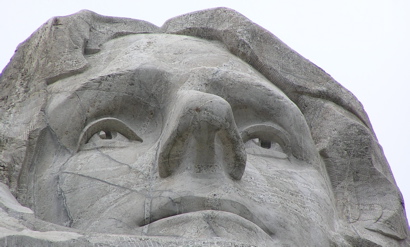
"A little patience, and we shall see the reign of witches pass over, their spells dissolve, and the people, recovering their true sight, restore their government to its true principles. It is true that in the meantime we are suffering deeply in spirit, and incurring the horrors of a war and long oppressions of enormous public debt. If the game runs sometimes against us at home we must have patience till luck turns, and then we shall have an opportunity of winning back the principles we have lost, for this is a game where principles are at stake," – Thomas Jefferson, in a letter to John Taylor, June 4, 1798.
A reader writes:
Where is the line between passion and sanctimony? Your stance of moral superiority over those who, believing ourselves to be faced with an unprecedented threat reluctantly endorse what in normal times we would abjure, is too easy. I do not fit into your categories of either ‘Christianist’ or principle-less conservative. Rather, I am someone who worries if the liberal societies I treasure can remain liberal in the face of this particular enemy. I don’t believe the enemy can ‘win’ but I do think they can have more devastating successes and that the reaction to them will deform our society beyond recognition making what you object to today seem like a civil libertarian’s paradise.
And even if they did not, we wonder what point is keeping our souls uncorrupted if we lose our cities? So my point is, while you are preening and damning you need to make more explicit the down side to your lofty position, fairly acknowledge the hard case – not the easy ones – against it and deal forthrightly with that for once. We may be paranoid or proto-fascist or blinded by religious fervor but you may be being naive and self-righteous – excusable in peacetime but unforgivable if even one American dies as a consequence. Time will tell.
A couple of responses. I believe in an aggressive fight against our enemy. I would have sent twice the number of troops to Iraq. I’d add a war-tax to gasoline. I would have expended whatever resources needed to find and kill Osama bin Laden. I’m in favor of an aggressive, dynamic, enterprising war against these barbarians. But I believe that part of that long war is continuing to insist on humane treatment of prisoners of war. And I believe that the laws of warfare need to be written and, if necessary, adjusted, to fight this new war. So I’d be happy to see the 1978 FISA law amended to make it easier to wiretap genuine security threats. I have no problem with the Swift program. I’d be happy to see enemy combatants detained indefinitely as prisoners of war, if so proved under a fair process.
Where I dissent is in the claim to grant the president extra-constitutional monarchical power to make this stuff up as he goes along, and to shred the Anglo-American principles of justice and war-making at the same time. I also believe that the United States must never torture any prisoner of war or enemy combatant, and must always treat them humanely. Real intelligence is gained by steady and long-term infiltration of terror networks, not crude torture of random individuals in dark cells. So let us fight by using our strengths – an executive whose errors are subject to checks from both judiciary and legislature and a free, robust press. That’s a democracy’s advantage in wartime over dictatorships – an openness to internal criticism and thereby correction. The results of one man deciding everything are already evident in the shambles of the Iraq invasion. We are better than that – and it befuddles me to see how little faith some "conservatives" now have in the procedures of constitutional democracy.
I have the Kyocera router he touts today, lauded and reviewed here. I second the good reviews. you carry your own WiFi everywhere, and if you have a Mac, it’s particularly useful, since EvDo cards don’t work on Macs. In some distant places – and Ptown is stuck on the end of a long peninsula – the service is not much better than dial-up, I’m afraid. But most other places, it’s mobile broadband. Works on trains too.
 The Dish