This time from Honda in the UK.
Christianism in the Military
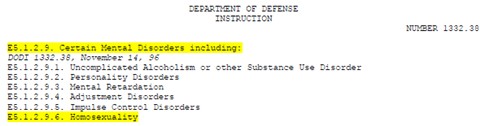
A new piece of evidence that some of the armed services have been hijacked by fundamentalists:
Homer Today
A reader writes, with respect to the compellingly plausible narrative in Ron Suskind’s new book, "The One Percent Doctrine:"
Indulge me a moment as I write our new Homerian: A weak man bred to believe he is strong and a leader of men. Propelled to success by family and powerful friends, he is granted the world’s foremost authority, but his victory is marred by controversy. At first he is insecure about his legitimacy, so he makes no bold moves and vacations at home where he is comfortable. Then, tragedy strikes, a historical moment that sears itself so immediately into the hearts of men that the date is marked forever: September the 11th. The leader asks God’s guidance and feels a revelation: this is fate. He has been chosen to lead America and the world in this decisive historical moment. Imbued with a sense of purpose and divine right, not to mention a political landscape in which his word is the nation’s command, he prepares to act. But he is still a weak, insecure man at heart, and he puts his faith not just in God, but in his right-hand men- Cheney, Rumsfeld, Rove. After all, he tells himself, they are also chosen to be in these positions at this time. He trusts them and he trusts their decisions to be the right ones, but in truth it is because he does not trust himself to question their judgments.
So our leader assumes the role of every bad manager – calling endlessly for unity, for strength and for faith, offering platitudes and placebos with no confidence in his own grasp on the policies that will solve the problem. And the people, rocked to their core by five jetliner-missiles, trust him, need to trust in their leaders. But as time passes, as the hubristic and imperial, aggressive policies of our leader’s right-hand men become clear, as it becomes obvious that these men are above governing and providing for the people, We the People begin to see that we have misplaced our trust, twice. Perhaps these leaders are merely incompetent. Perhaps they have a grand agenda they believe is too important to the globe to be bothered with international humility. Whatever the case, our fearful leader can only fumble and obfuscate when a frustrated press and citizenry begin to ask, "What policies are you uniting us behind, exactly?"
And now here we are, having abdicated our Constitutional authority to an executive whose values do not include levelling with the American people, or treating other nations as equally sovereign. Congress festers with corruption and abdicates its oversight duties in the face of the executive’s aggression. Judges are accused of ‘activism’ when they exercise their authority as a co-equal branch of government. The party in power is corrupt and beholden to the fundamentalists who secured its voting coalition. The opposition party scrambles for an appropriate vision but cannot seem to cohere or inspire. And We the People do not protest, they do not march, they do not riot to oppose torture in their name, or espionage conducted on them.
The stories that endure are those that speak to the rhythms of history – ambition breeds success breeds hubris breeds decadence breeds a downfall breeds introspection breeds spiritual rebirth breeds confidence breeds ambition and so on. This story has been told many times, in Rome, in France, in Britain, in Germany, in Russia, and now perhaps in America. And, for the first time, technology has crossed a line – we can bring about an armageddon with the push of a button. Perhaps this is why the religious awakening we are currently experiencing believes so strongly in the Rapture.
Thunder, I wonder? A storm will come one day.
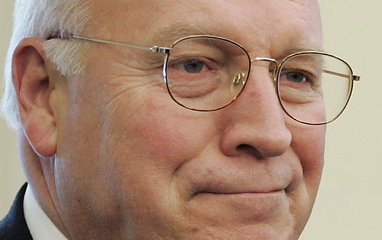
(Photo: Charles Dharapak/AP.)
Jesus Is Not A Republican
Or a Democrat, either, I’d hasten to add. This cri de coeur is worth reading, because it’s from a committed evangelical Christian appalled by what Christianism has become. Money quote:
Jesus himself recognized that his followers held a dual citizenship. "Give back to Caesar what is Caesar’s," he said, "and to God what is God’s." Negotiating that dual status can be fraught, but it is incumbent upon responsible citizens of this earthly realm to abide by certain standards of behavior deemed essential for the functioning of the social order. Much as I would like all of my fellow Americans to be Christians or vegetarians or Democrats, I have no right to demand it. The leaders of the religious right have failed to observe even the most basic etiquette of democracy.
Is there a better way? Yes, I think so. It begins with an acknowledgement that religion in America has always functioned best from the margins, outside of the circles of power, and that any grasping for religious hegemony ultimately trivializes and diminishes the faith. The Puritans of the 17th century learned that lesson the hard way, as did the mainline Protestants of the 1950s, who sought to identify their faith with the white, middle-class values of the Eisenhower era. In both cases, it was the evangelicals who stepped in and offered a corrective, a vibrant expression of the faith untethered to cultural institutions that issued, first, in the Great Awakening and, second, in the evangelical resurgence of the 1970s.
When Christians find ways to excuse torture, as the religious right has done, their pact with power is exposed as a deal with the devil. Evangelical Protestantism has a great, compassionate, spiritual legacy in America. It can and should be a powerful moral force. But not a partisan, political one. That way corruption comes. And the corruption is now very deep.
Air Torture
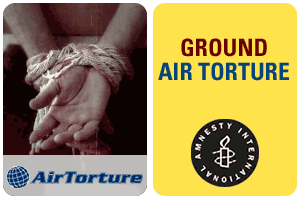 "Air Torture is the premiere airline transporting detainees to select torture chambers around the world. Organizations such as Amnesty International like to call our business ‘outsourcing torture’ because we deliver all our customers to countries where torture is routinely practiced – but our partners at the U.S. government have come up with a much better name: ‘extraordinary rendition.’" – Amnesty International.
Amnesty has a new website devoted to highlighting the outsourcing of torture to particularly nasty allies, like Uzbekistan. As the former British ambassador to Uzbekistan, Craig Murray, wrote in an email in July 2004:
"We receive intelligence obtained under torture from Uzbek intelligence services via the U.S. … Tortured dupes are forced to sign up to confessions showing what the Uzbek government wants the US and UK to believe … We are selling our souls for dross."
The War
Where are we? The vice-president thinks we are succeeding. I fear that too much evidence suggests otherwise. A reader spells out the dilemma:
I’m curious about whether or not your position on the war is changing.
If I were going to summarize my take on where you have been (which is probably simplified and not entirely fair to you), it would be that the war is vital to win, that we’ve been doing a terrible job of fighting it, and that we have to turn things around and win it. Fire Rumsfeld, bring in more troops, etc.
I agree with you that losing or pulling out is almost unthinkable. When I read things like that cable, or blog posts from Iraq the Model, I imagine the Iraqis who are friendly to us being taken out and shot. The woman who was told she’d have to wear something to cover in her head to ride in the cab – specific people. I mean, when I hear Murtha on TV talking about pulling out, that’s what I think of. That’s the question I’d ask him, if I were Tim Russert. What about the people they’ll take out and shoot?
And from a more detatched place, I wonder about the security structure of the region. We’ve used Iraq as a buffer for Iran. What happens if that goes away? That buffer been the lynch pin of our regional policy since the fall of the shah. It’s one of the main reasons we didn’t "finish the job" in Gulf War I. What’s it going to do to us if the buffer collapses?
But it looks to me like things are melting down so much that we’re probably moving past a point of no return. The chances of this administration doing anything dramatic enough to make a difference seem to be almost nil.
I think we’re f***ed. We’re in a war that we can’t afford to lose, and we can’t win it. I don’t think there’s any way to avoid taking horrific damage over the next several years. A lot of good people will have to live in hell because of what we’ve done in Iraq. A lot of good people will be killed, and we will share in the blame along with their murderers. Domestically, we’ll tear each other apart with recriminations, with finger pointing, with really vicious politics. In the Middle East, we’ll have strengthened Iran’s hand enormously through an unforced error on our part. And in the rest of the world, confidence in both our morality and our competence – both key qualifications for leadership – will be shaken tremendously.
I am very worried about further erosions of civil liberties and constitutional government in the years to come. I see that as the most important issue facing us – the need to preserve our system, and hand it down to the next generation. But I don’t see any public awareness of the issue, or much support at all for my position.
If we get into horribly polarized fights like the ones we had during the Vietnam meltdown, I think a lot of very bad stuff could happen to us. That’s the environment in which I worry that real losses of liberty here at home will be possible, or even likely.
I guess what it all comes down to, for me, is this: is it possible to manage the collapse? To make it less painful? If there is a storm coming, is it possible to prepare for it? I really hope I’m wrong about all of this – that Democracy takes root in Iraq, and that Bush goes down as the greatest president ever.
I hope so too. I’d love to be able to write in a few years’ time that all my fears were misplaced. But Cheney doesn’t exactly inspire confidence at this point, does he? What I fear most is not just the next attack, but the response to it; and how, bit by bit, the West and our enemies may become gradually more and more alike. All we can do is try and resist this process – to defend the constitution at home, while fighting Jihadism abroad. But the center is weak.
(Photo: David Burnett/Contact/Time.)
Happy Morning!!!!
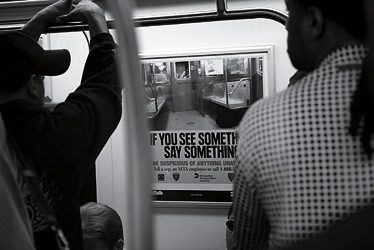
Yeah, I’m rendered speechless by this ad as well.
Outside The Box
A reader makes an important clarification about the tiny box in which prisoners were kept for up to seven days by U.S. military:
You left an important factor out. Suppose the doctor at camp has already identified you as claustrophobic. Now is it torture?
It qualifies as such by the Geneva Conventions definition. And Rumsfeld’s own explicit guidance for interrogation techniques allowed the unethical use of medical and psychological records to devise specific torture methods for individual prisoners. Yes, that violates Geneva. But we already know what Rumsfeld thinks of Geneva. I should also pre-empt the flood of emails about this post by simply saying: a) yes, al Qaeda would torture captured American soldiers whatever our policies are; and b) yes, even the worst forms of torture we have employed cannot be measured up against the Jihadists’ barbarism. But torture is always wrong; and this war is both military and ideological. Before the Bush-Cheney torture policy, the U.S. could protest the abuse of its soldiers in enemy captivity and be supported by its allies and their populations. Generations of American soldiers had cemented the concept of America as a decent country for whom torture was unthinkable. No longer. And so the enemy gains in the long war; and we lose. That’s the point. Winning is the point.
The View From Your Window

Tallahassee, Florida, dusk.
Power and Authority
A reader writes:
Many have noted the irony that a Christian administration would torture, but your recent e-mail also shows the practical problem for Christian conservatives here.
As good non-relativists, Christians ought to believe in universal standards, moral codes that apply to everyone. In some fashion that’s what the Geneva Conventions and other international agreements are meant to provide. But an unshakable article of conservative faith is that the United Nations and most other international compacts are inherently evil. So we come to a point where all that matters is American laws, American goals – and American power.
This really cannot stand. We will reach a point where we have infinite power, but zero influence. The nations we desperately need to change and win over will come to think that we get our authority solely from the barrel of a gun – or the damp gauze of a waterboarder. We will claim that we believe in universal, unalienable rights, but will refuse to hold ourselves to any meaningful universal standards. No one will take anything we say seriously, except our threats of war.
I recall Oakeshott’s response to a question about the power of the U.S. president. ‘The president has no power," Oakeshott explained. "A blackmailer has power. The president has authority." Under this president, I fear, we are beginning to appreciate that distinction more profoundly.
 The Dish