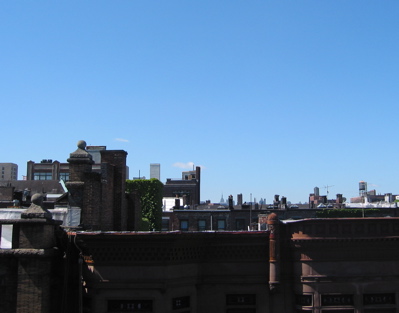
Harlem, New York City, 10.30 am.
Harlem, New York City, 10.30 am.
A fascinating piece in the NYT today about evolving Mexican views of a big ol’ security wall along the border with the U.S. Some see it as a boon to Mexico – specifically as a way to force Mexico’s government to implement real economic reforms, rather than using the U.S. as a safety valve for its own malfunctions. I’ve wondered why a country would pride itself onn the number of people who leave it; and I’m glad to see some Mexicans see the point as well. Money quote:
"It’s fantastic," said Primitivo Rodr√≠guez, an immigrant activist in Mexico, when asked about plans to build walls. "It’s the best thing that could happen for migrants, and for Mexico."
Mr. Rodr√≠guez, who has served as an adviser to the Mexican government and an organizer in the United States for the American Friends Service Committee, said the porous border had for years been an important safety valve of stability for Mexico’s economy, allowing elected officials to avoid creating jobs and even taking legal measures to stop the migration of an estimated 500,000 or more Mexicans a year.
Government reports indicate that the Mexican economy has created about one-tenth of the one million jobs it needs to accommodate that country’s growing labor force. Meanwhile, remittances from immigrants ‚Äî estimated last year at about $20 billion ‚Äî have grown larger than some state and municipal budgets.
The Wall: a way to force Mexico to reform, which in turn would reduce immigration pressures. I’m beginning to believe that constructing this barrier first might be the best way to tackle this problem. And I say that as an enthusiast for immigration.
The scenario Brian Ross lays out is pretty familiar. Abramoff holds fundraiser for Hastert; Hastert puts in a request to the secretary of Interior; Abramoff clients benefit. Seems like business as usual in Washington. What else are they doing at the Palm? It doesn’t help, though, that Hastert turns out to be the recipient of the most money from Abramoff. Now you begin to see why he might be extra sensitive about FBI raids on Capitol Hill offices. Even with warrants. Maybe he’s next. (Update: Or maybe he’s not. TLB asks some questions about the ABC News story here.)
The more you think about his claim to leg-press 2,000 lb, the weirder it gets. I know, I know. This is hardly the most important thing going on right now. But one of the ten commandments – right after the one about gay marriage – is that you shouldn’t lie. A sports columnist, it turns out, has been on the case before:
That would mean a 76-year-old man broke the all-time Florida State University leg press record by 665 pounds over Dan Kendra. 665 pounds. Further, when he set the record, they had to modify the leg press machine to fit 1,335 pounds of weight. Plus, Kendra’s capillaries in his eyes burst. Burst. Where in the world did Robertson even find a machine that could hold 2,000 pounds at one time? And how does he still have vision?
How many leg-press machines can handle 2,000 lbs? I’ve never seen one. Assume that he used 100lb plates – rare, but they exist. Ten on each side? Ladies and gentlemen, I’m sorry to say that a leading light of the Republican Party is lying to sell protein shakes.
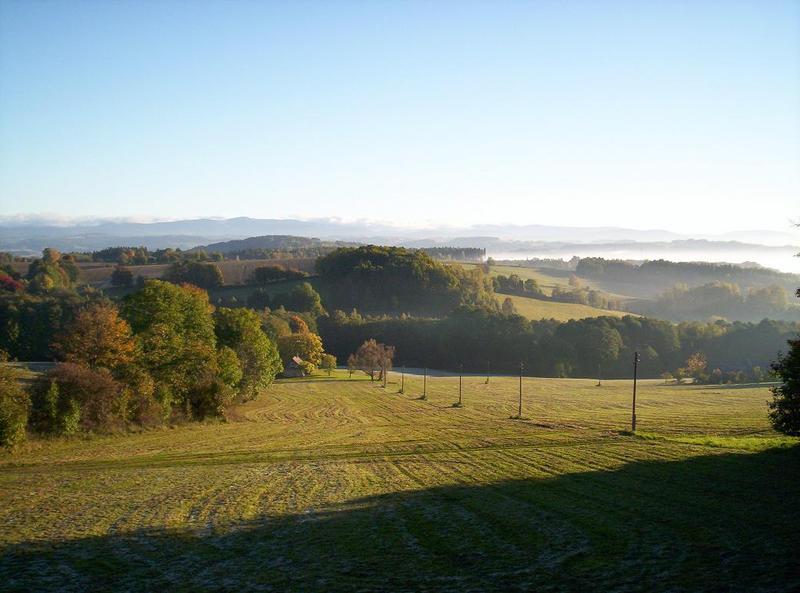
From a reader in a cottage in the northern part of the Czech Republic, looking toward the Russian and Polish borders. Wow.
[Readers have noted that the Czech Republic doesn’t have a Russian border. My bad. I checked the email and he says toward the Polish border and Russia.]
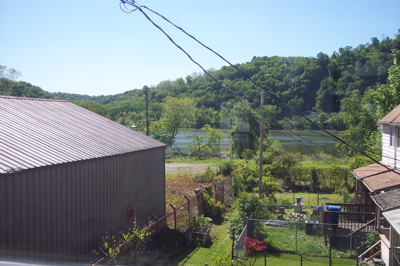
Blawnox, Pennsylvania, (6 miles up the Allegheny River from Pittsburgh), 10:45 am.
A reader explains:
Every time I look at one of your wonderful window view postings, I think of Melissa Etheridge’s song, Come to My Window. The tune has been stuck in my head since yesterday, and nothing it seems, will get it out.
Damn you! Now, I hope you think of the song as well every time you blog.Come to my window
Crawl inside, wait by the light
Of the moon
Come to my window
Ill be home soonArggggghhhh …
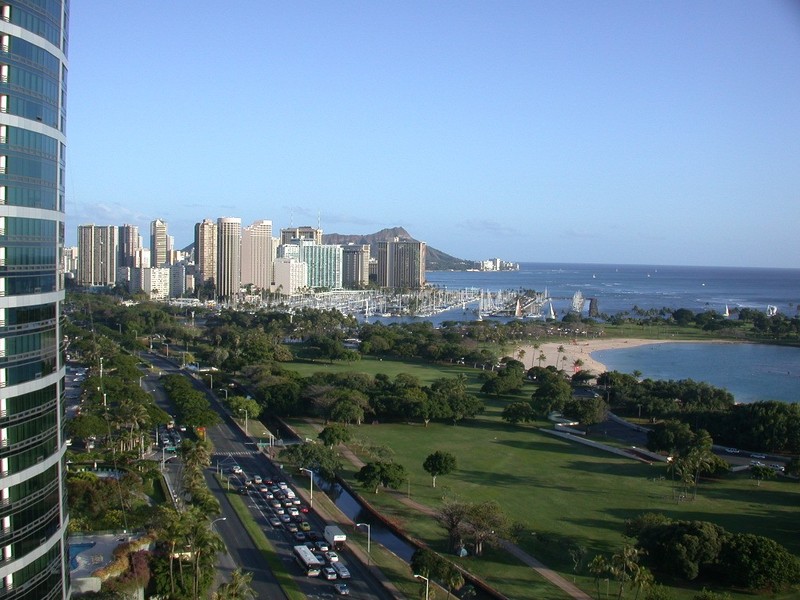
Honolulu, Hawaii, afternoon.
A reader writes:
While I was visiting my sister in Rome this past December, she and I took a short trip to Tunisia. This was my first visit to a predominantly Muslim country, and I didn’t really know what to expect. I must say, I was pleasantly surprised. The country felt distinctly modern and the people were welcoming. The most negative reactions we received were long, stern stares when entering one of Tunisia’s many male-dominated caf√©s, a common evening hangout in the country. From what I could tell, however, women played an active – if not equal – role in Tunisian society. And while I’m sure that extremist, anti-western elements exist, we saw no signs of them.
Mostly I was left with a strong sense that this is a country headed in the right direction, a place the US should be actively supporting as an emerging model in the region. Fortunately, it looks like we may be doing just that, thanks to Rumsfeld no less.
Credit where it’s due.
An exercize in self-criticism. (Hat tip: Paul.) I just got myself the new MacBook Pro 17 inch laptop. Who needs Cialis?
 The Dish