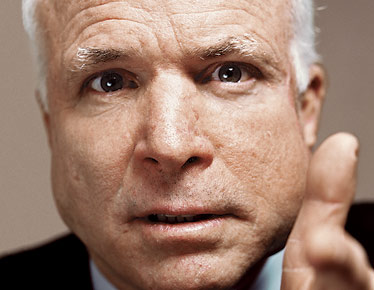
The speech is, to give my first impression, a truly inspired piece of work. It’s funny at times, sharp, moving, sincere, self-deprecating. What it manages to do is something that, sadly, Bush has been unable to do. It manages to argue forcefully for the moral cause of the war against Islamist terrorism and yet to defend the dignity and value of our strong and impassioned debates about it. It’s about reconciliation – and not just within Republican circles. It’s about reconciliation at a national level, a way to get beyond the polarization of the last few years, without descending into hazy delusions about the core and real disagreements that still divide us:
Americans deserve more than tolerance from one another, we deserve each other‚Äôs respect, whether we think each other right or wrong in our views, as long as our character and our sincerity merit respect, and as long as we share, for all our differences, for all the noisy debates that enliven our politics, a mutual devotion to the sublime idea that this nation was conceived in ‚Äì that freedom is the inalienable right of mankind, and in accord with the laws of nature and nature’s Creator.
We have so much more that unites us than divides us. We need only to look to the enemy who now confronts us, and the benighted ideals to which Islamic extremists pledge allegiance – their disdain for the rights of Man, their contempt for innocent human life – to appreciate how much unites us.
The tone is one in which McCain uses his advanced age – which will surely be a factor in the coming election – as an advantage. He provides a narrative of his life that portrays him as a former hot-head who has learned his lessons. He’s trying to defuse two potential liabilities with a single story. It’s artfully done:
Let us exercise our responsibilities as free people. But let us remember, we are not enemies. We are compatriots defending ourselves from a real enemy. We have nothing to fear from each other. We are arguing over the means to better secure our freedom, promote the general welfare and defend our ideals. It should remain an argument among friends; each of us struggling to hear our conscience, and heed its demands; each of us, despite our differences, united in our great cause, and respectful of the goodness in each other. I have not always heeded this injunction myself, and I regret it very much.
McCain is telling us – showing us – that he is ready to bind up the wounds and lead America. That’s what this speech suggests – and it may well become the theme of his presidential run. And, although I am less of a believer in government than McCain is, it may be what this country desperately needs, in a very perilous time. I know I’m a sap for McCain. Always have been. But he may soon be America’s indispensable leader. And a critical part of that leadership will be undoing the divisions that have been allowed to deepen and calcify in the last five years. If he runs against Hillary, it will be as a healer against a figure who, fairly or unfairly, represents salt in America’s ideological wounds. It’s a winning message; and a necessary one.
(Photo: Ben Baker/Redux.)
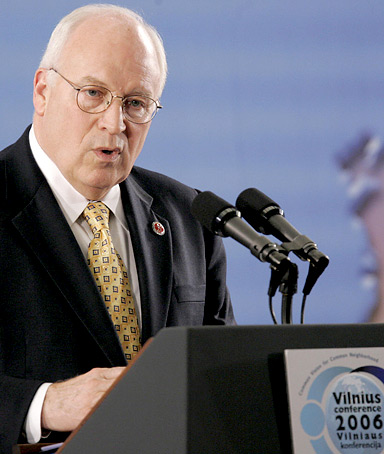 Isikoff’s latest report shows how close Patrick Fitzgerald is getting to the heart of the Plame outing. He seems to have nailed down Cheney’s hand-written notes on Wilson’s op-ed in the NYT – "Do we ordinarily send people out pro bono to work for us? Or did his wife send him on a junket?" – as well as hard evidence that Libby knew full well that Plame’s identity was classified before he leaked it. Who knows what he’s got on Rove? The court notice on Cheney’s hand-written notes as evidence can be read here.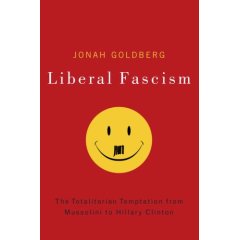
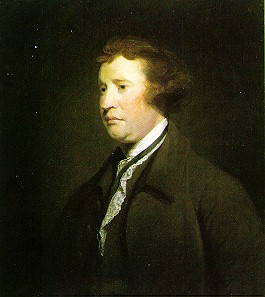 i.e. that "marriage" is for procreation and child-rearing only. He starts from the society he lives in. What does marriage mean now? How has organic social change – the new equality of women, the emergence of openly gay people, the graying of the population, the availability of contraception – made our current arrangements anachronistic? The conservative will then set about – carefully and conservatively – reforming social institutions so that they adapt and coopt the new social realities.
  The Dish