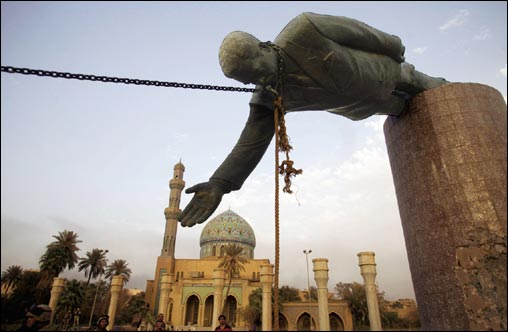
A long, detailed and fascinating insight into the Saddam dictatorship in Iraq has just been published in Foreign Affairs magazine. The swift decapitation of his brutal regime gave historians an unusual chance to get primary materials and records and testimony to explore what was going on in his deranged mind as the invasion happened – and much else. The report was commissioned by the U.S. Joint Forces Command. It rests on thousands of interviews and hundreds of pages of documents. It’s an important counter-weight to "Cobra II." There’s much in it that’s revelatory. Among the more important points, it seems to me, are a) Saddam really was hoping that Russia and France would prevent his toppling, because of their business interests; b) he lived in a world of denial and terror where the existence of WMD stockpiles was firmly believed within his own government; c) he created the Saddam Fedayeen, the al Quds Army, and the Baath Party militia to control Kurdish and Shiite unrest, and only later deflected them into the insurgency that is still raging.
But for me, the most important fact is the following:
The Saddam Fedayeen also took part in the regime’s domestic terrorism operations and planned for attacks throughout Europe and the Middle East. In a document dated May 1999, Saddam’s older son, Uday, ordered preparations for ‘special operations, assassinations, and bombings, for the centers and traitor symbols in London, Iran and the self-ruled areas [Kurdistan].’ Preparations for ‘Blessed July,’ a regime-directed wave of ‘martyrdom’ operations against targets in the West, were well under way at the time of the coalition invasion.
It was only a matter of time before Iraq deployed Islamist terror against the West. Those who sincerely marched against war in London in 2002 and 2003 were unwittingly marching to keep in power a regime planning to bomb and terrrorize them.
(Photo: James Nachtwey for Time.)
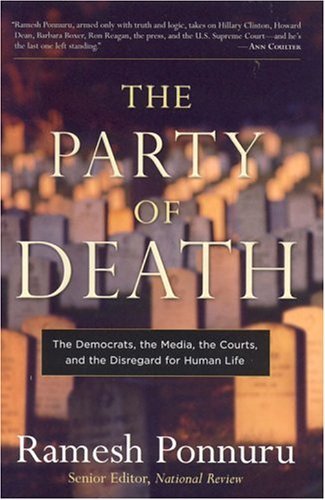 religious fundamentalism alarms me, and I’ve no doubt he has some interesting things to say. I may even agree with some of it. But this much I can say: the title of the book is reprehensible. To call half the country "a party of death" and to assign that label to one’s partisan political opponents is not, whatever else it is, an invitation to dialogue. It’s demagoguic abuse. It’s worthy of Ann Coulter (who, tellingly, has a blurb on the cover). It is one thing to argue that you are pro-life, to use the positive aspects of language to persuade. It is another to assert that people who differ from you are somehow "pro-death," (especially when they may merely be differing with you on the moral status of a zygote or the intricacies of end-of-life care). To smear an entire political party, and equate only one party with something as fundamental as life, is a new low in the descent of intellectual conservatism from Russell Kirk to Sean Hannity.
  The Dish