Will Any Real Change Come From Ferguson?

Douthat fears that “from the point of view of actual persuasion, as opposed to just mobilization — of reaching people who don’t follow these issues closely, or who might generally incline toward a different narrative, more pro-cop or just more pro-status quo — Ferguson is turning into a poor exhibit for the policy causes that it’s being used to elevate”:

My worry, therefore, which I tried to get at in the column, is that because the facts on the ground don’t clearly fit the policy narrative they’re being tied to, and may not fit at all, Ferguson and its aftermath are going to be too polarizing to effectively serve the kind of meliorist consensus — uniting a lot of religious conservatives and libertarians with liberals and the left — that’s been gradually emerging around criminal justice, drug policy, and related issues over the last five or ten years.

Digby highly doubts that bipartisan cooperation on criminal justice was ever in the cards:

The bill that seems to have everyone feeling so positive about bipartisan comity is the Smarter Sentencing Act, which has the backing of such disparate groups as the ACLU and the Heritage Foundation.

Ted Cruz says he’s for it too. It basically will give courts more discretion in sentencing and lower the daft mandatory sentences for drug crimes from 20-, 10- and five-year mandatory minimums to 10, five and two years. Considering the tremendous overcrowding in federal prisons this seems like a no-brainer.

Unfortunately, there are a few roadblocks. Sen. Chuck Grassley thinks mandatory minimums are an important crime-fighting tool. And for reasons of their own, Sens. John Cornyn and Jeff Sessions are likewise opposed. But perhaps the biggest obstacle to any kind of bipartisan criminal justice reform (that makes any sense) is the fact that the Republican base is not only strongly opposed to it, GOP political consultants would be deprived of one of their most potent lines of attack. (And, just as likely, Democratic challengers would cynically use it against them.)

When push comes to shove, this is the evergreen Republican go-to election attack. We saw it just recently in the fall campaign.

John Dickerson, meanwhile, wants a GOP presidential contender to give a speech about Ferguson:

As my colleague Jamelle Bouie pointed out on the Slate Political Gabfest, the most effective speech any politician could give in the wake of the Ferguson verdict might be one given by a Southern Republican. If a Republican, whose party benefits from the overwhelming support of white voters, could serve as a witness, at some level, to the feelings of distrust and anger within the black community, it might contribute to the conversation so many people say we should be having. It would not require abandoning values or offending their core constituency. Such a speech could even eclipse whatever President Obama says on a visit to Ferguson, given that he is hemmed in by the responsibilities of his office and the political crust of the past six years.

Of course, a potential GOP presidential candidate might choose an entirely different path. Instead of offering an example of bridge building, he might decide that the requirement after Ferguson is to defend the police force against a media that has convicted an officer trying to do his job in a brutal environment and speak up for the 61 percent of Republicans who in August thought race was getting more attention than it deserved, according to a Pew poll. Whichever route a candidate takes, such a speech would certainly distinguish him, and almost every future candidate wants that right now.

Enshrining Inequality In Israel, Ctd

J.J. Goldberg has a smart take on Israel’s “nation-state” bill. He begins by stressing how redundant it is for Israel to keep proclaiming itself a Jewish state when the UN recognized it as such in the 1947 partition vote, which the PLO ratified in 1998. The bill’s contribution, he concludes, “is not to define what Jewish statehood includes, but what it excludes: Arabic language, Palestinian national pride, a religion-neutral legal culture”:

It’s no accident that the legislation’s sponsors and main backers are the same right-wing factions, in the Likud and Jewish Home parties, that are fighting hardest against territorial compromise and Palestinian statehood. They’re not worried about international opinion. Their problem is the built-in flaw in their own blueprint for the future. Holding onto the territories, maintaining a single state between the Jordan and the Mediterranean, means creating a binational state. The advocates face growing pressure — and anger — from the military, academic, arts and legal communities and other sectors, all demanding to know how Israel can absorb two million-plus West Bank Palestinians without losing the Zionist vision of a Jewish state.

Their answer is to ground the state’s Jewish character — its language, calendar, legal culture, national anthem — in a quasi-constitutional basic law that can’t be amended except by a Knesset super-majority. That’s how they intend to defend Jewish statehood: by relegating the culture and values of today’s non-Jewish minority to the sidelines and ensuring they stay there, even if and when they become a majority.

The messy political battle sparked by the bill came to a head yesterday when Netanyahu abruptly fired the bill’s main opponents, Justice Minister Tzipi Livni and Finance Minister Yair Lapid, saying he would “no longer tolerate an opposition within the government”. The move effectively demolished his coalition, forcing new elections that could take place as soon as March. Zack Beauchamp believes the coalition’s collapse was inevitable:

The reason that Livni and Lapid, rather than Bennett and Lieberman, are being dismissed is simple enough:

Netanyahu is a right-wing prime minister leading the right-wing Likud party in a dominantly right-wing coalition. Together, Likud, Yisrael Beiteinu, and Jewish Home control almost twice as many seats as Yesh Atid and Hatnua. This put Lapid and Livni’s parties in a bizarre situation. On the one hand, Netanyahu needed to please them, because his government couldn’t achieve a governing majority without their support. On the other hand, the right-wing parties had them so outnumbered that they had huge trouble getting their way on issues like West Bank settlements, taxes, or minority rights. Lapid and Livni ended up, in practice, being centrist fig leaves for a hardline right-wing government.

Viewed in that light, it wasn’t a question of whether this inherently unstable government would collapse: it was a question of when. It turns out the answer was 18 months after forming.

Looking at the latest poll numbers, J.J. observes that Netanyahu could well emerge from these elections with a stronger hand – as is his intention, of course:

The latest opinion poll, published Sunday by Haaretz, showed that if elections were held today for a new Knesset, Likud would rise from 18 seats to 24 in the 120-member body, while Yesh Atid would drop from 19 seats to 11. The party to the right of Likud, Naftali Bennett’s Jewish Home, would rise from 12 to 16. Labor would drop from 15 to 13, Livni’s Hatnuah from 6 to 4 and Avigdor Lieberman’s Yisrael Beiteinu from 13 to 11 and Shas from 11 to 6. …

In all, according to the pollsters, the Dialog group, parties on the right would rise from 61 seats in the current Knesset to 77 seats, while the center, left and Arab-backed parties would drop from 59 to 43. That calculation counts the two Haredi parties, Shas and Torah Judaism, as part of the right, even though they were members of the last two Labor led coalitions under Yitzhak Rabin and Ehud Barak. In response to the question of who was “most fit” to be Israel’s next prime minister, 35% named Netanyahu and 17% named Labor leader Yitzhak Herzog, while Lieberman, Lapid and Bennett received 8%, 7% and 6% respectively.

Aaron David Miller sees Israel’s diminishing center-left parties as being too weak to pose much of a challenge to the prime minister:

There’s little doubt that Israelis are tired of hapless governance and failed politicians. The very fact that campaigns and elections are being scheduled at a cost of billions of shekels for reasons that are hard to divine or that appear to focus on petty politics and personal rivalries instead of big issues only reinforces the public’s cynicism. At the same time, however, there’s little doubt that Israel’s public has moved to the right (look at the last two elections) and that the current security environment and terrorism threat in Jerusalem will only highlight that anger and concern. If you had a pragmatic, security-credentialed, electable hawk, that is to say a Rabin-like figure whom Israelis trusted, you might even have a real election on some important issues. But right now you don’t.

Meanwhile, in another noteworthy analysis of the controversy over the nation-state bill, Bernard Avishai links it to Israel’s evolution from colony to state:

One should think of Israel as having two competing legal structures: a gradually evolving democratic state and the remnants of the old Zionist settler colony. Think of a nearly completed building encased in scaffolding that was never taken down—that, in effect, has become a rival structure. To incubate Hebrew, and provide refuge, Israel once needed Jewish collectives, whose land was purchased and owned by the Jewish National Fund. It needed to enforce strict regulations against selling J.N.F. property to non-Jews. It needed a Jewish Agency to qualify immigrants—a precursor of the Law of Return—and fund their assimilation into the Yishuv, while building settlements to house them. It needed a paid, official rabbinate to preside over the religious rites of marriage, burial, and divorce. And, given these material privileges, Israel needed an immanently legal definition of a Jewish person.

All of these fixes made sense for an insurgent Zionist colony in the nineteen-thirties. They are grotesque sources of discrimination within a Jewish democracy in 2014.

Ezra Sells Out

If the new media brands that have emerged over the last couple of years were described (accurately) as new advertising agencies, the stories might not have had as much traction (or contained as much hope for the future of journalism). But that, it is quite clear, is what most of these new entities are. Vox has now dropped any pretensions that it is not becoming an ad agency, creating “articles” that perpetuate and distribute the marketing strategies of major corporations.

The logic of this, from a business standpoint, is so powerful almost no one can resist it. Display or banner advertising is sinking into an after-thought, leaving journalism with a huge revenue crisis – especially when you have no subscription income from readers. And when you’re drowning in venture capital, the pressure to to find a way to pay it back eventually must, even now, be crushing. There’s no other explanation for the fullscale surrender of journalism to what would, only five years ago, have been universally understood as blatant corruption.

What always amazes me about the interviews with the various media professionals involved is their use of the English language. It’s close to impenetrable to anyone outside the industry – e.g. “publishers have to get better with understanding the product side of native” – which, of course, helps to disguise the wholesale surrender of journalism to public relations. What also amazes me is how silent the actual editors of these sites are on the core, and once-deemed-unethical, foundation of their entire business. So we’re unlikely to hear Ezra explain to his liberal readers how he’s now engaged in the corporate propaganda business. But if you scan the interview with Vox‘s new fake article guru, Lindsay Nelson, some truths slip out. To wit:

You’re going to need to be great storytellers and create things that help advertisers with the goals that they have for that quarter … We’re trying to become a consulting partner, where we help brands and guide them to develop a content marketing strategy that is 12-months long  … If there’s something in the news that a brand wants to be close to you can get them up and running with the same type of polish that they would expect from advertising that takes much longer.

So even breaking news may well be advertising in the near future. And good luck telling the difference.

Chart Of The Day

Crime Perception

Ana Swanson flags a 2012 paper in which “researchers argued that black people commit a much lower share of crimes than whites assume”:

The paper compares two surveys of people’s perceptions about violent crime with actual statistics. The “mean perceived percentage” figures are based on responses of white people in two telephone surveys: A random telephone survey of 1,575 adults conducted in Florida by the Research Network in 2005, and a nationally representative sample of 961 respondents directed by Oppenheimer Research in the summer of 2010. The “actual percentage” figures are drawn from various annual statistics published by the U.S. Department of Justice.

Losing Your Voice To Work

Noah Berlatsky has a hard nugget of truth for aspiring writers: “If you want to get paid … finding your own voice can be a distraction – even a hindrance”:

The bulk of writing opportunities that will actually provide you with a living wage are work-for-hire – writing textbook entries, or exam questions, or website content boilerplate. And when you’re doing work-for-hire, no one cares about your voice. Or rather, they do care, in that they actively don’t want anything to do with it. The point of work-for-hire is to make your voice disappear into the house style. Mostly that style is flat and factual. (“The enormous growth of world population in the last hundred years has been sparked by advances in medicine and disease prevention, by increases in life expectancy, and by agricultural improvements.”)  …

Perhaps there’s someone out there so famous or so obscure that they can say whatever they will in public in a unique voice untouched by editors or market considerations. But for the vast majority of working scribblers, writing is less about finding your own voice than about figuring out how to say something someone, somewhere will pay you for, or at least listen to. If there’s a voice, it’s always an adjusted and negotiated voice, rather than a pure effusion of individuality.

Texas Prepares To Execute A Mentally Ill Man

It’s scheduled for tonight:

First diagnosed with schizophrenia in 1978, [Scott] Panetti was hospitalized over a dozen times by 1992 and involuntarily committed to a mental hospital at least twice. On one such occasion in 1986, Panetti had buried his furniture in the backyard because he believed the devil was inside it.

In 1992, shortly after Panetti stopped taking his medication, he shaved his head, dressed in army fatigues, and killed his in-laws with a hunting rifle in front of his wife and three-year-old-daughter. He turned himself in shortly after, and told police officers that “Sarge” was responsible for the killings.

Sally Satel insists that it is “wrong to execute, even to punish, people who are so floridly psychotic when they commit their crimes that they are incapable of correcting the errors by logic or evidence”:

Yet Texas, like many other states, considers a defendant sane as long as he knows, factually, that murder is wrong. Indeed, Panetti’s jury, which was instructed to apply this narrow standard, may have been legally correct to reject his insanity defense because he may have known that the murders were technically wrong.

Nancy Leong and Justin Marceau review the relevant law:

The U.S. Supreme Court, in a 1986 case called Ford v. Wainwright, prohibited the execution of people who are so out of touch with reality that they do not know right from wrong and cannot understand their punishment or the purpose of it. Panetti’s attorneys argue that this holding applies to him. His severe mental illness causes him to believe that Satan, working through the state of Texas, is seeking to execute him for preaching the Gospel—and, therefore, he cannot possess a rational understanding of the link between his crime and his punishment. To most people, Panetti’s lengthy history of mental illness and his bizarre behavior strongly suggest that Ford should prevent his execution. Yet in practice, Ford’s guarantee is often compromised when courts refuse to order mental health evaluations in a timely fashion, as Panetti’s seven years without a competency evaluation illustrate all too clearly.

Ian Millhiser argues that, by “the Supreme Court’s own reasoning, he fits the criteria of a man who should be constitutionally ineligible for execution”:

And yet, the Supreme Court has not extended this rule to severely mentally ill individuals like Panetti. The justices have said that he should not be executed if he suffers from “gross delusions preventing him from comprehending the meaning and purpose of the punishment to which he has been sentenced,” but this is a much weaker protection from execution than the absolute bar the Court announced in cases involving people with intellectual disabilities. Among other things, it hinges upon Panetti’s present state of mind, giving Texas the opportunity to argue that he is currently lucid enough to be killed.

Rob Smith and Charles Ogletree weigh in:

One could point to a formalistic legal distinction to justify this inequity; some state legislatures banned capital punishment for juveniles and the mentally disabled well before the court stepped in, while no state — other than the 18 states with no death penalty — formally bars the death penalty for the seriously mentally ill. But this line of thinking is overly simplistic.

In its most recent Eighth Amendment decisions, the court has eschewed such formality and replaced it with a more holistic approach that looks at a number of different factors in order to gauge whether a punishment is excessive, and therefore cruel and unusual. For instance, it questions how often the punishment is imposed and carried out in practice; whether the punishment serves any penological purpose; and whether the administration of a punishment to a particular class of people elevates the risk of wrongful execution. This broader, and far more sensible inquiry, leaves little doubt that it would be cruel and unusual to execute someone as mentally ill as Scott Panetti.

Katie Halper points out that “a diverse group of individuals and organizations—beyond the usual prison-reform suspects—are calling for clemency”:

These in​cl​ude 55 prominent Evangelical Christians and seven retired and active bishops from the United Methodist Church; former US Representative Ron​ Paul; former Texas Governor Mark White; ten Texas state legislators; nearly 30 former prosecutors and US attorneys general; Murder Victims Families for Reconciliation, the American Bar Association, and the European Union.

Brent Bozell, Pat Nolan, and Richard Viguerie also speak out:

We are leaders in the conservative movement, and no one could accuse us of being soft on crime. There is much debate about the effectiveness and the morality of the death penalty. Some crimes are so terrible, and committed with such clear malice, that some believe execution is the only appropriate and proportional response. But Scott Panetti’s is no such case. He is one of the most seriously mentally ill prisoners on death row in the United States. Rather than serving as a measured response to murder, the execution of Panetti would only serve to undermine the public’s faith in a fair and moral justice system.

And Stephanie Mencimer looks at the bigger picture:

The Supreme Court hasn’t been especially sympathetic lately to arguments about mental illness and the death penalty. Last year, it refused to block the execution of another seriously mentally ill inmate in Florida, John Ferguson, who went to his death believing he was the prince of God. But Panetti’s pro bono lawyers, Kathryn Kase and Greg Wiercioch, argue that public opinion on the issue is changing, and that the law needs to change with it. They cite a new poll showing that nearly 60 percent of Americans oppose executing someone with a serious mental illness. They also reference new research showing that juries and judges today are far less likely to choose death for a mentally ill defendant than they were 20 or 30 years ago. In 11 former and current death penalty states that allow for a “guilty but mentally ill” verdict, there hasn’t been a death sentence imposed on a mentally ill person in at least 20 years.

Unbelievers In The Pulpit

Greta Christina spotlights The Clergy Project, an online support group for religious leaders who have lost their faith:

The project was inspired by the 2010 pilot study by Daniel C. Dennett and Linda LaScola, “Preachers Who Are Not Believers” (PDF), which exposed and explored the surprisingly common phenomenon of non-believing clergy. The need to give these people support — and if possible, an exit strategy – was immediately recognized in the atheist community, and starter funding for the Clergy Project was quickly provided by the Richard Dawkins Foundation for Reason and Science. Founded in March of 2011 with 52 members, the Clergy Project currently has over 270 members – and since recent news stories about it began appearing, in outlets from MSNBC to NPR to the Religious News Service to CNN, applications to join have been going up at an even more dramatic rate.

The cascade of news stories began when Methodist minister Teresa MacBain came to the American Atheists convention following last March’s Reason Rally – and made a dramatic unscheduled appearance at the podium, to announce that she was an atheist.

David Watkins writes, “I’ve met a few such people, over the years, and they’ve suggested to me the ranks of clergy who fit that description are far greater than anyone realizes”:

Clergy have a set general tasks – counselor, community organizer, etc.–and their and their parishioners religious beliefs and commitments are one of the primary tools they’re expected to use in these tasks. This gives them a perspective on their faith lay people are considerably less likely to have–they see how it can work, but also how and when it doesn’t. There are a variety of ways to cope with that, and some of them, it seems to me, could have a significantly corrosive effect on faith.

Still, he wishes that Christina didn’t view the phenomenon “through the eyes of evangelical atheism”:

Conversion stories are old and familiar. I’m much more interested in those who chose to stay in their positions. Not the megachurch grifters and profit-takers, but the ordinary and decent people making a modest living and trying sincerely to do good and help people. Some of them, no doubt, are like Rumpole’s father: “a Church of England clergyman who, in early middle life, came to the reluctant conclusion that he no longer believed any of the 39 articles” but “as he was not fitted by character or training for any other profession” he soldiered on. Some of these people might appreciate the rescue Christina wishes to offer; others may simply be comfortable where they are. But it’s a third group that interests me the most: those who have ceased to believe but don’t see that as a reason they should leave their position. How do they view the positive value of the religious beliefs they teach and reinforce? How do they counsel or approach fellow doubters? For obvious reasons, such a perspective is very rarely stated forthrightly.

The Shaky Plan To Avoid A Shutdown

Hill renews its' machinations after the holiday break, in Washington, DC.

Russell Berman summarizes it:

Rather than risk a government shutdown after federal funding expires next week, Boehner proposed a plan to approve an omnibus appropriations bill that would fund the government through the end of September with one exception: The Department of Homeland Security would receive money only through March, allowing the new Republican majority in Congress next year to take another try at blocking Obama’s directive. The House would separately vote—as soon as this week—on a largely symbolic measure disapproving of the president’s action and giving lawmakers an opportunity to formally express their opposition.

But House Republicans aren’t onboard:

Hardline conservatives who have caused problems for leaders for years were not falling in line. These conservatives estimate their ranks are 30 to 40, enough to derail a vote. That swelling Republican opposition gives Pelosi and her down-in-the-dumps House Democrats some unexpected power: the ability to rescue Boehner’s Republican Conference as Democrats have again and again in the big fights of the past three years.

Waldman quips:

For these guys, fighting their own party leaders is the whole point. The real enemy isn’t the Romans, it’s the Judean People’s Front.

Beutler calls Boehner’s proposal “basically complete surrender”:

As threats go, this is just about the opposite of threatening not to increase the debt limit. In a debt limit fight, the threat sounds mildeven politically popularwhile the actual stakes are horrific. Threatening to shut down the Department of Homeland Security, by contrast, sounds insanely reckless, but would actually accomplish very little, and, most importantly, it would leave the deportation program completely intact.

DHS secretary Jeh Johnson is already warning that defunding the department will have significant impacts on security. Allahpundit imagines how this will play out:

Think Boehner and McConnell are going to pull the plug on DHS in March and risk a White House media campaign along these lines, at a moment when people like Christie and Rubio are announcing they’re running for president to rebuild America’s national defense? Me neither. The only way out is to supersede Obama’s order by passing some immigration bills of their own — which, coincidentally, is what Jeb Bush encouraged them to do at a fundraiser yesterday that included McConnell. Raul Labrador also expects to see some Republican bills on immigration next year.

Jennifer Rubin warns that “the American people overwhelmingly don’t want a shutdown, and a majority would blame the GOP if one occurred”:

In sum, there is no way to achieve what Heritage Action wants now with no Senate majority and Obama in the White House. (Sound familiar?) The GOP can take a run at separately withholding funding on immigration after a short-term funding measure runs out next year, but even then the fee-based system will likely continue.

Mataconis agrees that a shutdown would be terrible for the GOP:

A new CNN/ORC poll, for example, shows that 50 percent of those surveyed would blame a shutdown on Congressional Republicans while only 33 percent would blame President Obama and 13% would blame both parties equally. These numbers nearly the same as they were prior to the shutdown in October 2013 which, by all accounts, was an all around disaster for the GOP tempered only by the fact that it was quickly followed by the disastrous rollout of the Affordable Care Act and that it occurred sufficiently in advance of the 2014 midterms to allow Republicans to recover to a significant degree. This time, a shutdown would occur just before the GOP takes control of Congress and would threaten to taint public opinion of the new Congress from Day One.

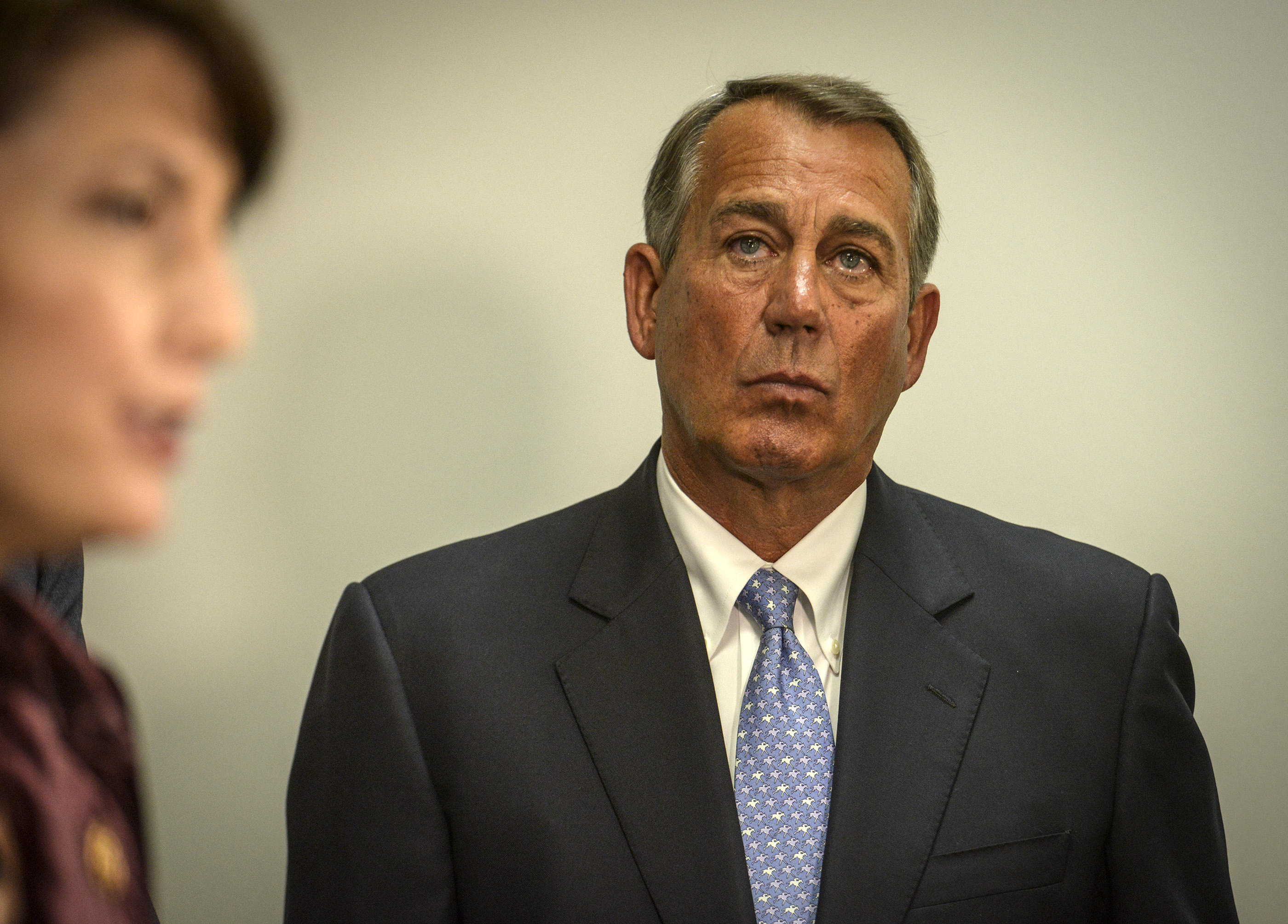
(Photo: Speaker of the House Rep. John Boehner(R-OH) listens to Rep. Cathy McMorris Rodgers(R-WA) make remarks after a meeting on upcoming spending legislation, on December, 02, 2014 in Washington, DC. By Bill O’Leary/The Washington Post via Getty Images)


Giving Machiavelli A Makeover

Kate Havard elaborates on the revisionist case Maurizio Viroli makes in his Redeeming “The Prince”: The Meaning of Machiavelli’s Masterpiece, which portrays the Florentine writer as being concerned mainly with the liberation of Italy. Such a case rests on the claim “that the most important chapter in The Prince is the last, ‘Exhortation to Seize Italy and to Free Her From the Barbarians'”:

This is an audacious claim because the Exhortation is usually regarded as the worst and least dish_Portrait_of_Niccolò_Machiavelliinteresting chapter in the book. For those who love Machiavelli for his cynicism, the fervor, patriotism, and piety in the Exhortation is puzzling. Was Machiavelli forced to include it? Was he merely shilling for a job? Is this some kind of trick? Is somebody being esoteric?

Viroli says no. When a book is as spare and carefully constructed as The Prince, it is unwise to dismiss any of it as superfluous. It’s especially unwise to dismiss its final chapter as meaningless, because, of course, this is the book where Machiavelli advises all men to “look to the end” for ultimate guidance.

“Looking to the end” is the literal translation of what has become the bumper-sticker version of Machiavelli, the assertion that “the ends justify the means.” Looking to the end is not permission to do anything: It demands consideration of the worthiness of the goal. The worthiness of Machiavelli’s goal—Italian liberation—is what redeems the prince, in Viroli’s view, and so he argues that The Prince is not a guidebook for evildoers.

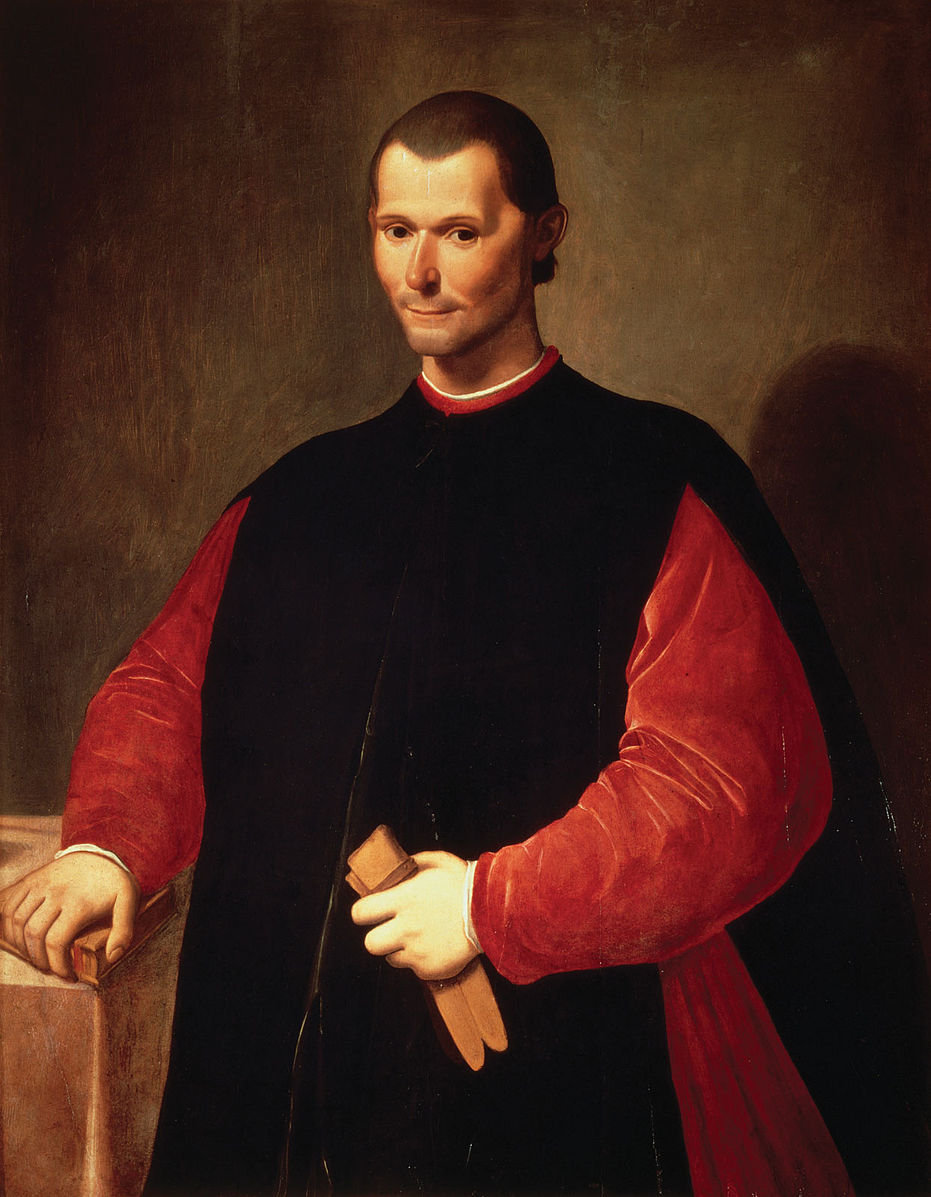
(Portrait of Niccolò Machiavelli, by Santi di Tito, via Wikimedia Commons)