Some dogs need more convincing than others during bath-time:
Why A Shutdown Would Be Political Suicide
Waldman lists a bunch of reasons that the GOP’s plan to pin the shutdown on Obama won’t work:
Republicans are the ones who hate government, and Democrats are the ones who defend it.
This is the heart of it. After so many decades of Republicans saying that government is evil, trying to slash it in a hundred ways, and more recently saying that they don’t think a shutdown would be all that bad, it will be all but impossible for them to convince people that they’re the ones who want government to stay open. Even if it were true (which it isn’t) they wouldn’t be able to convince people of it. They’re the anti-government party. That’s who they are. They worked very hard to create that image. So the universal default assumption is that when there’s a question of who’s responsible for shutting down the government, Republicans are the ones who are doing it, and persuading people that the opposite is true just isn’t going to happen.
A new CNBC poll finds that a plurality oppose defunding Obamacare and a majority oppose shutting down the government to do so. Ed Morrissey digs into the cross tabs:
[W]hile a majority of Republicans support defunding (51/36), a near-majority oppose a government shutdown over the issue (36/48 for shutdown). Independents break even more harshly against both, narrowly opposing defunding (40/44) but coming out almost 5:1 against a government shutdown, 14/65. In fact, the only demographic that favors this strategy, according to CNBC, is the Tea Party demo, which supports a shutdown strategy with a 54% majority.
Learning To Look
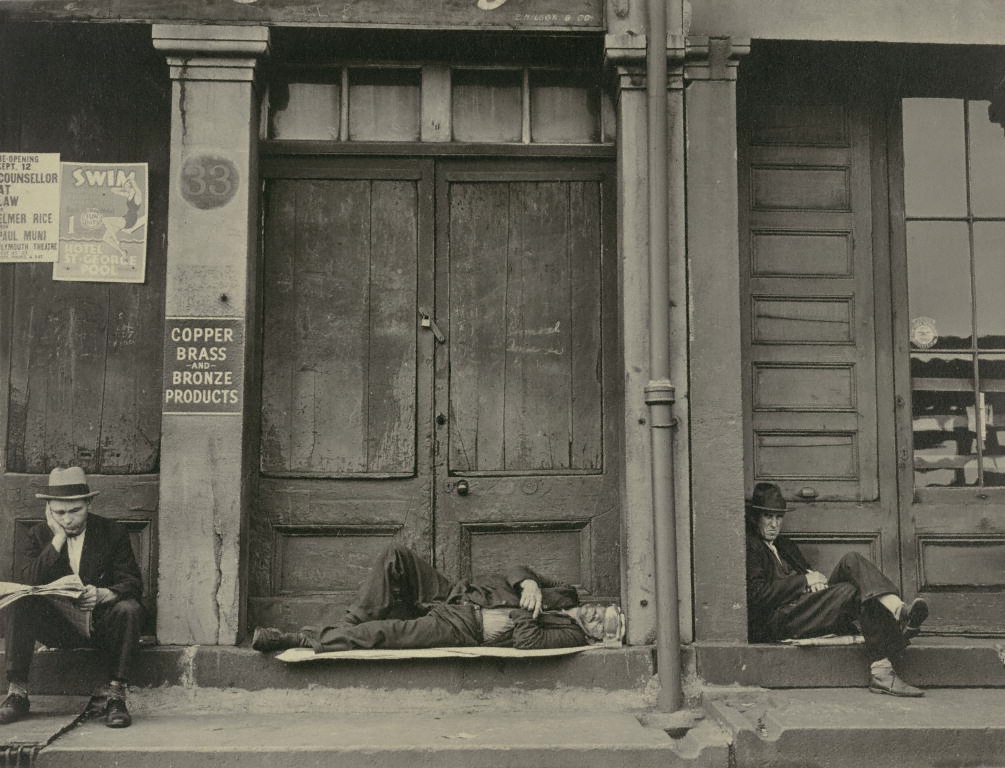
James Polchin reviews “American Photographs,” the Museum of Modern Art’s current exhibition on Walker Evans:
Evans’ vision was shaped in large part by his time in Paris in the late 1920s, where he learned to discard his midwestern prohibitions against sexual and aesthetic pleasures (artists were suspicious figures in the young Evans’ household). But he also learned the pleasures of staring, a behavior his mother held to be deeply impolite. “I remember my first experience as a café sitter in Europe. There is a staring that startles the American,” he related some years later, adding that he gained from that time an ability to “stare and stare at people, shamelessly.” In Paris he perfected his skills at observing that would eventually shape the compositions and framing of his photography. He studied Baudelaire’s ideas about the aesthetic and poetic potential of everyday scenes. He read Flaubert to grasp the melancholic tenor of realism. What Evans learned in Paris was a way of looking from a distance, a voyeurism that was intimate. And this sits at the heart of American Photographs: The pleasure of staring turned into the aura of longing.
(Photo: South Street, New York, 1932, by Walker Evans, courtesy of the Getty Open Content Program)
The Real Peril Of Being In Porn
Heather Smith, who did clerical work in the adult-film industry, quickly realized that performers are under high risk of identity theft:
The Adam Walsh Child Protection Act reporting requirements seem to have done a good job of keeping people under 18 out of the porn industry, but they have done so by compromising the personal information of every person over the age of 18 who has ever worked in porn, or erotic modeling, no matter how briefly. Even as a disaffected contract worker with no background check, I had access to the addresses, Social Security numbers, real names, and unflattering ID photos of every porn actor or actress that I identified. I had this information because the Adam Walsh Child Protection Act demanded that anyone who sold, or resold, pornography, have this information in their records.
As I linked performers to the database, I noticed that a few of them lived not far away from the dot-com office. I could have stopped and knocked on their doors on my way home from work. At the very least, I could have used their information to commit credit card fraud. Very little, [porn actress] Stoya told me, scares her more about her job than these databases: “People ask me if I’m worried about being recognized on the street and attacked by someone in a dark alley. No, I worry about people who are good with computers.”
Face Of The Day

Jesus, I’m so old.
A friend at The New Yorker emailed this to me. He found it poring through the archives. It’s from twenty years’ ago – and I have the original in a closet in DC – signed by Annie Leibovitz. From twink to bear … the cycle of gay.
How Callous Are Today’s Republicans?
In National Review, Henry Olsen admonishes Republicans for voting to cut food stamps:
The conservative war on food stamps is the most baffling political move of the year. Conservatives have suffered for years from the stereotype that they are heartless Scrooge McDucks more concerned with our money than other people’s lives. Yet in this case, conservatives make the taking of food from the mouths of the genuinely hungry a top priority. What gives? And why are conservatives overlooking a far more egregious abuse of taxpayer dollars in the farm bill?
It’s almost as if they want to be seen as the party of hand-outs to the very rich and brutal indifference to the needy poor. Tyler Cowen asks why the GOP is fixated on the program:
It doesn’t make sense to go after food stamps, and you can read the recent GOP push here as a sign of weakness, namely that they, beyond upholding the sequester, are unwilling to tackle the more important and more wasteful targets, including Medicare and also defense spending, not to mention farm subsidies. Here are a few basic numbers on when food stamps have grown and what has driven that growth. It has not become a “problem program” in the way that say disability has.
Krugman pinpoints how true fanatics and ideologues never see context. Context, after all, leads to understanding of why food stamps are still so big a program – and if understanding contradicts ideology, the shrunken GOP mind cannot compute:
So here’s the thing about SNAP: it’s one federal program that really has exploded in size in recent years, with the number of beneficiaries rising around 80 percent. Of course, it’s exploded for a very good reason, namely a once-in-three-generations economic crisis, and the program has stayed large because our so-called recovery hasn’t trickled down to the bottom half of the income distribution. But the right doesn’t care about any of that; in food stamps, it gets to see what it wants to see — surging government spending! Millions of takers! And so food stamps become public enemy #2.
Number 1 is, of course, Obamacare, which really does represent a major expansion of the government’s role.
Dylan Matthews finds that the food stamps vote was extremely partisan:
Democrats in districts with barely any food stamp users (such as Henry Waxman, whose district’s SNAP usage rate is a paltry 1.7 percent) all voted against cut, and Republicans in districts with huge numbers of food stamp users (such as Hal Rogers, 29 percent of whose district’s households are on SNAP) almost all voted for them. It’s yet another indication that House members are becoming less and less motivated by parochial interests of their districts and more and more unified on party lines.
Makeup For Men?
Farhad Manjoo makes the case:
Obviously men should wear makeup. It’s sort of crazy that we don’t, actually. Human beings have
been adorning themselves since forever; evidence of the application of body paint dates back at least 50,000 years and is taken to be one of the first signs of modern human behavior. For nearly all that time, both men and women indulged in cosmetics. As recently as a few hundred years ago, it was common for upper-class men in Britain and France to wear rouge and powder. It was only around the turn of the 19th century that facial adornment for men began to go out of fashion—though at the same time, other cosmetic enhancements for men, especially hair-care products, took off. This makes little logical sense (though, granted, it’s folly to apply logic to fashion trends). If it’s seen as necessary for a modern man to comb and sculpt his hair, why isn’t he expected to make up his face, too?
Update from a reader:
A man should not be able to wear makeup because it would otherwise interfere with his fabulous beard.
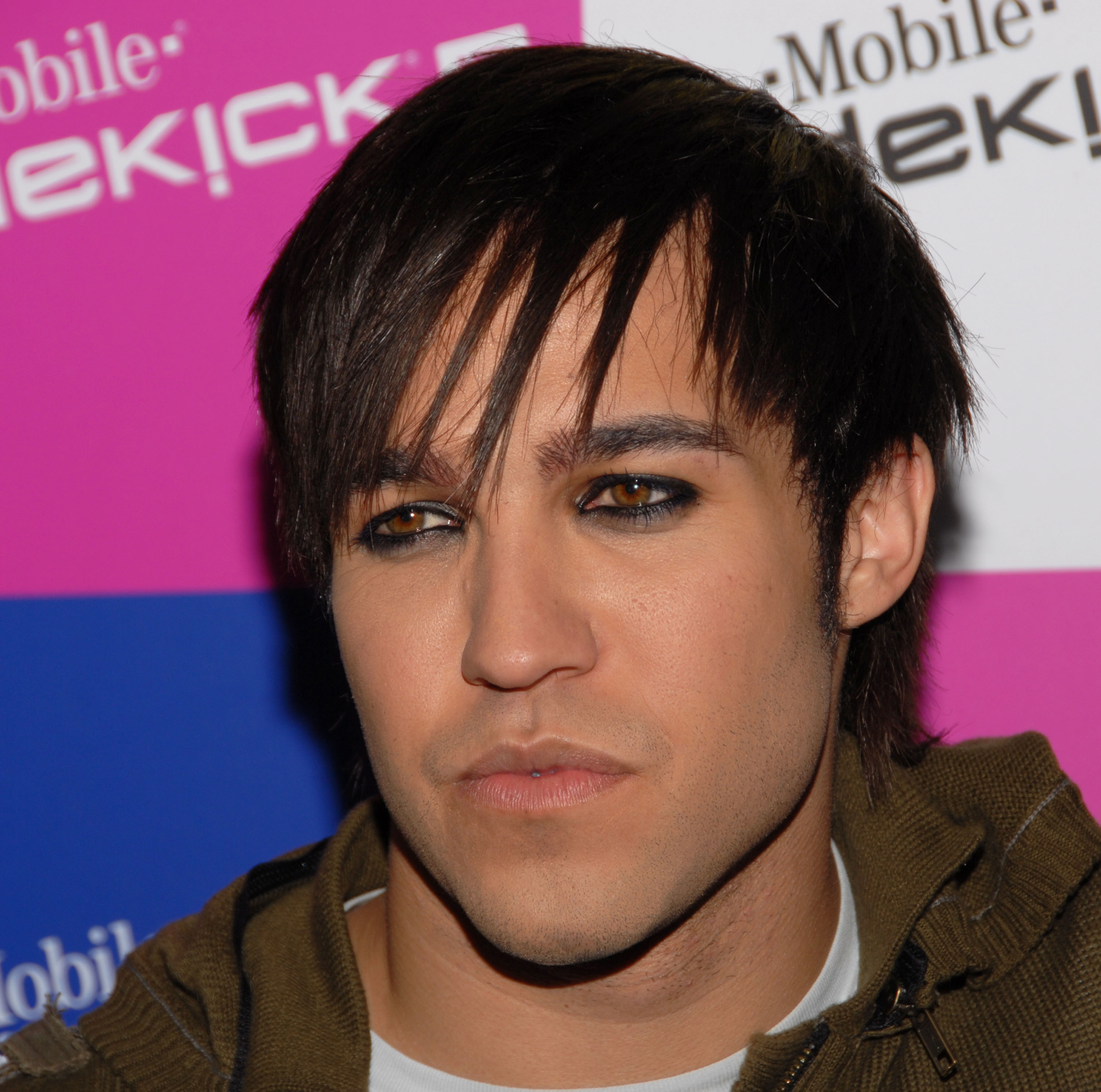
(Photo of Pete Wentz by Mark Sullivan/WireImage via Getty Images)
The Courageous Friends We Are Abandoning
Peter Meijer, an Iraq War veteran, reminds us that the visa program for Iraqis who assisted Americans is about to expire:
If Congress doesn’t act, on October 1 the State Department will dismantle the Special Immigrant Visa (SIV) program for Iraqi refugees. The program was introduced in 2008 as a way to provide special immigration status to some of the tens of thousands of Iraqis who served alongside U.S. forces at great danger to themselves and their families, during our 8 year occupation. Today, 5 years after the original legislation passed, less than a third of the 25,000 allotted visas have been distributed and the charter is set to expire. Will this be just another broken promise to the people of Iraq?
After destroying their country, and achieving nothing but a simmering civil war, it is the very least we should do. Earlier Dish on visas for Iraqis here, here, here, and here.
What The Hell Is Happening In Kenya?

In what was the largest terrorist attack in Kenya since the 1998 bombing of the American embassy, an estimated 10 to 15 militants stormed an upscale Nairobi mall on Saturday, killing at least 60 and injuring more than 175. The dead include an eminent Ghanian poet, a pregnant radio host, a 29-year-old diplomat, and citizens of at least 10 countries. The Kenyan government claimed control over the mall earlier today, but ongoing gunfire has been reported. Ishaan Tharoor provides background on the group that claimed responsibility for the attack via Twitter:
[Al-Shabaab], whose name means the Youth in Arabic, was once the militant youth wing of a coalition of Islamist forces that held sway in parts of Somalia more than half a decade ago. The country has had no real functional central government for over two decades, and the Islamists, for a time, provided a veneer of security and stability despite the harshness of the Shari’a they sought to impose. That control slipped following a series of offensives spearheaded by the African Union, beginning with an Ethiopian-led invasion in 2006. In early 2012, a video emerged of a top leader of al-Shabaab pledging obedience to Ayman al-Zawahiri, al Qaeda’s head. …
Al-Shabaab fighters had launched a number of minor forays across Somalia’s porous southern border with Kenya, kidnapping tourists and aid workers. By 2011, after al-Shabaab impeded humanitarian aid into southern Somalia during a ghastly drought, the Kenyan government had had enough. It launched a sustained military campaign across the border, eventually dislodging al-Shabaab from its stronghold in the Somali port city of Kismayo in 2012, a defeat from which the group has yet to recover.
Shane Harris sees an emboldened al-Shabaab:
The Westgate mall attack marks an audacious return for al-Shabaab, an al-Qaeda linked group that, as recently as last year, U.S. officials claimed was on the run in the face of an American-backed offensive in Africa. More recently, the Obama administration has expanded a secret war against al-Shabaab in Somalia, ramping up assistance to Somali intelligence agencies. The United States also runs training camps for Ugandan peacekeepers who fight al-Shabaab forces, and at a base in Djibouti houses Predator drones, fighter jets, and nearly 2,000 U.S. troops and military civilians.
But Ken Menkhaus believes the opposite:
Many [security experts] warned that Shabaab’s [previous] reluctance to attack soft targets in Kenya (or elsewhere, including in the US) was contingent on the group’s continued success in Somalia. Were the group to weaken and fragment, it would be more likely to consider high-risk terrorism abroad. Paradoxically, a weakened Shabaab is a greater threat outside Somalia than a stronger Shabaab. … The Westgate attack is the latest sign of the group’s weakness. It was a desperate, high-risk gamble by Shabaab to reverse its prospects.
Joshua Keating also points out how gains against the terrorist group in Somalia seem to have made it more dangerous to other countries:
Shabaab has attacked countries that have participated in military operations in Somalia before, most infamously the attack on World Cup spectators that left 74 dead in Kampala, Uganda in 2010. The group has also been blamed for several attacks in Kenya including the bombing of a Nairobi bus station last year and several grenade attacks on churches. Now that the group’s ability to actually control territory is waning, it seems possible that more of its efforts may be devoted to operations like these. Shabaab may start acting more like a transnational terror group than a rebel army fighting to control land.
Simon Tisdale elaborates on the group’s internal divisions:
Westgate … looks like a chilling statement of intent by Ahmed Abdi Godane, the al-Shabaab leader, who consolidated his power in June in an internal coup. … The apparent decision by Godane and fellow hardliners to again take the fight beyond Somalia’s borders looks like a bid to regain the initiative in the face of these setbacks and disagreements. In addition, the group’s occasional bomb attacks in Mogadishu keep the government on the back foot. The recent decision by the charity Médecins Sans Frontières to pull out of Somalia, due to worsening security, is a perverse vindication of such tactics. And Godane doubtless welcomes the negative impact of Barclays Bank’s decision to close accounts used to send remittances to Somalia.
Meanwhile, Patrick Gathara says the attack brought Kenyans together at a time of political and tribal acrimony:
Kenyans have come together in an impressive show of solidarity. The citizenry has literally responded with blood and treasure. When a call went out for blood donors, local hospitals were inundated and some had to turn people away. This morning, long lines of blood donors snaked across the city. Hospitals at one point were running out of blood bags, but not donors, so high was the turn out. An MPESA account set up for the victims has already raised millions of shillings. All over social media, on the streets and on air, the political bitterness of the last seven months seems to have, at least temporarily, abated.
But Paula Kahumbu cautions that the long-term impact remains to be seen:
The president of Kenya, members of his leadership team and the opposition have jointly called on Kenyans for support, and asked the international community not to issue travel advisories – revealing that tourism is the soft spot of greatest concern. Assessing the impact of the attack on tourism and foreign investments will depend very much on the success of the response by security forces. With things still unfolding as I write, it is far too early to analyze the implications, yet amazingly, Kenya feels stronger.
(Photo: An injured man is treated outside the Westgate shopping mall where hostages have been kept for three days on 23 September, 2013 in Nairobi, Kenya. By Ahmet Erkan Yigitsozlu/Anadolu Agency/Getty Images)
The Theocon Panic
The people in the hierarchy and the hard-right of the American Catholic church have put their best face forward after Pope Francis’ categorical rejection of their entire project. So allow me a big bucket of cold history and fact to show just how over they are.
For the last couple of years, their overwhelming theme has been that basic freedom of Catholic conscience has been denied by a small rule in Obamacare that makes public Catholic institutions, like hospitals and colleges that employ non-Catholics, provide contraception if women want it. The Catholic institutions do not pay for it; there’s a work-around. In the face of this and civil marriage for gay couples, the American hierarchy, backed by rightist Catholic entities such as National Review, launched a veritable crusade. Last summer, the Bishops even launched a Fortnight of Freedom, two weeks in which the hierarchy devoted itself almost entirely to the questions of contraception, homosexuality, marriage and abortion in the context of religious liberty. These themes were deafening and clearly designed to affect the presidential election. So let’s recall Francis’ words of last week:
We cannot insist only on issues related to abortion, gay marriage and the use of contraceptive methods… The dogmatic and moral teachings of the church are not all equivalent. The church’s pastoral ministry cannot be obsessed with the transmission of a disjointed multitude of doctrines to be imposed insistently.
In that context, remember something that wounded me more deeply than any other in recent years, when, in 2009, my own then-archdiocese went to rhetorical war against gay people, using the homeless and sick as pawns:
The Catholic Archdiocese of Washington said Wednesday that it will be unable to continue the social service programs it runs for the District if the city doesn’t change a proposed same-sex marriage law, a threat that could affect tens of thousands of people the church helps with adoption, homelessness and health care.
In the end, the archdiocese, mercifully, relented. But do you not hear the fresh relevance of Francis’ words:
The church sometimes has locked itself up in small things, in small-minded rules?
One of those whose writings have been almost obsessed with abortion, gay marriage and contraception is Kathryn-Jean Lopez. She’s still spinning as if nothing just happened:
As for [Pope Francis], Church teaching on sexual morality is about fruitfulness and surrender. That won’t be understood if catechetical fundamentals aren’t — and none of it will make any sense if Christ’s love isn’t encountered.
But that latter point got lost, did it not, in the recent past as an authoritarian Pope demanded “catechetical fundamentals” on everything all the time, often with more dictatorial fear than Christ’s love. Nothing better illustrated this in recent years than Benedict’s disciplining of America’s off-message nuns – even as orthodox child-rapist priests were routinely allowed to retire in peace. The final report on the nuns was as brutal as it was insensitively delivered:
The assessment accused the sisters of “corporate dissent” on homosexuality and failure to speak out on abortion.
The assessment also castigated LCWR for ties to NETWORK, a Washington-based Catholic lobbying group that supported the Affordable Care Act … Leaving the Holy Office, Franciscan Sister Pat Farrell felt numb. “It was in the press before we had time to brief our members,” she recalled.
Let us again recall Francis’ words. Here he addresses the role of nuns and monks in religious orders and the need for them to speak their conscience, even if they ruffle papal feathers:
In the church, the religious are called to be prophets in particular by demonstrating how Jesus lived on this earth, and to proclaim how the kingdom of God will be in its perfection. A religious must never give up prophecy…Let us think about what so many great saints, monks and religious men and women have done, from St. Anthony the Abbot onward. Being prophets may sometimes imply making waves. I do not know how to put it…. Prophecy makes noise, uproar, some say ‘a mess.’ But in reality, the charism of religious people is like yeast: prophecy announces the spirit of the Gospel.”
And yet Benedict attacked this very charism in favor of top-down papal control of every minute doctrinal issue. On this, how can the theocons ignore the following:
If the Christian is a restorationist, a legalist, if he wants everything clear and safe, then he will find nothing.
To whom do they think the Pope was referring? Who else if not them? Or do they have alternative suggestions?
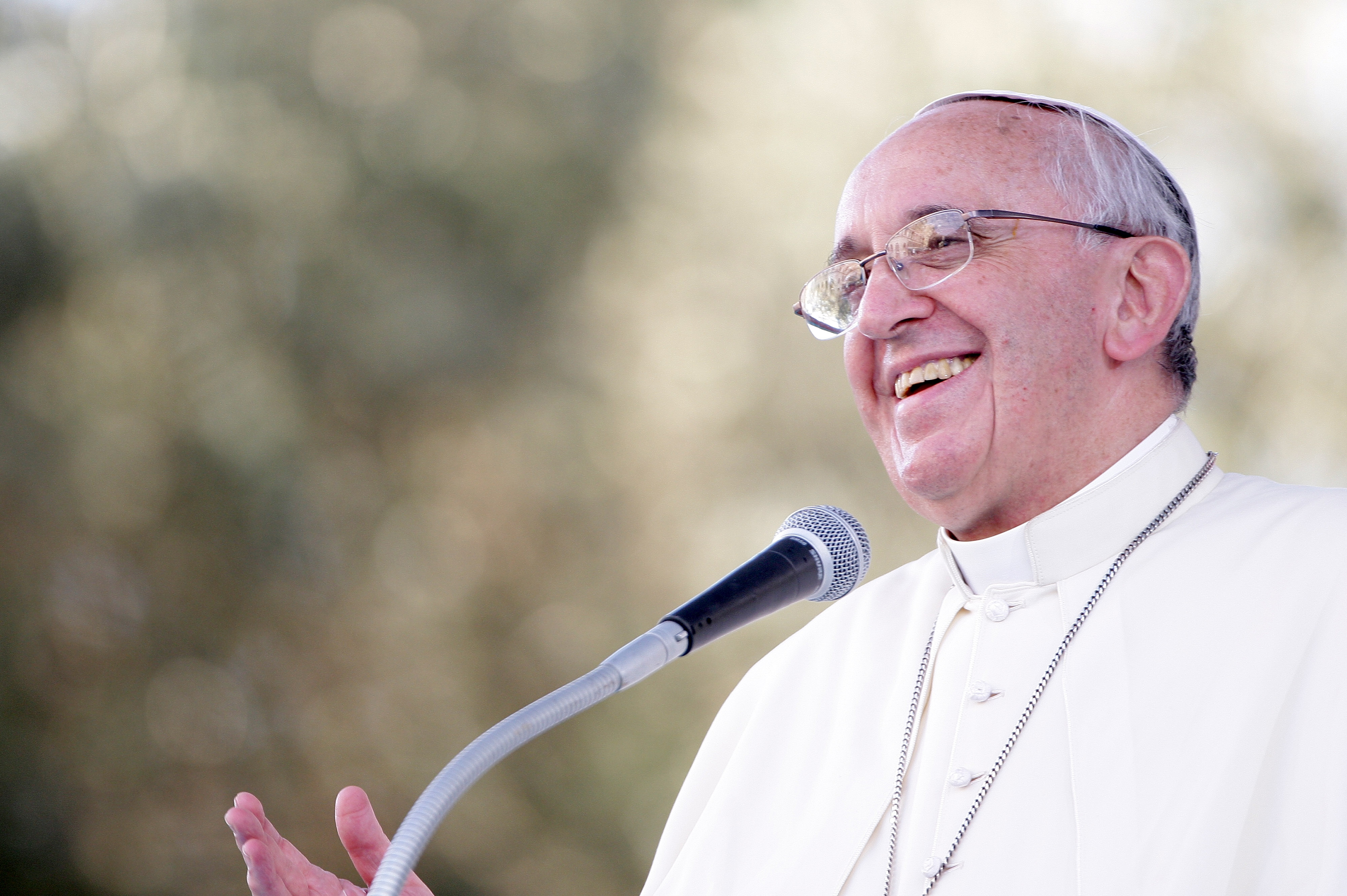
(Photo: Pope Francis delivers his speech during a meeting with young people on September 22, 2013 in Cagliari, Italy. By Franco Origlia/Getty Images.)

