What Does The Russian Solution Solve?

Keating pushes back on the idea that the Russian solution is actually a solution. He claims that “the United States will almost certainly be drawn in again”:

Putting aside the potential difficulty of verifying Syrian compliance with the plan and rounding up dangerous chemicals in the middle of a war zone, how is the credibility of the United States, its allies, and the United Nations—considered so important to maintain in the run-up to a possible airstrike—going to be tested if we’re actively turning a blind eye to atrocities committed with conventional weapons while an ongoing international effort, which would presumably require some international “boots on the ground,” is underway to take away the weapons responsible for fewer than 1 percent of the casualties in this war?

Ambers was unimpressed with how the Russian deal came about:

Recognizing the perceived and actual limits of U.S. power, hard and soft, Obama has always wanted regional powers to take more responsibility for moral calamities in their area of influence. With Syria, I think he made a mistake. It is in many ways the perfect test case for this new form of interest-balancing. Instead, Obama fell back upon old arguments. … It’s kind of embarrassing, and politically, probably terribly damaging, for the Obama administration to have fallen back and blundered into the solution its actual foreign policy would have recommended, but it may hasten the discussions that lead to the beginning of the end of the Syrian crisis. The U.S. will have to lead not from behind, but from somewhere way outside of the negotiating room.

And Juan Cole argues that the Russian proposal makes a political solution in Syria more likely:

Without a US or Western bombing campaign, the Syrian regime is likely just strong enough to hold on for years. The rebels’ advance of last spring has stalled and in some places been reversed. Some sort of negotiation now seems likely. While in my view the two sides are not yet desperate or exhausted enough to make that sort of agreement the Lebanese acquiesced in at Taif in 1989, they may be able to take small steps toward that eventual outcome, which increasingly seems the most plausible one.

A Phone That Reads Your Fingerprint

Kyle VanHemert wonders if the new iPhone’s fingerprint sensing technology, called Touch ID, could be transformative. He speculates that “the tiny new finger-sensing home button could be the biggest, smallest step we’ve seen towards a future where we’re buying stuff with our phones, not our wallets”:

Touch ID has farther reaching implications than simply letting you walk out of Walgreens without stopping at the register. Right now, we’re at a delicate locus where privacy is a greater concern than ever and where our digital selves are fragmented across countless platforms, apps and services. The catch, though, is that the next generation of interactive, digital experiences could well depend on some sort of unified personal profile–a more portable digital identity, including your preferences, your apps, your content, your settings and the rest, that could be brought from device to device. The fingerprint could be the key to all that.

It doesn’t solve issues of privacy and security out of the gate–not by a long shot. Armchair critics responded to the news of the iPhone 5S sensor with a common refrain: one more thing for the NSA to collect. Still, though, the fingerprint is a psychologically powerful mode of authentication. As we’ve seen, our usernames and passwords are simple puzzles to be cracked; the rise of sophisticated phishing makes them as insecure as ever. Two-step authentication remains a slightly mystifying pain in the ass. A thumbprint is essential, and elemental. It’s convenient and, at least in theory, uncrackable.

The Card Obama Didn’t Play

Fisher was impressed with Obama’s honesty about Syria not posing a real threat to the US:

There are few more reliable ways to sell Americans on military action than to tell them that they’re in danger. That’s not a dig on Americans; people of all nationalities are naturally self-interested. Perhaps that was a lesson Obama learned in the Iraq War cheneymandelnganafpgetty.jpgdebacle, when the Bush administration’s over-sell of Iraq’s alleged threat made the public easier to convince but also badly distorted the debate in ways that still impact U.S. credibility. It’s still much easier to argue that the United States has to fight the enemy abroad so it doesn’t have to defend against them at home. And, almost 12 years to the day after September 11, 2001, it would have been awfully convenient for Obama to tell Americans that strikes are necessary to prevent terrorism.

But Obama didn’t say any of that, even though the political consequences of threat-inflation have proven low in American politics and the tactic often seems to work. Obama himself has not been afraid to refer to direct threats to national security when defending, for example, drone strikes and NSA surveillance. But in making the case for Syria, not only did he mostly demur from following that time-worn path, he actually — amazingly — went out of his way to argue that Syria is not an immediate national security threat to the United States or even Israel.

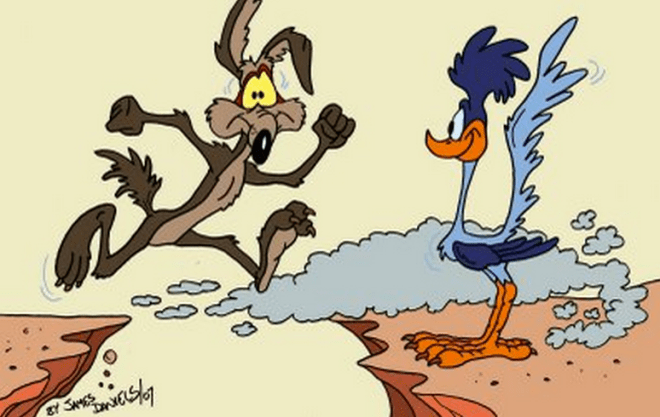
And so the Bush-Cheney syndrome evaporates a little bit more. Meep meep.

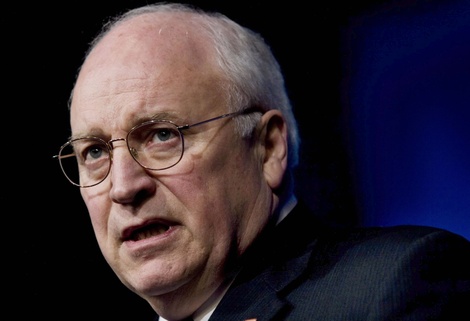
(Photo: war criminal Dick Cheney, by Mandel Ngan/AFP/Getty.)

“George Kennan Would Have Wept”

Greg Djerejian’s rhetoric gets ahead of him a little in his latest post on Obama’s Syria policy. He’s far, far too caustic about the extremely difficult choices Obama had to confront in the past few months and too breezily dismissive of the breach of the chemical weapons taboo. But he also argues, persuasively to me, that the precipitous decision to announce a strike against Syria was a function of Rice and Power et al recklessly over-playing their hand, without any serious understanding of what the Iraq War had done to US power in the Middle East or the dangers of an open-ended intervention as envisaged in the first proposed resolution for authorization of force in Syria. Money quote:

While the UN Ambassador was busily breezily querying the basic cornerstone underpinnings of the post WWII security architecture (e.g. the role of the UN Security Council, which like it or not, if wholly shunted aside without replacement international infrastructure, could eventually lead to far greater perils than any single CW attack), such myopically fanatical R2P adherents apparently did not engage in the merest bit of navel-gazing amidst the festival of frenzied outrage. Post-Iraq, was ‘high confidence’ good enough to launch a war, rather than confirmation? Why were the fatality counts in Ghouta so wildly different among different intelligence services? And why this “absurdly over-precise number” (CSIS Analyst Anthony Cordesman’s words) tally of 1429 dead? All this speaks to basic credibility, and one could be forgiven for being truly astounded that the Administration did not better realize how much higher the burden of proof needed to be post the Mesopotamian morass.

Agreed. But what matters is that Obama re-grouped and re-thought and the result is about as good as we could have hoped for. I’ll tackle more of the meep-meep question – especially about the decision to go to the Congress – soon.

This Was Roger Ailes’ Idea!

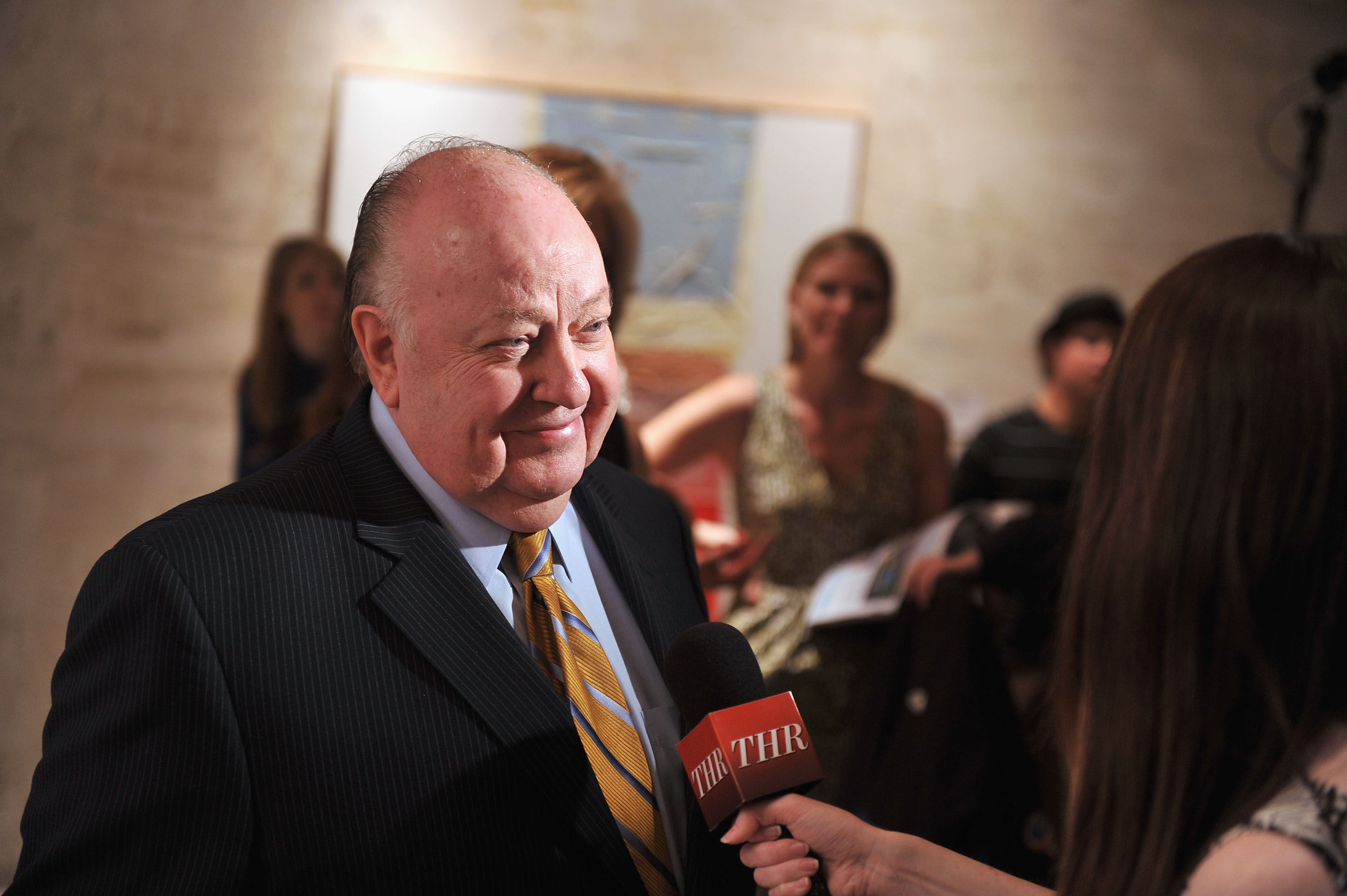
The Hollywood Reporter Celebrates "The 35 Most Powerful People In Media" - Arrivals

It will be fun – well, that might be going a bit far – to watch the usual partisan hacks on Fox attack Obama for his acceptance of the Putin offer in the next few days. Fun because the end-result is exactly what Roger Ailes proposed to solve the Syria problem over a year ago. McKay Coppins dug up the quote from Zev Chafets’ biography of Ailes from last year. Check this money quote out:

“Putin is angry. He thinks the United States doesn’t take him seriously or treat Russia as a major player. Okay, fine, that’s how he feels. If I were president, I’d get in a room with him and say, ‘Look at the slaughter going on in Syria. You can stop it. Do it, and I’ll see to it that you can get all the credit. I’ll tell the world it was you who saved the innocent children of Syria from slaughter. You’ll be an international hero. You’ll go down in history.’

Hell, Putin would go to bed thinking, ‘That’s not a bad offer.’ There will still be plenty of other issues I’d have with Russia. But instead of looking for one huge deal that settles everything, you take a piece of the problem and solve it. Give an incentive for good behavior. Show the other guy his self-interest. Everybody has an ego. Everybody needs dignity. And what does it cost? You get what you want; you give up nothing.”

And in the end, Obama did one better. He both explored this option for a year with Putin but got nowhere until he acted outside the box. At that point, Putin could genuinely feel as if the credit were his. As for empowering Russia in the Middle East?

What does it cost? You get what you want; you give up nothing.

(Photo: Roger Ailes, President of Fox News Channel attends the Hollywood Reporter celebration of ‘The 35 Most Powerful People in Media’ at the Four Season Grill Room on April 11, 2012 in New York City. By Stephen Lovekin/Getty Images.)

Reexamining The Murder Of Matthew Shepard

Stephen Jimenez’s upcoming book, The Book Of Matt: Hidden Truths About the Murder of Matthew Shepard, is the result of more than a decade of research into the truth behind Shepard’s brutal 1998 murder in Laramie, Wyoming. We recently had the opportunity to sit down with Steve and discuss his book. In our first video, he explains how he first became involved with the story and why he thinks it’s taken so long for the truth to come out:

This embed is invalid


Here’s what Kirkus had to say about The Book Of Matt, which comes out September 24 (pre-order here):

An award-winning journalist uncovers the suppressed story behind the death of Matthew Shepard, the gay University of Wyoming student whose 1998 murder rocked the nation. Jimenez was a media “Johnny-come-lately” when he arrived in Laramie in 2000 to begin work on the Shepard story. His fascination with the intricate web of secrets surrounding Shepard’s murder and eventual elevation to the status of homosexual martyr developed into a 13-year investigative obsession. The tragedy was “enshrined…as passion play and folktale, but hardly ever for the truth of what it was”: the story of a troubled young man who had died because he had been involved with Laramie’s drug underworld rather than because he was gay.

Drawing on both in-depth research and exhaustive interviews with more than 100 individuals around the United States, Jimenez meticulously re-examines both old and new information about the murder and those involved with it. Everyone had something to hide. For Aaron McKinney, one of the two men convicted of Shepard’s murder, it was the fact that he was Shepard’s part-time bisexual lover and fellow drug dealer. For Shepard, it was that he was an HIV-positive substance abuser with a fondness for crystal meth and history of sexual trauma. Even the city of Laramie had its share of dark secrets that included murky entanglements involving law enforcement officials and the Laramie drug world.

So when McKinney and his accomplices claimed that it had been unwanted sexual advances that had driven him to brutalize Shepard, investigators, journalists and even lawyers involved in the murder trial seized upon the story as an example of hate crime at its most heinous. As Jimenez deconstructs an event that has since passed into the realm of mythology, he humanizes it. The result is a book that is fearless, frank and compelling. Investigative journalism at its relentless and compassionate best.

Our full Ask Anything archive is here.

Flirting With Polarization, Ctd

Max Ehrenfreund sees no reason to restrict one’s dating pool to a single political party, noting that 2013 has been the year of strange bedfellows:

The House vote on the Amash-Conyers Amendment showed that party affiliation has little to do with support for the National Security Agency or its activities. More Republicans believe gays and lesbians should be allowed to marry. If someone tells you she’s a Democrat, you know very little about what she thinks federal fiscal policy should be. Maybe she agrees with President Obama’s attempts to reduce spending while increasing taxes, or maybe she reads Paul Krugman. On the question of whether the United States should intervene in Syria, Republicans and Democrats seem more or less united in opposition. (But I’m done writing about Syria.)

Party affiliation has not been a reliable indicator of a person’s views on any of the most important problems confronting our society this year. … For the past few months, these changes have made politics fascinatingly unpredictable. They also mean that if a person is searching for a romantic partner, online or at the club, neither stated party affiliation or any other trait will probably tell her what a potential love interest believes about several important issues. The consequence is more disagreement, more awkwardness, and, best of all, a more resilient democracy.

Previous Dish on the subject here and here.

Another Meep-Meep Moment?

Screen Shot 2013-09-11 at 4.47.16 AM

A reader writes:

You and Charles Pierce both seem to have done a 180 on the Syria question, and neither of you seems to have explicitly admitted it.  You’ve gone from slamming Obama for being imperial, idealistic, bloodthirsty, foolhardy – and God knows what else – to praising him for his subtlety, nuance, willingness to listen, and so on. Which, fine. But maybe somewhere along the way, you could just throw in a bit of an acknowledgment along the lines of: “Oops, I jumped the gun on this one; I overreacted, got hysterical, and now I see the President doing his characteristic thing – seeing the big picture when others did not.”

I don’t think I’ve done a 180. I remain opposed to any military intervention that could be seen as a way to alter the outcome of the Syrian civil war. I remain of the belief that the Congress should have the final say on any war, large or unbelievably small. Where I have shifted – and this may be a function of being off-grid when this atrocity occurred – is a greater awareness of and concern about the breach of the international norm with respect to chemical weapons. I have acknowledged this shift – here. Money quote:

I have to say I found myself shifting a little – not a lot, but a little – after reading the transcript of the president’s press conference at the end of the G20 Summit.

A better grasp and appreciation of the entire history in this area also affected me. And as this has all shaken out, I see a way to reconcile all these apparently conflicting goals in Russia’s and Syria’s public acknowledgment of the chemical weapons stash and apparent willingness to sign up to the Chemical Weapon Convention. This may turn out to be illusory, or too difficult to accomplish, or some kind of ruse to keep Assad in power for a while longer, but no president would turn such an offer down. If only such an offer had been possible in Iraq in 2003. Another reader wonders if we are “finally hearing the meep meep”:

I’m so glad you have calmed down about Obama on Syria. He is on the verge of accomplishing, without firing a shot, what Bush launched an invasion to do.  Congress is going to get him out of bombing Syria, and yet Obama is going to be able to point to the Republicans and call them the ones who blinked as a dictator massacred his people.  He is re-establishing the precedent that going to war requires congressional approval. He will have enhanced internationalism.

Republicans are loving this right now because they think Obama looks incompetent. They are blindly stumbling into an outcome that gives Obama everything he has ever said he wants, ever. And they’re not going to realize it until it’s too late. It’s such a perfect outcome, how could this have not been planned? Is Obama on the verge of pulling off the greatest rope-a-dope in the history of US politics?

Another isn’t buying it:

Your reaction to Obama’s address last night sounds suspiciously like you’re getting ready to declare another “meep, meep!” victory for Obama’s long-view, chess playing strategy:

Will Assad be more likely to surrender his chemical weapons if the US attacks or if Russia insists on their destruction? Please. It isn’t close.

As if Obama planned on this all along!  Putin may very well have just pulled Obama’s chestnuts out of the fire, while saving Assad and further ensconcing Russia as Syria’s and Iran’s protector (assuming, of course, that Syria indeed does hand over those weapons and this transfer can be verified). So Russia might have just saved Obama from himself. His policy and performance in regard to Syria has been jaw-droppingly amateurish, beginning with his drawing of “red lines” a year ago that he had no will to enforce, and the absurdly thin arguments he has advanced for military action, contradictory goals, general incoherence and flailing of these past weeks.

Even if this all works out in the end, this has not been Obama’s finest hour. Even admirers of Obama like myself must admit this. He was more than willing to get us into another stupid fucking war until the American people rejected it and the Russians intervened.

Has it occurred to my reader that it was necessary to actually risk another war to get the diplomatic solution we now have? Obama had to make that proposal credible and serious for it to work. Yes, it was a huge risk. Yes, it places a premium on restricting WMDs that may be too ambitious. But it may have paid off. And in the end, a president needs to be judged on results, not news cycles. And those alleging incoherence have not acknowledged that diplomacy – always Obama’s first preference with respect to Syria – sometimes requires a deadly serious intent to do something you don’t really want to do. It requires some level of nerve-wracking bluff. Bluff is not incoherence, although it sure can be risky. And a president who can live with that risk is a president with some cast-iron balls. And that’s why the view that this has revealed weakness in Obama seems completely wrong to me. It has revealed steel.

And you don’t have to argue that Obama is some kind of Jedi warrior who saw all this from the start (a silly idea) to see that he was able to pivot, shift, test, improvise and flush out new options in a horrible situation as the crisis careened from one moment to another. This is what leadership can be – and you saw a very similar set of patterns in Eisenhower’s administration, and even, as Michael Dobbs noted today, in John F Kennedy’s haphazard, contradictory, and risky maneuvers in the Cuba missile crisis. Eisenhower was ridiculed, and regarded as an idiot from day to day in Washington. Can you imagine what the neocons today would say if a president cut off a war as Eisenhower did in Korea? He’d be Carterized immediately. And Eisenhower was indeed regarded as out of his depth by the hard right, if not an active Communist appeaser. But he endures as one of the greatest foreign policy presidents of the last century.

Another reader ladles on the scorn:

Assad and the Russians have no intention of agreeing in a meaningful and substantive way to giving up all these weapons and allowing a verifiable implementation of any agreement.  They are going to make us a laughing stock by delay, denial, and obfuscation.  On the other hand, it does give President Obama a little face-saving in the short run from the big mess he let himself get into. There are no good alternatives in this morass, but I think this might be the least worst alternative.

But again: why is the US on the hook for this? Russia has said this is what it wants; so, staggeringly, has Syria. They are the ones now on the hook. And the key objective is to stop future chemical attacks by Assad and to minimize the dangers of those weapons being dispersed or in the hands of Sunni Jihadist terrorists. Isn’t that far more likely now than, say, a week ago? Mission advanced. Another pivots back to domestic politics:

I hope that Assad can be made to back down. But in a way, the best thing that could happen at home would be for the Republicans to vote down the use of power.

It would inoculate Democrats for a generation against going to war: “The Republicans voted against punishing Syria, which was a threat to Israel, why should we support this next war?” Who would have predicted that in a long interview on NPR, Republican Tom Cole would have said that Assad’s use of chemical weapons did not result in any direct security threat to America or its allies.  Democrats will be able to play back that interview for years: “Syria, Israel’s most hostile neighbor, deployed chemical weapons and the Republicans voted against any use of force.” Meep meep?

Another adds:

Seems to me that AIPAC and the Israeli government are still pushing for a strike, latest developments be damned. If, as it appears likely, the US Congress either votes down the authorization to strike, or doesn’t bring it to a vote, it’d be the first Congressional rebuke of AIPAC that I can remember. Does your crack staff know the last time that happened?

Another awesome development. Another reader references Kerry’s historic gaffe:

Just a funny thought: remember another time that an Obama surrogate went out in public and accidentally blurted out a major shift in policy that immediately set in motion a process no one expected would start, and is at this point now a reality? Marriage equality?

Another points to another major achievement that many, including me, thought would never come:

I’m with you on Syria. I don’t think Obama gives two shits how he gets there; he’s just concerned with the final destination.  Does anyone remember all the ups and downs and sausage-making over the ACA? Nope. They just know it’s Obamacare.

The way I see it, we have a president confident enough and secure enough in his authority to let others take the credit, to let the Russians lead.  Because in the end, who cares how we get there? What matters is that the weapons are gone.

But of course the Washington class will frame this as a huge loss for the president, because.  Can you imagine George W. Bush or Dick Cheney taking this route?  Not a chance.  They would’ve bombed the shit out of Syria just to show they could.

The current solution doesn’t have the drama of dropping bombs or sending sorties over Damascus, so Obama comes off as a bit of a dull president.  And in this case, that’s fantastic, because he’s getting shit done.  He always does.

Meep meep.
Lies Your Memory Tells You

Psychology researcher Elizabeth Loftus explains how easy it is to implant false memories in unwitting subjects:

We gather a whole bunch of data from you, about your personality, thoughts about different foods, all kinds of things. Later, we hand you this computerized profile, which reveals certain things that probably happened when you were a child. In the middle of the list is, say, that you got sick eating strawberry ice cream. We give you false feedback about your data, and then encourage you to elaborate and imagine. Later we ascertain whether you have a belief that it happened to you. Then we offer you a choice from all these different foods. In that example we found that participants didn’t want strawberry ice cream as much. … We did a similar kind of false-feedback study with vodka. If we make people believe that before the age of 16 they got sick drinking vodka, they don’t want to drink as much vodka.

See another Loftus test demonstrated above.