The Origin Of “Meh”

Ben Zimmer provides some etymology:

The British poet W.H. Auden didn’t think much of the first lunar landing, and he wrote a poem about it.

Worth going to see? I can well believe it.
Worth seeing? Mneh! I once rode through a desert
and was not charmed: give me a watered
lively garden, remote from blatherers

Auden’s mneh sounds like [humorist Leo] Rosten’s mnyeh, but Auden was no Rosten, to say the least. Still, since he was living in New York in 1969, we can imagine him hearing the Yiddish-style expression of apathy and finding it an appropriate vehicle for his lack of interest in the exploits of Armstrong and Aldrin. I found a 1973 collegiate poetry journal on Google Books, which had this to say: “Stanza six offers a new word to our word-hoard: the exclamatory Mneh! A pseudo-borrowing from Mad magazine?” Auden reading Mad in New York is an enticing image, of course. But I don’t think he picked up the expression that way, despite the fact that founding editor Harvey Kurtzman gave the magazine a Yiddish spin.

Pynchon In Profile, Ctd

Penguin has released a trailer for Thomas Pynchon’s forthcoming novel, Bleeding Edge:

This embed is invalid


Margaret Eby captions the video, calling it “bizarre” and “entertaining”:

On Tuesday, The Penguin Press released a five minute video clip that features a young, schlubby dude sporting novelty sunglasses and a t-shirt that reads “Hi, I’m Tom Pynchon” explaining the mores and manners of the Upper West Side. “Listen, I mean, they call me the king of the Upper West Side,” the Pynchonian figure says, surveying the Manhattan skyline. “I mean, I kind of see myself more as an all-seeing eye. A power player from the margins. Kind of like Karl Rove, if Karl Rove were liberal and Jewish. Just ask my doorman.”

Alexander Nazaryan adds:

Penguin Press has released a trailer as strange and intriguing as the book it purportedly promotes, with an actor traipsing around the same “Yupper” West Side where Pynchon lives and his latest fiction is set. In fact, Bleeding Edge isn’t even mentioned until the actor on screen calls Maxine “a grade A MILF.”

Biblioklept’s take:

I don’t know, I’m guessing this is intentionally awful. I mean, book trailers are supposed to be awful, right?

Recent Dish on the elusive novelist here.

Heroism 101

Phillip Zimbardo – originator of the Stanford Prison experiment – now focuses his research on ways to “train” people to avoid unethical conformity:

According to a principle known as the bystander effect, for instance, we’re less apt to help someone in need if there are others standing around; we may not feel as compelled to act if we think another person will step in. The hero project’s curriculum teaches students to use a mental “pause button” so that they can avoid falling prey to automatic assumptions (“Someone else will take care of it”) and choose a more thoughtful response instead.

Similarly, instructors warn students how easy it is to slide into conforming with what others are doing—even if it’s something unethical like bullying a fellow student—and emphasize the importance of standing alone when necessary. In addition to learning how to overcome tendencies that may hold them back from helping, heroes-in-training get to flex their selflessness muscles by brainstorming social change strategies (helping fellow students struggling with math, say) and testing them out in the real world.

It’s still too soon for a long-term verdict on the curriculum, but early assessments indicate hero project’s approach is one to watch. In pilot programs at high schools in California’s Bay Area, kids who’d taken a hero course showed an enhanced understanding of concepts like the bystander effect and the ways people defer to authority, and they reported being more reflective and compassionate after taking the course.

Six Degrees Of Francis Bacon

Screen Shot 2013-09-09 at 11.14.04

The Economist spotlights “Kindred Britain,” a site that traces ancestral connections between famous Brits and allows users to “uncover interrelationships that even the historical personages themselves probably never knew”:

[U]nlike in other attempts to map relationships, Kindred Britain doesn’t flinch from the messiness of the real world. Bigamists, same-sex marriages and illegitimate children are included. Thus the site traces connections that were previously obscure. And by pouring resources into the presentation of the information over the web, “digital humanities” projects such as this makes academic research far more accessible and publicly-available than before.

And so David Hume, an eighteenth century Scottish philosopher, is distantly connected with Charles Darwin, the founding father of evolutionary theory. Novelists across the centuries are linked by marriages between their descendants: Jane Austen, who never married or had any children, is linked to both Charles Dickens and Virginia Woolf. Poets, in contrast, are more likely to be related to one another.

When Revolutions Collide

Jenna Krajeski chronicles the plight of Syrian refugees who took shelter in Egypt, only to end up as targets of the military junta after the coup:

In June, Morsi delivered a speech in favor of the Syrian opposition. Standing dramatically in front of a large Syrian flag, he vowed to cut diplomatic ties with Bashar al-Assad’s regime. The gesture, meant to garner Egyptian support for the Syrian opposition—and for the embattled Morsi—backfired. Syrians were now seen as aligned with the Brotherhood. And when Morsi fell and the Brotherhood was declared terrorists, Syrians became terrorists, too—enemies of the state to which they had fled. … I was told of Egyptian security forces swarming 6th of October and arresting Syrians inside their homes. According to Edward Leposky of the United Nations High Commissioner for Refugees, out of a hundred and forty-three arrested, fifty-eight have been deported, thirty-two released, and fifty-three remain in detention. Worst of all, the camaraderie Egyptians had shown toward Syrians—a solidarity cemented by the shared goals of the Arab Spring—seemed to have vanished overnight.

Why Won’t Vegetarians Eat Fake Meat? Ctd

A reminder of where real meat comes from:

This embed is invalid


A reader answers the above question:

But they do! Have you ever wandered into a vegan health food store and seen tofu cut and colored to look like grilled chicken, or veggie patties made to look (and taste) like hamburgers?

Another quotes the previous post:

“In a poll run on the website of the Vegetarian Society, nearly four in five said they would not eat IVM [in vitro meat], while fewer than 7 per cent said they would.” In a related story, nearly 999 out of a 1000 vegetarians never heard of the Vegetarian Society.  Seriously, polling the holy rollers of vegetarians says nothing about what the vast majority of vegetarians (myself included) would do.  Most of the vegetarians I know (including myself) have “fallen off the wagon” one or more times for various reasons.  I had a couple of female former vegetarians tell me they weren’t feeling all that well and their bodies just “told” them to eat meat.  Assuming IVM has the taste and nutrition of “real” meat, I would imagine first, the ranks of vegetarians would significantly increase, and second, that while a majority of current vegetarians may not use the IVM option, I’m betting a lot more than 7% will.

A few who won’t:

I’m 45 and I’ve been a vegetarian for almost 20 years. Although I like animals and believe they should be treated with dignity, that’s not my primary motivation for being vegetarian. I just don’t like to eat meat. There’s something about it that I find repulsive.

I’m regularly confronted by people who hear that I’m vegetarian and project all sorts of political significance on it. The most belligerent ones want to believe that I’m in PETA and spend my time throwing paint on women in fur coats. It really seems to get their goat that I don’t want to eat a steak, even if it’s “free range,” “grass-feed,” 100% organic, locavore’s delight. Oh, and then the inevitable question: “Don’t you crave it? What about bacon?”  It’s like I’m being chased around by that character in “Green Eggs and Ham.” Do you like it in a house?

For the majority of vegetarians whom I have met (and we’re NOT in a club or anything), the answer is no, I don’t crave bacon. That’s like asking a person who doesn’t like olives, “Don’t you just want one?” Or someone who doesn’t smoke: “How can you restrain yourself? Everyone loves the taste of a Marlboro.”

And really – synthetic meat? Are you serious? That sounds even worse than real meat. I almost barfed just thinking about it!

Another:

I’ve been a vegetarian for about 15 years now, and am mostly vegan. I can say with 99% certainty that my vegetarianism has to do with animal welfare and suffering and environmental concerns.

I shit you not, this is what I wrote to my wife a few hours ago, in an email planning our family’s dinners for the upcoming week: “I also think we should try to make some sort of fish thing once a week [for the wife and kids]… I wish I could make myself eat fish, but I just don’t really think I can.” I think fish is good and healthy. It’s great (aside from environmental concerns). But I don’t want it bad enough to say “ha ha, sucker, I want to taste your flesh so badly that you have to die!”

So would I be first in line to eat some IVM-produced fried chicken? Probably not. Why? It’s not because my actions don’t align with my professed values; it’s just that I haven’t eaten it in so long, the desire for it is just long gone. But just because I’m not all that interested in buying it, doesn’t mean I don’t think IVM is not an awesome development.

Another:

I’ve been a vegetarian since 1979. I became a vegetarian solely for ethical reasons. If fake meat were being marketed today, I would probably force myself to use it, to insure that the producers found it profitable to produce, but I wouldn’t really want to. For the first few years of being vegetarian I still lusted after meat, but after five years or so I no longer perceived meat as food and didn’t find it attractive. A friend of mine, who is 25 years sober through AA, has told me that he went through the same process with alcohol.

One more vegetarian:

If it is clear to me that my eating lab-grown meat would reduce animal suffering, then I would absolutely do it – I’m sure I’d get used to it fast enough. But I think the money I would spend on the product would do less to support and grow that market than if I spent that money on programs that educate people about the horrors of factory farming. Even a small contribution to Vegan Outreach, for example, would get many more booklets like this one in the hands of college students: “Even If You Like Meat“.

“They Are Not Monsters”

Dahlia Lithwick reviews a new memoir, What Do You Buy the Children of the Terrorist Who Tried to Kill Your Wife?, about an American Jew who travels to Jerusalem to reconcile with the family of his wife’s would-be murderer:

Harris-Gershon’s story is not really about Middle East politics so much as it is a story of healing—a debate about whether South African–style reconciliation and restorative dialogue can really bring about closure after an event of unspeakable pain and violence.

That’s a slightly tricky proposition in this instance, in no small part because rarely has a book about empathy and reconciliation been so full of loathing and outrage.

Harris-Gershon pretty systematically rejects any offers of help, friendship, support, or healing, or he mashes them through a fine mesh sieve of sarcasm and second-guessing. Harris-Gershon seems less interested in the work of embracing the “other” than in the rejection and renunciation of the community from which he hailed. Indeed the most beautiful and powerful moments in the book take place when he interacts with children—his own daughters whom he clearly adores, and at the very end, with the children of [terrorist Mohammed] Odeh himself, who he really does embrace with a breathtakingly open heart. But it’s the adults Harris-Gershon seems to have given up on completely, and it’s hard to find reconciliation in the absence of truly guilty humans.

Harris-Gershon’s book is ultimately a powerful and harsh tale of solitude, of perfect lonely rage. (About halfway through the narrative, every colloquy is between himself and himself; for much of the book other voices disappear altogether.) The relief I felt when Harris-Gershon finally allowed himself to sit and listen to the voices of Odeh’s family was the closest thing to actual reconciliation you could find. Harris-Gershon closes his own narrative uncertain that restorative dialogue is the answer, but he’s finally persuaded that the only way forward is to believe that “they are not monsters.” You are not ever fully certain he comes away healed, but he finally seems to be less alone.

The Best Of The Dish Today

Red Bank-NJ-525pm

It was a riveting, fascinating day in world affairs. First came Kerry’s gaffe – which we now know was airing out loud what the Russians had already told him earlier. Lavrov pounced and an entirely new paradigm emerged. Meanwhile, public opposition to a new war – even an “unbelievably small” one – remained solid and showed signs of surging. The opposition of so many Independents – more than Republicans – exposed how politically untenable a military strike would be.

Today, the president seemed prepared to take a serious yes for an answer from the Russians and no for an answer from the US Congress.

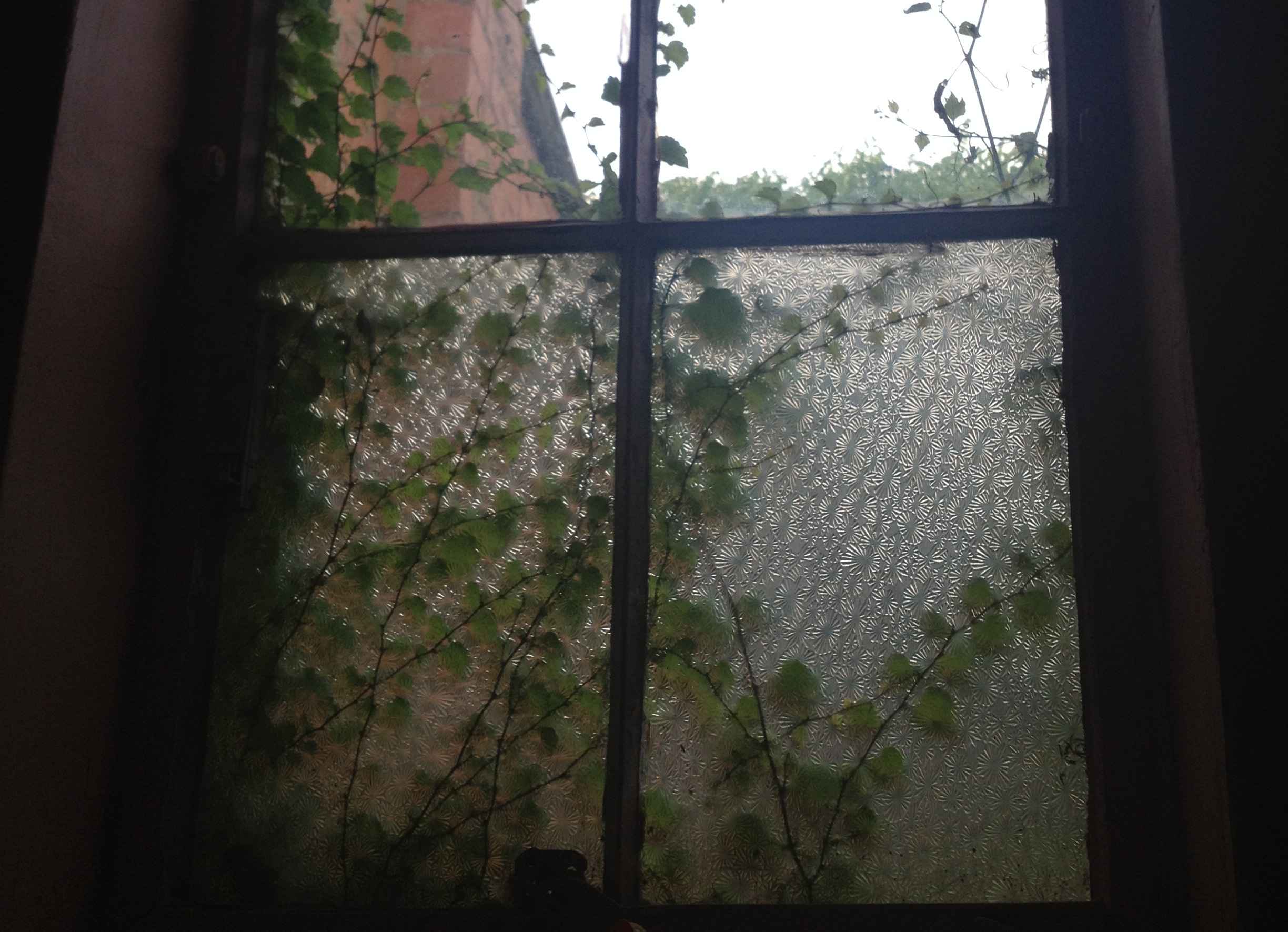
Today’s window view reminds me why I love this feature so much: just a beautiful image of normality.

The most popular post of the day, by far, was Kerry Gaffes; The Russians Blink; next up: Patience, Mr President. Patience.

See you at 10pm on Anderson Cooper – and in the morning.

Why We’re Creeped Out By The Uncanny

Rose Eveleth outlines the reasons:

One is that not being able to tell whether something is human or not can be a deeply unsettling feeling in itself. Artists and directors take advantage of this all the time for dramatic effect. The dread that viewers feel while trying to figure out who is a zombie, or Cylon, or alien might be the very same dread they feel when faced with a very realistic robot.

Another explanation focuses on the disconnect between how realistic something looks, and how well it moves.

There’s always been a lag time between how quickly designers can make things look like people, and how quickly engineers can make them move like us. If a figure that you thought was human started to move jerkily, you would recoil. Similarly, if you were to shake a robot’s hand while expecting a human touch, but instead felt cold rubber, you would be caught of guard. An unexpected break in humanness can be an unpleasant shock, one that sets off fearful and distrustful instincts. “Whenever we see something move, and we’re not familiar with the mechanism of movement, it grabs our attention,” says Andrew Olney, a psychologist at the University of Memphis who works on designing intelligent robots. “If your coffee cup started slowly moving across the table, that would kind of freak you out a bit.”

Finally, a third theory turns to evolution. It suggests that if a robot looks like a human, but moves unnaturally, our brains subconsciously classify what we’re seeing as someone with a disease. This is the same explanation proposed for most feelings of disgust. When we stand near something like faeces, rotting flesh, or a jerking robot, we experience a sudden urge to get away from it so as to avoid catching the infections it may harbour.

Previous Dish on the “uncanny valley” here, here and here.

Therapy For Losers

Robert L. Strauss provides a glimpse into the training methods of psychiatrist David Burns, a leader in cognitive behavioral therapy and the author of Feeling Good.  “Theo” is a fellow therapist who is frustrated that a patient dropped out of his practice:

Although Theo is obviously upset, this is a training session, not a therapy session, and so Burns asks what the two of them should do next. Theo suggests the “externalization of voices” technique, in which the therapist (or friend or spouse) hurls the patient’s negative thoughts right back at him. It’s the patient’s job to defeat those thoughts.

“People will think I’m a loser,” Burns says, as Theo’s inner voice.

“And they’d be right,” Theo answers, disheartened. “I am a loser.” (Theo has an advanced degree from Stanford.)

Burns reminds Theo that in this exercise he needs to find positive thoughts he “believes in 100 percent” that will crush his negative thoughts completely.

Round Two.

“You have to accept that you’re not going to have a successful practice,” Burns jabs.

“It’s silly to jump to conclusions,” Theo answers.

“Well, you failed the patient who dropped out,” Burns says.

“We don’t know that,” Theo answers. “That’s black or white. That’s not how the world works.”

“Still, you don’t know what you are doing.”

“I’m learning every week. I’m having some remarkable success,” Theo says more assertively. “Openings just mean that people’s schedules change. The reality is that therapists have openings.”

“The reality is that you are a loser.”

“That’s just not true!” Theo retorts with a conviction that was entirely missing moments before.

Burns asks who won the exchange.

“I did,” Theo says.

When Theo quantifies his “after” feelings, anxiety has dropped from 75 to 40 percent, inferiority from 75 to 30. He reminds himself that therapy is a science and an art.