The Gender Divide In Suicide

Jesse Bering ponders one explanation for why men take their lives more than women do:

It’s mostly because they’re far more likely to use a gun to do the job.

In any given year, men account for about 80 percent of all suicides, and the lion’s share of those deaths are gun-related. Not all involve your standard handgun, either. There’s the occasional suicide by the more cumbersome or exotic firearm, too, such as a double-barreled shotgun, an Uzi, or an assault rifle. But you tend to find such “long gun” deaths only among younger men, and almost never in women. Most people who commit suicide were never keen on making Swiss cheese out of folks with automatic weapons, so they probably used a smaller, discreet firearm for their ego’s coup de grâce—one that they’d acquired originally “for protection” against all those other crazy people out there. These statistics on basic handguns being the most common type of firearm used for suicide also make sense from a simple agility perspective. After all, although teen suicides get the most press, it’s in fact the elderly male demographic, the age group with the sort of arthritic joints and Parkinson’s trembles that make handling a military-grade weapon a challenge, which accounts for the highest suicide rate. The same is true for all the setup and effort needed to hang oneself properly, the second deadliest suicide method.

In America, where the chances of finding a gun in the home (the place where, incidentally, most suicides occur) are about as good as finding a carton of milk in the fridge, there’s no better predictor of suicide than simply having access to a firearm. In one study, 25 percent of California residents who bought a gun killed themselves with that same gun within a year of the purchase. And although women aren’t as likely to go out and buy a handgun, when they do, they’re more likely to turn it on themselves; for the ladies subset of those new California gun owners, for instance, over half of these women used it to commit suicide in a matter of months.

Update: a number of readers have written in contesting a particular claim in Bering’s post:

Jesse Bering’s Scientific American post needs correcting, on the claim that “25 percent of California residents who bought a gun killed themselves with that same gun within a year of the purchase.” The NEJM article he linked to says 25% of deaths among that group in the following year were suicides: “Suicide by means of a firearm (188 of 857 deaths) ranked second among all causes of death.” The article analyzed “the 238,292 purchasers of handguns in California in 1991,” so in fact the correct number in Bering’s original claim would be 0.08%, not 25% (188/238,292).

Another adds:

The paper also isn’t persuasive in furthering the idea that having a gun made suicide more likely through it being present, while it’s not hard to think that having the means at hand might facilitate someone if they got an impulsive urge to commit suicide. However, the more plausible explanation for the statistical increase is that people who already wanted to kill themselves got a handgun, if not specifically for that purpose, then at least to provide them the option.

Problems like this typically emerge when studies are conducted seeking to show a causal relationship between guns and something – and devaluing the effects of human agency. It is easy to believe that some things are affected by the mere presence of a gun – accidents for certain, rash and impulsive acts, perhaps. But in many cases the gun is simply part of a thought-out trajectory toward another end.

Superhero Social Justice, Ctd

In light of recent developments in superhero diversity, including a black Captain America, Daniel D. Snyder muses about the subject:

Traditionally, movies have done a curious thing with black heroes: Charge them not with saving the world, but rather with protecting their immediate, ethno-specific domains, or, in many cases, to put it bluntly, the ghetto.

The 1977 blaxploitation film Abar, the Black Superman, may be of questionable filmmaking merit, but is essential in defining the tone of black-superhero movies to come. In it, an affluent black doctor and his family move into a white neighborhood, prompting anger, protests, and even threats of violence. A local black leader, Abar, steps into help protect the Kincaids and is able to do so until extreme circumstances force him to take a serum of Dr. Kincaid’s creation, granting him invincibility and psychic powers. Abar then goes on a quest to vanquish racism and the machinery of oppression. It’s an (amusing, absurd) empowerment fantasy, but it’s also a limited one—about the men and women next door, not mankind itself. …

There is obviously nothing wrong with the messages behind these films—that real heroes come from and protect specific places. But taken together, over time, they contribute to the stagnant idea of what a black hero can be to the world. Even when moving outside of the neighborhood-watch paradigm, black heroes still aren’t granted the mantle of universal protector bestowed on their counterparts. Spawn (1997) and Catwoman (2004), the latter widely regarded as one of the worst movies ever made, both feature black leads (at least before Spawn‘s Al Simmons gets turned into cooked burger meat) but their narratives are tied to tales of personal revenge, where any worldly do-gooding is merely incidental.

A Poem For Saturday

1357896174_de877f896a_b

“At the IGA: Franklin, New Hampshire” by Jane Kenyon (1947-1995):

This is where I would shop
if my husband worked felling trees
for the mill, hurting himself badly
from time to time; where I would bring
my three kids; where I would push
one basket and pull another
because the boxes of diapers and cereal
and gallon milk jugs take so much room.

I would already have put the clothes
in the two largest washers next door
at the Norge Laundry Village. Done shopping,
I’d pile the wet wash in trash bags
and take it home to dry on the line.

And I would think, hanging out the baby’s
shirts and sleepers, and cranking the pulley
away from me, how it would be
to change lives with someone,
like the woman who came after us
in the checkout, thin, with lots of rings
on her hands, who looked us over openly.

Things would have been different
if I hadn’t let Bob climb on top of me
for ninety seconds in 1979.
It was raining lightly in the state park
and so we were alone. The charcoal fire
hissed as the first drops fell….
In ninety seconds we made this life—

a trailer on a windy hill, dangerous jobs
in the woods or night work at the packing plant;
Roy, Kimberly, Bobby; too much in the hamper,
never enough in the bank.

(From Collected Poems by Jane Kenyon © 2005 by the estate of Jane Kenyon. Used by permission of the Permissions Company on behalf of Graywolf Press. Photo by Christopher Aloi)


Stay Weird, Internet

Alexis Madrigal thinks niche social networks can survive the age of Facebook:

Social networking is not, it turns out, winner take all. In the past, one might have imagined that switching between Facebook and “some other network” would be difficult, but the smartphone interface makes it easy to be on a dozen networks. All messages come to the same place—the phone’s notifications screen—so what matters is what your friends are doing, not which apps they’re using. Take a look at the rise of apps that exploit the desire for anonymity, ephemerality, and the unknown—roughly the opposite of Facebook’s founding desire to connect real people (under their real names) on the Internet. …  “I think we’re shifting in a weird way to one-on-one conversations on social networks and in messaging apps,” says Shani Hilton, the executive editor for news at BuzzFeed, the viral-media site. “People don’t want to perform their lives publicly in the same way that they wanted to five years ago.”

Taken together, these trends pose a direct challenge to Facebook’s supremacy. After all, Facebook is built around a trade-off that it has asked users to make: Give us all your personal information, post all your pictures, tag all your friends, and so on, forever. In return, we’ll optimize your social life. But this output is only as good as the input. And it turns out that, when scaled up, creating this input—making yourself legible enough to the Facebook machine that your posts are deemed “relevant” and worthy of being displayed to your mom and your friends—is exhausting labor. These new apps, then, are arguments that we can still have an Internet that is weird, and private. That we can still have social networks without the social network.

“Elvis Presley With A Social Conscience”

Ryan L. Cole reflects on the persona that led Bruce Springsteen to fame and fortune:

His 1973 debut album, Greetings from Asbury Park, N.J., and its follow-ups, The Wild, The Innocent & The E Street Shuffle (also 1973), and Born to Run (1975), featured songs about Jersey boardwalks, open roads, slamming screen doors, and other assorted bits of romanticized American life, written with a verbosity that would make Bob Dylan tip a leopard-skin pillbox hat … . But around the time of his fourth LP, Darkness on the Edge of Town (1978) … the songs increasingly turned to blue-collar angst, and the singer was progressively positioned as the culmination of rock ’n’ roll: Elvis Presley with a social conscience.

Springsteen embraced the imagery, iconography, and gestures of the genre. He threw on a leather jacket, sculpted his sideburns, and posed broodingly in Corvettes and Cadillacs. Then he name-checked John Steinbeck and Flannery O’Connor, sang of American decay and inequality, and rebuffed Ronald Reagan, whose reelection campaign had the nerve to assume that “Born in the USA”—a gloomy song about a homeless Vietnam veteran dolled up with a misleadingly anthemic chorus and sold with imagery of Springsteen draped in Old Glory—was actually a statement of patriotism. Which is not to say that Springsteen isn’t a patriot. It’s just that he articulates progressivism’s brand of national pride: America is noble in theory, nightmarish in reality; cool around the edges, but rotten to the core.

Previous Dish on Springsteen here.

The End Is High

Tom Angell points out an international agricultural effort to preserve weed after the apocalypse:

By preserving genetic material in an insulated, underground facility, the Svalbard Global Seed Vault hopes to guard against the permanent loss of plants that humanity relies on for food and medicine. According to a Marijuana.com analysis of Svalbard’s database, there are 21,500 cannabis seeds being held for safekeeping in the vault. That’s more weed seeds than there are asparagus, blueberry or raspberry seeds stored at the facility. There are more marijuana genetics in the “Doomsday Seed Vault” than there are for artichoke, cranberry and pear combined. …

The vault’s location, about 800 miles from the North Pole, was selected because of its permafrost and lack of tectonic activity. That means the seeds will stay cold even in the event of a power failure, and the bunker they’re contained in is unlikely to be cracked open by an earthquake or volcanic eruption. And, because it’s located 430 feet above sea level, the facility will stay dry even if global climate change causes the ice caps to melt.

And You Thought They Just Used Soy Sauce …

Keating flags some odd news out of China, which is planning to do away with its 2,600-year-old state monopoly on table salt:

The salt monopoly began during in the Qi state on the Shandong peninsula around the seventh century BC and may have been the first ever state-controlled monopoly. During the third century BC, the Chinese imperial state sold salt at a markup, effectively levying a tax used to pay troops and, perhaps, the early stages of the Great Wall of China.

Several centuries, dynasties, and revolutions later, the world’s oldest monopoly is still in place. Under the policy’s current incarnation, the China National Salt Industry Corp. designates who is authorized to produce salt and is the only entity allowed to sell it to consumers. These consumers often pay three to four times more than what the CNSIC does. The new plan will liberalize the industry and scrap price controls starting in 2016.

Some Chinese netizens, Bethany Allen-Ebrahimian observes, are concerned that opening the salt market will just lead to more food safety scandals:

“There will soon be frequent cases of industrial salt” — far cheaper than table salt — “being mixed with edible salt,” went one popular comment on Weibo, China’s huge, Twitter-like microblogging platform. Another userwrote, “Soon the media will be putting out articles called ‘How to tell industrial salt from table salt.'” The topic seemed to resonate; “salt monopoly abolished” became a top-trending hashtag on Weibo, and one related post on CCTV’s official Weibo account quickly garnered over 1,300 comments. One user commented cynically, “I’ve eaten all kinds of fake products; now I will finally have the opportunity to eat fake salt!”

But Austin Ramzy notes that ending the monopoly might actually help fix this problem:

Some scholars have argued that the state monopoly system actually contributed to the phenomenon of tainted salt, and that overhauling the system while enforcing food quality laws should help improve safety. In a 2010 paper, Sun Jin, Fan Zhou and Qin Li of Wuhan University noted that the monopoly meant that the price consumers paid for salt was three to four times higher than the price the China National Salt Industry Corporation paid for salt from authorized producers.

While the average consumer does not feel the price difference because salt makes up such a small portion of a typical grocery bill, the markup supports a vast and pernicious underground market, the authors wrote. Such salt often does not contain iodine and can have harmful impurities, they noted.

The Moral Case Against Zoos, Ctd

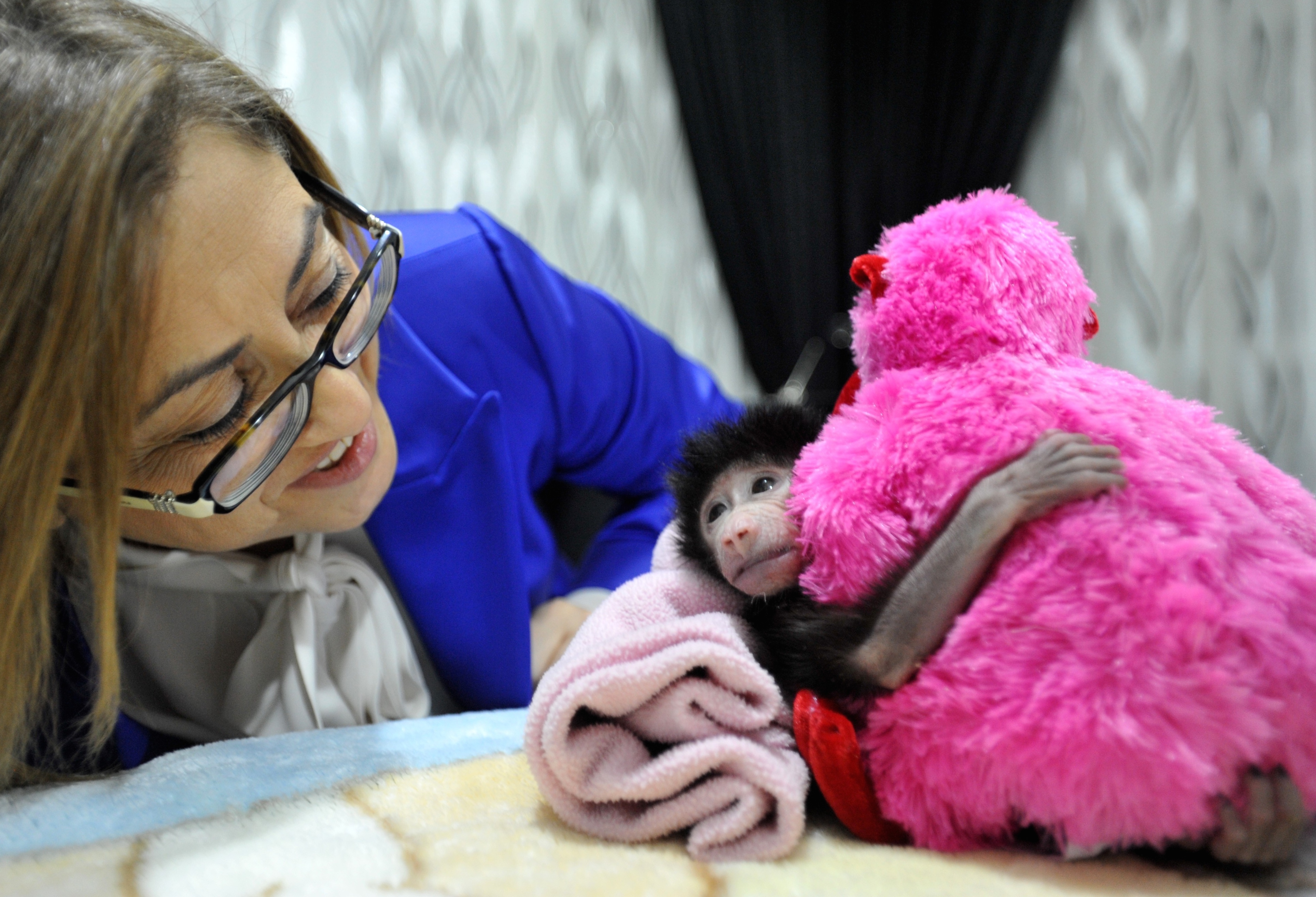
Mayor Sahin visits  the baboon rejected by its biological mother

Chelsea Wald reflects on Benjamin Wallace Wells’s argument:

[H]ow can we justify keeping animals in zoos? Wallace-Wells asks. His conclusion is that we can’t, and that we won’t continue to try for much longer. I’m not sure I agree. But there are certainly bits and pieces of zoos that could be handed over to technology. The educational aspect of zoos would be relatively easy to make virtual. And since zoo animals don’t really act as they would in nature (even when they’re not psychotic), it’s hard to argue that zoos can convey much about the animals other than how they look. And while many zoos attempt to share a lot of material about conservation, it’s not clear how much of that is getting through to visitors. Certainly, technology that connects people to animals in the wild could reveal far more about the animals’s actual behaviors as well as the need for conservation. If kids just want to see an animal up close, they can go to a farm or get a pet.

But we do lose something, if we lose physical zoos.

The world’s best zoos go to great lengths to help save threatened species. Some animals—like the northern bald ibis—are safe from looming extinction precisely because zoos have developed captive breeding programs. It seems to me that we should at least let the good zoos keep on with that good work (and encourage them to do it better); then we could see some wild animals close up from time to time. The rest of the wild kingdom we could keep in contact with on our devices. Bye-bye, sweet guilty feeling.

Yet I wonder: Even if a nearly zoo-less world would satisfy me ethically, would it satisfy me emotionally? What about that desire to feel something? Could I really make a connection through a GPS tracker or a live cam? Certainly my friends and I have gotten mesmerized by video feeds of animals (think panda cam), but my heart melts extra when I make eye contact with the monkeys at the zoo.

(Photo: A newborn baboon cuddles a plush monkey presented by Fatma Sahin, the mayor of Gaziantep, a southeastern city in Turkey, on November 23, 2014. The newborn baboon was rejected by its biological mother. By Kerem Kocalar/Anadolu Agency/Getty Images)