Fundamentalism On Trial

Noting this week’s anniversy of the Scopes trial – often portrayed as a seminal contest between religion and science – Yair Rosenberg points out that key religious authorities supported the pro-evolution side and served as experts for the defense:

[Louis] Ginzberg [who helped Scopes’ defender Clarence Darrow brush up on scripture]  was not the only rabbi to make his mark at the Scopes trial. Herman Rosenwasser, a Hungarian-born Reform rabbi, actually traveled to Dayton for the proceedings. Though uninvited, he so impressed the defense team that the ACLU’s lawyer Arthur Hays delivered the rabbi’s argument–that the Hebrew text of Genesis, properly translated, in fact supported the evolutionary narrative–in court. (You can see Rosenwasser giving Hebrew instruction to the defense attorneys in this photo.)

In fact, Ginzberg and Rosenwasser were only a subset of the religious figures who supported the pro-evolution side of the Scopes case–a group which included liberal theologian Charles Francis Potter, and many of the scientists who submitted written testimony on Scopes’s behalf, like Harvard’s Kirtley Mather. These individuals were systematically scrubbed from depictions like “Inherit the Wind” to give the impression that the trial was a simple showdown between science and faith. But as Louis Ginzberg and his comrades remind us, many religious people have never perceived the two realms to be in conflict.

Faith In Mea Culpas

Stephen Mattson suggests that modern day believers revisit the idea of apology:

Despite vast Biblical support requiring followers of Christ to apologize, historically, Christians have been guilty of using “forgiveness” as a pseudo-weapon to point out the sins of others. Forgive the gays, the abortionists, the liberals, the Communists, and the Muslims! Spiritual leaders have manipulated “Christian forgiveness” into a subtle way of pointing out the faults of those we disagree with. They’re sinners. They’re guilty. They’re ignorant. They’re wrong.  …

Christians mistakenly believe that apologizing discredits everything they’ve ever said. As if saying “we’re sorry” will somehow negate the fact that Jesus died on the cross and rose from the dead. In reality, apologizing promotes honesty, transparency, authenticity, and humility — things all Christians should exhibit throughout their lives. When Christians apologize, it adds integrity and legitimacy to their words and actions.

Quote For The Day

Grapes

“I don’t think it is enough appreciated how much an outdoor book the Bible is. It is a ‘hypaethral book,’ such as Thoreau talked about – a book open to the sky. It is best read and understood outdoors, and the farther outdoors the better. Or that has been my experience of it. Passages that within walls seem improbable or incredible, outdoors seem merely natural. This is because outdoors we are confronted everywhere with wonders; we see that the miraculous is not extraordinary but the common mode of existence. It is our daily bread. Whoever really has considered the lilies of the field or the birds of the air and pondered the improbability of their existence in this warm world within the cold and empty stellar distances will hardly balk at the turning of water into wine – which was, after all, a very small miracle. We forget the greater and still continuing miracle by which water (with soil and sunlight) is turned into grapes,” – Wendell Berry, “Christianity and the Survival of Creation” in Sex, Economy, Freedom & Community

(Photo by Flickr user tribp.)

The Thinking Faithful

Millman considers the challenges they face:

In my experience, only a very small minority of people in any religious tradition truly affirm that religion’s teachings intellectually, and most of the world’s religions aren’t organized around creedal affirmation anyhow. For the overwhelmingly majority of people, they want to be able to live with their church – to experience life cradled within its arms – not to think with it.

The trouble for the minority who actually care about thinking is that they may also care about that experience of living within a religious tradition and community. Then they have a choice: of learning to “think with” that tradition, and turn the mind away from doubt (which has, I would argue, deleterious consequences for the health of one’s mind); or of becoming the kind of theological liberal who isn’t terribly committed to a particular truth (which has, I would argue, deleterious consequences for one’s ability to truly feel religious experience); or of becoming a secret dissenter (which has, I would argue, deleterious consequences for one’s relationships with one’s fellow communicants); or of becoming a public dissenter (which makes one a trouble-maker with all kinds of deleterious consequences).

A Poem For Sunday

dish_poem3

“Sometimes I walk where the deep water dips,” by Frederick Goddard Tuckerman:

Sometimes I walk where the deep water dips
Against the land. Or on where fancy drives
I walk and muse aloud, like one who strives
To tell his half-shaped thought with stumbling lips,
And view the ocean sea, the ocean ships,
With joyless heart: still but myself I find
And restless phantoms of my restless mind:
Only the moaning of my wandering words,
Only the wailing of the wheeling plover,
And this high rock beneath whose base the sea
Has wormed long caverns, like my tears in me:
And hard like this I stand, and beaten and blind,
This desolate rock with lichens rusted over,
Hoar with salt-sleet and chalking of the birds.

(Photo by A Guy Taking Pictures)

Immortality Is Unnatural

PZ Meyers provides an evolutionary reason for why immortality is “both impossible and undesirable”:

We already have a potent defense against death put in place by evolution: it’s called more death. That sounds contradictory, I know, but that’s the way it works. Every cell replication has a probability of corruption and error, and our defense against that is to constrain every subpopulation of cells and tissues with a limited lifespan …

The undesirability of immortality derives from the proponents’ emphasis on what is good for the individual over what is good for the population. There’s a kind of selfish appeal to perpetuating oneself forever, but from the perspective of a population, such individuals have an analog: they are cancers. That’s exactly what a cancer is: a unit of the organism, a liver cell or skin cell, that has successfully shed the governors on its mortality and achieved immortality…and grows selfishly, at the expense of the organism.

How Wonder Works

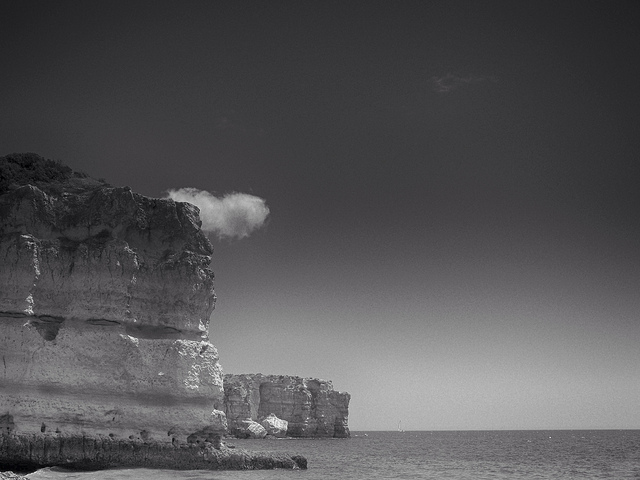
Canyon

Jessa Gamble explores the mechanics of awe:

Last year, Stanford consumer behaviour researcher Melanie Rudd was able to define and measure awe, the kind architecture can evoke through soaring vaulted ceilings of cathedrals. What makes cathedrals and canyons awe-inspiring is partly their physical vastness. We marvel over the sheer scale of what we are seeing, and that helps to produce awe. But the 20th time we walk into the same cathedral, it may not have the same effect. That’s because awe is not just the experience of vastness. We have to be so surprised by the vastness that we don’t feel we fully grasp it. We stand at the edge of a cavernous space and marvel at its boundless capacity. We want to understand, but it’s hard to hold the mammoth volume in our minds.

Awe has two key components: perceptual vastness and what’s called the “need for accommodation”. The latter involves a desire to interpret that vastness by learning more about the world. The builders of Oxford’s dreaming spires clued in to this effect in Medieval times, and more centres of learning could stand to take their cue.

(Photo by Flickr user Al King)

Taken By A Name

Lauren Markoe interviews Cameron Partridge, a lecturer at Harvard and chaplain at Boston University who, “[a]fter college…graduated from Harvard Divinity School, married her girlfriend, became an Episcopal priest, changed her name — and changed her gender.” The whole exchange is worth reading, but his description of choosing a new name stands out:

In a way, the name chose me. I was at a point in my life when my previous name (which I prefer not to publicly disclose) felt like it no longer fit. I wanted a name that conveyed some sense of gender complexity, since I consider gender in general and my own in particular to be less than straightforward.

At the same time, I had no desire to totally jettison the history — including the thoughtfulness of my parents — caught up in my birth name. Then one day when I was getting sushi takeout, the person behind the register “misheard” my old name as Cameron.

It was a bolt from the blue. I thought, “I think I’ll take that to go too, thanks.” Eventually I looked it up. It turned out to mean something slightly askew: bent nose, crooked stream, or craggy rock. Years earlier I’d bought a button from a queer bookstore that said, simply, “bent.”

And I recalled being struck by a line from Ecclesiastes that I once heard the former Episcopal presiding bishop, Frank Griswold, preach in connection with the scandalous quality of the Christian gospel: “Consider the work of God: Who can make straight what God has made crooked?”

In a profile of Partridge published earlier this year, Becky Garrison emphasized the impact of Partridge being trans on his ministry:

Partridge does not feel his transgender status has hindered his role as a chaplain; if anything, it has helped him connect with students. “In one sense, my being trans doesn’t matter,” he said. “In another way, I’m able to have certain conversations about the complexities of human identity with college students, who are figuring out their own identities.”