Ask Dan Savage Anything: How Much Better Has It Gotten?

Dan explains how the It Gets Better Project has not only saved lives, but enabled a previously-impossible dialogue between gay adults and gay kids as well:

Dan’s new book, American Savage: Insights, Slights, and Fights on Faith, Sex, Love, and Politics, came out a few weeks ago. My recent conversation with him at the New York Public Library is here. Dan’s previous answers are here. Our full Ask Anything archive is here.

The Christianists’ Terms Of Surrender

Douthat wonders how yesterday’s rulings will impact them:

Unless something dramatic changes in the drift of public opinion, the future of religious liberty on these issues is going to depend in part on the magnanimity of gay marriage supporters — the extent to which they are content with political, legal and cultural weddingaislevictories that leave the traditional view of marriage as a minority perspective with some modest purchase in civil society, versus the extent to which they decide to use every possible lever to make traditionalism as radioactive in the America of 2025 as white supremacism or anti-Semitism are today. And I can imagine a scenario in which a more drawn-out and federalist march to “marriage equality in 50 states,” with a large number of (mostly southern) states hewing to the older definition for much longer than the five years that gay marriage advocates currently anticipate, ends up encouraging a more scorched-earth approach to this battle, with less tolerance for the shrinking population of holdouts, and a more punitive, “they’re getting what they deserve” attitude toward traditionalist religious bodies in particular.

If religious conservatives are, in effect, negotiating the terms of their surrender, it’s at least possible that those negotiations would go better if they were conducted right now, in the wake of a Roe v. Wade-style Supreme Court ruling, rather than in a future where the bloc of Americans opposed to gay marriage has shrunk from the current 44 percent to 30 percent or 25 percent, and the incentives for liberals to be magnanimous in victory have shrunk apace as well.

As Ross knows, not all marriage equality supporters are liberals. But I do want to state for the record that my own view is that we as gays will do much better if we combine our formal civil equality with maximal religious freedom for our opponents and unrelenting magnanimity for all, past and present. We have nothing to fear from religious groups who have every right to condemn our marriages if they wish to, and absolutely every right to conduct their own religious organizations as they see fit. If in doubt, give it to them. We are winning this so fast anything else would be unworthy of a civil rights movement which seeks to expand everyone’s freedom. Maybe the right-left split within the gay community will re-emerge after the unity necessary for this landmark moment. Or maybe we can exercize some patience, diversity of view, and good will.

Daniel McCarthy has related thoughts to Douthat’s:

The bigger question isn’t whether more states will recognize same-sex marriage—let alone whether there’s much possibility of rollback—but on what the terms of victory of the SSM side is going to be consolidated. Conservatives have a different battle to fight, psychologically as well as legally, to preserve religious liberty and ensure that this revolution already made doesn’t enter a more radical phase. High-strung right-wingers who say, for example, that the country might as well embrace polygamy if it’s going to have same-sex marriage are not doing themselves any favors. More seriously, this would be a good time for conservatives to take supporters of SSM at their word and insist on stronger cultural as well as legal affirmations of monogamy for everyone. Somehow, though, I suspect that rather than using this as an opportunity to build new coalitions against promiscuity or divorce, we’ll just see a redoubling of resentments.

Legal affirmations of monogamy? And how, pray, would any government enforce them? And why would any conservative want to give government that kind of power? The model, it seems to me, should be that of civil divorce. No Catholic church or Mormon authority will divorce a couple; but the civil law can. And we manage to live with that. Catholics and Mormons do not feel that their religious liberty is under threat because they live alongside divorced couples, or work with them, or employ them. All of us can live equally under the law as well as doing something else: mind our own business.

There is no way to resolve the deep cultural conflict in this kind of area; but there is a way to manage it. With civility, generosity and toleration – on both sides.

Snowden As An American Rorschach Test

edward-snowden-guardian-vid

This was admirably clear from Steve Wozniak:

I don’t think terrorism is war. I think terrorism is a crime. And by using the word ‘war’ we’ve managed to use all these weird ways to say the Constitution doesn’t apply in the case of a war. And I think Edward Snowden is a hero because this came from his heart. And I really believe he was giving up his whole life because he just felt so deeply about honesty, about spying on Americans, and he wanted to tell us.

A reader writes:

Edward Snowden as a personality probably gets far more ink and interest than the situation warrants (conversely, it warrants much deeper exploration of the facts that Snowden exposed), but he is an interesting social lightening rod. Official Washington despises him–that’s both people within the national security state, who understandably feel threatened by him, and the whole supporting apparatus that has grown up around them, including a large part of the media which instinctively feels itself a part of this world and considers it to be under siege. On the other hand, there is another world that lionizes Snowden, and this is the same world that rallied to the defense of Aaron Swartz – hip, young, extremely tech-savvy and with a healthy streak of disrespect for authority at its core.

This world understands the threat that the national surveillance state presents to privacy and personal freedom and responds in an impish fashion to it. It applauds challenges to the sanctimonious claims of self-importance of the national security establishment and loves to see them be revealed as liars and cheats, which at least to some measure they are.

The recent interview Steve Wozniak gave shows all the markers of this community of thinking, and it also reminds us that these people are extremely important to America – they are our innovators and by and large the people who made the current technological revolutions possible. The fear that the national security world has of them, most dramatically exemplified in the Swartz case, but flashing through with Snowden too, points to genius in one corner and a group of dim-witted, power-abusing dullards in the other. So the national security community has a rather challenging PR crisis. The claims to “keep us safe” are already wearing a bit thin, especially as millions around the world begin to view their intrusions into privacy as a more meaningful threat than Islamist terrorism.

And then look at the unenviable challenge this presents to Obama. Both are his natural constituencies. How does he reconcile that? He’s not doing a good job so far, he’s thrown in his lot with the national security state. That is just as predictable an outcome for Obama the president as the opposite was for Obama the candidate.

Another wishes Snowden would have stayed anonymous:

I’ve become wistful for when we didn’t know who Greenwald’s leaker was. Knowledge of the leaker may give us more confidence in the leaks, but it has also focused the press on his motives and character. It doesn’t matter why Snowden leaked the documents – even if his intent was malicious or profit-seeking – the fact is we have a broad surveillance program targeting domestic communications. Every article on his whereabouts is a distraction. We – the press and electorate – need more information about the alleged successes of the program to make a judgement. What country Snowden wants to go to or settle in doesn’t answer any questions relevant to the issue. Right now, the public is making a bunch of gut checks and that’s a damn poor way for an electorate to hold the government accountable.

“Hairy-Jocking” Glenn

Greenwald responds to some unflattering profiles cropping up, peppered with homophobia, including one yesterday in the New York Daily News that dug up a dispute with his condo board over the size of his dog. He’s even accused of being a businessman for a while, some back-tax issues with the IRS and the various sundry, occasionally embarrassing things that will accumulate if you live a life. I was once “power-gluted” myself. I can’t see how any of it detracts from his role in doing what he believed was right in the Snowden case – and I know for a fact that this has been a sincere and principled passion on his part. But I wouldn’t say it’s a function of the persecution of a journalist who rattled those in power – which is too easy a victim card to play for a big boy like Glenn; it is, alas, simply a fact of today’s public life.

Meanwhile, Erik Wemple finds that Greenwald is probably safe from prosecution under the Espionage Act, no matter what David Gregory thinks:

Attorney Jeffrey J. Pyle, a partner in the Boston-based firm Prince Lobel Tye LLP, takes a whack at that question in this post on Greenwald’s exposure:

To prove that Greenwald acted willfully, the government would have to demonstrate beyond a reasonable doubt that he acted “with an evil-meaning mind, that is to say, that he acted with knowledge that his conduct was unlawful.” Bryan v. United States, 524 U.S. 184, 191-92 (1998). For all we can see, Greenwald acted in the time-honored tradition of investigative reporting. It would be next to impossible for the government to prove that he knew his conduct was unlawful.

Hold on: Greenwald clearly knew that the information from Snowden was classified and closely held by the government. So why wouldn’t he have known quite well that his conduct was unlawful? That’s an easy one, according to Pyle. Decades of U.S. history tell us that the government has leaked all manner of classified information to journalists — it’s a commonplace occurrence around these parts. Yet journalists haven’t been prosecuted for publishing that information. When was the last time Bob Woodward faced indictment?

To slam-dunk the situation, consider that around the same time that Greenwald dropped his first NSA scoop, Attorney General Eric Holder said this: “[T]he [Justice] Department has not prosecuted, and for as long as I’m attorney general of the United States, will not prosecute any reporter for doing his or her job.”

Will We See A Republican Comeback?

Harry Enten thinks the GOP could easily win in 2016. He argues that Clinton’s general election polling numbers “won’t stand up over time” and that she is “still coming off a height of popularity since serving in the non-partisan position of Secretary of State”:

At this point, a better feel of how a Democrat might do if the election were held today is polling involving Vice President Biden. Biden is a well-known standard bearer of the Democratic label. He’s been serving in a partisan office for as long as many have been alive. His favorable rating generally matches up with President Obama’s approval rating in the polls.

Last month, Biden was either neck-and-neck or trailed leading Republicans. He was 1pt ahead of Marco Rubio and 2pt ahead of Rand Paul in an early May Public Policy Polling survey. He was behind by 4pt against Paul and 6pt behind Jeb Bush in a Quinnipiac poll.

All of them are also less well-known than Biden, yet they are polling at or ahead of him.

You could argue that Bush is more moderate than the mainstream Republican candidates, though, Rubio and Paul are almost certainly to the right of it. They incidentally are three of the top four leading contenders for the nomination right now. You wouldn’t expect mainstream Republican candidates to be polling this well if the party were too out of the mainstream to win.

Reihan objects to Enten’s claim that the “GOP might be feeling the pressure to adjust its political platforms to win national elections, but it doesn’t need to”:

The conceptual problem with Enten’s piece, in my view, is that some measure of “adjustment” is inevitable, as the issue mix changes from election cycle to election cycle. Issues that were not salient in 2012 will be salient come 2016, and the process of taking a stand on emerging issues will necessarily entail shifts of emphasis, etc. The central claim made by conservative reformers or reform conservatives (or whatever we’re called this week) is that the party still needs a compelling post-Reagan, post-crisis domestic policy agenda that resonates with middle-income voters. A related claim is that though, as Enten notes, the average voter felt that Mitt Romney was closer to them ideologically than Barack Obama, this didn’t mean that the average voter felt that Romney’s policy agenda was more responsive to her needs and concerns, which is the more salient question.

The Method In Kennedy’s Muddle

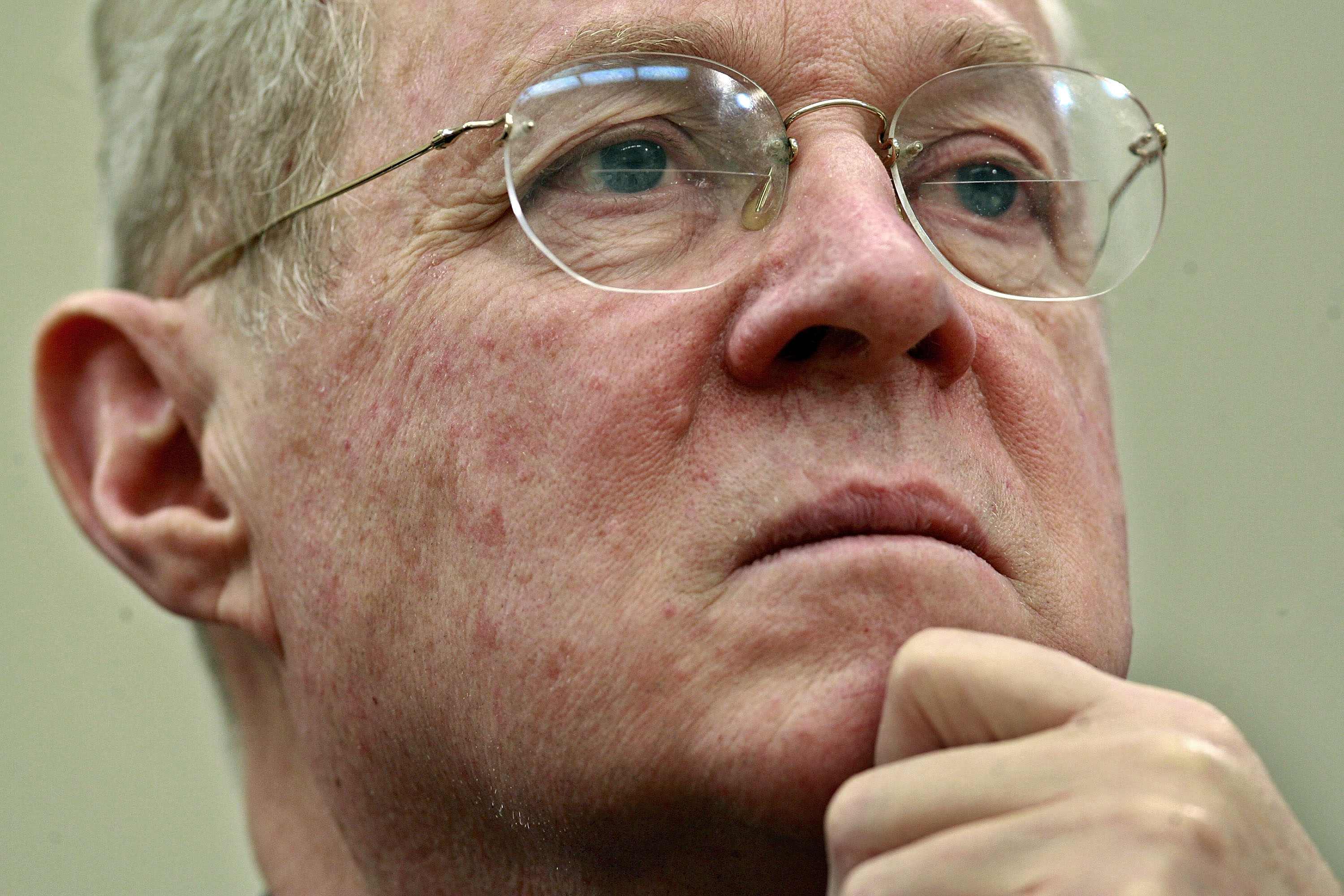
Justices Kennedy And Thomas Testify Before House Appropriations Committee

Let the parsing begin. A legal reader writes:

The Kennedy opinion in Windsor is, I think, deliberately obscure and muddled in its rationale(s), owing to his obvious — and quite laudable — design, namely, to point the way for other states and lower courts, but to ensure that they have, say, five years to work it out, rather than five months. (As an aside, I dare say that that strategy might not have been possible without the standing argument in Perry that the Court largely derived from Walter Dellinger’s brief — an argument that Kennedy himself nominally rejected, but that I’d wager he was relieved to see, for it paved the way for him to do what he did.)

But make no mistake: The writing is on the wall as to what Kennedy is prepared to do when he decides the time is right. The most significant sentence in the Windsor opinion is the very first one in the merits section, which has not received remotely the attention it warrants: “When at first Windsor and Spyer longed to marry, neither New York nor any other State granted them that right.”

“Longed to marry” . . . in a majority opinion of the Supreme Court of the United States!

Of course, one can never be too sure. But as long as Anthony Kennedy remains the pivotal vote on the Court, is there serious doubt about what the Court will do when it finally confronts the core marriage question? Indeed, one might even imagine the eventual opinion of the Court, per Kennedy, channeling your reaction last evening: “Marriage is not a political act; it’s a human one. It is based on love, before it is rooted in law. Same-sex marriages have always existed because the human heart has always existed in complicated, beautiful and strange ways.”

Jeffrey Rosen wonders if other Justices prevented Kennedy from ruling on the merits on Prop 8:

Joined by the unusual lineup of Thomas, Alito, and Sotomayor, he insisted that the challengers of Prop 8 should have their day in Court. But if the liberal justices were confident that Kennedy would join them in striking down Prop 8, wouldn’t they have joined him in finding that the Supreme Court had jurisdiction to hear the case? Please tell me if you disagree, but my surmise is either that the liberal justices weren’t confident that they could get Kennedy’s vote or that he made clear his willingness to uphold Prop 8.

A Kennedy vote against gay marriage would be surprising, and hard to reconcile with his obviously heartfelt and passionate defense of the equal dignity of gays and lesbians in the DOMA case. And yet at the oral argument, he was obviously conflicted about Perry, asking aloud why the Court had taken the case to begin with. Since it takes four votes to hear a case, is it possible that the Court voted to hear Perry over Kennedy’s objection but that, once he faced the need to decide, he wasn’t ready to vote for gay marriage, even on narrow grounds? Once again, that would seem surprising in light of his previous opinions. (Because her vote wasn’t necessary to dismiss the case, Justice Sotomayor was willing to join Kennedy, Thomas and Alito in making clear she would have decided the case on the merits.)

Scott Lemieux weighs in:

The most obvious way of interpreting the vote lineup, which doesn’t map on to the typical preferences of a majority of justices on either standing or equal protection law, is that nobody trusted Kennedy on the merits. I could find no hint in either Kennedy’s majority opinion in Windsor or his dissent in Perry of how he would have ruled if compelled to consider the merits. This question will simply remain open for the time being.

(Photo: Chip Somodevilla/Getty.)

The Punishment For An Accidental Death

Justin Peters reacts to news of a mother being tried for murder because her daughter shot herself:

On Sunday a 5-year-old New Orleans girl shot and killed herself with a .38-caliber revolver while her mother was out at the store. On Monday authorities in New Orleans announced that the mother, 28-year-old Laderika Smith, would be charged with second-degree murder—an offense that, under Louisiana state law, is punishable by life imprisonment at hard labor with no chance of parole. Yesterday I wrote that I wasn’t yet sure what to think about the charges against Smith. Now, I’m sure: This is ridiculously severe. Justice will not be served if Smith is convicted.

There’s negligence and then there’s murder. McArdle chimes in:

How much added deterrence do we get from telling parents that if their kid finds a gun and shoots themselves (or a sibling), that parent will go to jail? Let me submit that the answer is “virtually none”. Oh, sure, there are a handful of sociopathic, mentally ill, or drug addicted parents who don’t care if their kid gets shot, but we’re mostly describing people sufficiently addled that very little will deter them from anything. All the rest of the parents are internally sobbing with anguish at the mere passing thought that something could happen to their darling child.

Thirteen Down

13colonies

A reader does some math:

Once the Ninth Circuit stay is lifted in California, some 97 million Americans will live in a state with marriage equality, just under one-third of the US population. In the rest of 2013 and 2014, we can likely bring marriage equality to Colorado, Hawaii, Illinois, Michigan, Nevada, New Jersey, New Mexico, and Oregon – adding another 47 million. That leaves us about 9 million shy of a majority. All we’d need is Ohio or Pennsylvania and then a majority of Americans would live in states with marriage equality. Massachusetts became the first state to gain marriage equality only in 2003, just ten years ago. If we can bring over those states above in the next five years, we will have achieved majority marriage equality in only 15 years.

In 1947, California started the end of anti-miscegenation laws with a decision by its Supreme Court in Perez v. Sharp, 32 Cal. 2d 711. By the time of Loving v. Virginia, 388 U.S. 1 (1967), some 20 years had passed. I bet the US Supreme Court bans anti-marriage equality laws less than five years from now, which means we will have won our victory slightly faster than those fighting for racial equality won their fight in this arena.

Not bad for a group of sissies.

Nate Silver has the global numbers. Another sends the above image:

After reading that the Windsor decision affects 13 states (including California with Hollingsworth), I thought maybe the gay pride movement should consider a new flag.