How We Judge SCOTUS

Joseph Daniel Ura reviews research showing how “the Supreme Court’s legitimacy is not dependent on agreement on individual questions of policy between the Court and the public” but upon “the public’s perception that the Court uses fair procedures to make principled decisions—as compared to the strategic behavior of elected legislators.” Furthermore:

Though much of the public may sharply disagree with a decision of the Supreme Court—producing an initial backlash against the policy implications of a particular ruling or set of rulings—the decisions of the Court tend to lead public opinion over the long run. In a recent analysis of more than 50 years of data on Americans’ collective responses to Supreme Court decisions, I find that public responses to important Supreme Court decisions were typically marked by a negative response in public opinion in the short-term that decays and is replaced by a long-run movement in public opinion toward the positions adopted by the Court.

Do Mascots Need Modernizing? Ctd

image001

The popular thread continues:

In a different twist to potentially offensive school mascots, consider the Richland High School Bombers, which have an atomic mushroom cloud as their mascot.  The school is near Hanford, Washington, where the “Fat Man” atomic bomb dropped on Nagasaki was manufactured.  There has been substantial controversy over the mascot for some time now (e.g. here and here).

Another adds:

I know what the Hanford nuclear reservation means to that community and how proud they are what they did for the war effort, but … come on.  Being proud of it is one thing, but celebrating and reveling in it is another.

Update from a reader:

I went to Richland High School and even graduated in 1986, the year the sign was made. I don’t think the students understood the gravity of that symbol. The symbol fit with the pro-nuclear stance of the community – the defense aspect that goes all the way back to WWII and the power generating aspect. A good friend of mine was a football coach there and worked hard to bring back the original (I think) meaning of ‘Bomber’ – a plane that was financed by the workers at Hanford. Look up “A Day’s Pay” plane. My friend was really frustrated, though, with some of the adult boosters – team fan club – that pushed the mushroom cloud aspect. (P.S. I love The Dish and am one of your early subscribers!)

Another reader:

The high school in Orofino, Idaho shares its town with a state mental hospital:

Screen Shot 2013-06-21 at 2.39.21 AM

Another adds to this tangent:

North Dakota does indeed have a long and storied history of dealing with colorful team names and mascots.  My favorite has to be the controversy surrounding the Devils Lake Satans.  Yes, you read that right: The high school teams were known as the Satans, complete with a red imp mascot.

After a great hue and cry by evangelical Christians throughout the ’90s, the school board finally voted to retire the nickname and mascot in 2002 and Screen Shot 2013-06-21 at 2.34.15 AMdirected the school to come up with something new.  The overwhelming choice of the students was to change to The Blaze, but that got shot down when someone on the school board realized that “Blaze” was slang for smoking marijuana. The eventual compromise? The Firebirds.P.S.  The best high school sports match-up in North Dakota history: 1981 semifinal basketball game between the Devils Lake Satans and the St. Mary’s Saints.  Oh, you can just imagine the cheers coming from both sets of fans …

Last but certainly not least:

Maybe a little off topic: the mascot for the Arkansas School for the Deaf is the leopard, or, as they put it on their webpage, “Welcome to the Arkansas School for the Deaf Leopards.”

The Tea Party’s Defining Characteristic

A recent book on the Tea Party by Christopher Parker and Matt Barreto suggests that hate of Obama unifies the group. This prompts Michael O’Donnell to ask, “If Obama-bashing sustains the Tea Party, will it go away without him?”

According to Parker and Barreto, 91 percent of Tea Party supporters hold negative opinions of Obama. (This beats the 82 percent who hold negative views of illegal immigrants, and, even more tellingly, the 85 percent who report a preference for limited government.) Sixty-seven percent of Tea Party supporters believe that Obama is a socialist, and 71 percent think he will destroy the country. Destroy the country! In contravention of basic, established facts, solid majorities do not believe that he is a Christian (71 percent) or that he was born in the United States (59 percent). Parker and Barreto take pains to distinguish these views from those of non-Tea Party conservatives, and to ensure—by means of regression analysis—that Tea Party affinity, and not some other factor like support for the Republican Party, accounts for the figures.

Do We Really Need The Self-Driving Car? Ctd

This embed is invalid


A reader writes:

Just a quick response to the question:  My mother is 88 years old.  She’s in great shape for 88, very self-sufficient.  But she’s not really physically fit to drive and thankfully gave up her car keys willingly about 8 years ago.  Many “seasoned citizens” are decidedly NOT willing to give up their keys, and it’s a terrible battle within families when it’s time for Grampa to give up driving for good.

My mom feels very stranded and many times wishes she could still drive.  She loves the idea of a self-driving car, it would give her back some of the freedom she gave up when she stopped driving.  She’s doubts she’ll live to see the day when self-driving cars are a reality, but I can see how it can really improve the lives of elderly folks, as well as the handicapped.

Another agrees – and expands the argument:

Autonomous cars will be a boon for aging populations.

Many old people rely on their cars but should not be driving. Simply taking them off the road does not help them go to the hospital, store, to socialize and live active lives. But a chauffeur-less car would allow them to do these things without driving.

If there’s an argument that old people should be driven automatically, there’s an argument that all people should be. There’d be far fewer accidents, no traffic, no parking meters, no parking garages, no drunk driving, no insurance issues, no traffic stops, and no DMV. And you could text and talk to your heart’s content, with even a beer if you like, or work on your computer on the way to the office – all the negatives associated with car culture would be abated. You would not need to own a car; you could subscribe to a car service. “Your car” would always be within five minutes of you, among a vast fleet.

Aside from ferrying people around, the most impact from driverless vehicles would be on trucking. “Trucks” would be like those strange little boxy robots in the early Star Wars movies, zipping along on their individual missions. They would completely revolutionize how things are transported and delivered, from the macro to the micro, in driverless trucks of all sizes, down to the pedestrian level. A pharmacy might dispatch your medicines from a secure mini-truck in your area. Order online, get your pills in a few minutes. Or takeout, Amazon goodies – all “things” would be in motion. Not to mention the impact of drone delivery systems. A totally different world, to be sure.

I just wonder if there’s a tradeoff of freedoms. Would you get into your driverless car, and find yourself locked in and being taken to the IRS, FBI, NSA or police for some infraction that’s on your record? Driverless paddy wagons?

Those Pesky Unproven WMDs

Here we go again:

The United States, Britain and France have supplied the United Nations with a trove of evidence, including multiple blood, tissue and soil samples, that U.S. officials say proves that Syrian troops used the nerve agent sarin on the battlefield. But the nature of SYRIA-CONFLICTthe physical evidence — as well as the secrecy over how it was collected and analyzed — has opened the administration to criticism by independent experts, who say there is no reliable way to assess its authenticity… Jean Pascal Zanders, who until recently was a research fellow at the European Union Institute for Security Studies, said he has scoured the Internet for photographs, video and news reports documenting alleged nerve agent attacks in Syria. What he has seen has made him a skeptic.

Few of the photographs, Zanders said, have borne the trademark symptoms of a chemical weapons attack.

Let’s do a quick check-list against Iraq? Hateful dictator? Check. Sectarian civil divisions now in full-out civil war? Check. Middle Eastern Muslim country? Check. Saudis and Jordanians on board? Check. Massive emotional and moral appeal for getting rid of a dictator? Check. No idea who the opposition really is? Check.

Seriously, how can anyone – anyone – back getting involved in such a war only a decade after the worst foreign policy catastrophe since Vietnam? Especially all those, like Bill Clinton and John McCain, who were wrong about Iraq having assured us they were so very, very right.

The End Of The Auto Age?

Michael Todd wonders if we’ve passed “peak car”:

A new study from the University of Michigan’s Transportation Research Institute looking at cars and car ownership data between 1984 and 2011 argues that while the total number of cars and other light vehicles in the U.S. is almost certainly going to rise from its pre-recessionary peak of 236.4 million in 2008, the rate of ownership among individuals has stalled and likely will remain in a lower gear down the road. … [Study author Michael] Sivak expects that as the economy perks up and the population grows that the absolute number of vehicles will drive past that 2008 peak. But a raft of societal changes, not to mention expensive fuel, are likely to depress individual ownership rates. Among those are growing rates of telecommuting and use of public transportation and the aging out of getting a license or indeed, a car itself.

Jordan Weissman is skeptical:

It’s an interesting theory. But were Americans really rethinking their gas guzzling ways before the economy went south? I’m not quite sure. Remember, before we had a recession, we had a housing bust. Home values peaked in 2006, and families that had bet on infinitely rising prices by taking out second mortgages to finance their lifestyles started getting whacked. That marked the beginning of the end for the over-consuming oughts. And, given that housing values and spending tend to move in tandem, it’s no surprise that vehicle registrations went into retreat around then, just as they retreated after the dotcom collapse.

When Good Causes Go Bad

PZ Myers is disappointed by the results of the Tampa Bay Times‘ recent investigation into how charities are spending the money they collect:

The worst are the cancer charities, and the article singles out the Reynolds family and their nepotistic mill for turning dying people into salaries. Cancer is so easy for these crooks: everyone hates it, there’s no plus side to the disease, and there’s a wealth of tragic heart-string-tugging tales to be mined from it. And you can’t tell from the names what they’re doing! “Breast Cancer Society,” for instance…how can you refuse to support that? “Children’s Cancer Fund of America” — OMG, children with cancer? Here’s $50. And then the members of the family doing the bilking make 6 figure salaries for shipping boxes of surplus junk to cancer patients. It reinforces my opinion that most people are good, but that there are always parasites who know what buttons to push to exploit them.

The Times’ list of the 50 worst charities here.

Happy Birthday! ©

A music company called Warner/Chappell owns the copyright to the omnipresent ditty that begins “Happy birthday to you”:

A lawsuit filed in federal court last week seeks to change that. The complaint (online here) argues that the copyright to the song, if it ever existed at all, “expired no later than 1921.” Warner/Chappell hasn’t responded to the suit yet …

The story of the song is long and weirdly complex. The short version is: A pair of sisters published a song called “Good Morning to You” in 1893. Over the next few decades, the song morphed into “Happy Birthday to You.” In the 1920s and ’30s, a couple versions of the birthday song were published in copyrighted songbooks. But Happy Birthday to You was in wide circulation for years before it was published and copyrighted, and it’s not clear who wrote that version of the song, according to Mark Rifkin, one of the lawyers who filed the suit.

Jacob Goldstein has a scanned version of the evidence in question, an early “Happy Birthday to You” song from a 1911 “Board of Sunday Schools of the Methodist Episcopal Church” book. He calls it the “one page [that] could end the copyright war.” Previous Dish on the Happy Birthday song here.

The Best Of The Dish Today

dish_ekaterinapanikanova

This is going to have to be a truncated version because I just got back from dinner with high school (Reigate Grammar) friends I haven’t seen in 30 years. And, yes, I have a rule against blogging drunk. So, in brief, Gandolfini reax, Jihadist Syrian rebels, fascinating to and fro on a pill to prevent HIV, and the sweet sounds of silence.

Beard-rub!

An Unconditional Surrender In The Culture War

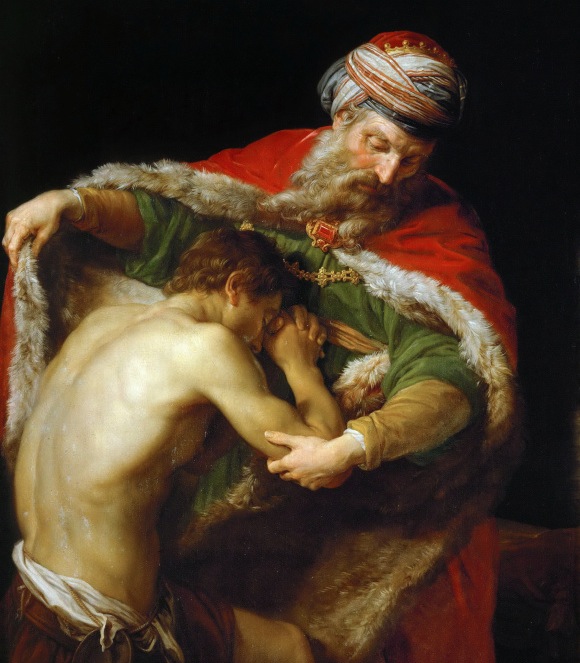
pompeo-batoni

[Re-posted from earlier today]

It’s very rare that one side in a culture war actively renounces its past positions and embraces a new one. That’s particularly true on the Christianist right, where absolutes hold sway, regardless of doubt or charity. So today is a banner day for those of us who have long fought for the equal dignity of homosexuals as children of the same God as heterosexuals, and deserving of no less love and support. Exodus International, the group that championed “reparative therapy” for gays as the only way to live a Christian life, will soon cease to exist and has offered an apology for its past actions. This is quite a statement from Exodus’s president, Alan Chambers:

Exodus is an institution in the conservative Christian world, but we’ve ceased to be a living, breathing organism. For quite some time we’ve been imprisoned in a worldview that’s neither honoring toward our fellow human beings, nor biblical. From a Judeo-Christian perspective, gay, straight or otherwise, we’re all prodigal sons and daughters. Exodus International is the prodigal’s older brother, trying to impose its will on God’s promises, and make judgments on who’s worthy of His Kingdom. God is calling us to be the Father – to welcome everyone, to love unhindered.

Then this personal apology:

Please know that I am deeply sorry. I am sorry for the pain and hurt many of you have experienced. I am sorry that some of you spent years working through the shame and guilt you felt when your attractions didn’t change. I am sorry we promoted sexual orientation change efforts and reparative theories about sexual orientation that stigmatized parents. I am sorry that there were times I didn’t stand up to people publicly “on my side” who called you names like sodomite—or worse. I am sorry that I, knowing some of you so well, failed to share publicly that the gay and lesbian people I know were every bit as capable of being amazing parents as the straight people that I know. I am sorry that when I celebrated a person coming to Christ and surrendering their sexuality to Him that I callously celebrated the end of relationships that broke your heart. I am sorry that I have communicated that you and your families are less than me and mine.

That’s an enormous statement given the recent past and, to me, a sign of God’s grace. That’s why when I say “unconditional surrender,” I hope Exodus won’t regard that as some kind of victory lap. It isn’t. It just springs from a deep appreciation of their grace-filled decision to re-examine their conduct as Christians and see where the world may have led them astray. Anyone in the public sphere who openly and candidly comes to terms with an error of judgment, and owns it, and even seeks forgiveness for it, is contributing to a more humane, honest conversation and dialogue.

I’ve never been one of those campaigning to shut these psychological torments/”therapies” down. If that kind of therapy is what an adult wants, I will not get in the way.

In fact, I examined the actual arguments of reparative therapy in some detail in my book, Love Undetectable. The mind is still mysterious enough and the origins of our emotional and sexual attractions so complex, my view has always been to keep an open mind about what makes one a homosexual, before or after birth. I still don’t know. But what I do know is that homosexuality exists, that we are not a chimera, and that we are not straight people, drawn to wicked things. We are simply human beings, as human as any heterosexual, with all that entails for Christian doctrine.

And the older brother of the prodigal son is a fascinating analogy. The older son is still thinking in terms of rigid categories of worthiness and rule-based morality (and the pride that often comes with them), while the father opens his heart and doors to the younger, feckless son, who long ago abandoned every duty and every moral obligation, but who remains his son. The righteous brother is appalled at the overflow of the father’s love to such a miscreant:

Behold, these many years I have served you, and I never disobeyed a commandment of yours, but you never gave me a goat, that I might celebrate with my friends. But when this, your son, came, who has devoured your living with prostitutes, you killed the fattened calf for him.

But God’s love sees past these categories. The only true virtue for Jesus is love – unconditional love, for anyone, in any situation. The parable is about letting go of those strict and sometimes self-righteous moral codes in order to surrender to the expansive and unknowable force of God’s love. I return again to Augustine’s phrase

In essential things, unity. In doubtful things, liberty. In all things, charity.

Finally, one part of the Christian right has grasped the last part of that equation. They have returned from the barren land of Christianism and control of others and toward the fertile valley of Christianity and love for all.

May others follow in their path – as many in the younger generation already are.

(Painting: The Return Of The Prodigal Son, Pompeo Batoni, 1773)