Iran Votes For Change: Tweet Reax

https://twitter.com/SaeedKD/status/345939930280775680

https://twitter.com/PoliticallyAff/status/345941018874617858

https://twitter.com/iShahrzad/status/345934533142671360

https://twitter.com/Omid_M/status/345940487913496577

https://twitter.com/Max_Fisher/status/345945322570252289

https://twitter.com/PoliticallyAff/status/345942146194493440
Iran Votes For Change: Blog Reax

IRAN-VOTE-ROWHANI-WIN

Among Juan Cole’s initial observations:

Those who believed that Khamenei would try to fix this election for Jalili as he is accused by the Green movement of doing four years ago were mistaken. Either the Leader feels that he has sufficient control of the country to risk a mildly reformist candidate like Hasan Rouhani winning, or the turmoil the country faced in 2009 chastened him and he decided to let the public blow off steam by giving him a president he isn’t entirely happy with.

Suzanne Maloney believes that Rouhani could improve relations with the West:

Today, despite the campaign antics, Rouhani is an ideal candidate to spearhead a new initiative to wrest Iran from its debilitating battle with the international community over the nuclear issue. His credentials for this assignment are clear: as a member of the religious class, he offers the prospect of clerical continuity; as a long-time consigliore of Khamenei, he harbors no intentions of pushing the constraints on the presidency; and as the author of Iran’s previous dabbling in nuclear concessions, he can be the fall guy, yet again, for a deal that the Leader wishes to disavow. Rouhani is tested and nothing if not pragmatic. Though his supporters have crashed the gates of theocratic restrictions on debate, Rouhani has remained mostly cautious in his own statements, his campaign embodying its slogan of prudence as well as hope.

Bob Dreyfuss is optimistic:

[A] former nuclear negotiator for Iran under President Khatami, and as President Rafsanjani’s top national security adviser before that, Rouhani will have a chance to “reset” relations with the United States. Just as important, the emergence of Rouhani as president of Iran gives President Obama a tremendous opportunity to re-start talks with Iran on a new basis, and the fact that Iran’s next president won’t be named Ahmadinejad means that all of the efforts by hawks, neoconservatives and the Israel Lobby to demonize Ahmadinejad are now for naught.

Before the election, NIAC’s Trita Parsi predicted what a Rouhani win would mean:

First, it’s not just about Rouhani; it’s about the personnel that would follow him into government and populate key ministries and institutions and reconfigure the political makeup of the regime’s decision-making table. When Mahmoud Ahmadinejad came to power, within months he fired 80 of Iran’s most experienced ambassadors and foreign policy profiles. Many of these were Iran’s most pragmatic and competent foreign policy hands, often key players in Iran’s more conciliatory decisions, such as the collaboration with the United States in Afghanistan and the suspension of enrichment in 2004. They were replaced by inexperienced ideologues hired not for their capabilities but their loyalty to Mr. Ahmadinejad. A reversal of this trend can prove quite valuable.

Second, Mr. Rouhani and his entourage hold a different world view than those close to Mr. Ahmadinejad and the supreme leader. While still suspicious and distrustful of the West, and while still committed to Iran’s bottom line on the nuclear issue, the elite that associates with Mr. Rouhani does not see the world in Manichean black and white. The outside world may be seen as hostile, but common interests can still be found. Collaboration is still possible. Rather than emphasizing ideology and resistance, they pride themselves on being pragmatic and results-oriented (of course, within the context of the political spectrum of the Islamic republic).

Parsi believes both the West and Iran should now take this opportunity for a reset.

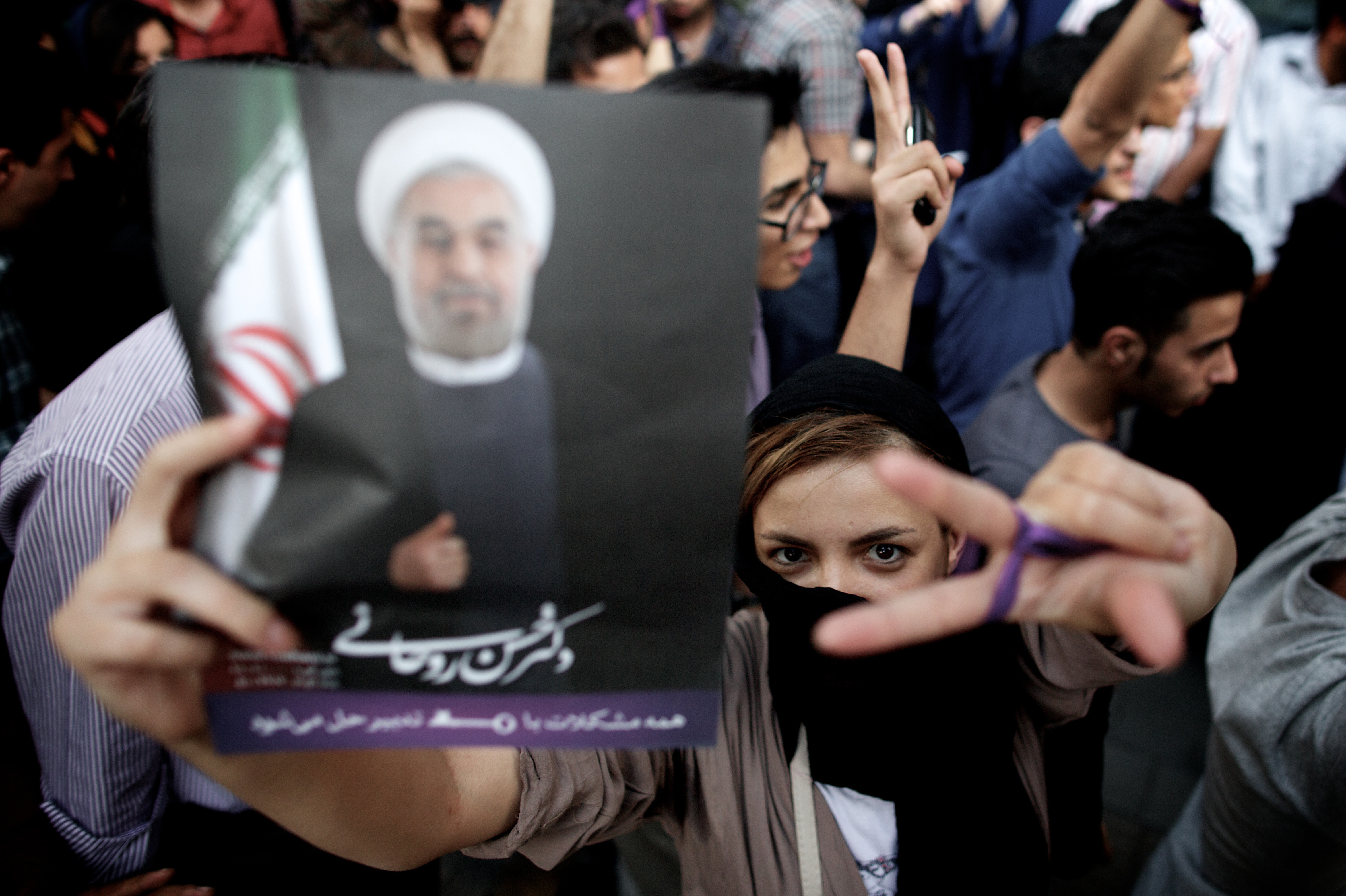
(Photo: An Iranian woman flashes the sign for victory as she holds a portrait of moderate presidential candidate Hassan Rowhani during celebrations for his victory in the Islamic Republic’s presidential elections in downtown Tehran on June 15, 2013. Iranian Interior Minister Mohammad Mostafa Najjar said Rowhani won outright with 18.6 million votes, or 50.68 percent. By Behrouz Mehri/AFP/Getty Images)

The View From Your Window Contest

vfyw_6-15

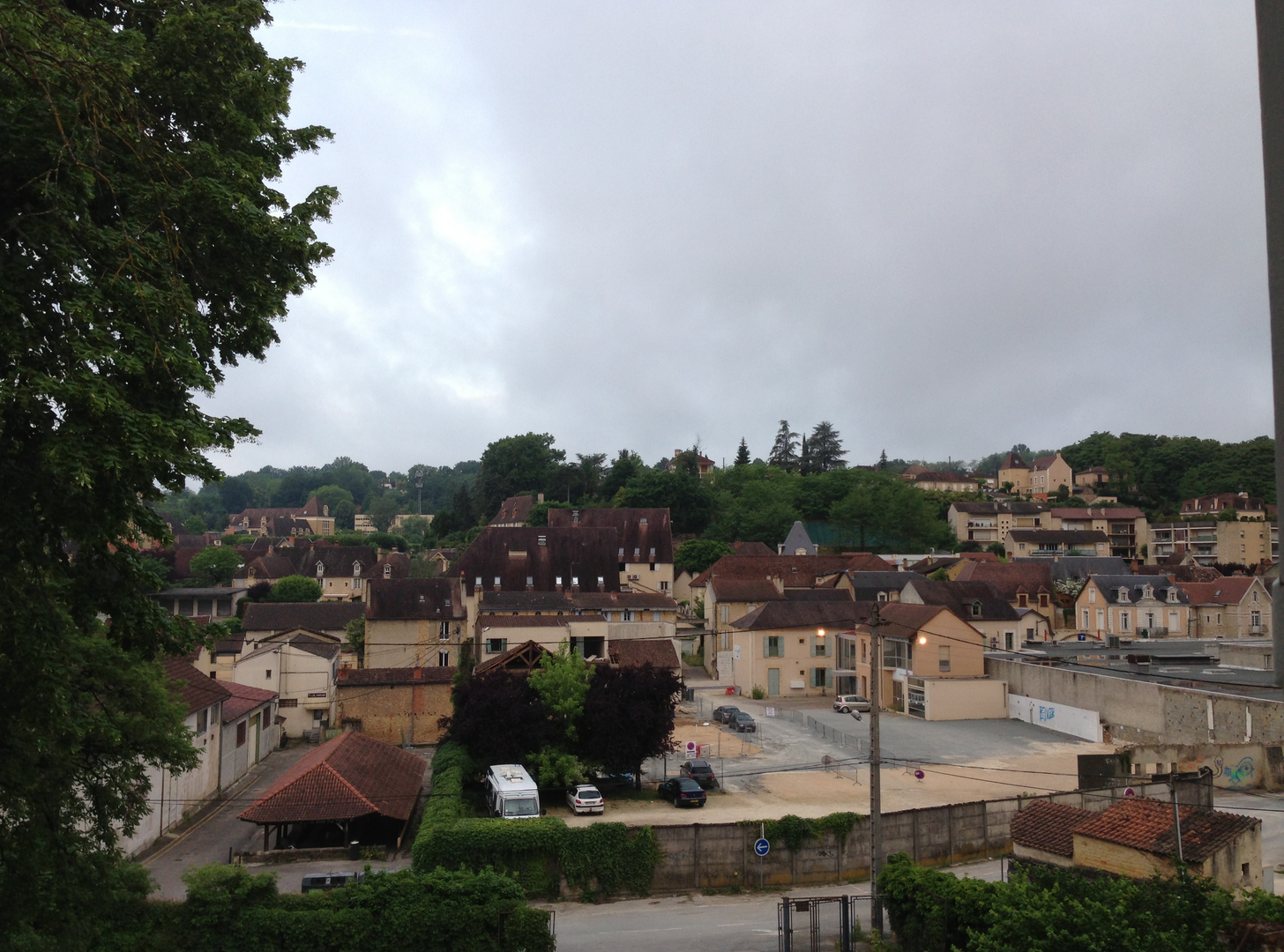
You have until noon on Tuesday to guess it. City and/or state first, then country. Please put the location in the subject heading, along with any description within the email. If no one guesses the exact location, proximity counts.  Be sure to email entries to contest@andrewsullivan.com. Winner gets a free The View From Your Window book. Have at it.

Iran’s Election Surprise?

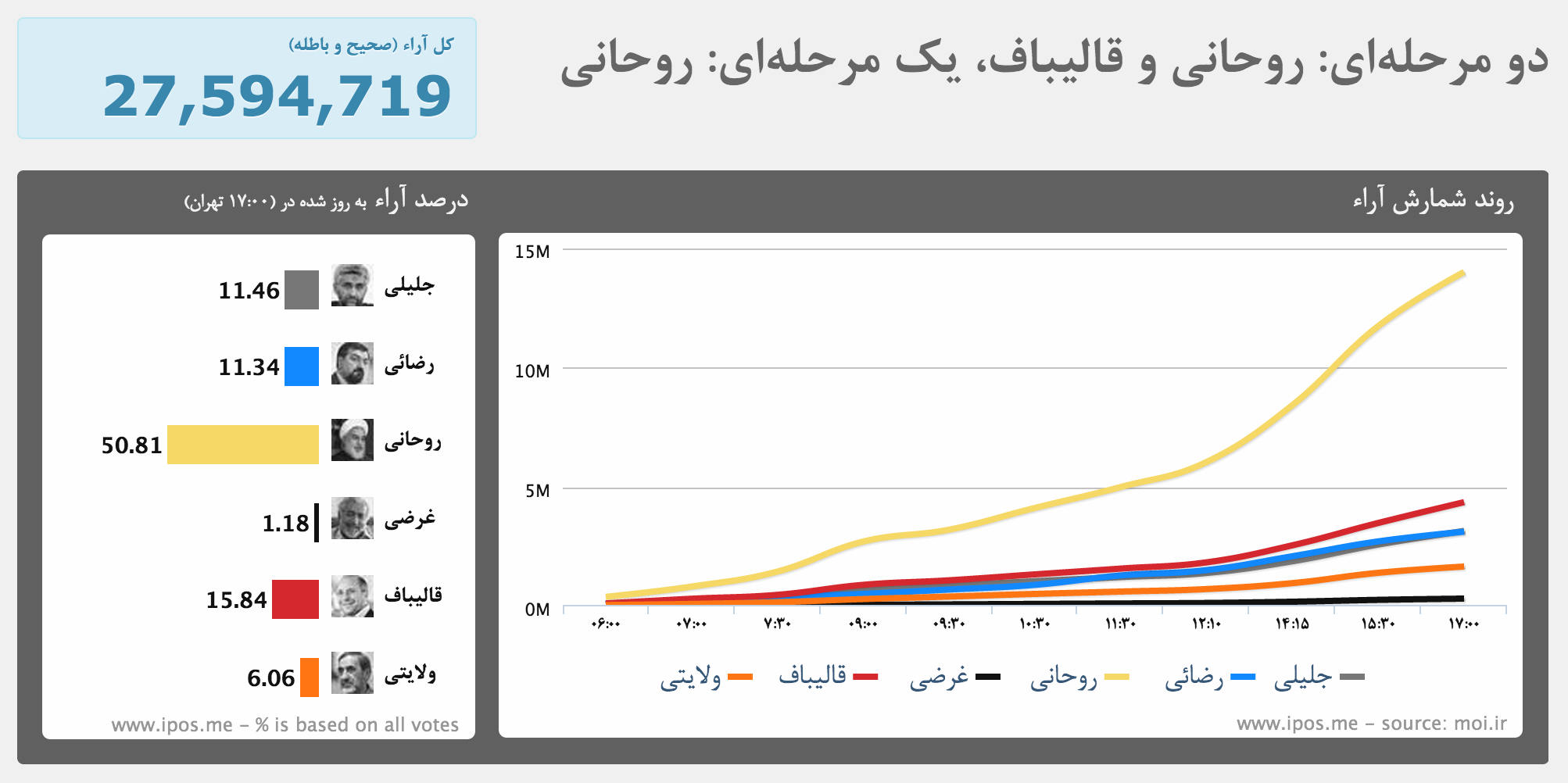
Here are the voting results as of 5 pm Tehran time, as tracked by Ipos.me:

ipos-iranelection-results

With the votes still be counted, reformist-backed candidate Hassan Rouhani is currently winning yesterday’s election in a landslide. We’ll have reax soon but in the meantime here’s a selection of tweets following the news as the results trickled out over the past 12+ hours:

https://twitter.com/thekarami/status/345670534509514752

https://twitter.com/SaeedKD/status/345711846042505217

https://twitter.com/Omid_M/status/345735721799278592

https://twitter.com/IranBlogger/status/345694591137230850

https://twitter.com/ianbremmer/status/346018038782521345

https://twitter.com/Najmeh_Tehran/status/345805085328158720

https://twitter.com/SaeedKD/status/345844909758099456

https://twitter.com/Najmeh_Tehran/status/345845437233762305

https://twitter.com/thekarami/status/345769771641475075

https://twitter.com/Najmeh_Tehran/status/345886784162500609

https://twitter.com/Omid_M/status/345882361784848384

https://twitter.com/thekarami/status/345882338527432705

https://twitter.com/shashj/status/345887742716157952

A Cutting-Edge Comedienne

Rebecca Onion at Slate‘s new history blog, The Vault, features the above performance by Jean Carroll, one of the first female stand-ups:

At a time when many moms on television were paragons of domesticity, Carroll’s act lampooned that image. In this clip, she’s dressed in a party dress, a choker, and heels. (She often wore fancy clothes to perform.) Working contrary to her prim-and-proper appearance, many of her jokes skewered suburban life, child-rearing, and marriage. Here’s Carroll on her new life in the suburbs:

In the country everything is done in groups. Two women meet up on the street, “Oh Agnes, I’m going to have a baby!” “Oh, so am I!” “Isn’t that wonderful! Who else can we get?”

Carroll’s material, which she wrote herself, still resonates after all these years. But the most charming aspect of this clip is Carroll’s small reactions to the big laughs she gets after delivering each punchline—a comical roll of the eyes, a little giggle, but nothing to interrupt the rapid flow of her delivery.

The Rubber Duck Menace

dish_rubberduck3

Rubber Duck was devised by Dutch artist Florentijn Hofman:

While something of a behemoth – measuring 10 metres wide, 11 long and 13 tall – the duck is friendly in appearance and has been stationed against the skylines of numerous cities since it first hatched from Hofman’s studio, with Auckland, Sydney and Sao Paulo among those to have enjoyed its company. It is currently bobbing around in Hong Kong’s Victoria Harbour.

Illegal copies of the art piece have been surfacing in other Chinese cities, rankling the state:

The fakes have been greeted with a dismayed editorial in newspaper the People’s Daily, which is generally held to be the press wing of the Chinese Communist Party. According to the column, the fake ducks provide the wider world with a poor impression of China’s efforts to create its own, original works. ‘The more yellow ducks are there, the further we are from Hofman’s anti-commercialisation spirit, and the more obvious is our weak creativity,’ the paper said. ‘It’s good that the rubber duck is popular, but it’s sad to see the innovation of our country go down. We often talk about awareness and confidence in our own culture, but where do they come from? Definitely not from following new trends.’ Fakery on this scale ‘will ruin our creativity and our future and lead to the loss of imagination’, it added.

More photo adventures with Rubber Duck here.

(Photo by Flickr user onebigfish)

(Hat tip: Core77)

A Poem For Saturday

Wigwam

“Medicine Song of an Indian Lover,” from the Ojibwa tribe:

1.

Who, maiden, makes this river flow?
The Spirit—he makes its ripples glow—
But I have a charm that can make thee, dear,
Steal o’er the wave to thy lover here.

2.

Who, maiden, makes this river flow?
The Spirit—he makes its ripples glow—
Yet every blush that my love would hide,
Is mirror’d for me in the tell-tale tide.

3.

And though thou shouldst sleep on the farthest isle,
Round which these dimpling waters smile—
Yet I have a charm that can make thee, dear,
Steal over the wave to thy lover here.

(From Wild Scenes in the Forest and Prairie, Charles Fenno Hoffman, 1839. Reproduced in American Poetry: The Nineteenth Century,Volume Two: Herman Melville to Trumbull Stickney, American Indian Poetry, Folk Songs and Spirituals, edited by John Hollander, published by The Library of America, 1993. Image: Details of Ojibwe Wigwam at Grand Portage by Eastman Johnson, c. 1906, via Wikimedia Commons)

Web Developers: They Didn’t Build That

James Somers questions the value of his field:

We call ourselves web developers, software engineers, builders, entrepreneurs, innovators. We’re celebrated, we capture a lot of wealth and attention and talent. We’ve become a vortex on a par with Wall Street for precocious college grads.

But we’re not making the self-driving car. We’re not making a smarter pill bottle. Most of what we’re doing, in fact, is putting boxes on a page. Users put words and pictures into one box; we store that stuff in a database; and then out it comes into another box. … I do most of that work with a tool called Ruby on Rails. … And the important thing to understand is that I am merely a user of this thing. I didn’t make it. I just read the instruction manual.

Update from a reader:

I’ve been a web developer since the late ’90s. James Somers is accurately describing a small percentage of the web development world that is unfortunately blown out of proportion by lazy sensationalist writers. While I am sure that there are people burning VC money on lavish salaries for guys to put boxes on pages that’s not how it goes where I work. But hey, Somers is an expert who works in the industry so obviously his take on it must be accurate, right?

As Mr. Somers has observed in response to being called out for his poorly-written screed, there are a lot of companies out there doing real work, making products that perform valuable and necessary services, and without skilled web developers that wouldn’t be possible. Mr. Somers also falsely implies that all it takes to succeed in this field is the ability to read a manual. That’s a bit like saying all it takes for an attorney to be successful is to have the ability to read a law book, or for an accountant to be successful the ability to do math. Where I work the developers have to actually know how to think and solve problems, and they must pass non-trivial coding tests to get hired. It’s damn tough to find qualified applicants for our numerous open engineering roles, where we wade through dozens of resumes from wannabe web devs to find the few who know what they’re doing.

Another:

The thing about programming is if you’re good at it, it’s gonna be really hard to imagine why other people aren’t. There’s this problem that a lot of companies use to test candidates, writing a program that can play FizzBuzz, and a shockingly large number of applicants fail it. As far as I’m concerned you should be able to do that on your very first day programming, but there you have it. I suspect something similar is going on with Somers, along with the all-too-common refrain that if it’s not ground-breaking it must not be worthwhile. Even if he were right, there are still a lot of people in the world who need boxes put on their webpages and clearly not everyone can do it for themselves. (Otherwise, they wouldn’t pay a lot of money to hire web developers to do it for them.) Sometimes these boxes are in the service of something really important and sometimes they aren’t, and that’s completely irrelevant to whether web developers should be making that much money making them. They make that much money because their skills are in demand and supply is scarce. Either programming is harder than we think or other people have mysteriously failed to catch on.

Obama Caves On Syria

US-POLITICS-OBAMA-LGBT

[Re-posted from earlier today]

Well, we don’t yet quite know what’s in the works – but once you start arming one side of a civil war, you become part of that civil war; the other side may target you; and as this sectarian conflict deepens across the region, the US will be seen as a Sunni power fighting Shiites. I cannot think of a worse policy position for this country – to take stand on the sectarian fault-line of the Muslim world and back one side over another. You think the other side won’t notice? You think Americans wouldn’t be targeted for this kind of meddling? Let Putin get bogged down in this hell, if he remains so 19th Century he feels he must. But we should have zero interest in that ancient religious dispute; zero.

And you can say you’re only arming them with anti-tank weapons and the like. Ben Rhodes was very careful not to say too much. But of course he did say far too much. Once you have committed to one side in a civil war, you have committed. The pressure from the neocons and liberal interventionists to expand this war will only increase – because either you fight to win or you shouldn’t fight at all. Yes, it’s the same coalition that gave us the Iraq catastrophe.

My strong view, vented last night as I absorbed this stunning collapse of nerve, is that we shouldn’t fight at all. We are damn lucky to have gotten every GI out of Iraq, and the notion of being sucked back into that region again – and to join sides in a sectarian conflict – is a betrayal of everything this president has said and stood for. It’s a slap in the face for everyone who backed him because he said he wouldn’t be another Bush or McCain or Clinton. If he intervenes in Syria, he will have no credibility left with those of us who have supported his largely sane and prudent foreign policy so far. Libya was bad enough – and look at the consequences. But Syria? And the entire Middle East? Is he out of his mind?

And can you think of a dumber war than this one?

The man who said he would never engage in a dumb war is apparently preparing to join the dumbest war since … well, Iraq. And by the way: who would you rather have in control of chemical weapons – Assad or the al Nusra brigades? Because it will be the al Nusra brigades who would seize the country if Assad falls. And you think those fanatics have the slightest loyalty to us?

One reason I supported Obama so passionately in 2008 and 2012 was because I thought he understood this and had the spine to stand up to drama queens like McCain and armchair generals like William Jefferson Clinton. But it is beginning to appear that this president isn’t actually that strong. We voted for him … and he’s giving us Clinton’s and McCain’s foreign policy. If Cameron and Hollande want to pull another Suez, for Pete’s sake be Eisenhower – not Kennedy.

My cri de coeur is here. Don’t do it, Mr President. And don’t you dare involve us in another war without a full Congressional vote and national debate. That wouldn’t just be a mistake; it would be a betrayal.

(Photo: Saul Loeb/Getty.)