They Don’t Make CEOs Like They Used To

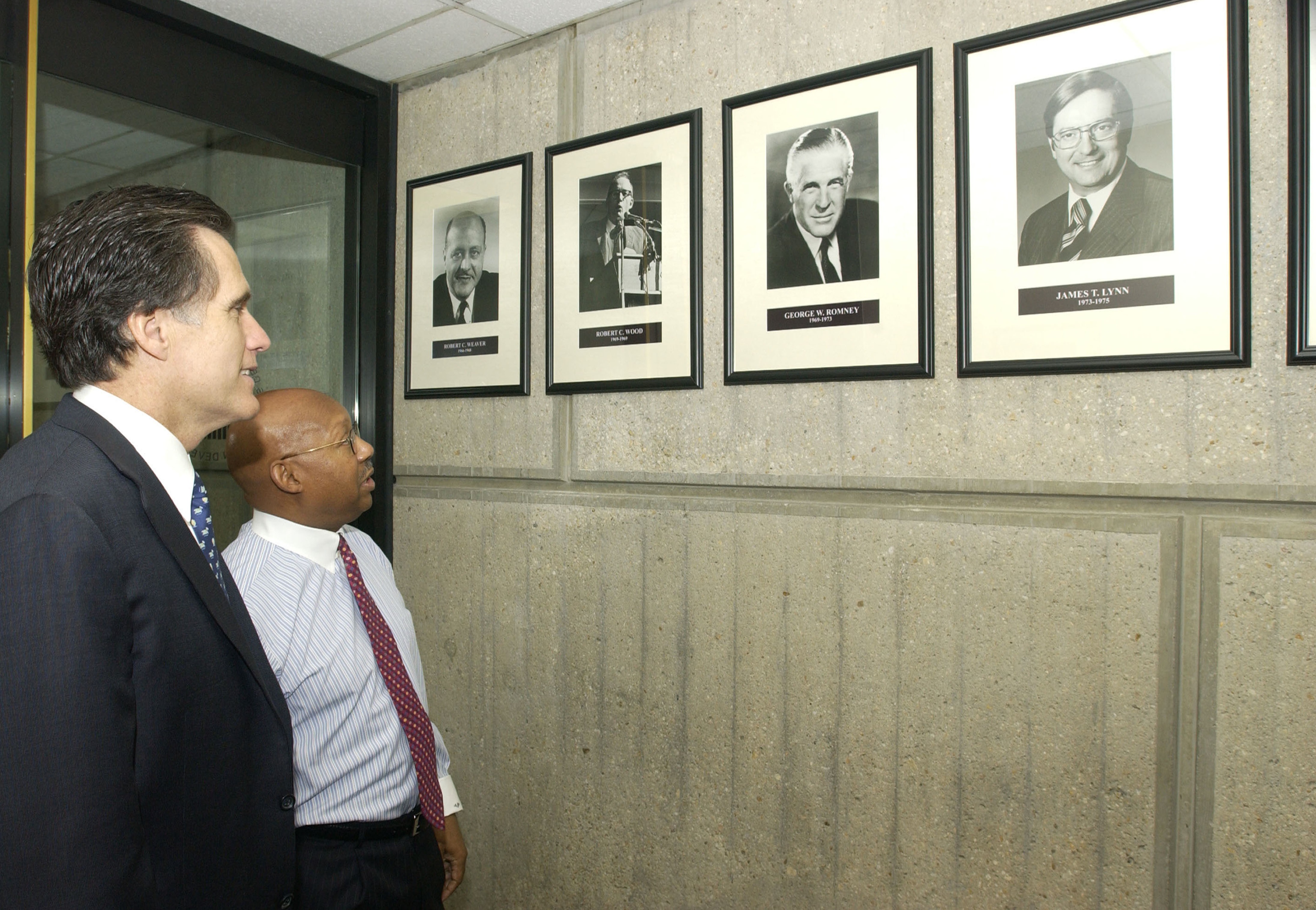
Mitt Romney With HUD Secretary

Chrystia Freeland asks today’s CEOs to take a lesson from Mark Mizruchi’s book The Fracturing of the American Corporate Elite, which tells the story of the Committee for Economic Development, a group of “engaged, moderate businessman from across the country” formed in 1942:

In order to maintain the system from which their privileges derived, they believed it would be necessary to attend to the welfare of the broader population. This meant supporting a high level of employment, the alleviation of poverty, the amelioration of racial disadvantage, and the provision of sufficient purchasing power in the population to consume the goods that American business was so proficient at producing.

This was the creed of the nation’s most influential corporate leaders, a group that supplied Cabinet secretaries to both Republican and Democratic Administrations. Today, with so much of the national economic conversation consumed by the budget deficit and which middle-class entitlements need to be cut to reduce it, that platform would place you on the left wing of the Democratic Party, and no leading business organization would advocate it.

Christopher Flavelle, meanwhile, is bothered by today’s chief executives “squandering their influence” by promoting partisan ideas rather than bridging the gaps:

The Business Roundtable, an association of chief executive officers of the largest U.S. companies, held a lunch for reporters this week on what’s wrong with the economy. A better question might be what’s wrong with the country’s chief executives.

In the face of persistently high unemployment and slow economic growth, the two executives hosting the lunch (the Roundtable insisted they not be identified) didn’t talk about this year’s government spending cuts, the best course for monetary policy or even reducing regulations. Instead, they talked about their plan to cut Social Security and Medicare, which they called a drag on economic growth. …

If business leaders really wanted to shore up Medicare, they could throw their weight behind cost-cutting mechanisms that are already in law but face enormous political opposition, such as the board of experts charged with limiting the rise in Medicare spending to just 1 percent more than gross domestic product growth. If they really wanted to ensure Social Security’s solvency, they could support eliminating the cap on income subject to the Social Security tax, which now stands at $113,700. That the Roundtable chose instead to push ideas that even Republicans seem to have quietly shelved says more about its members than the state of debate. It doesn’t matter whether these proposals are a heartfelt but unpromising attempt to fix the economy, or simply the Roundtable providing a soapbox for its members’ views about the role of government. The effect is the same: It isn’t likely to accomplish much.

(Photo: American politician (and future Republican Party nominee for the US Presidency) Mitt Romney looks at a portrait of his father, former Michigan Governer and US Secretary of Housing and Urban Development (HUD) George Romney, with then-incumbant HUD Secretary Alphonso Jackson, in Washington DC on May 3, 2004. By PhotoQuest/Getty Images)
The Death Of The Unpaid Internship?

Following a recent court decision forcing Fox Searchlight Pictures to pay two interns from the movie Black Swan “because they were essentially regular employees,” Duncan Black applauds:

Aside from the “fetch my coffee for free” aspect, unpaid internships shut out people from less wealthy backgrounds from important, desirable, lucrative, and influential career paths.

Yglesias disagrees:

My worry would be that we’ll replace zero-salary work/training positions with what amount to negative-salary training in the form of graduate school.

Both the unpaid summer internship and the master’s degree in journalism are based on the idea that eight semesters worth of college leaves most people ill-qualified for a paying journalism job without some further seasoning. And while requiring people to spend months working for free does put a substantial barrier in the way of someone who can’t get financial assistance from his parents, requiring someone to spend a year or two paying many thousands of dollars to a school creates a much larger barrier.

Scott Lemieux objects to Yglesias’ argument:

[N]on-affluent people can borrow money for graduate school but can’t borrow money to work for free.   This may not make sense, but this general framework is enormously unlikely to change.  Because of this, a de facto requirement to do unpaid internships is in fact a much greater barrier to the non-affluent than the requirement to obtain a graduate degree is

Your Brain Has Been Branded

Tom Jacobs explains a recent study that suggests big brand names neurologically “override” consumers’ usual patterns of judgment:

The researchers describe an experiment featuring 15 people ranging in age from 23 to 50. While their brains were scanned using fMRI technology, they were given a series of small drinks of cola. After each swallow, they rated how pleasurable it tasted on a scale of one to eight. They were told they were sampling Coke, Pepsi, River Cola (a generic brand sold in Germany), and a new drink created in a test laboratory, which was labeled T-Cola. In fact, they always received the same mixture of the first three brands. Participants rated the “Coke” and “Pepsi” samples as tastier than either the generic or the test brand. “We did not find a significant difference between Coca-Cola and Pepsi-Cola preference,” the researchers write.

Relatedly, Planet Money describes Coke’s new ad campaign in Burma, where, until recently, sanctions prevented Coke from selling its products. One of the strategies being used to sell “Coke to people who may not remember what it tastes like”:

[Shakir Moin, the head of marketing for Coke in Southeast Asia,] says he started to go back in the Coca-Cola archives. He was looking at how the company marketed its product before the internet, before TV, even before radio. Eventually he found his perfect model for Myanmar, place where nobody knew anything about Coke — Atlanta, 1886.

Back then the hot advertising trend was wall posters. Moin noticed that in the beginning, Coke didn’t use the posters to talk about friends or happiness or style. It talked about what the product tasted like. It simply described it. Moin pulled out two words in particular that would form the core of his Myanmar campaign — “delicious, refreshing.”

Those two words from the 1800s are now on the Myanmar bottle, and on the billboards and fliers that advertise the product.

Face Of The Day

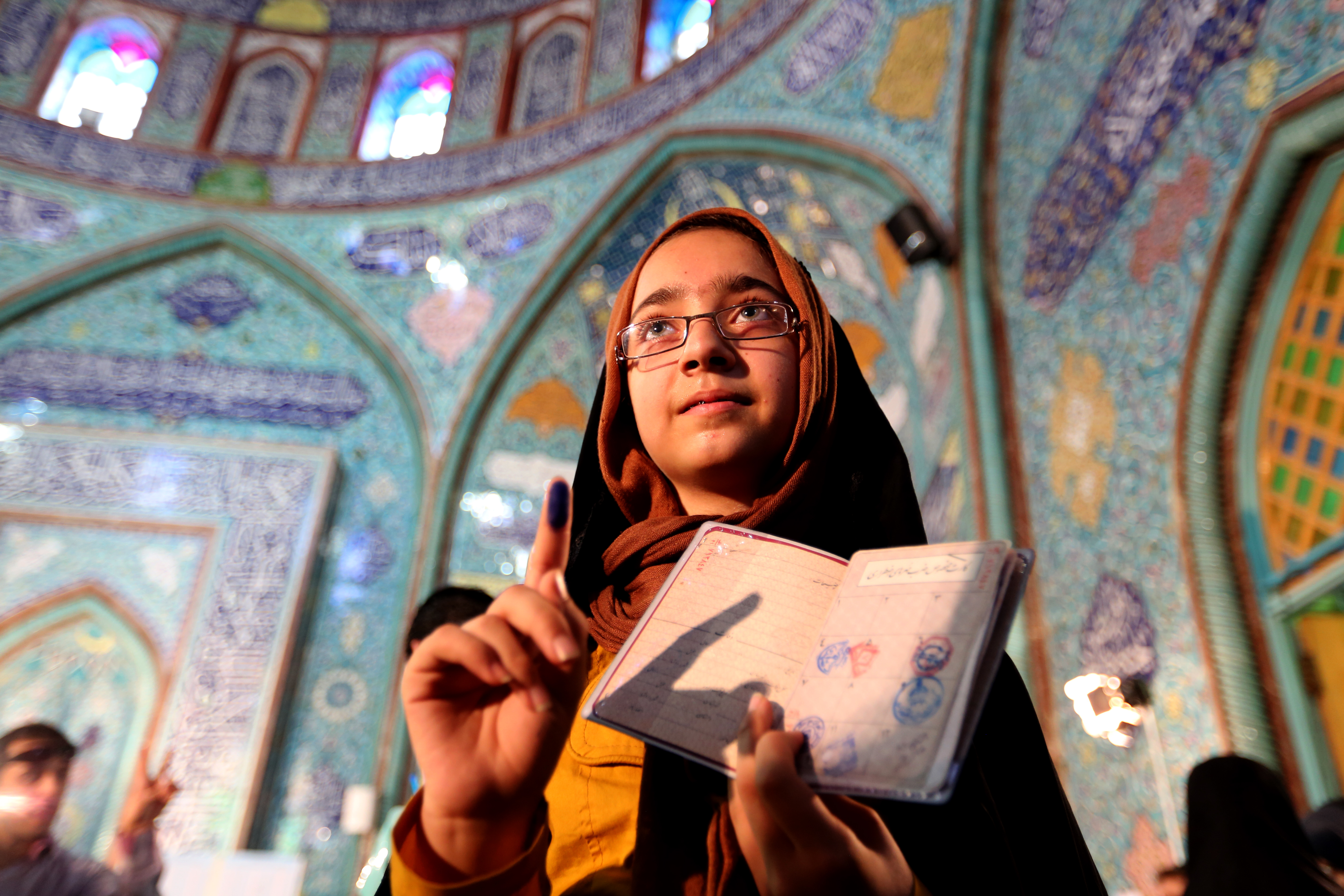
IRAN-VOTE

An Iranian woman displays her ink-stained finger as she casts her vote in the first round of the presidential election at a polling station in Tehran on June 14, 2013. Iranians are voting to choose a new president in an election the reformists hope their sole candidate will win in the face of divided conservative ranks, four years after the disputed re-election of Mahmoud Ahmadinejad. By Atta Kenare/AFP/Getty Images.

Diversity Pays Dividends

TNC believes that Republicans suffer from a lack of diversity:

I’ve said this before but conservatives often perceive liberal attachment to diversity as a kind of “everyone’s a winner” cuddle party, where we sit around exchanging rice-cakes and hating on the military. But the great strength of diversity is it forces you into a room with people who have experiences very different from your own. It’s all fine and good to laugh at Sherrod Brown dancing to Jay-Z. But dude is outside his lane and he’s learning something. M.C. Rove should be so lucky.

If you are not around people who will look at you like you are crazy when you make stupid claims about other people’s experiences, then you tend to keep saying stupid things about other people’s experiences.

Dreher objects:

TNC’s point that we benefit from learning perspectives different from ours is perfectly valid, even anodyne. But it’s simply untrue that “diversity” in practice means what liberals say it means. If liberals meant what they said, they would push for “diversity” to include political conservatives, Southern Baptists, and others unlike themselves. How often does that happen? It seems that ”diversity” only applies to racial and sexual minorities. Conservatives understand perfectly well that the concept of diversity is an ideological construct that implicitly marginalizes them. That is the essence of the conservative resistance to “diversity” — that it’s a racket and a sham. TNC’s post prescribes diversity to conservatives to get them to be less “stupid,” and again, I agree that it’s always good to try to understand the perspective of others. But: every conservative has heard liberals say incredibly ignorant, stupid, untrue things about conservatives, but one rarely hears liberals worry about their own epistemic closure resulting from their monocultural liberalism.

A Sunny Future For Veterans?

Tina Casey applauds a new program that is reducing the military’s carbon footprint while providing job training to servicemembers and veterans:

The nonprofit career education organization Solar Energy International (SEI) has taken note of the surging interest in solar jobs among military veterans, and it has come up with a scholarship plan to help both veterans and active duty military jump-start new careers in the solar industry. The program is further evidence that the creation of a culture of energy awareness in the Defense Department is having a direct impact on service members and their home communities…

The need to create an energy awareness platform for deploying new technology effectively is best demonstrated by the Army’s new “The Power Is In Your Hands” energy awareness initiative, which notes that sustaining a Soldier in today’s battlefield takes more than 20 gallons of fuel per day, compared to two or less in World War II. Private sector companies are already taking note that military veterans can serve as powerful “green ambassadors” for introducing renewable energy technology to civilian communities, particularly in the solar industry, and the Army’s Net Zero program was designed in part to serve as a role model and best practices test bed for its host communities.

Jeff Spross agrees:

The new scholarship is a direct response to an uptick in demand, probably driven by the military’s big ongoing push into renewable power and energy efficiency. … [T]he military is pushing ahead with everything from geothermal projects, to electric vehicles, to solar cells that can be stitched into backpacks, clothing, tents, or that can even be rolled up or unfurled like placemats — thus relieving soldiers of the need to cart around much heavier battery packs.

Given all that, it’s little wonder there are more soldiers and veterans looking to carry those skills and experiences into the private sector.

#HistoryLesson

Alexis Madrigal profiles the man behind the hashtag:

The practice of putting a pound symbol before a key word or phrase or acronym began on Twitter, when one guy, Chris Messina, suggested that Twitter allow them. On August 25, 2007, Messina wrote up his proposal and posted it to his blog.  … The history of any invention is complicated, as Messina’s foundational post details, but this is one case in which some individual human being — in the right place at the right time with the right contacts — came up with something new and watched the whole (online) world adopt it. That’s pretty amazing when you think about it.

Iranian Election Update

https://twitter.com/thekarami/statuses/345613295564251136

Voting ended at 11 pm in Iran. Saeed Kamali Dehghan reports that a second round seems likely:

Election officials at Iran’s interior ministry were yet to announce final results but a high turnout after a last-minute excitement caused by the reformists’ endorsement of a moderate candidate boosted the chances of a second round next Friday. Hassan Rouhani, the moderate cleric backed by reformists and many opposition figures, and Tehran’s pragmatic mayor, Mohammad-Bagher Ghalibaf, looked likely to emerge on top, with the chief nuclear negotiator Saeed Jalili, thought to be the favourite candidate of the clerical establishment, falling behind.

He also points out:

In a strange paradox, the state is so keen during elections to showcase a country ostensibly united despite it differences that normal stringent rules do not apply. Thus a picture published by a conservative news agency showed a young woman with virtually no head-covering, her headscarf loosely tied at the back of her head. Iranian women voting abroad reported that they were able to vote without wearing the hijab despite normally strict rules imposed by embassies.

The BBC, meanwhile, complained that Iran had launched a new campaign of intimidation against staff working for its Persian service in London. Relatives of 15 journalists have been harassed, summoned for questioning and threatened.

Regardless of which candidate is ultimately declared the winner, Reza Aslan thinks we might end up missing Ahmadinejad and how extensively he took on Iran’s clerical establishment:

In his second term, Ahmadinejad steadily chipped away at the clergy’s religious, economic, and political control. First, he started questioning the mullahs’ self-proclaimed status as the arbiters of Islamic morality — and especially its obsession with proper Islamic dress. He condemned the actions of the country’s dreaded morality police, saying, “it is an insult to ask a man and woman walking on the street about their relation to each other.” Ahmadinejad’s media advisor, Ali Akbar Javanfekr, was even arrested for printing articles criticizing the law forcing women to wear veils.

The president then began repeatedly criticizing the clergy for their enormous wealth, which stood in stark contrast to most Iranians’ economic suffering under international sanctions. In a surprise move, Ahmadinejad curtailed the amount of money that the government pays to religious institutions, which have ballooned over the past three decades into a source of tremendous personal enrichment for many in the clerical elite.

Ahmadinejad also took a number of bold steps to wrest political power away from the mullahs. He ceased attending meetings of the Expediency Council, one of Iran’s many Orwellian committees whose purpose is to protect the political interests of the clergy. When Iran’s oil minister stepped down, Ahmadinejad took over the ministry himself until a permanent replacement could be found, establishing an extremely significant presidential precedent in the process. … But Ahmadinejad’s challenge to the clerical regime goes beyond any single skirmish with the supreme leader. Perhaps more important is his very public questioning of the foundation of the Islamic Republic’s political and religious authority. “Administering the country should not be left to the [supreme] leader, the religious scholars, and other [clerics],” the president said in 2011.

Aslan adds that “the one thing that the top contenders to replace [Ahmadinejad] have in common is their comical obeisance to the supreme leader”. Mackey and Enduring America are still live-blogging. Our earlier coverage from today is here.

Do Republicans Care About Healthcare?

Paul Waldman thinks the Republicans’ biggest challenge in the fight against Obamacare is that “conservatives just don’t care”:

That isn’t to say there are no conservatives who care about health care, because there are a few (like the folks at the Heritage Foundation who came up with the individual mandate!). But they are few and far between on the right. Your typical Republican, on the other hand, cares deeply about issues like taxes and defense policy, and works hard to understand them and come up with ideas for where they should go in the future. But had President Obama not passed health-care reform, they would have been perfectly happy to let the status quo continue indefinitely.

Drum agrees:

I don’t blame Ponnuru and others for trying to get conservatives to embrace some kind of healthcare plan. I think they’re kind of crazy to think their proposed plan would (a) work, (b) be politically attractive, or (c) be popular, but maybe that’s just my liberal bias talking. What’s not my liberal bias talking, however, is the plain fact that conservatives don’t care about expanding access to healthcare. As Waldman says, the evidence on this score is overwhelming. They opposed Medicare. They opposed CHIP. They’ve opposed every expansion of Medicaid ever. Only brutal strongarm tactics got them to support their own president’s prescription drug plan, despite the sure knowledge that killing it would likely lose them the White House the following year. And of course, they’ve opposed every Democratic attempt to pass universal healthcare legislation in the last century.

During that same period, Republicans have never shown any interest in a plan of their own. They periodically put on a show whenever Democrats propose something that looks like it might have legs, but it’s purely defensive. When the threat goes away, so does the show. This has happened like clockwork for decades.