The difference between conservative reformers and pseudo-conservative bullies is that the reformers watch South Park. Or you can just blame it all on Weigel.
Malkin Award Nominee
“That’s the attitude necessary to victory, a core belief that whatever Democrats are in favor of is a bad thing for America, because if it was good for America, Democrats would be against it. Democrats are the Evil Coalition of Liars and Fools, and the job of Republicans is to convince America of this basic truth,” – Robert Stacy McCain, proving Josh Barro right.
Gay-Baiting Josh Barro
Below is an almost poignant recent video of a man still clinging to the hope that, at some point, the GOP may be able to have a conversation about how to address the crisis in middle class mobility, security, and job growth:
How does the right react to a smart young writer trying patiently to bring its agenda back to what he thinks is a winning formula? Erick Erickson calls him a faggot. Not in those words, exactly, but by egregiously, pre-emptively dismissing Barro’s arguments in the following way:
Josh Barro is a late twenty-something gay male who hates conservatives, champions Obamacare, attacks Republicans for wanting to oppose it, supports the tax hikes that come with Obamacare, wants to rid the GOP of social conservatives, and gets fawning pieces of prattle composed by liberals who want everyone to know that their friend Josh Barro is a conservative reformer who wants less conservatism.
Josh is currently the Politics Editor at Business Insider, and used to write for Bloomberg View, after being a Senior Fellow at the Manhattan Institute. He does not “hate” conservatives; he wants to rescue conservatism from its current nihilism, bile, anti-intellectualism and loathing of modern life. Josh defends himself better than I can. Erickson gets most of his facts wrong – but none of that matters past the “gay male” soubriquet.
I recall asking a leading conservative intellectual why he thought most of the rightwing press refused to review “The Conservative Soul.” His answer: if you weren’t a homosexual, they might. He didn’t seem shocked by this or offended. Just telling the truth. All I can say is that if the GOP wants to escape from its pseudo-conservative cultural and intellectual backwater, they’ll need more Barros and Frums and fewer Ericksons and Malkins. But I won’t be holding my breath. And I won’t wait for others in the Republican reformist camp to call out the homophobia either. They have a base they want to keep happy.
Previous Dish on Chait’s profile of Barro here and here. Our Ask Anything archive is here, and Josh will be back soon with other thoughts on the intellectual crisis on the right, and how to get past it.
Washington’s Vanishing Veterans

James Hohmann ponders the implications of the death of Frank Lautenberg, “the Senate’s last World War II vet”, at age 89:
The New Jersey Democrat, who enlisted in the Army at 18 and shipped off to Europe, was the last of 115 senators who served during World War II. They were more likely to work together and avoid petty partisanship than their successors. Most, including Republicans like Bob Dole of Kansas, came home believing that government could be a force for good. They internalized a leeriness of war and were committed to caring for fellow veterans. …
A dwindling number of senators served in subsequent wars. Only 14 of 100 senators now have worn the nation’s uniform, and three of them have announced plans to retire. In the House, it is fewer than one in five. [Rep. John] Dingell said those who have fought in war are often leeriest about using force.
Amy Davidson hopes that he will serve as an inspiration to a new generation of veteran legislators:
Lautenberg enlisted in the Army in 1942, the year he turned eighteen, and was an ordinary soldier in the Signal Corps for the rest of the war. One of his many legislative battles was to expand the education benefits connected to the G.I. Bill, which had helped him to attend Columbia. His status as the last of his war’s veterans in the Senate is worth reflecting on, but one wonders, even more, what younger veterans going into politics now will do with what they learned. There is an empty space for his cohort in the Senate, but an emerging one for veterans of Iraq and Afghanistan in the House. Their ranks include women like Tulsi Gabbard and Tammy Duckworth, whose presence is no eccentricity. It is part of the America Lautenberg, and the liberalism he aspired to, helped build.
(Photo: U.S. Senator and World War II veteran Frank Lautenberg (D-NJ) speaks at a free veterans job fair at Rutgers University on March 29, 2010 in Newark, New Jersey. Public and private sector employers attended along with agencies providing support to veterans. First time jobless claims numbers fell to their lowest level in six weeks last week as the economy shows possible signs of recovery. By Mario Tama/Getty Images)
How Out Of It Is Bob Woodward?
My initial reaction to the Daily Caller’s rigged chart of White House visits by the IRS head, Douglas Shulman, was O’Reilly’s and Woodward’s. But in a matter of seconds, it was clear that there was a grotesque distortion. Later, we got to the bottom of the question, and found nothing there. A definitive piece by Garance Franke-Ruta also put the matter to rest.
But O’Reilly is, as we know, immune to facts when they get in the way of smearing Obama as a second Nixon. That’s no surprise. Roger Ailes runs a tight propaganda ship, just as he did when he worked for, er, Nixon. But why is Bob Woodward joining in? Here he goes again:
“This fiction that somehow [The IRS is] totally an independent agency is absurd,” the legendary journalist said Monday on “The O’Reilly Factor” on Fox News, saying that in the Nixon era, the Treasury secretary refused to audit Democratic groups when the IRS commissioner was asked to do so by the White House. “Clearly in the pipeline, lots of people knew some of this or should know it. And I agree, this should be investigated, but you know who should lead the investigation? President [Barack] Obama.”
Notice that his one piece of evidence that the White House meddles with the IRS is from the criminal Nixon administration. Any evidence apart from that, Bob? Have you even seen the careful reports proving this a fake story? Do you even care? And by what authority should the White House investigate an agency designed to be as independent of the White House as possible? Can you imagine the ratings Ailes would get out of Obama doing that? Those who should investigate are not those now recklessly accused. The Congress should find out if there’s anything of substance there, and so far, no dice.
Whence Woodward’s bile? Irrelevance in Obama’s Washington, one senses. But aiding and abetting Roger Ailes, who crafted Nixon’s media strategy in 1968? That’s more than bile. It’s bitter.
Mental Health Break
Their confusion is our entertainment:
Putting Your Money Where Your Mouth Is
When partisans are asked to do just that, they become less partisan:
Without any money involved, Democrats’ estimates of the change in unemployment under Bush were about 0.9 points higher than Republicans’ estimates. But when correct answers were rewarded, that gap shrank to 0.4 points. When correct answers and “don’t knows” were rewarded, it shrank to 0.2 points. [Political scientists John Bullock, Alan Gerber, Gregory Huber and Seth Hill] conclude that false answers — like Democrats saying that casualties in Iraq increased from 2007 to 2008 — are just cheap talk, a way to signal a party affiliation rather than a sincere belief.
GMO-phobia

Kevin Bonham criticizes the Union of Concerned Scientists for their opposition to genetically modified organisms (GMOs) and genetic engineering (GE) of produce:
I should be clear that I support UCS generally, and their work on agriculture specifically. Their roadmap for healthy farm policy is a wonderful and succinct explanation for what’s wrong with the way we currently grow food, and policy proposals to make it better. But GE is a technology (among others) that can help us make it better. Yes, they should be regulated, but so should new varieties produced by techniques like mutation breeding. Yes, we need to move away from monoculture and industrial farming practices, but that’s true of GE and organic farming alike. Genetic engineering, like any other technology can be used for good and for ill. It can be helpful and it can be dangerous. New regulations and policies should be technology-neutral, and focus on outcomes.
PZ Myers similarly downplays concerns about GMOs:
[T]here is established policy in many countries and states to prohibit use of GMO crops. When a small patch of GMO wheat was found in Oregon, Japan responded by shutting down all wheat imports from Oregon. That’s nothing but fear based in ignorance. All of our crops, everyone’s crops, are heavily modified genetically. Wild strawberries are tiny little things. Corn is a hybrid monster shaped by centuries of selection, twisted from a seedy little grass into this weird elaborate conglomeration. Wheat and barley and rye are the product of thousands of years of genetic reshuffling and selection. Walk into the produce section of your grocery store — do you really think all those fruits and vegetables are unshaped by human hands?
This strange unfounded fear of GMOs is unfortunately most strongly expressed in the political left. It’s embarrassing that political progressives are being made to look bad by raging superstition and unscientific claims. … Sometimes I wonder if the GMO controversy isn’t just a giant red herring thrown into the debate about the future of agriculture just to distract us from what should be real concerns.
(Photo: People hold signs during a demonstration against agribusiness giant Monsanto and genetically modified organisms (GMO) in front of the White House in Washington on May 25, 2013. By Nicholas Kamm/AFP/Getty Images)
Collecting Evidence On Cold Cases
Lyle Denniston recaps yesterday’s SCOTUS ruling:
Treating the solution of unsolved crimes as a legitimate part of routine police station “booking” procedures, a divided Supreme Court on Monday upheld the power of government at all levels to take DNA samples from every person legally arrested for a “serious” new crime. What a suspect may have done in the past, the Court majority ruled, is a part of the profile that police may constitutionally begin to assemble at the time of arrest for a separate offense.
Justice Anthony M. Kennedy, writing for a five-four majority, insisted that the ruling in the case of Maryland v. King (docket 12-207) involved little more than what happens when police take a suspect’s fingerprints or mug shot. But Justice Antonin Scalia, writing for the dissenters, said the Court had validated the use of scientific evidence taken without a warrant not to make an identification but to gather evidence to solve cold cases — something he said the Court has never allowed before.
Lauren Kirchnem wonders, “Is the DNA-fingerprint comparison an accurate one?”:
In an age when an artist can pick up an old piece of chewing gum from the sidewalk and create a 3-D model of the gum-chewer’s face, it sounds a bit naïve.
Orin Kerr’s perspective:
It’s hugely important as a practical matter, but it’s not very interesting from a theoretical or academic standpoint. The difference between the two opinions largely hinges on how you characterize the purpose of the search. For the majority, per Justice Kennedy, taking and analyzing DNA samples upon arrest is okay because taking DNA is generally about identifying the person under arrest, which is a very important government interest and renders the search constitutional. For the dissent, per Justice Scalia, taking DNA isn’t okay in this case because it really had nothing to do with identifying the person and was just about collecting evidence of other crimes.
Doug Mataconis is uncertain about the wisdom of the ruling:
As the dissent notes, some 23,000,000 people will be arrested or one reason or another before their mid-20s. In many cases, they will be completely innocent of the charges they are arrested for. Under the Court’s logic, every single one of these people will now be required to give up a DNA sample regardless of whether there was probable cause to ask for such evidence or not.
Noah Feldman is less conflicted:
If DNA sampling was actually like fingerprinting, this argument might be convincing. But of course it isn’t. Fingerprints are a phenotype that reveals nothing except a random pattern that no two individuals share. DNA, however, is your genotype: the blueprint for your entire physical person. If the government has my fingerprints, it’s like they have my randomly assigned Social Security number. If it has my DNA, it’s like they have the entire operating system.
The Brain Of The Beholder
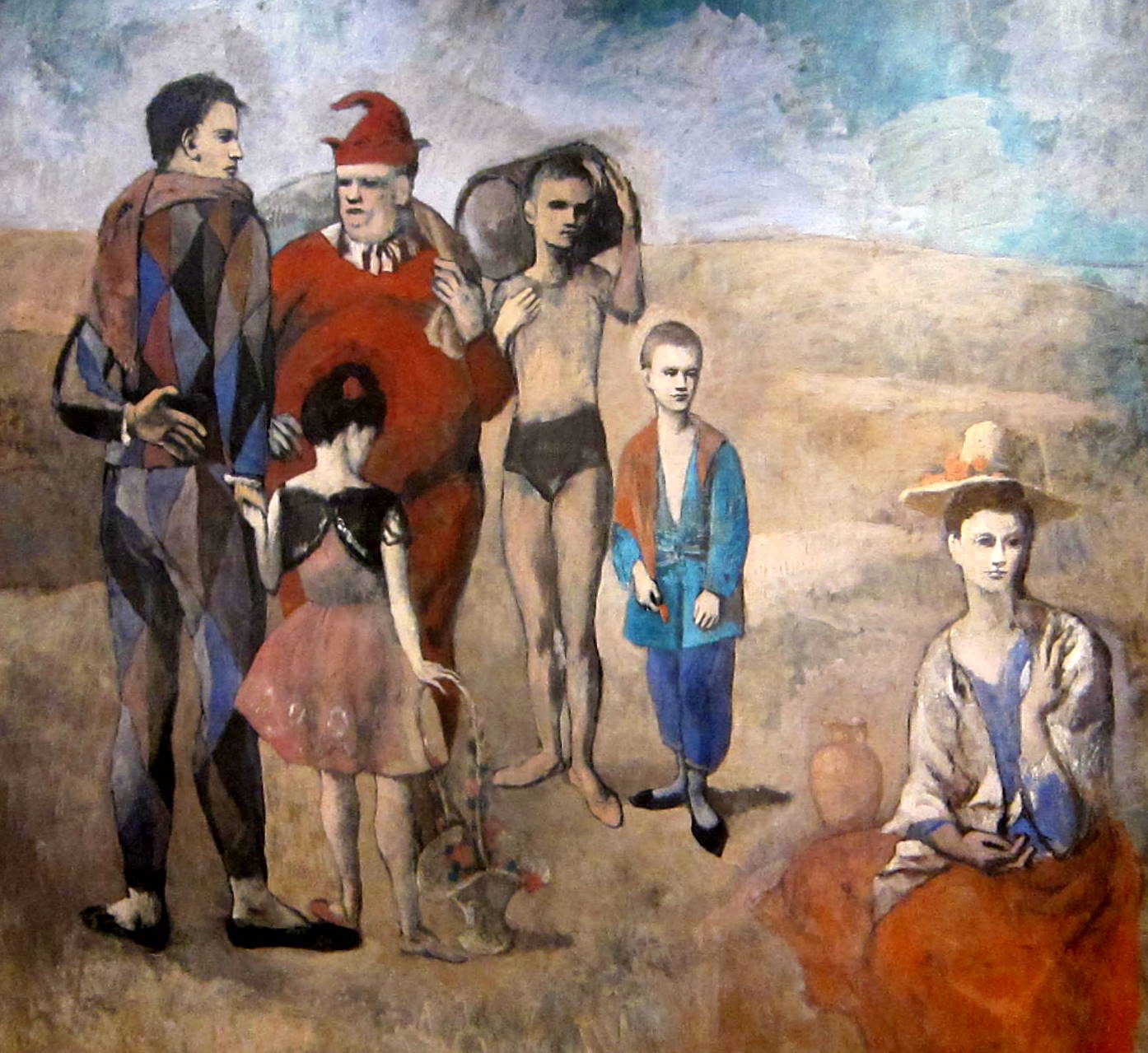
Priscilla Long admires our brain’s capacity for understanding art:
[T]he brain is an artist, creating images out of separate visual components. Maybe our ability to read a curve drawn on a flat surface as a three-dimensional figure is related to our reception of visual data from the world as edges—lines and curves. Maybe when artists draw they are doing with their hand what the brain is doing with its electrical pulses.
Consider, too, our brain’s extensive face-recognition equipment, including the ability to read feeling in facial expression and body language. Our “face patches,” located low in the temporal lobe, along with our emotion-tracking amygdala, light up equally when confronted with a face or a picture of a face. Art is intermingled with biology and inseparable from it. As we are wired to recognize faces, so portraits and self-portraits—images of the human face and body—have proliferated throughout the history of art.
And too, our brain has its “theory of mind”—specific areas steadily assessing what’s going on in the next person’s head. We have our mirror neurons that fire when we move and fire in just the same way when somebody else moves. Our “theory of mind” works in life and in art. When viewing the sad, disconnected, gaze-averting circus figures in Picasso’s painting Family of Saltimbanques, we may feel sad, though we are looking at nothing more than lines and color on a flat surface.
(Picasso’s “Family of Saltimbanques,” dated 1905, via Wikimedia)


