The Dish is seeking a full-time paid intern – details here. Resumés and cover letters are due by the end of Monday, May 20.
The Paranoid Style
Charles C. W. Cooke offers up some “praise”:
By reminding its citizenry that government tyranny is not an abstract concept, the IRS has done America a considerable favor. “Strange how paranoia can link up with reality now and then,” wrote Philip K. Dick in A Scanner Darkly. Indeed. Next time an authoritarian explains how, say, a national gun registry will be just swell — and labels its naysayers as neurotic — his opponents will have a new and useful shorthand: “IRS scandal.”
Why, you might ask, do I use “paranoia,” instead of the more palatable “skepticism”? Paranoia, after all, is an involuntary reaction — less of a tendency to “wait and see” than a recipe for constant fear. I will tell you why: because reflexive suspicion of government power is a magnificent and virtuous tendency, and one that should be the starting point of all political conversation in a free republic.
Jonah Goldberg agrees that the “fear of tyranny, healthy and unhealthy, are American traits, not right-wing ones”, but is less gung-ho about embracing the word “paranoia”:
If you know in your gut something is wrong, but you lack the ability to distinguish your emotions and instincts from facts and reason, it is all the more likely you’ll succumb to paranoia — and that’s a bad thing.
Cooke doubles down:
The word “skepticism” isn’t quite strong enough for me because one can be convinced from a position of skepticism, “Look, we’re not doing anything bad. How about it?” As a general rule, I want people far more afraid of the government than that would allow. I want people saying, “I don’t care how safe you say it is, I’m just not doing it. Ever.” There is never going to be a government or a society in which “tyranny is not just around the corner,” to borrow a phrase from the president. Never, ever. And there are never going to be people who can be trusted to rule.
What Will Drones Do?

Use of domestic drones is expected to increase greatly in the near future. Many of the applications are more mundane than you’d expect:
[T]he vast majority of drones in the United States will probably be used for agriculture. According to a recent report from the Association for Unmanned Vehicle Systems International (A.U.V.S.I.), a trade group, over ninety per cent of the U.A.V. industry’s possible economic impact in 2015 (or about two billion dollars) will be agricultural. Drones can be used to more precisely spray crops, keep track of growth rates and hydration, and identify possible outbreaks of disease before they spoil a harvest.
Interactive version of the above map here.
The Anti-Equality Money Dries Up
Last month, Stephanie Mencimer reported that the Mormon Church has largely excused itself from the marriage equality fight. Her follow up on the subject includes more good news:
[Fred] Karger, the California activist who helped call attention to the church’s Prop. 8 role, believes that without the Mormons’ money and organizing clout, the fight has been left to a handful of extremely conservative Catholic groups such as the Knights of Columbus and NOM, none of which has much in the way of grassroots organizing skills. Indeed, a whopping 90 percent of NOM’s funding comes from only about 10 individuals. According to the most recent IRS filings available, it raised nearly $3 million less in 2011 than it did in 2010, a reduction of about one-third. In 2012, according to Human Rights Campaign, gay marriage proponents in four states considering marriage bills outraised NOM by $20 million.
Writing Within The Lines
Noreene profiles “New Girl” show-runner Liz Meriwether:
“Some of the beauty of writing for network is that there are so many things you can’t do, but that sort of pushes you to do things you didn’t even think you could do to get around that,” says Meriwether. “I do miss going there, I really do, and I hope—I want—in the future to write something that gets a little bit dirtier and goes there a little more. But it has been a really good exercise for me in learning not to rely on that, in learning, like: OK, so we can’t show boobs, we can’t say the word ‘dick,’ we can’t just say the most shocking thing. We have to come up with a way around it.”
One way around the obstacles was to anchor the show in a character who is a bit of a prude. Jess’s girlishness was something critics initially found off-putting about the show, but Meriwether wasn’t creating a symbol, after all. She was looking for things she found funny, then finding means for getting them across. And so there was a whole episode in the first season during which Jess is afraid to say “penis.” As Meriwether delights in recounting, in that context, standards and practices allowed five instances of the word. This year, she and her writers tried to get seven penises into an episode; that was too much.
During a debate over network TV, Willa Paskin compares “New Girl” to “Girls”:
Why is “New Girl” downgraded so drastically because you’ve seen something like it before? I get that originality counts, but I think this is part of the strain of Book Report-ism that has crept into TV-watching (in the corner of the universe that writes about “Girls” on the internet a ton, where I live). We watch TV for pleasure! There is no shame in that! If “New Girl” makes one laugh and smile a ton, if it is super-super enjoyable and pleasant, that is awesome, period. If its version of self-asphyxiation sex did not launch a million blog posts and New York Times op-eds, that’s fine. It has a different set of intentions than “Girls,” among them trying to make millions of people laugh. Which is crazy hard to do! Originality is important, but I think the fixation on it obscures the way that even the very best, most original things riff on what came before—the way that “The Wire” functioned as a genre cop show, where the gang got back together at the start of each season; the way that “Mad Men” works as a melodrama; the way that “30 Rock”’s workplace is structured almost exactly like “Mary Tyler Moore”—and backseats pleasure like it’s something lesser than, instead of being the whole point. TV is not homework, and that is one of the very best things about it.
Mind The Historical Gap
Naomi Alderman’s main problem with historical fiction, both in books and film, is the failure “to imagine how minds were different in different eras.” An example:
[Y]ou get horrors like the moment in Gladiator (which is in general a very good, very Roman-feeling movie) where Commodus berates Marcus Aurelius for not having loved him as a boy. What nonsense. No Roman man would have asked for this from his father, nor would a Roman father have apologized for it. A Roman man might have been justly condemned for not teaching his son the manly virtues, but love…? Irrelevant. One has to understand that people really did think differently in the past.
Protecting The Leakers
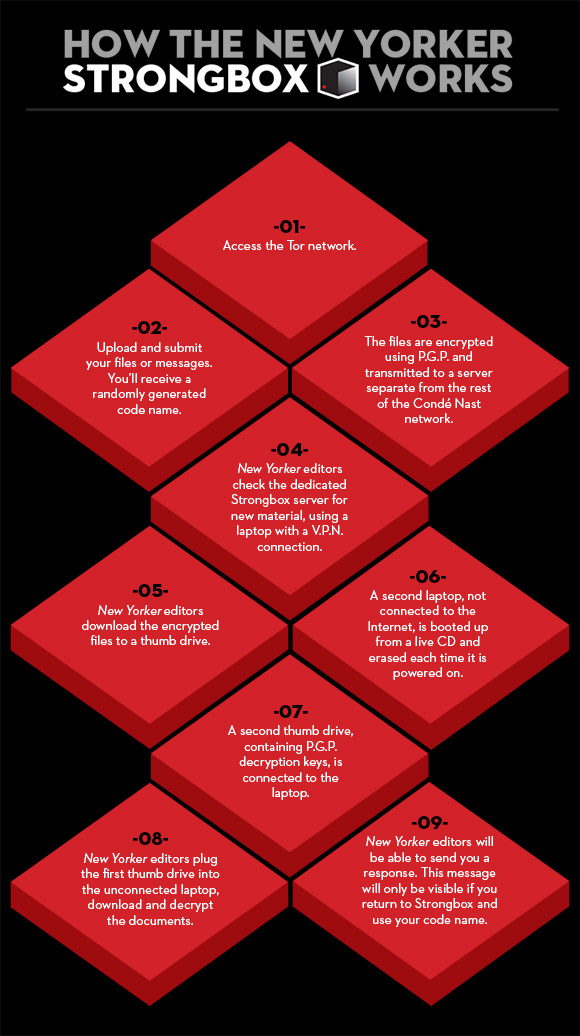
The New Yorker announces a new way for whistleblowers to leak classified documents, created by the late Aaron Swartz:
[He] was not yet a legend when, almost two years ago, I asked him to build an open-source, anonymous inbox. His achievements were real and varied, but the events that would come to define him to the public were still in his future: his federal criminal indictment; his leadership organizing against the censorious Stop Online Piracy Act; his suicide in a Brooklyn apartment. I knew him as a programmer and an activist, a member of a fairly small tribe with the skills to turn ideas into code—another word for action—and the sensibility to understand instantly what I was looking for: a slightly safer way for journalists and their anonymous sources to communicate. …
By December, 2012, Aaron’s code was stable, and a squishy launch date had been set. Then, on January 11th, he killed himself. In the immediate aftermath, it was hard to think of anything but the loss and pain of his death. A launch, like so many things, was secondary. His suicide also raised new questions: Who owned the code now? (Answer: he willed all his intellectual property to Sean Palmer, who gives the project his blessing.) Would his closest friends and his family approve of the launch proceeding? (His friend and executor, Alec Resnick, reports that they do.) The New Yorker, which has a long history of strong investigative work, emerged as the right first home for the system.
Nicholas Weaver compiles instructions for leaking to outlets that don’t have a Strongbox-like feature. Image from the New Yorker.
Which Employers Will Drop Coverage?
Next year when Obamacare comes into effect, Casey B. Mulligan expects certain employers with lots of low-wage workers to stop offering health insurance:
To qualify for subsidized exchange plans, workers cannot be offered affordable insurance by their employers. Paradoxically, employers will create subsidy opportunities for their middle- and low-income employees whenever they fail to offer health insurance.
On the other hand, an employer dropping its health insurance next year will put its high-income employees in a tough spot, because they will have to buy insurance on their own without the tax advantages they had in the past by obtaining health insurance through their employer. As a result, employers with relatively many high-income employees will be under pressure to keep their insurance, whereas an employer of middle- and low-income employees may find them asking for health insurance to be dropped from the employee benefit menu.
Recent Dish on healthcare reform’s nightmare scenarios here.
The Artist In Rebellion
Raja Adbulrahim profiles Haj Kadour, whose paintings of Bashar and Hafez Assad are being destroyed by Syrian rebels:
Their faces have dominated walls, storefronts and car windows all over Syria, a visual declaration of loyalty to the dictators. Their images — sometimes partially hidden behind sunglasses, other times in military uniform but always stern and slightly foreboding — were the ubiquitous reminders that Big Brother was watching. Haj Kadour painted hundreds of the portraits. “We don’t need to dwell on that,” he said. …
[A]s the revolt against Assad continues, the 66-year-old artist has seen the portraits he spent his career producing torn down and ripped apart. Once, local opposition figures came to his house in Syria and apologized for defacing his paintings.
“I told them, ‘You don’t have to get my permission; go destroy them.’ “
Wikipedia’s Blog Problem
Benjamin Wittes, editor-in-chief of Brookings’ Lawfare blog, and colleague Stephanie Leutert tried to edit the Wikipedia page for “Lawfare”:
Rather to our surprise, our edits were almost immediately undone; the material we added was, literally within minutes, removed. The reason? The disreputable nature of blogs. Wikipedia is, as we shall explain, somewhat inconsistent on this point, but as to the word “lawfare,” it enforced its no-personal-blog rule with a brutal kind of rigor. The consequences are bizarre: As a result of this rule, Wikipedia denies its readers access to the thoughts of an active-duty brigadier general who currently serves as chief prosecutor of the U.S. military commissions, as well as those of a Harvard Law School professor who happens to be among the world’s most renowned national security law scholars. …
There is an almost comic irony here: Wikipedia, an experiment in new media that has succeeded beyond anyone’s imagination, is so prejudiced against new media that it cannot see value in an active duty military officer’s blogging from Afghanistan. The site’s greatest strength—its ability to flexibly construct knowledge as events occur and new sources emerge—is ultimately undermined by its inability to provide clear and flexible guidelines that allow common-sense source judgments.

