Combating Military Rape, Ctd

It hasn’t been a good month for the armed services – first the Air Force, now the Army:

In the latest incident, the Department of Defense revealed on Tuesday a sergeant first class in the U.S. Army stationed at the Ft. Hood, TX military base is under investigation for sexual assault. Along with allegedly sexually assaulting two of his peers, the the sergeant is being investigated for possibly forcing a subordinate into prostitution. Making matters even worse, the soldier under investigation was assigned as the Sexual Harassment/Assault Response and Prevention (SHARP) program coordinator for an eight-hundred person battalion stationed at the base.

Adam Martin notes:

The officer ran the sexual assault prevention program at the battalion level, for about 800 people, so it’s not quite the same as the Air Force lieutenant colonel who ran the program for the entire branch. But the accusations, if true, speak to an apparently more premeditated crime.

The latest scandal will surely fuel the reform effort from Congress:

Senator Kirsten Gillibrand is set to introduce a particularly drastic bill on Thursday in response to increasing military sexual assaults. Her bill would completely remove the decision to prosecute all major criminal cases from the military chain of command.

More in the Dish thread here.

Why Rule Out Racism?

Will Wilkinson asks:

I don’t think the subject or conclusion of Mr Richwine’s dissertation is out of the bounds of reasonable discourse. Yet I think a suspicion of racism is perfectly reasonable. Grad students can choose from an infinite array of subjects. Why choose this one? Who are especially keen to discover a rational basis for public policy that discriminates along racial lines? Racists, of course. Anyone who chooses this subject, and comes down on the side vindicating racist assumptions, volunteers to bring suspicion upon himself, to expose his work to an extraordinary level of scrutiny. Were Mr Richwine’s dissertation a model of scientific rigour, he might easily enough survive this scrutiny.

The first trouble with this is that Will provides no evidence that the dissertation is second-rate, except Dan Drezner’s quick browse. The PhD advisor is on record saying: “Jason’s empirical work was careful. Moreover, my view is that none of his advisors would have accepted his thesis had he thought that his empirical work was tilted or in error.” I’d put that more considered judgment over Dan’s. As for anyone thinking of examining group differences in IQ, the presumption of racism is pure prejudice. If Richwine had arrived at different conclusions, would he be given this treatment?

Freddie seconds Will:

Precisely so. It is not racist to ask these questions. James Flynn, one of the most important researchers of the question of human intelligence in history, has used this sort of research precisely to agitate for social justice and left-wing politics. But it is perfectly natural, in a country with such a long legacy of racism, to expect those arguing that race leads to inferior outcomes in as existential a quality as intelligence to be held to very stringent consideration. That is particularly true when, as in the case of Jason Richwine, that argument is levied in the service of further discrimination, a reactionary call against immigration and deepening racial diversity in the United States.

My problem here is with Freddie’s smuggling onto the argument a line about something “as existential a quality as intelligence.” That is not what IQ is. It’s a very limited measurement of predicted success on our modern economy. There are other kinds of intelligence, which can be measured differently. And you can also note that this research could also be saying that, on some cases, race may lead to superior outcomes – for, say, Asians and Ashkenazi Jews. If all this were a white supremacist plot based on rigged pseudo-science, I would not expect Jews to come out on top, or for there to be no measurable difference in IQ between the two genders, or for Caucasian whites to be in the middle of the pack. And I wouldn’t expect it to earn a PhD at my alma mater.

Since this issue is so explosive and important, I look forward to the scholarly dismantling of the Richwine thesis. Have at it. I’ll happily publish the grotesque, racist errors that somehow got past Christopher Jencks.

Chart Of The Day

Drug And Murder Sentences

Julie Turkewitz flags a recent report:

For years, Latin American governments have been dishing out increasingly harsh punishments to people convicted of drug-related crimes, including those convicted of low-level offenses—possession of, say, 50 grams of marijuana. While anecdotal evidence has often pointed toward this pattern, a new study conducted by Dejusticia, a Colombian research and advocacy group, documents this trend and comes to a harsh conclusion: “In three of the seven countries surveyed, drug trafficking garnered longer maximum and minimum penalties than murder.” In all countries studied, “the maximum penalty for drug trafficking is nearly equal to or, in most cases, greater than the maximum for rape.”

(Chart created by the Washington Office on Latin America (WOLA). Check out their Border Fact Check blog, which separates fact from fiction on border security issues.)

Quote For The Day

“If a gay man — or, let’s face it, a straight man — can’t make an HIV joke and somehow connect it with Glee, then I guess we’re all lost in The French Royal Court of West Hollywood,” – Brett Easton Ellis, in a piece to which I can only respond: hurrah!

And, yes, Weekend is the first honest movie about gay life today I have seen. And fuck GLAAD.

Fleeing The Sea

Michael Osborne interviews Andrew Guzman, author of Overheated: The Human Cost of Climate Change, about the strife that rising sea levels will likely cause:

The environmental-refugee problem becomes eye-poppingly scary when you look at the 150 million people living in Bangladesh. A one-meter sea level rise would swamp about 17 percent of the country. “We know where people go when they lose their land: They go to cities, and they go to refugee camps,” Guzman says. “So the Bangladeshi cities that remain are going to be overrun and crumbling. Just think of the sewage system alone.”

Lest you think no one has considered what might happen next, in recent years India has increased security along the border with Bangladesh. “But fences are only so good up to a point,” Guzman says. “So how much violence are you prepared to use to keep that border secure? It’s not at all clear to me that the border can remain intact.”

Closer to home, Suzanne Goldenberg reports on how rising sea levels threaten Newtok, a village in Alaska:

A report by the US Army Corps of Engineers predicted that the highest point in the village – the school of Warner’s nightmare – could be underwater by 2017. There was no possible way to protect the village in place, the report concluded.

If Newtok can not move its people to the new site in time, the village will disappear. A community of 350 people, nearly all related to some degree and all intimately connected to the land, will cease to exist, its inhabitants scattered to the villages and towns of western Alaska, Anchorage and beyond.

It’s a choice confronting more than 180 native communities in Alaska, which are flooding and losing land because of the ice melt that is part of the changing climate.

Making Art For The Masses

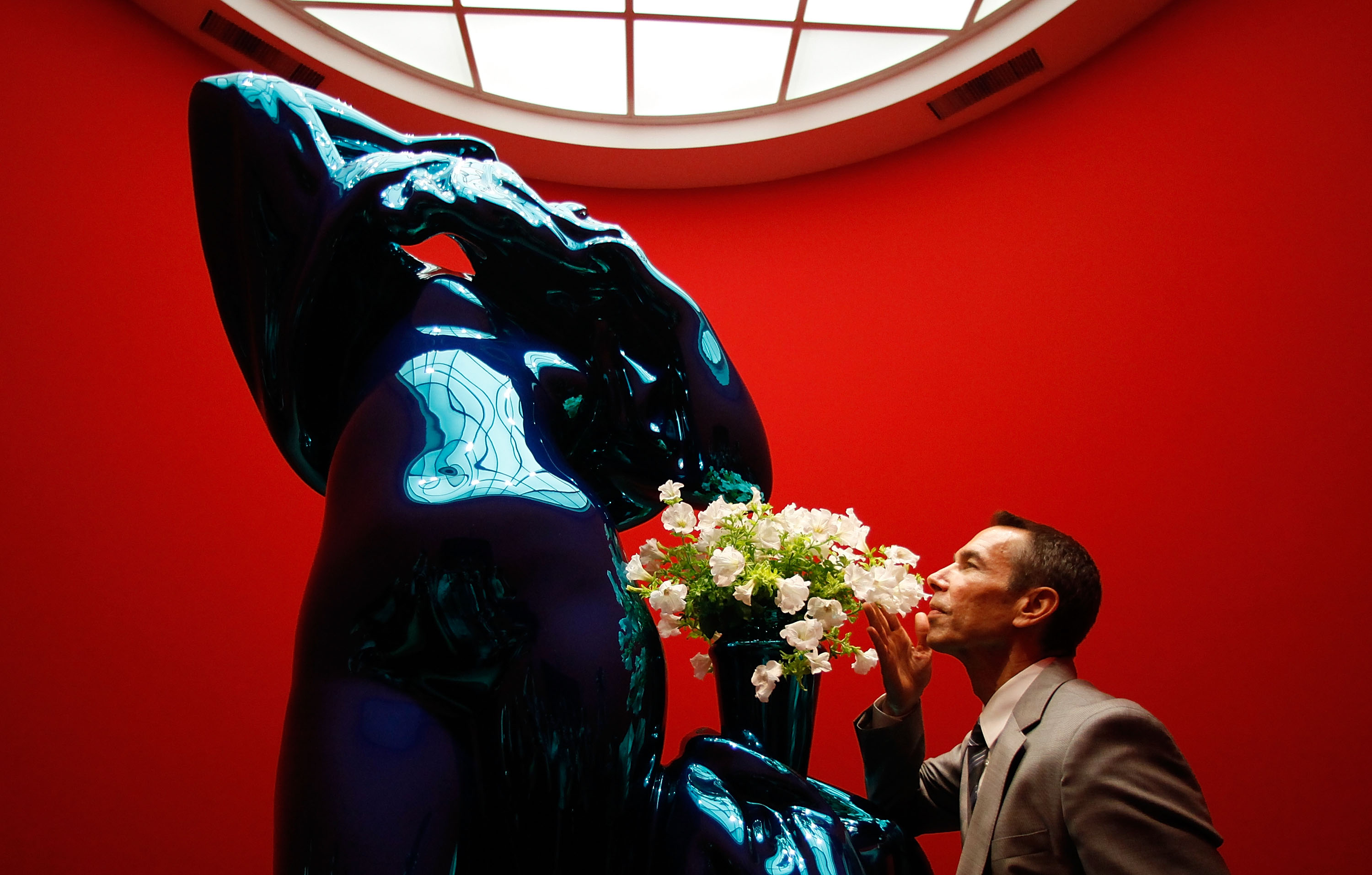
Carl Swanson profiles Jeff Koons, who has two major gallery shows in New York and a full-career retrospective at the Whitney Museum next summer:

I am very conscious of the viewer because that’s where the art takes place,” he once told an interviewer. “My work really strives to put the viewer in a certain kind of emotional state.”

What a balloon dog or a puppy made of flowers or a shiny hanging-heart sculpture offers is a picture of industrial perfection, a naïve piece of uncomplicated beauty that can be appreciated without using words like discourse. Which is one very clear reason why he is held in such unsteady regard by critics and curators and is so beloved by spectators. As a reflection of the world in which it was made—a Pop universe of digestible wealth—it is perhaps as profound a picture as the work of Warhol’s was of his.

Tobias Meyer calls Koons’s work an expression of Disney-like “pathological optimism” and compares what he does to Bernini’s work at Villa Borghese. “One of the things which comes back to him, positioning himself as a contemporary master,” Meyer says, is “perfection. Which is something that was for a long time not a part of contemporary art, which embraced the nonart of the accident or the imperfect.” And which is how Koons can be the art world’s great populist artisan, even as he operates as its most exclusive salesman.

(Photo: Artist Jeff Koons poses next to his art work ‘Metallic Venus, 2012’ during the opening of the exhibition ‘Jeff Koons. The Painter & The Sculptor’ at the Liebighaus museum on June 19, 2012 in Frankfurt am Main, Germany. By Ralph Orlowski/Getty Images)

Capturing Carbon In The Wild

Lawrence Krauss wants more research into extracting existing CO2 from the atmosphere as a way to address climate change. He notes that, unlike other forms of geoengineering, “direct air capture would treat the disease, not merely the symptoms”:

First, one removes CO2 from the air by using a sorbent, which is a material that can absorb gasses. Next, the CO2 has to be extracted from the sorbent and sequestered, presumably by pumping it deep underground at relatively high concentration or by binding it to minerals—a bit like how we handle nuclear waste. But another possibility includes actually converting it back into fuel. One particularly attractive possibility that has been proposed involves using an “exchange resin” sorbent which binds CO2 when dry and releases it when wet. In this way the evaporation of water could actually be used to help reduce the energy burden associated with binding and subsequently extracting the CO2.

Scott Rosenberg wonders whether geoengineering, through either carbon dioxide removal or solar radiation management, is “a slam-dunk no-brainer or a regrettable last resort”:

Unfortunately, the slam-dunkness of geoengineering turns out to be illusory at best. We really don’t know if any of these schemes can or would work. How much time, energy, and money should we put into finding out? That was the theme of a debate on geoengineering that I moderated last week, and here’s the lesson I took from it: If we expect new technology to save us from the mess old technology has made, but don’t also fix the broken political processes and social dynamics that made it impossible to avert that mess, we’re just inviting a bigger mess.

Akshat Rathi cites literature indicating that multiple types of geoengineering will be necessary to avoid climate change:

Several geoengineering initiatives plan to tackle climate change by cutting incoming sunlight, through methods such as spreading reflective aerosols in the stratosphere. But without also removing carbon dioxide from the atmosphere, such plans would fail to fully mitigate change in rainfall in the tropics, a study published in Nature Geoscience last week (21 April) suggests.

Why Are Academic Papers So Pricey?

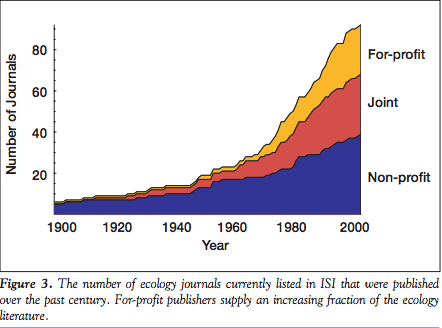
In 2012, Harvard Library blamed the “efforts of certain publishers (called “providers”) to acquire, bundle, and increase the pricing on journals.” Alex Mayyasi explains further:

The most famous of these providers is Elsevier. It is a behemoth. Every year it publishes 250,000 articles in 2,000 journals. Its 2012 revenues reached $2.7 billion. Its profits of over $1 billion account for 45% of the Reed Elsevier Group – its parent company which is the Journal Economics495th largest company in the world in terms of market capitalization.

Companies like Elsevier developed in the 1960s and 1970s. They bought academic journals from the non-profits and academic societies that ran them, successfully betting that they could raise prices without losing customers. Today just three publishers, Elsevier, Springer and Wiley, account for roughly 42% of all articles published in the $19 billion plus academic publishing market for science, technology, engineering, and medical topics. University libraries account for 80% of their customers. Since every article is published in only one journal and researchers ideally want access to every article in their field, libraries bought subscriptions no matter the price. From 1984 to 2002, for example, the price of science journals increased nearly 600%. One estimate puts Elsevier’s prices at 642% higher than industry-wide averages.

Isolation And Illness

Judith Shulevitz examines how loneliness changes the actual genetic makeup of individuals:

[Primatologist Steve] Suomi raises his monkeys in three groups, one group confined entirely to the company of peers (a chaotic, Lord of the Flies kind of childhood); another group left alone with terry-cloth mother-surrogates, except when released for a couple of hours a day to scamper with fellow babies; and the third raised by their mothers. What he found is that, in monkeys separated from their mothers in the first four months of life, some important immunity-related genes show a different pattern of expression. Among these were genes that help make the protein that inflames tissue and genes that tell the body to ward off viruses and other microbes.

“The very fact that something outside the organism can affect the genes like that—it’s huge,” Suomi says. “It changes the way one thinks about development.” I didn’t need genetics, though, to see how defective the peer-raised monkeys’ development had been. Suomi took me outside to watch them. They huddled in nervous groups at the back of the cage, holding tight to each another. Sometimes, he said, they invite aggression by cowering; at other times, they fail to recognize and kowtow to the alpha monkeys, so they get picked on even more. The most perturbed monkeys might rock, clutch at themselves, and pull out their own hair, looking for all the world like children with severe autism.

Her Breasts, Her Choice

Women in the World Summit 2013

Yesterday, Angelina Jolie revealed that she had a preventive double mastectomy. A genetic test found that she carries a BRCA gene, which greatly increases the chances of breast cancer:

I wanted to write this to tell other women that the decision to have a mastectomy was not easy. But it is one I am very happy that I made. My chances of developing breast cancer have dropped from 87 percent to under 5 percent. I can tell my children that they don’t need to fear they will lose me to breast cancer.

Rebecca Mead applauds:

Jolie’s medical decision says again what shouldn’t need re-saying: that a woman’s body is hers, that breasts are for something other than ogling, and that hard choices are made for strong reasons. Her decision to make her choice public is bold and brave and admirable. It is what celebrity is for.

Aaron Carroll emphasizes that these types of medical decisions are highly personal:

[E]ven a preventive mastectomy is not a guarantee against cancer. Studies show that it’s about 90% effective in preventing breast cancer in moderate and high-risk women. That still leaves a 10% chance of developing cancer in the chest wall, armpit or even in the abdomen. That’s because it’s pretty much impossible for even the best surgeon to remove all breast tissue from a woman.

Because of this, some women choose not to have the procedure done, even when they are at high risk. Just a few weeks ago, Peggy Orenstein wrote a compelling account of her decision not to undergo the procedure after her first brush with breast cancer. Her reasons are just as valid and important as Jolie’s but may not make the same splash in our national discussion.

Elaine Schattner is on the same page:

I know physi­cians who’ve chosen, as did the celebrity, to have mas­tec­tomies upon finding out they carry BRCA muta­tions.

And I’ve known “ordinary” women—moms, home­makers, librarians (that’s fig­u­rative, I’m just pulling a stereotype) who’ve elected to keep their breasts and take their chances with close monitoring. I’ve known some women who have, perhaps rashly, chosen to ignore their risk and do nothing at all. At that opposite extreme, a woman might be so afraid, ter­rified, of finding cancer that she won’t even go to a doctor for a check-​​up, no less be tested, examined, or screened.

What’s great about this piece, and what’s wrong about it, is that it comes from an indi­vidual woman. Whether she’s made the right or wrong decision, neither I nor anyone can say for sure. Jolie’s essay reflects the dilemma of any person making a medical choice based on their cir­cum­stances, values, test results, and what information they’ve been given or oth­erwise found and interpreted.

Sarah Kliff notes that the BRCA test isn’t recommended for everyone:

The [U.S. Preventive Services Task Force (USPSTF)] recommended against widespread BRCA screening in 2005 and reiterated that stance in draft recommendations made last month. The task force gave widespread screenings a “D” grade, meaning that it would expect “no net benefit.”

“For women whose family history is not associated with an increased risk for potentially harmful mutations in the BRCA1 or BRCA2 genes,” the task force wrote, “there is moderate certainty that the net benefit of testing for potentially harmful mutations in the BRCA1 or BRCA2 genes and early intervention ranges from minimal to potentially harmful.”

Florence Williams explains why she didn’t get tested for BRCA:

Both my counselor and I thought I should get tested for the BRCA genes, but my insurance carrier firmly disagreed. At over $3,000, Myriad’s test is too expensive for me and most other women to get, regardless of what they and their doctors may think.

So why didn’t I just cough up the money? Isn’t my health and life worth it? A couple of reasons. For one thing, I learned that our fear of breast cancer is clouded by misconceptions. We tend to think of breast cancer as a heritable disease, but in the vast majority of cases, it’s not. Straight hereditary factors only account for about 10 percent of all breast cancers. And while the BRCA genes are the well-known poster children of risk,  they get more credit than they deserve. In families with histories of breast and ovarian cancer, about half do not have BRCA mutations at all.

Claudia Wallis shares her experience with the BRCA test:

The news was good: I did not carry the mutation. I wept with relief. But then the counselor told me that I should not give too much weight to the finding.

My negative result “would be more meaningful,” she told me, if one or more first-degree relatives (a sister, mother, first cousin) tested positive for one of the BRCAs. Then I would have evidence that the familial cancer pattern was due to this particular genetic mutation. Without that knowledge, it could be that my family’s crazy burden of breast cancer was due to another gene defect—either a less common one that’s known to researchers or one that has yet to be discovered. Sigh.

This was in some ways the hardest news to deal with. How would I tell my two sisters that I wanted them to get tested, too—and that, if they turned out to be BRCA carriers, it would be bad for them but good for me?

Amanda Hess defends Jolie against misogynists:

Said one commenter on a Jezebel post about the op-ed, “How many guys stopped reading as soon as they realized Angelina Jolie has no breasts—she’s dead to me!”

I’d like to dismiss these commenters as trolls, but their attitudes are unfortunately pervasive in our culture, and they don’t just represent a personal affront to Angelina Jolie, a veteran of such inappropriate body commentary. These comments affect every woman who has undergone a similar procedure—every woman who has overcome the pain, the fear, and the constant and casual reminders that her breasts are more valuable than her life. Really, these comments affect all women who have seen their bodies reduced to mere objects for others to consume. As scholar of the stars Anne Helen Petersen says, “Remember: What we talk about when we talk about celebrities is, as ever, ourselves.” Some of us are not speaking very highly of the women in our lives today.

Alyssa hopes that Jolie won’t shy away from nude scenes in the future:

If Jolie has decided that she’s done with nude scenes or with sex scenes, that’s entirely her decision, and all of us should respect that. But if she does accept such roles in the future, I hope that she, and the writers and directors she works with, see her scars as a feature of her body, rather that some sort of grotesquerie to be hidden by shot angles or erased in post-production. Mastectomy scars should be treated like a physical characteristic that could inflect characters Jolie plays in the future without requiring major plot alterations or commentary. And it would be good for audiences, particularly of the kind that snarked on Jolie today for her brave revelation, to see that they don’t make her any less stunningly gorgeous.

And Michelle Cottle, who also recently had a double mastectomy, praises Jolie’s courage:

Whatever her acting gifts, Jolie would not have become the megastar/tabloid darling she is if she were not damn near every man’s fantasy. … By discussing her mammary travails so openly, Jolie runs the risk of messing with the fantasy. And for this reason, her willingness to go public with her surgeries strikes me as a genuine act of bravery—and one that will hopefully provide comfort and even inspiration to many women out there facing similar challenges.

After all, if Jolie can boldly and publicly trade-in such prime assets, what are the rest of us so anxious about?

(Photo: by Daniel Zuchnik/Getty Images)