A Poem For Sunday

kcpoem2

Another poem from Killarney Clary:

I want a solution. So, “God,” I pray, “finish this one un-
wavering note, at any cost, song or silence.”  I’m afraid
I don’t care; afraid someone might find out even in my
sore the wrinkle continues, the same future.  God’s familiar
with my tricks—precise requests, then total surrender–,
familiar with tomorrow, too, and my billion dreams.  He
will forgive me them, but forgiveness  is an added step.

I want to see the air itself dissolve, the colored powders
which are you or me scatter and fade, and no, I don’t care
for another try. It is kindness that puts the world in my
hands for me to hate; fortune that opens the surface which
is, after all, beauty.

I’m sure there are endless reasons and answers, methods
by which I might change. Give them to someone who deserves
them along with my good luck and what “science”
can put to use.

(From Who Whispered Near Me © 2013 by Killarney Clary. Used by kind permission of Tavern Books, Portland, Oregon. Photo by Flickr user T1m0thy77)

Face Of The Day

Peter_Lipton_2

This little guy has reason to keep his head down:

Amsterdam-based photographer Peter Lipton’s recent project is based around a research and conservation program at the Catholic University of Quito that was created in 2005 to address the growing number of endangered amphibians due to the country’s increases in logging, oil exploration, agriculture and climate change. Named ‘Balsa de los sapos’—Spanish for ‘Life raft of the frogs’—the program aims to collect, reproduce, and return endangered amphibians to their natural habitat. Lipton creates an exquisite showcase of these unique creatures, many of which are sadly the last known specimens.

To Be Sure

Daniel Dennett offers a tip for assessing arguments:

When you’re reading or skimming argumentative essays, especially by philosophers, here is a quick trick that may save you much time and effort, especially in this age of simple searching by computer: look for “surely” in the document, and check each occurrence. Not always, not even most of the time, but often the word “surely” is as good as a blinking light locating a weak point in the argument. Why? Because it marks the very edge of what the author is actually sure about and hopes readers will also be sure about. (If the author were really sure all the readers would agree, it wouldn’t be worth mentioning.) Being at the edge, the author has had to make a judgment call about whether or not to attempt to demonstrate the point at issue, or provide evidence for it, and—because life is short—has decided in favor of bald assertion, with the presumably well-grounded anticipation of agreement. Just the sort of place to find an ill-examined “truism” that isn’t true!

Dennett has a new book out, Intuition Pumps And Other Tools for Thinking. He discusses it and related topics with The Mind Report’s Tamar Gendler here.

The Cold Cradle Of The Internet

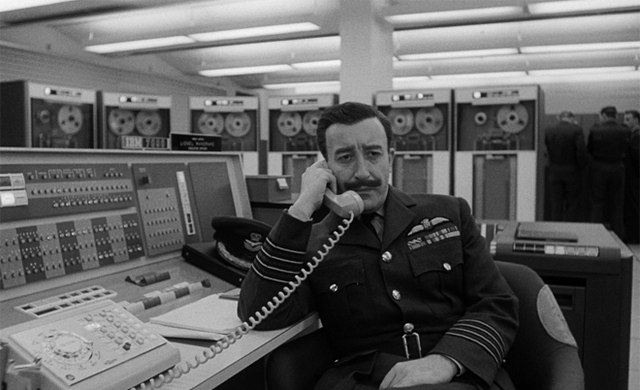
dish_dr-strangelove_large_verge_medium_landscape

David Banks describes how the ethos of the Internet is rooted in the rivalry between the US and USSR:

The Cold War is usually associated with big, hulking organizations that rely on strategic planning and mathematical theory: Historical accounts are replete with continental super powers strutting along each others’ borders with military technologies that are, themselves, highly centralized and ordered entities. Both sides tried to out-maneuver the other by decentralizing resources and populations. In America, it meant spending lots of defense money on building the first peer-to-peer computer networks and the nation’s first interstate highways. Decentralization and redundancy is the best defense against centralized power. [T]he decision to decentralize cities and computer systems was a political (not to mention military) decision.

Perhaps the Cold War logic that birthed the Internet has such a tenuous bearing on how we currently use the Internet, that it barely warrants mentioning.

The intentions of the early Internet’s designers probably do not factor into my choice of Tumblr theme, or the Instagram filter I put on a photo of my houseplants. But intentions aren’t even half the story. Technologies live and act beyond their creators’ intentions and quite often produce unintended consequences. Think about all of the decentralized, rhizomatic organizations and social movements that have been earmarked or popularly associated with the digital technologies they used so well: the Arab Spring, Occupy Wall Street, Anonymous, and the BART protests have all out-maneuvered (at least for a time) the state and corporate bureaucracies that sought to shut them down. The Internet doesn’t unilaterally impose or determine certain political organizations, but it does assist and afford their continued existence.

(Photo: Peter Sellers as Group Capt. Lionel Mandrake with the IBM 7090, from Dr. Strangelove, 1964)

The Wisdom Of Great Writers

Maria Popova compiles a remarkably eclectic “reading list” of all the advice on writing from famous authors she’s featured on Brain Pickings over the years, ranging from 19th century figures like Herbert Spencer to contemporary writers such as Mary Karr. Here’s an aphorism she includes from Kurt Vonnegut:

Write to please just one person. If you open a window and make love to the world, so to speak, your story will get pneumonia.

Choose Your Own Conclusion

S. Hope Mills spots a provocative passage from a recent Tim Parks essay about not finishing books:

To put a novel down before the end, then, is simply to acknowledge that for me its shape, its aesthetic quality, is in the weave of the plot and, with the best novels, in the meshing of the writing style with that weave. Style and plot, overall vision and local detail, fascinate together, in a perfect tangle. Once the structure has been set up and the narrative ball is rolling, the need for an end is just an unfortunate burden, an embarrassment, a deplorable closure of so much possibility.

Mills comments:

The idea of an ending as an “unfortunate burden” may be a bit dramatic, but the other idea, that a novel’s possibility doesn’t rest solely on the ending, is an interesting one. Engaging a good story, isn’t—and can’t be—a highly controlled experience. While we writers would like for readers to feel our sentences, interpret our characters and move through the story exactly as we intended, we can’t talk them through the experience page by page. We have to leave quite a lot in their hands. And frankly, when we’re on the other side, as readers, those are the stories we love best, the ones where we’re equipped and then trusted to figure things out for ourselves.

When I think about what I’ve long loved about reading, it’s the different worlds that scoop me up, my senses fully engaged. The writer, of course, is my guide, but I still have a role to play, too—I’m interacting with the information that’s been given to me. That’s what makes the deepest reading experience. And because this is my story now, too, I might be ready for closure sooner than another reader, sooner even than the author.

Faulkner On Film

Mike Springer highlights an odd, fascinating documentary about William Faulkner:

In November of 1952, the normally reclusive Faulkner allowed a film crew into his secluded world at Oxford to make a short documentary about his life. The film, shown here in five pieces, was funded by the Ford Foundation and broadcast on December 28, 1952 on the CBS television program Omnibus. The scripted film re-enacts events from November 1950, when Faulkner received the Nobel Prize in Literature, through the spring of 1951, when he spoke at his daughter Jill’s high school graduation.

It turns out Faulkner was better on the page than the screen:

[T]he entire film is stiff and unrealistic. It’s a bit of a shock to see Faulkner, a master of the narrative form, going through the motions as a bad actor in a horribly written story about his own life. But any literary fan should be fascinated by this rare glimpse of the master at home on his own little postage stamp of native soil.

Watch the rest of the film here.

How A Poet Gets Crushed By Propaganda

One historical example:

In the early 1960s, Kim Chul was one of the foremost poets in North Korea. He was renowned for his lyric poetry and wrote often about love. The people even dubbed him “the Pushkin of Korea.” But no matter how beautiful, his poems could not be published unless they promoted Party ideology. One such poem, “A Military Jacket Button,” depicts a soldier returning home after the Korean War. He takes in his arms a motherless baby. The baby wakes up and sucks on a button on the soldier’s military uniform, mistaking it for his mother’s nipple. It is a poignant elegy about the misery of the Korean War. … [Kim Chul] depicts the Koreans as a war-weary people, and the Korean War as a tragedy for the nation. The work was considered seditious in its realism, and banned.

How Nuns Inspired John Waters

Paul Gallagher quotes the director on his childhood:

The first thing I can remember rebelling about really, was when I was about 8-years-old and every Sunday we’d go to church. Once a year they’d read us this pledge that we had to take for the Legion of Decency, which was the Catholic Church rating the movies—what you could see and what you couldn’t—and the condemned ones were the ones they’d tell us you’d go to Hell if you saw these movies.

Well, I remember refusing to do this pledge and my mother was kind of shocked, but I was just a child, and she didn’t make a big deal out of it. And on Sundays, the nuns would read us this list, with this voice like the Devil, and you know, seeing this nun stand there saying, “Love Is My Profession, Mom and Dad, The Naked Night.” I thought “What are these movies?” I’d never heard of them—they didn’t play at my neighborhood, believe me—but I would go and see them, or read about them, and clip the little list and keep a record of all these condemned movies. The Mom and Dad poster is hanging right in my hall—it’s still that much of an influence. But it made me want to see these movies I’d never, ever heard of. So, in fact they encouraged me, [the nuns] encouraged my interest, without ever knowing it completely.

More here. Previous Dish on Waters here and here.