The NRA: It Gets Worse

The new president of the organization – the son of a previous president – could have been invented by Rachel Maddow:

Alabama lawyer Jim Porter has called U.S. Attorney General Eric Holder “rabidly un-American” and proudly spews the Confederate line on the Civil War.

In a June speech, Porter noted the NRA was “started by some Yankee generals who didn’t like the way my Southern boys had the ability to shoot in what we call the ‘War of Northern Aggression.’ ” “Now y’all might call it the Civil War, but we call it the ‘War of Northern Aggression’ down South,” Porter said to the New York State Rifle & Pistol Association. He also advocates training all U.S. civilians to use standard military firearms so “they’re ready to fight tyranny.”

RPGs for all!

Ask Josh Fox Anything: Safe Fracking?

The filmmaker and environmental activist explains whether or not, with proper regulation and precautions taken, he could support a safer form of hydraulic fracturing:

Michael Coren points out an alternative to liquid-based fracking that may be a climate win-win:

A technique of pumping pressurized carbon dioxide (CO2) into wells to shatter the rock and push out more oil and gas is gaining steam. Researchers in Japan, publishing in Geophysical Research Letters, showed injecting super-critical CO2 into granite blocks creates more extensive fracture patterns and theoretically outperforms conventional water-based techniques. Eliminating the need to truck, pump and process millions of gallons of water, compared to CO2 is a major benefit. But the most promising, if still uncertain, advantage is using shale formations for carbon dioxide storage, potentially removing a major source of warming greenhouse gas emissions (GHG) to the atmosphere while extracting cleaner energy than today’s coal mines. …

But it’s not without costs. Carbon dioxide from wells must be separated out from the natural gas, and CO2 pipelines– 3,900 miles of the infrastructure already exists–will never reach every well. Finally, the economics aren’t always a money maker. For CO2 to gain traction away from existing pipelines, either hydraulic fracking must cost more due to its risks or water scarcity, or the benefits of CO2 from carbon sequestration and lower pollution must be monetized. Still, the potential to tap into cleaner burning energy while slashing carbon emitted into the atmosphere may change the equation for the future of fracking.

Josh Fox’s Gasland Part II will air on HBO this summer. His other Ask Anything answers are here. Full archive here.

The Church In Rhode Island

A nasty piece of divisiveness from Bishop Tobin, after civil marriage equality became law:

At this moment of cultural change, it is important to affirm the teaching of the Church, based on God’s word, that “homosexual acts are intrinsically disordered,” (Catechism of the Catholic Church, #2357) and always sinful. And because “same-sex marriages” are clearly contrary to God’s plan for the human family, and therefore objectively sinful, Catholics should examine their consciences very carefully before deciding whether or not to endorse same-sex relationships or attend same-sex ceremonies, realizing that to do so might harm their relationship with God and cause significant scandal to others.

This is putting a wedge between Catholic family members and their gay brothers, sisters, sons and daughters. It also fails to address any of the questions raised by the marriage equality debate: in particular, what should civil society do with respect to a critical mass of gay citizens? The Church’s answer is: nothing. All they have is calling our orientation “intrinsically disordered” and our families “clearly contrary to God’s plan” in a way they would never use with respect to, say, civilly divorced Catholics or those using contraception. They frame it with this perspective:

As I have emphasized consistently in the past, the Catholic Church has respect, love and pastoral concern for our brothers and sisters who have same-sex attraction. I sincerely pray for God’s blessings upon them, that they will enjoy much health, happiness and peace.

But they are allowed no happiness routinely granted as central to heterosexuals: a loving, stable relationship and home. Take the right to a stable home away, and you do not bring health, happiness and peace. You bring sickness, depression and pain. And the reason some in the hierarchy still do not see this is because they cannot yet see gay people as human beings, with dignity. And that is what is “intrinsically disordered” from a Christian point of view.

The Shirts Off Their Backs

After the recent factory collapse in Bangladesh that killed more than 500, Rosemary Westwood calculates the cost of cheap clothing:

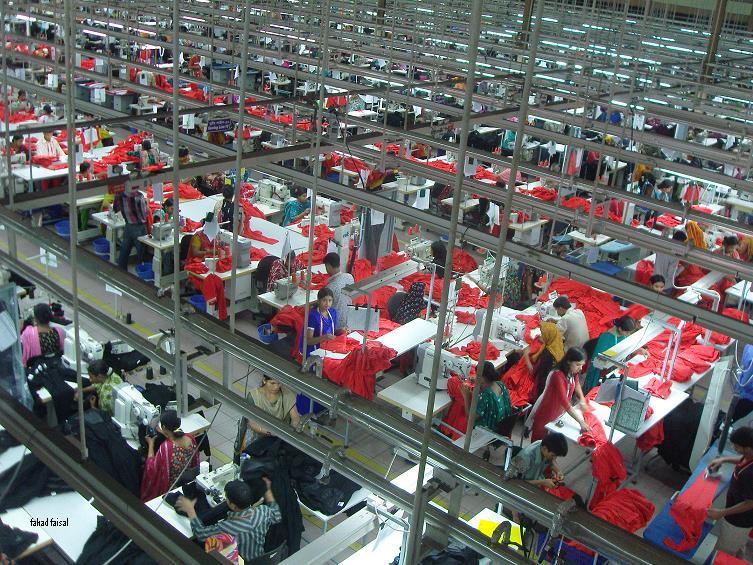
According to a 2011 report by the consulting firm O’Rourke Group Partners, a generic $14 polo shirt sold in Canada and made in Bangladesh actually costs a retailer only $5.67. To get prices that low, workers see just 12 cents a shirt, or two per cent of the wholesale cost. That’s one of the lowest rates in the world—about half of what a worker in a Chinese factory might make—and a major reason for the explosion of Bangladesh’s garment industry, worth $19 billion last year, up from $380 million in 1985. The country’s 5,400 factories employ four million people, mostly women, who cut and stitch shirts and pants that make up 80 per cent of the country’s total exports.

For that $14 shirt, the factory owners can expect to earn 58 cents, almost five times a worker’s wage. Agents who help retailers find factories to make their wares also get a cut, and it costs about $1 per shirt to cover shipping and duties. Fabric and trimmings make up the largest costs—65 per cent of the wholesale price.

Sarah Stillman spoke to Bangladeshi garment worker Sumi Abedin:

Last November, Abedin was sewing clothing for Walmart and other American brands at a factory called Tazreen Fashions, on the outskirts of Dhaka, when she heard a colleague yell, “Fire!” She thought of sprinting toward the stairs when the factory owner said, “He is lying,” and padlocked the doors.

As the air of Tazreen Fashions filled with dark smoke, Abedin told me, “I was running around the factory floor, screaming, crying for help.” After the power went out, she followed the dim light of other workers’ cell phones to the factory’s third production floor, where she saw a man removing the bars from a window. She decided to leap.

“I didn’t jump to save my life,” she told me, much as she has told reporters, students, and anyone who would listen over the past several weeks of touring the country. “I jumped to save my body, because if I stayed inside the factory I would burn to ash, and my family wouldn’t be able to identify my body.” When she landed, she broke her foot and arm. She considers herself lucky; a hundred and twelve of her colleagues died in the Tazreen fire. The parallels to New York’s Triangle Shirtwaist Factory fire, in 1911, where doors were locked and a hundred and forty-six workers died in the space of twenty minutes, are obvious.

(Photo: Garments Factory in Bangladesh by Fahad Faisal from Wikimedia Commons)
Correction Of The Day

“An earlier version of this article referred incorrectly to the products sold at By Brooklyn. The store does not sell dandelion and burdock soda, lovage soda syrup, and Early Bird granola ‘gathered in Brooklyn.’ An earlier version also referred incorrectly to the thoroughfare that contains the thrift shop Vice Versa. It is Bedford Avenue, not Bedford Street, or Bedfoprd Avenue, as stated in an earlier correction,” – NYT, from Henry Alford’s “How I Became a Hipster.”

(Hat tip: Mark Liberman)

Warming Up To The Apocalypse

last_judgment

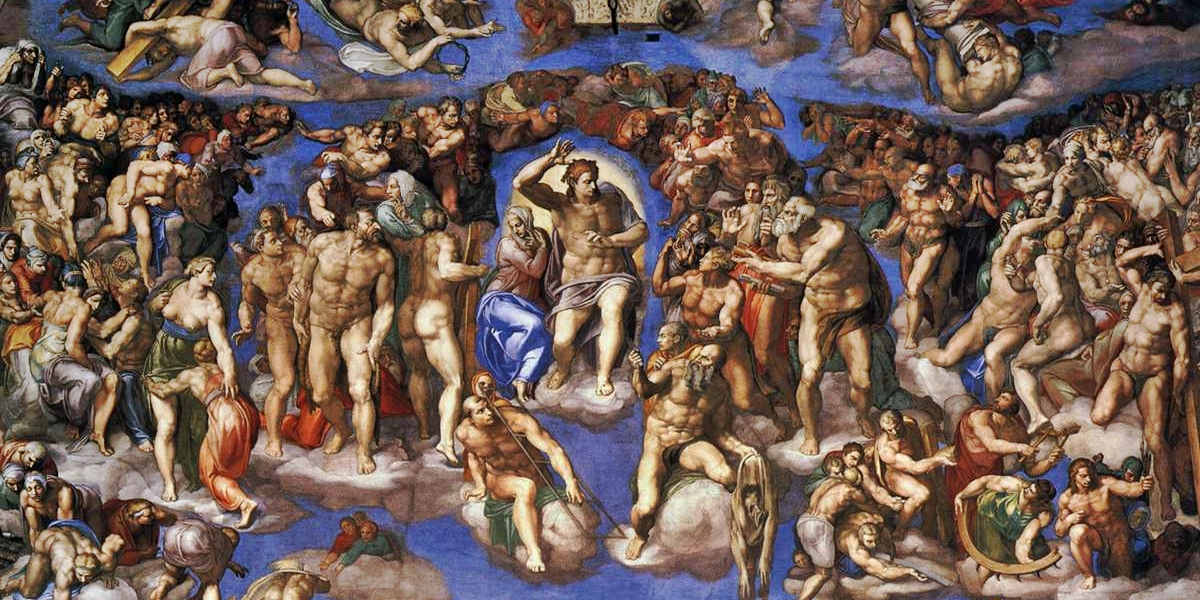
A new study draws a connection between the 76% of Republicans who “profess a belief in the Second Coming” and America’s inaction on climate change:

The study, based on data from the 2007 Cooperative Congressional Election Study, uncovered that belief in the “Second Coming” of Jesus reduced the probability of strongly supporting government action on climate change by 12 percent when controlling for a number of demographic and cultural factors. When the effects of party affiliation, political ideology, and media distrust were removed from the analysis, the belief in the “Second Coming” increased this effect by almost 20 percent.

“[I]t stands to reason that most nonbelievers would support preserving the Earth for future generations, but that end-times believers would rationally perceive such efforts to be ultimately futile, and hence ill-advised,” [David] Barker and Bearce explained. That very sentiment has been expressed by federal legislators. Rep. John Shimkus (R-IL) said in 2010 that he opposed action on climate change because “the Earth will end only when God declares it to be over.” He is the chairman of the Subcommittee on Environment and the Economy.

I recall David Brooks’ comment on my book, The Conservative Soul, where he declaimed that my concern with religious fundamentalism taking over the GOP was a function of bad faith or ignorance. And yet here we have a clear policy position distorted beyond reason by fundamentalist claptrap. Add the support for Israeli settlements to the mix as well. It’s those who refuse to see or downplay religious fanaticism in the current GOP who are either writing in bad faith or have no idea what they are talking about.

(Image from Michaelangelo’s Last Judgment, courtesy Wikimedia)

The Internet Is For Marriage

So claims a recent paper (pdf):

In fact, the study notes, marriage rates are between 13 percent and 30 percent higher than they’d be without the advent of broadband technology. The basic intuition here is that stuff like online dating makes it easier for people to find potential partners — or, as University of Montreal economist Andriana Bellou puts it, the Internet “has the potential to reduce search frictions.” That’s not utterly implausible. Researchers have already noted that the Internet allows us to find jobs and homes more easily. Why not spouses?

Yglesias, who met his wife online, shares his thoughts on digital courtship:

I would say that this is an underrated benefit of recent technological innovation. It has become somewhat fashionable to dismiss the web and digital communication as not all that significant in economic terms. But if you dial back to 1993, you’d find that the U.S. was already a land of material abundance by any realistic standard. Innovations that have helped us build and maintain richer connections with other people are in fact extremely valuable relative to that baseline.

All Politics Pack A Punch

Praising Kelsey Grammer’s political series Boss, Prospero sets the gritty, Chicago-based thriller against the more polished and presidential House of Cards:

“Boss” is a grand, operatic tale. And yet it plays out within the modest confines of contemporary city politics. [Mayor Tom] Kane’s epic quest is not to conquer another country, amend the constitution or avenge a terrorist attack. He just wants to add some extra runways to O’Hare airport. This is very much a municipal melodrama. …

In “Boss”, small-ball is hard-ball.

The mayor and his enemies bring buckets of guile and gumption to bear on their un-presidential struggles. Municipal showdowns motivate titanic clashes, deadly conspiracies and orotund speeches. The success of the show is that it makes all this seem entirely fitting. Of course the mayor’s encroachment on the bureaucratic turf of a local housing authority must be resisted like a fascist invasion. Of course a runway expansion must stand as a monument to man’s will to imprint himself on the world. The show makes you believe that the last mile of politics is the only mile that matters. Kane can stroll through parks he has built and trespass on ghettos he has neglected. His political achievements and failures are tangible, visible, inhabitable. If politics is the “slow boring of hard boards”, then city wrangling is where the gimlet pierces the wood.

What’s Not Ok About 401(k)s

Felix points out the downsides:

[T]he 401(k) is a way for both your government and your employer to disown you, and to leave your life savings to be raided by the financial-services industry and its plethora of hidden and invidious fees. The well-kept secret about old-fashioned pension funds is that, for the most part, they’re actually very good at generating decent returns for their beneficiaries. They tend to have extremely long time horizons, and are run by professionals who know what they’re doing and who have a fair amount of negotiating leverage when they deal with Wall Street. Savers are always strengthened by being united: disaggregating them and forcing them to take matters into their own hands is tantamount to feeding them directly to the Wall Street sharks.

Yglesias and Drum have related thoughts.

The Cannibal Colony

A fresh excavation at Jamestown uncovered a body that reveals that life in the settlement was even grimmer than previously thought:

[Anthropologist Douglas] Owsley speculates that this particular Jamestown body belonged to a child who likely arrived in the colony during 1609 on one of the resupply ships.

She was either a maidservant or the child of a gentleman, and due to the high-protein diet indicated by his team’s isotope analysis of her bones, he suspects the latter. The identity of whoever consumed her is entirely unknown, and Owsley guesses there might have been multiple cannibals involved, because the cut marks on her shin indicate a more skilled butcher than whoever dismembered her head.

It appears that her brain, tongue, cheeks and leg muscles were eaten, with the brain likely eaten first, because it decomposes so quickly after death. There’s no evidence of murder, and Owsley suspects that this was a case in which hungry colonists simply ate the one remaining food available to them, despite cultural taboos. “I don’t think that they killed her, by any stretch,” he says. “It’s just that they were so desperate, and so hard-pressed, that out of necessity this is what they resorted to.”

Dana Goodyear explains why the Donner party’s cannibalism is well-known but Jamestown’s isn’t:

The difference between the tale of the Jamestown colonists and that of the Donner Party is transmission: in 1847, a noisy newspaper culture reported on every available detail; two hundred and thirty-seven years earlier, there was no domestic press. There was only word of mouth.