The Other One Percent: Our Vets, Ctd

A reader responds to our profile of PTSD advocate Mikey Piro:

I have three family members who served in active duty in my generation’s wars over the past 11 years. None were significantly injured in combat, but they are not the men who left us. One we thought was lost, but has regained semi-independence through the resources of his family and a wonderful program called Paws4vets (please visit their site; they are doing amazing things). One remains in the service, to our great worry, while he goes through a bitter divorce, drinks too much, is quite depressed and violent, and is financially beholden to military service due to his lack of private-sector skills. The other revealed recently he had been acting out sexually to combat the guilt and stress experienced in two tours. His marriage is precarious and he has been unable to maintain steady employment for several years.

I do not relay this to make excuses for them. But the lack of support and cultural bias in the military against their struggles is criminal. Our nation does not support our troops other than camera ready ceremonies and other PR opportunities.

My immediate family has borne little cost to their struggles – money here and there to help out, taking children at times when needed, attempting to provide emotional support if possible. If between my wife and I we have these immediate connections but have had such little impact in our day to day lives, how do we as a country expect to respect the sacrifices these soldiers and their families make for not only their tours, but the remaining years of their lives?

Thank you for continuing to beat the drum of this neglected issue. Our servicemembers deserve better.

We’re going to do more.
Books Are Bigger Than Ever

The NYT recently ran an op-ed by author Scott Turow bemoaning both the recent decision to allow resale of foreign editions as well as the overall effect of e-books on the publishing industry. Mike Masnick is unimpressed:

[T]he idea of a literary culture at risk is laughable. More books are being published today than ever before. More people are reading books today than ever before. More people are writing books than ever before. Books that would never have been published in the past are regularly published today. There is an astounding wealth of cultural diversity in the literary world.

Sure, some of it means a lot more competition for the small group of authors (only about 8,000 or so) that Turow represents… oh wait, I think we’ve perhaps touched on the reason that Turow is all upset by this. But, of course, more competition for that small group of authors does not mean the culture of books and literature is at risk at all. Quite the opposite.

Alison Baverstock, meanwhile, argues that “self-publishing brings happiness”:

Publishers have long assumed that only if nearing professional standards could a self-published product bring any satisfaction. My research has revealed the opposite. It seems self-publishers approach the process confidently, are well-informed, and aware of how much the process will cost and how long it is likely to take. They emerge both keen to do it again and likely to recommend it to others. Finalising a project you have long planned feels good, and the process builds in the possibility of future discoverability – whether that is in an attic (whenever the family decides they are mature enough to want to know), or by ISBN from within the British Library. Self-publishing as a legacy – should we really be so surprised at its growing popularity?

“Nothing Would Become His Reign Like The Renunciation Of It”

The Enthronement Of The 105th Archbishop Of Canterbury Justin Welby

Thomas Mallon offers advice to Prince Charles:

What, one wants to whisper into his still endearingly jug ears, have you got to lose? If you insist on waiting it out, why not kick over the table once the jackpot is finally yours? If Charles I gave the British regicide, and Charles II gave it restoration, why shouldn’t you, at the moment of coronation, give it at long last a republic? Why not take the crown from the archbishop’s hands—not to set it on your own head, à la Napoleon—but merely to set it aside, a simple and grand refusal? And why not do some advance colluding with your eldest son, who by all accounts quite genuinely loves you, so that, when everyone’s eyes turn in his direction, he simply shakes his head and refuses it, too? At that point, the whole flyblown confection of monarchy will collapse.

The Scots may by then have disappeared over the Highlands, into independence, depriving the United Kingdom of its adjective. Charles could take the king out of the kingdom, the scepter from the isle. He could smash the strongest pillar of his people’s magical thinking and subconscious self-hatred. Then, if he really seeks to restore the greenness of his green and pleasant land, he could—enhanced rather than diminished—jolt the country into taking desperate measures.

I post this secular blasphemy for purely provocative reasons.

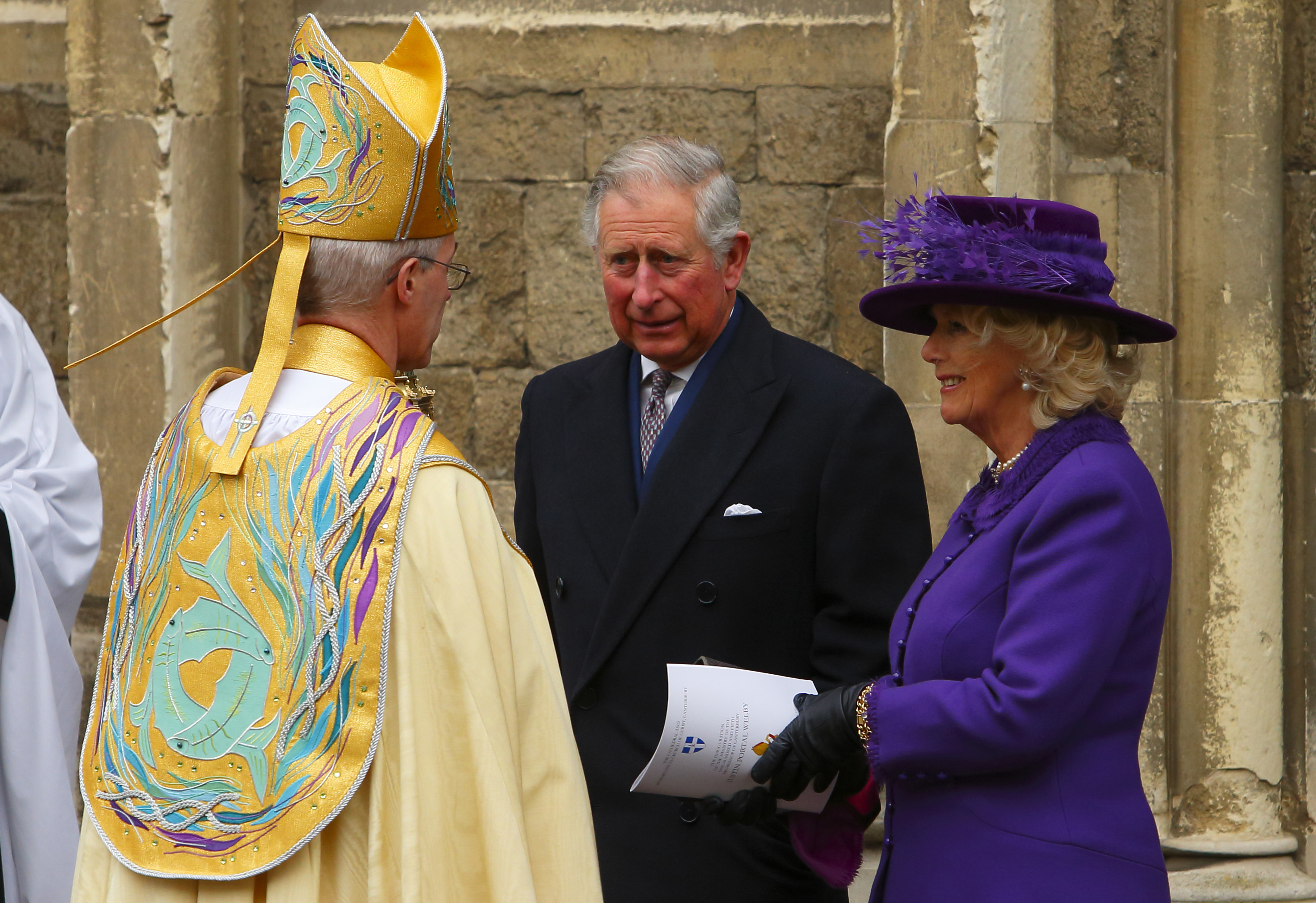
(Photo: The Most Reverend Justin Welby speaks with Prince Charles and Camilla after his enthronement at Canterbury Cathedral on March 21, 2013 in Canterbury, England. By Chris Ison – WPA Pool/Getty Images)

Tax Inequality

Caleb Crain studies his and his husband’s tax returns:

Simple arithmetic shows that in 2011, we paid $5,675 more than we would have if the federal government had recognized our marriage, and in 2012, $4,250 more. (I benightedly write for a living and my husband, though he also writes, has a proper job; couples like us with a significant income disparity usually come in for a marriage bonus, not a penalty, when paying taxes.) There’s something a little sordid about these dollar amounts. Whatever the cost of being gay in America may be, they don’t correspond to it. But I find their perspicuity, however petty and inadequate, somewhat fascinating. Numbers are so definite, even when their meaning isn’t.

Class On The Silver Screen

Alyssa is looking forward Elysium, created by District 9 director Neill Blomkamp, because she likes how his films show how “technological advancements will not be distributed equitably or universally, and in fact, that technology may be used to provide an escape hatch for the most privileged people in society”:

In [District 9], someone went from the privileged side of the divide to the underprivileged one and discovered that he couldn’t go back again, that there are strict rules for who you have to be to live in a comparative paradise. It looks like Elysium is flipping that divide in having Matt Damon crash the gates of a heaven near to earth, surprising the residents of that gated community with his capacity to get inside. I can’t wait to see what happens when he gets there.

The Right Kind Of Recycling

David Roberts interviews Bill McDonough, co-author of The Upcycle: Beyond Sustainability – Designing for Abundance, about the failures of recycling:

We often talk about recycling, but we’re actually not. We are downcycling. Take a plastic water bottle. If we recycle it into a park bench, it’s actually downcycling, from a quality perspective. I’ve reused the molecules, so that’s recycling polymer. But I’ve reduced its qualities, because I mixed it with other things, hybridized it, let’s say, with other polymers and various dyes and finishes. The flower pot I made it into is going to a landfill, or potentially an incinerator. It’s downcycling, cascading down in quality, from cradle to grave, or cradle to crematorium.

Now, if I take something that’s problematic, like soft PVC, that contains plasticizers, alloys, endocrine disrupters, materials that are gassing and become dioxins that could cause cancer, and I recycle that — is that recycling good? No.

Recycling’s a process; the product is good or not depending on human values. It’s sort of like efficiency. If I’m a terrorist, and I’m efficient, it’s worse. So if I’m recycling, that’s great, but if I’m recycling things that have become carcinogenic, is that great?

Upcycling is about increasing the quality as it goes to its next use. So, that water bottle. There is a residue in the bottle from a catalytic reaction involving very low levels of antimony, which is a heavy metal. Although it may not be dangerous when you drink water out of the bottle, it is something that’s suboptimal from a cradle-to-cradle perspective. If I burn the bottle as fuel, I get anti-trioxide in the atmosphere. Not a good thing. Why would I want a system of polyesters contaminated by heavy metal, when I’d like to use them forever, again and again, safely?

Upcycling means that we’d get that bottle back and take out the antimony. It gets better. That’s what we mean by upcycling: the idea that things get better when humans touch them.

Throwing More Money At Students Won’t Help

Josh Barro points out that, as “of 2008, we were spending more per pupil on primary and secondary education than every Organization for Economic Cooperation and Development country except Luxembourg, Switzerland and Norway”:

When the subject is health care, liberals have drawn the right lessons from the last 40 years of cost growth, understanding that more money doesn’t necessarily mean better outcomes. They should apply that same lesson to education: In a cost-bloated sector with poor quality improvement, we should be figuring out how to spend money better, instead of spending more of it.

The Daily Wrap

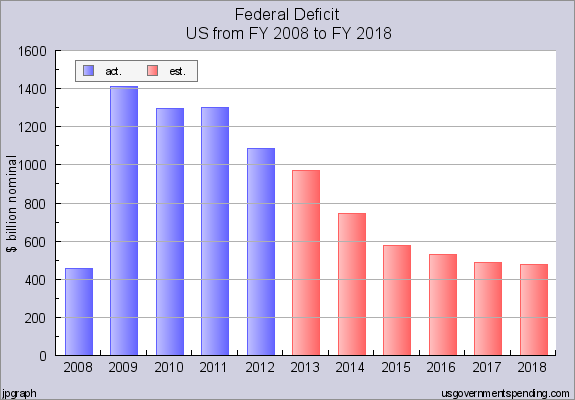
usgs_line.phpToday on the Dish, Andrew drew attention to the state of America’s veterans, sunk his teeth into the new budget offer, and gave Rand Paul some credit for attempting outreach to black Americans. He extolled Maggie’s sensible position on Israel, described Thatcherite counterculture from his youth (underlining the vitriol of her enemies) and yet noted that critique of her relationship with Augusto Pinochet is totally valid. Later, Andrew saw the end of gay culture watch and explored the possibilities of monetizing blogs.

In political coverage, we checked in with the upcoming consequences of the sequester, gathered reax to the trials of the bitcoin, and pointed to the next possible push for marriage equality. Waldman was skeptical of the gun control bill in the Senate, readers continued to hash out the right to bear arms, and pushed back against Goldblog on silencers. Nate Cohn remained positive that the Republicans are facing demographic trouble as we revisited Brown Vs. Board of Ed and heard an anecdote on Thatcher’s modern attitude toward same sex couples. Readers countered the idea that only women are objectified in politics and the New York Times made a Freudian slip.

In miscellanea, Chris Oates spotted a reflection of the British Empire in Doctor Who, Noah Berlatsky rebutted Alyssa’s critique of Romeo and Juliet, and Jeffery Overstreet pondered the Cohen brothers’ theological streak. We found more tributes to David Kuo, awed at the reality TV flooding over Alaska, and readers sounded off on the novelization of the small screen.

Later we saw a super secret social network, readers weighed the nutritional value of guinea pig and Seth Rogen went Breaking Bad for a Cool Ad Watch. Finally, we got a taste of summer movies in the MHB, visited Banner Creek, Alaska for the VFYW and recognized a chubby control freak in the Face of the Day.

­B.J.

“Clay Hunt Was A Casualty Of War”

A recent 60 Minutes profile of an Iraq and Afghanistan veteran who committed suicide after suffering years of PTSD:

This embed is invalid

Some more context on the crisis:

About 20% of Iraq and Afghanistan veterans are thought to suffer from PTSD, though many do not report their problems. Instead they try to dose themselves. A VA study found that veterans suffering from PTSD or depression were about four times more likely to have drug or drink problems. Too many end up in the same desperate place as Eiswert. The VA reported that, on average, 22 veterans committed suicide each day in 2010. Last year more active-duty soldiers took their own lives than were killed in combat. …

In war, it is said, there are no unwounded soldiers. Bombs that shatter bones also batter brains. Even on the periphery, war afflicts men with aching joints, ringing ears and psychological damage. Imagine, then, the human damage wrought by over a decade of battle.