Obama’s Success In Israel

In an surprise diplomatic breakthrough last week, Obama extracted a long-awaited apology from Bibi to Turkish Prime Minister Erdogan over the killing of Turkish civilians in the flotilla incident of 2010. Brent Sasely calls Obama “a magician” for negotiating the apology, while Michael Koplow thinks the mess in Syria is what finally brought the two countries back together:

[I]t was the recent introduction of Syrian chemical weapons into the equation that really changed Turkey’s calculus; now more than ever, the country needs better intelligence and allies to bring an end to the civil war or at least prevent it from spilling over. Turkey cannot afford to have chemical weapons used anywhere near its border with Syria, and the longer the fighting goes on, the greater the chances of a chemical weapons strike gone awry. Israel simply has better intelligence on regional developments than Turkey does, and Turkey can use that help to monitor Assad’s weapons stores and troop movements on both sides. In addition, whereas the United States and other NATO countries have been reluctant to support the Syrian rebels in any meaningful way, Israel has a greater incentive to make sure that the moderate Sunni groups prevail over the more radical jihadist elements of the opposition. As the situation in Syria heats up, Turkey and Israel will be thankful that they can talk to each other and coordinate.

Claire Sadar connects the thaw to the other deal Ergodan has been negotiating – peace with the PKK, the Kurdish nationalist group:

The apology from Israel is situated perfectly (perhaps purposely given the fact that [FM Ahmet] Davutoglu and the Foreign Ministry were circumvented) to maximize Erdogan’s popularity and therefore his power to orchestrate the rapprochement between the Turkish government and the PKK.  Some have worried that if Erdogan appeared too eager to placate the Kurds and [their leader] Abdullah Ocalan, he risked alienating his conservative Turkish base.  However, the Israeli apology is the perfect bone to throw to his supporters.  If Erdogan does not take advantage of this moment to do everything he can to ensure a successful peace process between Turkey and the PKK, then he truly never was committed to peace in the first place.

Another Hacker Hounded By The Feds

weevilicious

After attending the sentencing hearing for Andrew “Weev” Auernheimer, convicted of accessing an AT&T database containing customer email addresses in order to expose the company’s lax security, Molly Crabapple fumes:

[T]he email addresses AT&T claimed he stole were on publicly accessible web pages. Weev’s group, Goatse Security, just had to guess the URLs. Weev and his partners compiled 114,000 addresses, sent them to Gawker, and shamed AT&T epically. Supporters argued that he had done nothing illegal—that his prosecution was the latest warning shot against anyone able to use computers to embarrass power. … The prosecutors spun the tale of a brilliant young sociopath. They quoted his Reddit AMA three times, then some drama around Encylclopedia Dramatica. They called him “highly intelligent” to justify his sentence. They led a populist diatribe against individuals with “special [computer] skills” and the power they wielded over the unskilled common man.

And the sentence?

… 41 months of prison, three years of probation, and $73,000 restitution to AT&T. He will serve more years than the Steubenville rapists.

Ryan Tate, who wrote the original post based on the info collected by Goatse Security, lets loose:

The scapegoating of Auernheimer is revolting for two reasons.

One, it lets AT&T off the hook for exposing sensitive information to public view, shifting the blame onto those who reported the slip-up, and discouraging future disclosure. Two, the jailing of Auernheimer criminalizes the act of fetching openly available data over the web. …

[F]ederal prosecutors are doing their best to punish and deter security whistleblowers, and thus to help large corporations cover up their endless bungling of customer privacy. That only increases the vulnerability of those of us who depend on those corporations. Goatse Security won’t be the last ad hoc band of hackers to stumble on a large-scale web vulnerability. But it could be the among the last to report its findings so openly, a development that’s only going to hurt the very citizens the Justice Department purports to serve.

John Knefel adds:

The added irony that AT&T, the target of Auernheimer’s action, and other telecoms were granted retroactive immunity after spying on Americans without warrants – a crime far more significant than anything Weev, Swartz or Keys did – only heightens the sense of injustice.

(Photo of Auernheimer from Wikimedia Commons)

The Iraq War Wasn’t All Bad

IRQ: Odai Hussein's Torture Devices On Display In Baghdad

Dexter Filkins recalls touring Iraq’s torture chambers with a former torture victim named Al-Musawi:

Today, in 2013—a decade later—it’s not fashionable to suggest that the American invasion of Iraq served any useful purpose. It was a catastrophe, born of original sin—of lies and exaggeration and trumped-up intelligence. How many times have you heard that this week? There are a hundred thousand dead Iraqis, more than four thousand Americans killed, and a bill for a trillion dollars. Indeed, the near-universal certainty that America’s war in Iraq was nothing but bad is as widespread and unbreachable as the notion, in 2003, that Saddam had to go.

But what are we to make of Iraqis like Al-Musawi? Or of torture chambers like Al Hakemiya? Where do we place them in our memories? And, more important, how should they shape our judgment of the war we waged?

They must be part of what shapes our judgment. Saddam was a sociopath mass murderer. But what shapes my judgment is that in deciding to depose a dictator because he was a torturer, the United States tortured countless prisoners, many of them tortured to death. We ended his torture by embracing our own.

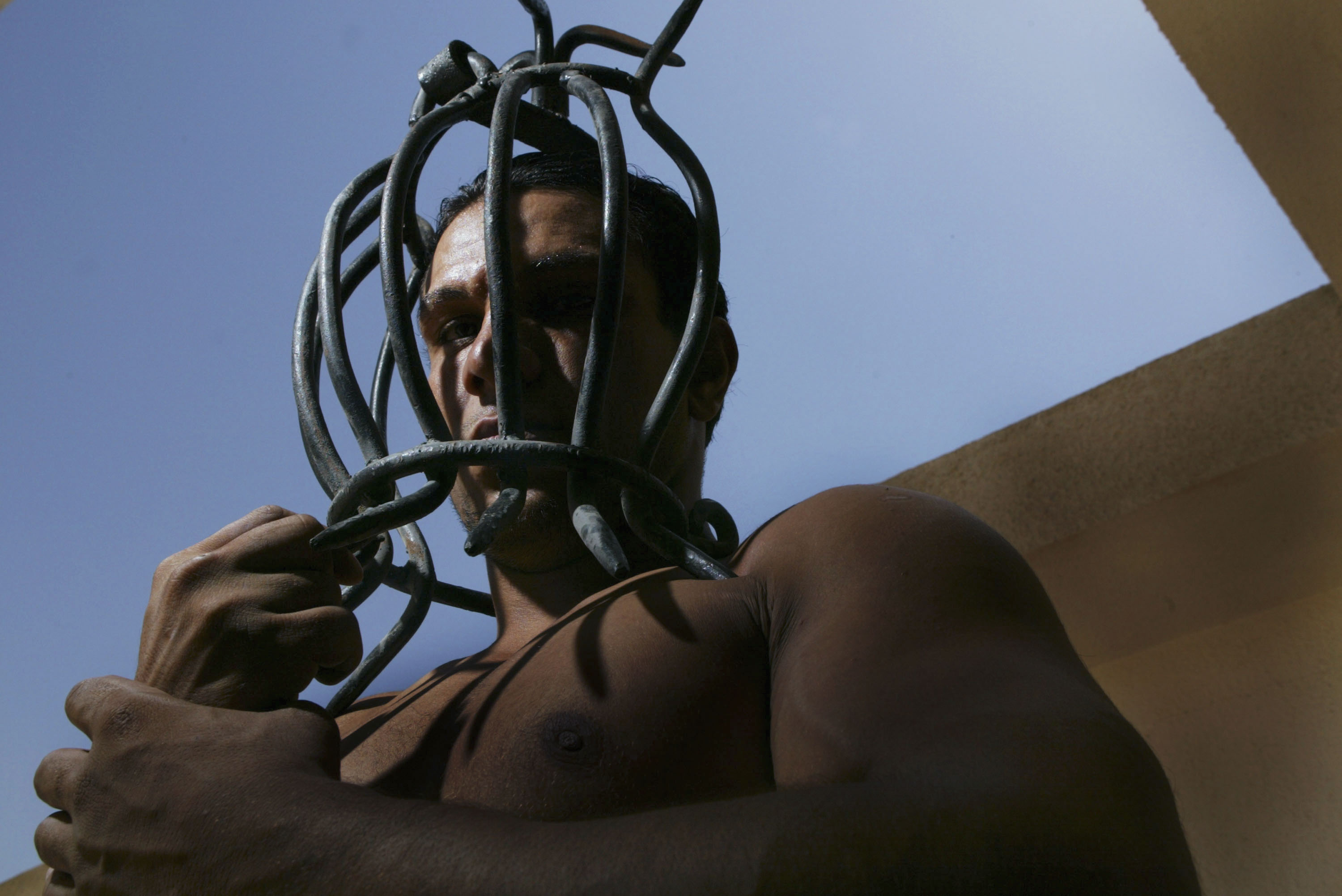
(Photo: Iraqi security guard, Ayad Mutashar, shows off a mask that was one of the tools of torture that Saddam Hussein’s slain son, Odai, is believed to have used to punish under-performing Iraqi athletes July 29, 2004 in Baghdad, Iraq. Odai ran the Olympic committee while his father ruled Iraq and it is said that he used the devices to instill fear in the athletes to perform. By Joe Raedle/Getty Images)

“Conservatism Simply Is.”

reeds

Sean Lowe, the most recent star of The Bachelor, is an outspoken “born-again virgin.” Scott Galupo scoffs at the idea and makes a broader philosophical point:

In a 1974 appendix to his study Conservatism Revisited: The Revolt Against Ideology, [Peter] Viereck wrote that classical conservatism, of the mostly British but also French variety, is “an inarticulate state of mind and not at all an ideology. Liberalism argues; conservatism simply is.” Once conservatism becomes conscious of itself—becomes aware that it is a thing set apart—it changes irrevocably; it becomes another species of rationalism. Viereck was writing in a sociopolitical context, in which classical conservatives recoil from Rights of Man universalism and other logical abstractions. But the observation applies just as well, I think, to traditional values in modern Western societies.

That couples should abstain from sex until marriage used to be more than an imperative; it was a norm, a widely-shared expectation of behavior. Today it is a value—inculcated and professed as against the more lax standards of the mainstream. It is joined to a narrative about honor and degradation. It is an argument, rather than something that simply is.

This no more presages the disappearance of the practice of abstaining from sex until marriage than it does the disappearance of any other rational, self-conscious ethical or political blueprint. It does, however, mean that its adherents must realize they are tending to something inorganic and exposed to a “torrent of change,” like Chesterton’s white post. It means they must become radical and set apart.

The inarticulate tendency in conservatism is what led John Stuart Mill to say the following:

I never meant to say that the Conservatives are generally stupid. I meant to say that stupid people are generally Conservative. I believe that is so obviously and universally admitted a principle that I hardly think any gentleman will deny it.

Of course, I think that’s a misunderstanding. The inability to articulate the value of something you have come to love or do is, to my mind, part of its value. Some things in life are ineffable and to explain them almost a violation of their essence. Most of these lie in the practical arena. How does a master chef explain exactly how he makes a dish with his singular skill, developed for years? How do those who are doing beautiful things with scooters answer when you ask them how they became so good at it, and why they keep at it? How do I explain why the cutting down of a small copse of trees near my childhood home traumatized me – because of what it did to my little universe of boyish escape?

There are reasons we can come up with. But they don’t capture the lived experience and never can. And it is precisely when you explain it that you undermine it. As soon as you call the town you have always lived in a “community”, it no longer is one. This is the Tao of conservatism. If conservatism were to be properly represented by a religion, it would be the opposite of fundamentalist Christianity. It would be Taoism. As Wiki notes,

The right libertarian economist Murray Rothbard suggested that Laozi was the first libertarian, likening Laozi’s ideas on government to F.A. Hayek’s theory of spontaneous order. James A. Dorn agreed, writing that Laozi, like many 18th century liberals, “argued that minimizing the role of government and letting individuals develop spontaneously would best achieve social and economic harmony.” Similarly, the Cato Institute’s David Boaz includes passages from the Daodejing in his 1997 book The Libertarian Reader. Philosopher Roderick Long, however, argues that libertarian themes in Taoist thought are actually borrowed from earlier Confucian writers.

Thomas Merton wrote: “I simply like Chuang Tzu because he is what he is and I feel no need to justify this liking to myself or anyone else.”

But no conservative thinker was as steeped in Taoism as Michael Oakeshott. If I were to pick one story that describes the essence of conservatism, it would be this one:

Duke Huan was in his hall reading a book. The wheelwright P’ien, who was in the yard below chiseling a wheel, laid down his mallet and chisel, stepped up into the hall, and said to Duke Huan,

“This book Your Grace is reading may I venture to ask whose words are in it?”

“The words of the sages,” said the duke.

“Are the sages still alive?”

“Dead long ago,” said the duke.

“In that case, what you are reading there is nothing but the chaff and dregs of the men of old!”

“Since when does a wheelwright have permission to comment on the books I read?” said Duke Huan. “If you have some explanation, well and good.  If not, it’s your life!”

Wheelwright P’ien said,

“I look at it from the point of view of my own work. When I chisel a wheel, if the blows of the mallet are too gentle, the chisel slides and won’t take hold. But if they’re too hard, it bites in and won’t budge. Not too gentle, not too hard you can get it in your hand and feel it in your mind. You can’t put it into words, and yet there’s a knack to it somehow. I can’t teach [explain] it to my son, and he can’t learn it from me. So I’ve gone along for seventy years and at my age I’m still chiseling wheels. When the men of old died, they took with them the things that couldn’t be handed down. So what you are reading there must be nothing but chaff and dregs of the men of old.”

But when it’s gone, it’s gone. Every attempt to replicate it rationally misses the point. If you can grasp that point – and it is often better grasped by those not schooled in the supremacy of reason – you have captured the essence of conservatism, properly understood.

The Liberal Lawyer And The Conservative Writer

enhanced-buzz-22008-1364186812-0

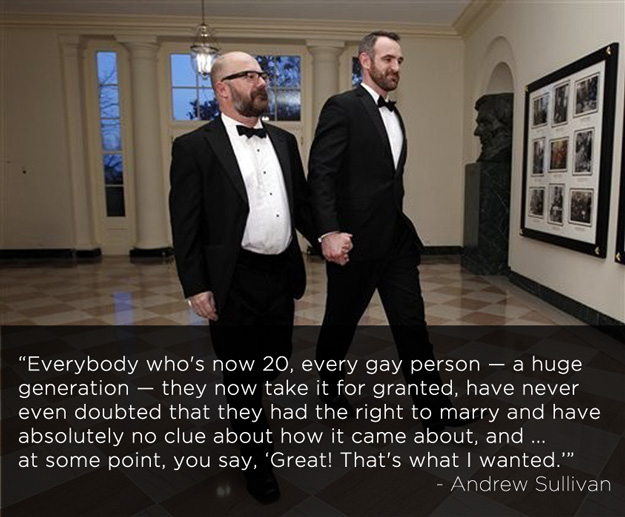
Here’s Chris Geidner’s profile of Evan Wolfson and me – who were once the only two gay activists of our generation who, despite core philosophical differences, made the once ludicrous idea of gay marriage the cause of our lives. It was a thrilling time in a way – because it seemed simply impossible, yet to us, utterly irrefutable as a logical and legal argument. We used to joke, as we toured the country, went on every cable show, spoke on campus after campus, agreed to talk-radio grillings, and wrote essays and legal briefs and books and strategy sessions, how funny it was we were so busy fighting for marriage that we didn’t have time to have a boyfriend.

And then the big surprise. We both became the victims of our own arguments:

enhanced-buzz-26929-1364172764-3

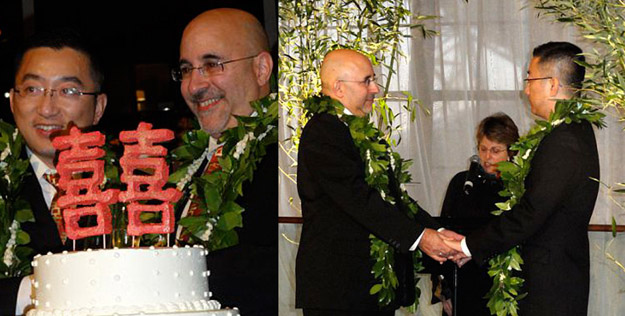
Sullivan met his now-husband nine years ago at a gay circuit party — “which is not exactly where you think traditional marriage begins: semi-naked on the dance floor at 4 a.m. in the morning,” he joked.

Looking at his phone, which occasionally lights up with a text message from his husband, Sullivan added, “But, we just said goodbye, he’s walking the dogs, and we’re still living together and sharing our lives together.”

“Even me, I was shocked,” Sullivan said of the experience of getting married. “I think there were two moments in my life when I was really shocked by the way I felt. The first was how much shame I felt when I found out I was HIV-positive. And the second was how much joy I felt when I got married. I didn’t anticipate either of those things. And that’s the arc. That’s what we’re really talking about. We’re talking about the human heart here, and its ability to heal.”

Drug Sanity Watch

Rand Paul advocates for less draconian drug policy (and Chris Wallace gets it):

Paul is wrong about pot. Sure, it can undermine productivity – but no more than video games or a hangover. Responsible recreational use – always outside the workplace – is, in my view, a clearly positive thing for the society as a whole, for its creativity and sanity, especially as the virtual cult of ADD contemporaneity threatens to swallow us all. Riggs sees Paul as part of a larger movement on the right:

If you compare Paul only to his colleagues in the Senate, yes, he sounds like a pioneer. But if you broaden the comparison to include Republicans outside the Senate, Paul is coming late to this way of thinking. Former drug warriors Newt Gingrich, Ed Meese, Asa Hutchinson, and Bill Bennett have all come out against incarcerating low-level nonviolent drug offenders. Republican Governors Dennis Daugaard of South Dakota, Nathan Deal of Georgia, Chris Christie of New Jersey, and John Kasich of Ohio have not only come out against imprisoning low-level, nonviolent drug offenders, they’ve signed legislation that diverts more of those offenders from prison into community supervision programs.

Ian Millhiser of Think Progress worries that Paul will will outflank Democrats on this issue. I sure hope so. It’s about time the right began to get ahead of the left with the next generation – on a question of core individual liberty and absurd, cruel abuse of our incarceration system.

Coming Out Through The Evening News

New US Trade Representative Rob Portman

Will Portman speaks up about his Dad’s announcement:

It has been strange to have my personal life in the headlines. I could certainly do without having my sexual orientation announced on the evening news, or commentators weighing in to tell me things like living my life honestly and fully is “harmful to [me] and society as a whole.” But in many ways it’s been a privilege to come out so publicly. Now, my friends at Yale and the folks in my dad’s political orbit in Ohio are all on the same page. They know two things about me that I’m very proud of, not just one or the other: that I’m gay, and that I’m Rob and Jane Portman’s son.

I’m of an utterly different generation than Will, and, to be perfectly frank, I look up to his. Coming out in the 1980s – as the plague began to cull more and more gay men – was an alternate universe, and drenched with much more trauma. But in my case, I simply kissed a man and the world that had been in black and white was suddenly drenched in color. Dishheads will know that one of my vices is pathological indiscretion, so, true to form, I told everyone I knew over a couple of months; then my folks; and then it was over. Done. Back to reading and teaching Kant and Machiavelli and sending my jejune prose to be eviscerated by Mike Kinsley’s editing skills.

Or so I thought. Then, writing the marriage equality cover-story in 1989, being made editor of TNR in 1991, changed everything. Marty asked me if I intended to make a big issue out of it. I told him I didn’t but I wouldn’t lie. To his immense credit, he knew I wouldn’t. And all I ever really did was answer yes to a question all my colleagues and friends and family already knew. But suddenly I was the gay poster-boy, Gap-ad and all. In retrospect, I would have given far fewer interviews, but I wouldn’t have held back on adding gay stories to TNR where they had been relatively rare (but not absent) before me. The early 1990s were critical ones in getting Washington to take the issues of marriage equality and military service seriously. But I was absurdly naive about what being so publicly gay would mean – at a time when many fewer people were, and about what being openly conservative would mean to a gay community of solidly left-wing leadership. But it truly was not an act of courage. It was simply an act of not lying.

In the end, it’s about one’s willingness to lie, to put calculation before truth. And with all due respect to Will, we know more now than that he is Rob and Jane Portman’s son, or that he is gay.

We’ve learned something much simpler and more important: that he tells the truth.

(Photo: New US Trade Representative Rob Portman (C) is sworn-in by White House Chief of Staff Andrew Card before President George W. Bush, Portman’s daughter Sally (lower left), son Will (rear) and wife Jane (R) on May 17, 2005. By Paul Richards/AFP/Getty Images)

Cannabis Lite, Ctd

A reader responds to this post:

I’m one of the users who attempts to reach an after-work glass of wine-like buzz. I can get close to accomplishing this by placing a small amount of pot in a vaporizer, but I still have very little certainty that I’ve got the dose right. Unlike alcohol, where the proof is written on the bottle and assured by regulators, you can only gauge THC levels through trial-and-error or your dealer’s sales patter.

What’s worth mentioning is that increasing purity is another natural economic consequence of prohibition, as manufacturers seek to mitigate risk by reducing the volume of product and increasing per-gram profit margins. It’s infuriating to see the DEA and ONDCP point to increased THC levels of marijuana as a talking point against legalization.  They hope to convince middle-aged parents with fond memories of gentle buzzes from the 1970s that the harmless weed of their day has morphed into a powerful narcotic that could harm their children. Yet somehow they can’t see that their very actions have contributed to the incentive to amp up THC levels.

The Dictator’s Temper Tantrums

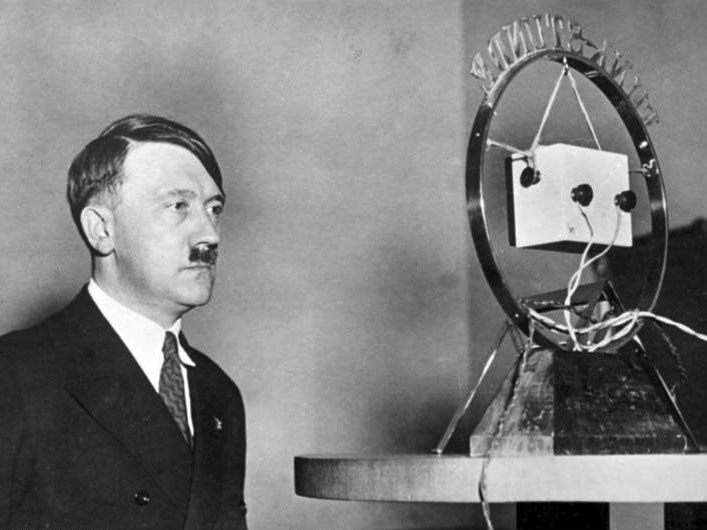
Adolf_Hitler_vor_Rundfunk-Mikrofon

In a review of a number of new books on Adolf Hitler, Carlin Romano turns to Laurence Rees’s Hitler’s Charisma to understand the connection between the Nazi leader’s mercurial temperament and mass appeal:

Rees observes that Hitler “found it impossible to debate any issue. He would state his views and then lose his temper if he was systematically questioned or criticized,” and was “the least likely person in the world to change his mind on any issue he thought was important.” Hitler specialized in “screams, tantrums, rapid changes of mood, sulks.”

Rees notes, however, that the “overconfidence” implicit in such behavior was widely “perceived as a mark of genius” and persuaded millions—in part because Hitler made “in an extreme form” arguments already in the minds of his German listeners. Was that not a canny use of reason? Hitler understood, says Rees, that it’s smart to present oneself as “infallible.” Hitler may also have thought it effective to appear volatile. Rees writes that Hitler rooted his hatreds in “an emotionality that was given such free rein as to appear out of control. The ability to feel events emotionally and to demonstrate that emotion to others was a crucial part of his charismatic appeal.”

German listeners, according to Rees, thought of Hitler as someone who spoke with “conviction” and an “absolute certainty” that they liked.

(Photo of Hitler in 1933, from the German Federal Archives, via Wikimedia Commons)