Seat Strategery

Alex Cornell maps some ideal seating arrangements for dinner guests. Some tips:

7 Person Rectangle: It’s very easy to get screwed in this scenario. While it may appear like you can sit anywhere except the ends, this is not so. You are at risk of sitting next to the lonely end-seat, which requires you to speak soley to that person for the duration of the meal.

2 Tables of Any Size: You’re fucked. Regardless of how you time your approach, you will inevitably choose too soon. Lament as the other table’s attendance crystallizes into what is clearly the superior group. Sometimes it’s best to visit the bathroom while seats are chosen, so any seating disasters are the result of chance, and not your own miscalculation.

A large version of his map here.

Doped Up Domesticity

In 1955, the first commonly prescribed tranquilizer, Miltown, burst onto the American scene, and “within a year, a staggering 1 in 20 Americans were regularly prescribed it”:

[Miltown] was a potent and prescription-only tranquilliser, most often used by women. Among American housewives, it became as fashionable as the latest style of dress or car. It was discussed at dinner parties and md30791written about in lifestyle magazines. Miltown was, from its birth, bound up with ideas of glamour, framed as part of an aspirational lifestyle choice which Hollywood starlets and suburban housewives alike could indulge in. Celebrities promoted its benefits, and bowls of Miltown were even rumoured to be passed around like canapés at Hollywood parties.

Such anecdotes spawned a flurry of Miltown cocktail recipes for star-struck housewives to copy. There was the ‘Militini’, a martini with a pill replacing the olive. Or those more daring drinkers could try a ‘Guided Missile’ – a double vodka and two Miltowns. The jewellers Tiffany’s even produced ruby- and diamond-studded pill-cases, while Cartier advertised a silver charm bracelet with a convenient holder designed for a single Miltown pill. This was a medicine like no other – until it was surpassed by its descendant, Valium. By 1974, an astonishing total of 53.4 million Americans were taking Valium – a quarter of the whole population.

(Image: 1959 Miltown ad via Deco Dog)

Pilgrims And Prohibition

They struggled against it just like we do today:

Our collective mythmaking about the Pilgrims and their pious conservatism does not make room for this image of the colony. Pilgrims are hard-working, religious, pious people to us, and Americans are intoxicated with this puritanical vision of past. We don’t see Plymouth as a party town, but as the birthplace of our best selves.

And yet alcohol was everywhere. The Mayflower had been stocked with more beer than water, as well as cider, wine, and aqua vitae, a form of distilled brandy. The first Thanksgiving included thanks for a successful barley crop, which allowed for the brewing of beer, and aqua vitae, or “strong water,” was used to smooth over discussions with the Wampanogs. Alcohol was essential to the survival of the colony, both as a drink and a currency, and a great deal of energy and time was dedicated to lawmaking and law enforcing surrounding the making, selling, and drinking of alcohol.

The Beatles And Chris Matthews

His show – where I’ve appeared regularly – has a 50th anniversary special on the Beatles this weekend. Joe Klein and Chuck Todd are among the nostalgics. Consider this just a plug for what is often the most honest political show on Sunday mornings, and the most entertaining. Who else but Chris would get all emotional about the Fab Four? Oh, and happy St Paddy’s Day, while I’m at it.

Reads Like A Dream

Francine Prose rejects the advice of a 7th grade teacher who cautioned students, “Never end a story with, ‘It was all a dream!’”:

Literature is full of dreams that we remember more clearly than our own. Jacob’s ladder of angels. Joseph saving Egypt and himself by interpreting the Pharoah’s vision of the seven fat and lean cows. The dreams in Shakespeare’s plays range as widely as our own, and the evil are often punished in their sleep before they pay for their crimes in life. Kafka never tells us what Gregor Samsa was dreaming when he awakens as a giant insect, except that the dreams were “uneasy.” Likely they were not as uneasy as the morning he wakes into.

She credits Tolstoy’s Anna Karenina with the boldest use of a dream in fiction:

Tolstoy showed it was possible to give a character a dream that strikes the reader as plausible, convincing, important enough to pay attention to, without being heavy-handedly symbolic or portentous. Or boring. What’s harder to recreate on the page is anything remotely resembling the experience of actually dreaming, with all the structural and narrative complexities involved, the leaps, contradictions, and improbable elements. Maybe that was my seventh-grade teacher’s problem: She’d read too many middle-school accounts of dreams that were nothing like dreams.

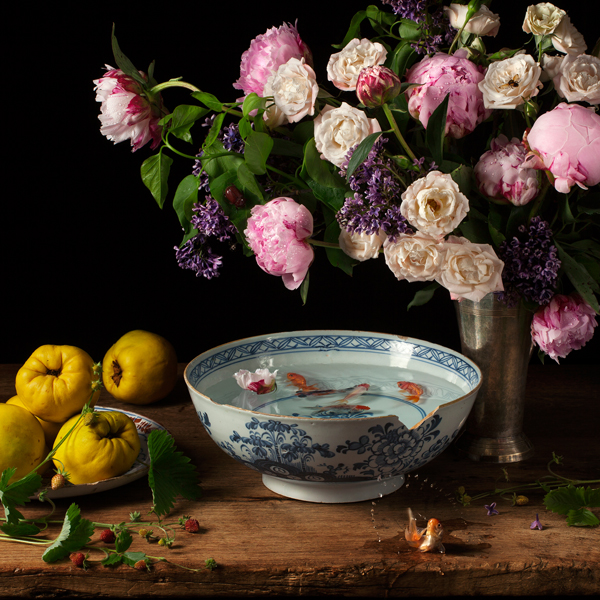
Still Lifes And Walking Deaths

Sara Davis conceives of the still life and the artistic portrayal of zombies as two forms of memento mori – a symbol of death’s inevitability:

For the 17th century Dutch merchant class, a still life was a shrine to the beauty and pleasure that money can buy: luxuries, delicacies, fine things that could be held in the hand or captured in oils, a small and fine possession in itself. But for contemporary society, the ultimate shrine and symbol of prosperity is the well-kept body — that is, a body that falls into a fairly narrow category of healthy, beautiful, and athletic. Despite all the goods and brands and tech toys, so much more of our collective wealth is sunk into sculpting or tightening, brightening or darkening, coloring and trimming, running, counting calories, and swallowing gallons of “smart” water.

It makes sense, then, that today’s bogeyman and morality tale is a decaying body, a walking (or running) death’s head that all the cardio and training in the world can’t outrace. Zombies mock us, like the half-eaten fruits of the Dutch golden age and the weary speaker of Ecclesiastes, that though we may define ourselves by what and how we consume, it is all a pretty distraction from how we will be consumed.

Speaking of zombies, A.J. Kandathil draws lessons for writers from The Walking Dead.

(© Paulette Tavormina, Flowers and Fish III, After G.V.S., 2012, Courtesy of Robert Mann Gallery, New York, from the series Natura Morta)

A Poem For Saturday

William_Butler_Yeats

“A Coat” by William Butler Yeats (1865-1939):

I made my song a coat
Covered with embroideries
Out of old mythologies
From heel to throat;
But the fools caught it,
Wore it in the world’s eyes
As though they’d wrought it.
Song, let them take it,
For there’s more enterprise in walking naked.

(Photo: William Butler Yeats in 1933, via Wikimedia Commons)

The Upstairs/Downstairs Drama Around Mrs. Dalloway

Alexis Coe marvels at the tumultuous relationship Virginia Woolf had with her servant of 18 years, Nellie Boxall:

Boxall was hired as the Woolf’s live-in servant at 52 Tavistrock Square, where the writer would draft Mrs Dalloway and launch Hogarth Press. All the while, Nellie was hard at work in the background, pumping the water, lighting the lamps, making the beds, and emptying the chamber pots — more than her title of “cook” suggests, though she did that as well, serving multiple courses three times a day.

Few scholars have parsed Woolf’s diaries without commenting on her frequent, detailed, and often vitriolic accounts of Boxall. Their brand of melee was firmly mired in a cycle, each arguing her points with the tools available to them. Boxall howled and cried, and then threatened to leave, which she would not, but the threat greatly destabilized and embarrassed Woolf. For her part, Woolf recognized, if not predicted, the attraction, writing, “If I were reading this dairy…I should seize with greed upon the portrait of Nelly & make a story — perhaps make the whole story revolve around that.”

More details of their toxic dynamic:

Boxall certainly facilitated optimal writing conditions at times, and greatly hindered them at others. Her complaints were not unfathomable, given her substantial work load. Swollen ankles and a bad back might have been tolerated in relative silence if, she seemed to tell Woolf, her efforts were appreciated. “Nellie Boxall was one of the majority throughout history who had made their presence felt through surliness or tears, downright disobedience, petty acts of revenge (like spitting up on soup) or vicious talk,” wrote [Alison Light, author of Mrs. Woolf and Servants]. Nellie communicated her grievances through dramatic scenes, which Woolf found distracting and “degrading,” but nonetheless chose to obsess over them for nearly two decades.

Woolf recounted and appraised “the famous scene” at Tavistock Square in London over and over again in her diary. After a particularly bad argument, Boxall ordered Woolf out of her room, one she inhabited but technically belonged to her masters. “In her closest relationships — with Vanessa, Leonard, Nellie, Vita, and Ethel — Virginia knew she wanted mothering and protection but she also distrusted ‘the maternal passion,’” explained Light. This was not weak moment for Woolf, and she did not need to be reminded of instances in which Boxall had played the stern but kind parental figure. She could not decide if Boxall, by ordering her out of the room, had treated her like a child or a servant; in the end, it did not matter, for Woolf was resolute. This time, Boxall would go. She spent the following weeks rapt with expectation, engrossed in preparation for any possible scenario. She copied out and practiced reading aloud various replies to what she expected Boxall to say. “I am sick of the timid spiteful servant mind,” wrote Woolf, the very same woman who had railed against men’s use of ‘the female mind.’”