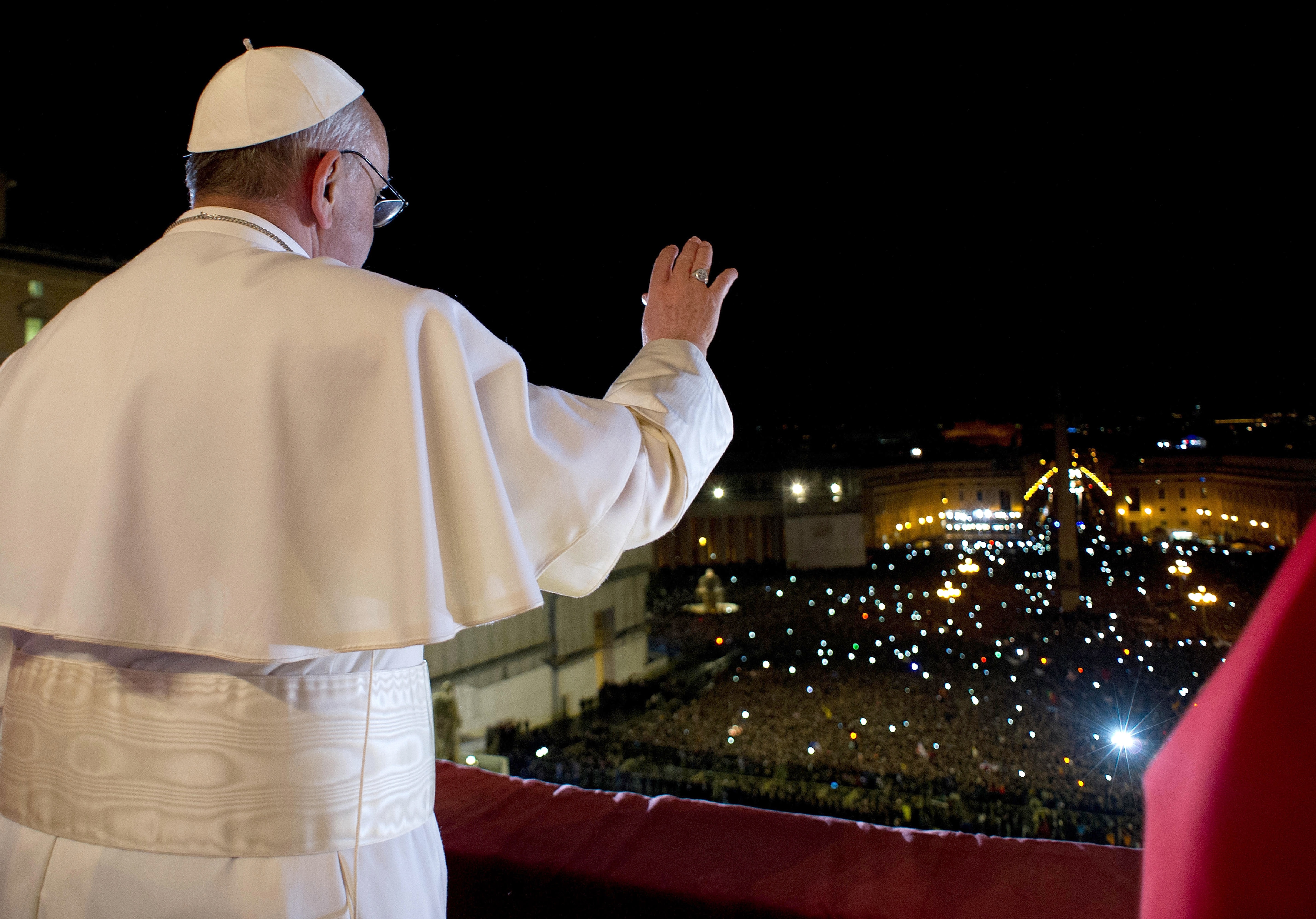
Google Reader, RIP

Citing declining usage, Google announced yesterday that it will shut down its Google Reader RSS service in July. Tom Watson thinks Google is pissing off the wrong crowd:

Google Reader is used and loved by a very loud – and as some would no doubt say, very influential – core user group. Any app builder would kill for this following – any social entrepreneur would walk a thousand miles for this crowd. And make no mistake, Google Reader is something of an important public accommodation, a real point of differentiation for a company whose motto is “don’t be evil.” Google was doing a public service for the news and blogger community by keeping Reader going. Understandably, the Reader shutdown [is being] received not just as the end of an era but almost as an attack on those who count on it for traffic and attention.

Drew Olanoff pins the blame on RSS’s lack of consumer appeal:

I’ve heard many smart people try to explain RSS to normal folks, such as “turning content into television stations, allowing you to subscribe only to what you want to consume.” That one didn’t work. Neither did any other explanation, because RSS as a technology is too nerdy, too behind-the-scenes and lacked general consumer appeal. Nobody ever took RSS under its wing and “mentored” it. In essence, Twitter is a big RSS reader, allowing you to “follow” the people sharing content that you’d like to consume. That simple concept of following gripped, but subscribing to feeds simply did not, at least how Google Reader and other popular readers let you do it.

Zooming out, Alex Kantrowitz argues that Reader’s demise is proof that no service on the Internet is forever:

The death of Google Reader reveals a problem of the modern Internet that many of us likely have in the back of our heads but are afraid to let surface: We are all participants in a user driven Internet, but we are still just the users, nothing more. No matter how much work we put in to optimize our online presences, our tools and our experiences, we are still at the mercy of big companies controlling the platforms we operate on. When they don’t like what’s happening, even if we do, they can make whatever call they want. And Wednesday night, Google made theirs.

Yglesias hopes that Google Reader’s death will spur innovation:

Google Reader wasn’t a viable business that Google was investing in and improving. If anything, they were making it worse in flailing efforts to integrate it into a real business strategy. But it was essentially impossible to compete with them either. They were the 800-pound gorilla in the RSS space, but like a hobbled 800-pound gorilla that wasn’t going anywhere.

Marco Arment argues along the same lines:

It may suck in the interim before great alternatives mature and become widely supported, but in the long run, trust me: this is excellent news.

Meanwhile, Whitson Gordon rounds up some alternatives for the soon-to-be Reader-less.
A Poor Education

Yglesias focuses on the differences in college application strategies between rich and poor students:

High-income, high-achieving students generally do what you’d expect. Most of their applications are to schools where the median admissions test score is similar to what they got. But they apply to some reach schools and most to a safety school. Generally they apply to the local flagship state university campus, which is sometimes a match and sometimes a reach depending on the state.

Low-income students are very different. Fully 53 percent of them apply to zero schools whose median SAT or ACT scores are similar to their own. Many of these smart, poor kids apply only to a single unselective school. Only a very small percentage of these kids—8 percent of them, the authors estimate—act the same as high-achievement kids from prosperous families by applying to selective schools, including some reaches and safeties.

Reality Check

This embed is invalid


Blumenthal examines the president’s approval rating:

Despite the recent decline, Obama’s overall approval rating remains well ahead of the 46 to 47 percent levels on the Pollster trend line during the spring and summer of 2012. The open question is whether the recent shifts result more from newly negative views of Obama’s handling of the economy or an end to a bubble of approval fostered by Obama’s November victory and January inauguration, a period in which the usual partisan invective fades, albeit temporarily.

Our Constant Struggle With Stress

Dana Becker, who has a new book on stress, dislikes contemporary understandings of the term:

Instead of thinking about stress as something outside us, it’s now become integral to the self. So the problem of stress has become our own personal predicament to solve, and there’s no dearth of advice about how to do this: eat more kale, get some therapy, take a yoga class. The message is: change yourself, change your lifestyle, or learn to adapt to the stress. Consider what it means to accept this way of thinking about stress. If women believe that it’s our job to manage the stress of combining paid employment and family work, we’re more likely to “de-stress” by putting more bath oil in the bath and less likely to work toward changing family-unfriendly workplace policies or to agitate for universal daycare.

Alexander Nazaryan reviews Becker’s book:

[T]oday, not only has the notion of being stressed-out come to embody a whole host of issues that may have non-mental underpinnings, but we are constantly told that we can marshal what the poet John Berryman smirkingly called our “inner resources” to wage an effective battle against this invisible enemy. This is Becker’s objection to the culture of stress: Stress exists, but it’s been blown out of proportion, falsely rendered, and has spawned an entire ecosystem of pseudo-psychological empowerment, from therapy to VitaminWater that purportedly offers relaxation.

Stress is not the issue, Becker says. Life is difficult, unknowable and often harrowing, and there is no use pretending that two minutes spent in downward dog is going to change all that. One more inclined to philosophy than sociology might note that we have replaced Kierkegaard’s prevailing anxiety about existence with a far more mundane unease, one we think we can eliminate precisely because it is earthbound.

Gender Neutral Gaming

A father reprogrammed the vintage game Donkey Kong so his daughter could enjoy playing as a heroine rather than a certain stout, moustached plumber:

Mika happens to be a competent developer, and after a few late-night hours spent hacking the NES version of Nintendo’s classic, he accomplished the role reversal his daughter had wished for. Mario was now under Donkey Kong’s control, and Pauline was tasked with rescuing the plumber in distress.

The Community Katrina Washed Away

Lydia DePillis checks in on the Lower Ninth Ward:

If the Lower Ninth has any chance at becoming a livable community, new people are going to have to move in. But the young people who flooded the city after the waters receded are still finding plenty of room in the hipper neighborhoods, like the Marigny and the Bywater, that retained more of their historic housing stock. And the city seems determined to maintain the Lower Ninth’s structural disadvantage in this regard: Although a 2009 analysis of residential market potential showed that only about 20 percent of the existing demand was for single-family detached homes, that’s how the neighborhood has seen itself, and how it wants to remain. Even when a developer proposed the kind of dense, multifamily project that would attract the kind of amenities everybody says they want, residents howled in protest.

Crowdsourcing On Steroids

This embed is invalid


A reader writes:

Because of your interest in fan-based funding and the independence of the new Dish, I thought you might find the Veronica Mars movie kickstarter project interesting. [Yesterday] morning it had about 30,000 dollars, right now it has about 1.7 million dollars. And this isn’t some indie movie; it’s a real Hollywood production.

As of now it’s passed $2.5 million, in just 24 hours since launch. The project’s goal was $2 million.

Executing Teens

Along with Iran, Saudi Arabia and Sudan, Yemen is one of the only nations that puts minors to death. Tik Root explains the story of Mohammed Haza, who last weekend was executed by firing squad:

In 1999, Mohammed shot an intruder at his home in the central Yemeni city of Tiaz. The man later died of his wounds. Various judges, including the one who made the initial ruling, determined that the killing was self-defense and that Mohammed was underage at the time of the crime. Ignoring these concerns, an appeals court eventually sentenced him to death.

Root notes that “since 1994, Yemen’s penal code has prohibited executing anyone under 18, while at the same time referring those over the age of 15 to adult courts.” However, the country’s 22% birth registration rate means many fall through the cracks to death row:

Experts say that both the age verification process and Yemeni courts are plagued by unprofessionalism, bias, and corruption. According to [a] HRW report, age certification is conducted using questionable methods and inadequately trained staff. “Forensic doctors” rely on wrist or arm x-rays to make their determinations, a technique that has a margin of error of up to two years in either direction. In poverty stricken Yemen, the fact that “bone-age assessments may be influenced by factors including socio-economic background and nutrition,” further compounds concerns over the accuracy of the tests.

Francis: Another Mediocre Novelty?

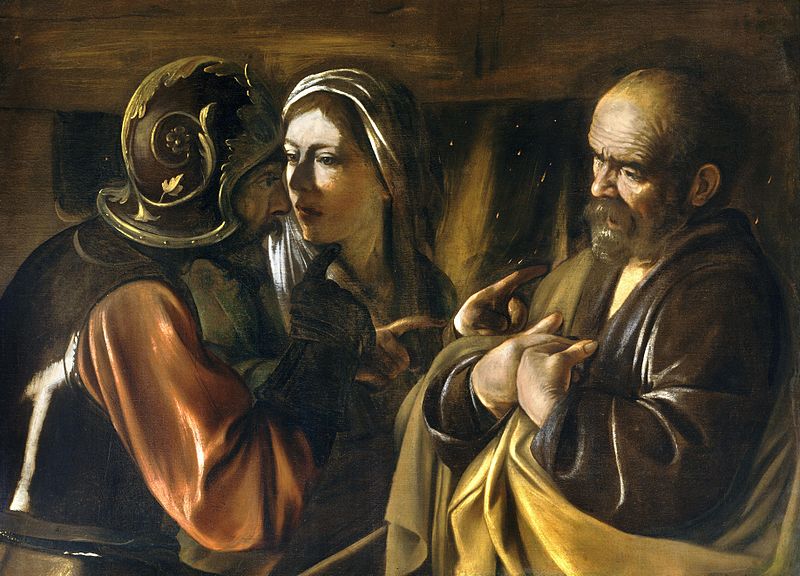
800px-The_Denial_of_Saint_Peter-Caravaggio_(1610)

That’s Dougherty’s concern – and the possibility that Francis was actually the candidate of the old guard in the Curia:

A contentious reading of Pope Francis’ rise is that Benedict’s enemies have triumphed completely. It is unusual for a one-time rival in a previous election to triumph in a future one. And there is almost no path to Bergoglio’s election without support from curial Italians, combined with a Latin American bloc. Low-level conspiracy theories already flourish in Italy that Benedict’s resignation was the result of a curia determined to undermine his reforms. This election will only intensify that speculation. An older pope who does not know which curial offices and officers need the ax, will be even easier to ignore than Benedict.

The more I read about his role during the dirty war of the 1970s, the queasier I get. This is not an encouraging detail about a priest under Bergoglio’s authority who was convicted of seven homicides and 40 torture sessions:

Father von Wernich was allowed to continue to celebrate Mass in prison, and in 2010, a church official said that “at the appropriate time, von Wernich’s situation will have to be resolved in accordance with canonical law.” But Cardinal Bergoglio never issued a formal apology on behalf of the church, or commented directly on the case, and during his tenure the bishops’ conference was similarly silent.

Only in November 2012, a year after Cardinal Bergoglio had stepped down as head of the bishops’ conference, did the group address the issue of its role during the dictatorship.

We need a Pope unafraid of airing the dirtiest of laundry. But if Bergoglio kept silent in the face of government assassins and torturers, and didn’t de-frock a torturer-murderer priest, why would he be vigilant about child rape? This line from Dougherty struck a chord about the current turbulence:

Benedict’s papacy, which focused on “continuity,” seems like the exception to an epoch of stunning and unsettling change, which—as we know—usually heralds collapse.

(Painting: St Peter’s denial of knowing Jesus, by Caravaggio.)

The Daily Wrap

The Conclave Of Cardinals Have Elected A New Pope To Lead The World's Catholics

Today on the Dish, Andrew greeted the new Pope in real time, and looked forward to seeing his marriage equality learning curve. At home, he flunked Paul Ryan’s budget, called out Republicans for taking obstructionism too far, and knew hope for marijuana legalization as a result of the progress on marriage equality, which continued its advancement down under. Elsewhere, he drew parallels between anti-semitism and homophobia and protested comparisons to Stalin or Hitler.

In politics, we wearied of Paul Ryan’s schtick as Derek Thompson broke down his budget, Kevin McCarthy took points off for Obama’s professorial attitude, and Rand Paul hearkened back to the “big tent” days of the GOP. Max Fisher noted ambiguity in the UN report on a murdered Gaza child, the Falklands opted to stay British. As the Conclave ended, Philip Ball cleared up the Vatican’s smoke coloring as we pulled back the curtain on the seconds before the announcement and rounded up Twitter’s reactions. Meanwhile, Garry Wills looked forward to a Pope who was “ordinary and ignorable” and Massimo Gatto deconstructed the Pope Emeritus’ ruby slippers.

In assorted coverage, Anna Clarke uncovered USPS-enabled discrimination, Robin Hanson lost sleep over couples’ bed arrangements, and Rebecca Willis blacklisted Manet from being an Impressionist. Judy Stone disputed the rationale behind employer drug tests and the drug war slowed, while Ben Goldacre pulled back the curtain on publication bias in pharmaceutical studies. Dr. Suess sucked on the silver screen, Margaret Talbot found practical advice for the trans population on YouTube, and video sites tested out some new revenue models.

We deliberated over juror questions, readers fleshed out the debate on the origins of racism, the UFC fought homophobia, and the internet revealed its charitable side. SubPop held auditions to complete the Postal Service, the VFYW looked down on Hong Kong and we listened in on the Pope’s first address in the FOTD.

– D.A.

(Photo by L’Osservatore Romano/Getty Images)