As we wait for the papal news, New Zealand’s parliament votes 77 – 44 in favor of full civil marriage rights for gay couples. The Australian opposition leader, meanwhile, shares his experience with an openly gay sister. And the beat goes on …
The Science Of The Smoke

A timely explainer from Philip Ball:
The smoke comes partly from the burning of ballot papers in a special stove in the chapel. But to colour it white or black, this smoke is mixed with that from chemical additives burnt in a second stove. Traditionally the Vatican produced the different colours by burning wet straw for white and tarry pitch for black.
Anyone who has ever made a bonfire knows that damp grass will work for the former; the less responsible of you will know that chucking old tyres or roofing felt into the flames will turn the smoke black – and what’s more, noxious, because it is then full of sooty carbon particles that can clog the lungs and are potentially carcinogenic.
It’s not concern for the environment that has led the Vatican to change its ways, however. Rather, the smoke in some previous elections came out an ambiguous grey, prompting the decision for the last conclave in 2005 to use a more reliable method based on chemical ingredients.
The Vatican has now revealed what these are. For black, it uses a mixture of potassium perchlorate, anthracene and sulphur; white comes from potassium chlorate, lactose and the conifer resin called rosin, which is also used to lubricate violin strings. We needn’t imagine a team of Vatican chemists labouring like alchemists to devise these magic recipes, because what they really show is that the Vatican is making plain old smoke bombs.
(Screenshot from the site www.istherewhitesmoke.com)
The Falklands Vote
99.8% of the islands’ residents voted to remain British subjects. Nile Gardener struts a bit:
The [Argentine President] Kirchner regime can rage all it likes, but it has no prospect of seizing the Falklands. For as long as its inhabitants wish to remain under the protection of the Crown, Britain will defend them, and stand up to Argentina’s threats and intimidation. Argentina’s government claims the Falklands will be theirs within 20 years. This is the language of delusion, and the stuff of pure fantasy, the pathetic ranting of a failed presidency, which cares little for the prosperity of its own people, and nothing at all for the freedom and liberty of the Falkland Islanders.
Seamus Milne is unsatisfied, claiming the issue at hand isn’t the opinion of the British occupants, but Argentina’s right to the territory:
[S]urely the islanders have the right to self-determination, it’s argued, even if they’re 300 miles from Argentina and the other side of the world from Britain. They certainly have a right to have their interests and way of life protected, and to self-government. But the right of self-determination depends on who is deciding the future of what territory – and since the dispute is about whether the islands are part of Argentina or not, it’s also about who should exercise that right.
The Economist suspects Argentina sees things the same way:
No matter how overwhelming the Yes vote, it will not shift the position of the Argentine government, which claims sovereignty over the islands, which it calls Las Malvinas. “Self-determination does not apply to Las Malvinas,” the Argentine foreign minister, Héctor Timerman, told British politicians in London last month. And it is unlikely to make much difference to the views of ordinary Argentines either. A recent poll found that only 15% thought the islanders should get to decide their own future, and 59% that the islanders’ wishes were simply irrelevant to who held sovereignty over the island. Other South American governments support Argentina’s claim and its desire for bilateral negotiations, without the islanders present, to resolve the territorial dispute.
The Pope’s Ruby Slippers Explained
Massimo Gatto traces the history of the most conspicuous retired red shoes in Rome. They were once a symbol of wealth and power:
Those red shoes, for example—which the pontifex emeritus has now given up in favor of a more ordinary brown pair from Mexico—may symbolize the blood of Christian martyrs. But when red shoes were the height of fashion in Etruscan Rome, that is, five hundred years before the birth of Jesus, they designated the wearer as an aristocrat, someone who could afford leather that had been colored with the most expensive dye in the Mediterranean, Phoenician “purple”—which was actually scarlet red. (It was produced by scoring the bodies of molluscs and ranged in color from blue to red, with red the most prized shade). The leather itself came not from kangaroos, of course, but from the Chianina cattle, who came to Italy together with the Etruscans and provided the ancestral form of Florentine beefsteak.
Habemus Papam!
We have white smoke. Stay tuned. As by the usual modern standards, this was pretty quick:

Jews And Gays: The Bonds Of Ostracism
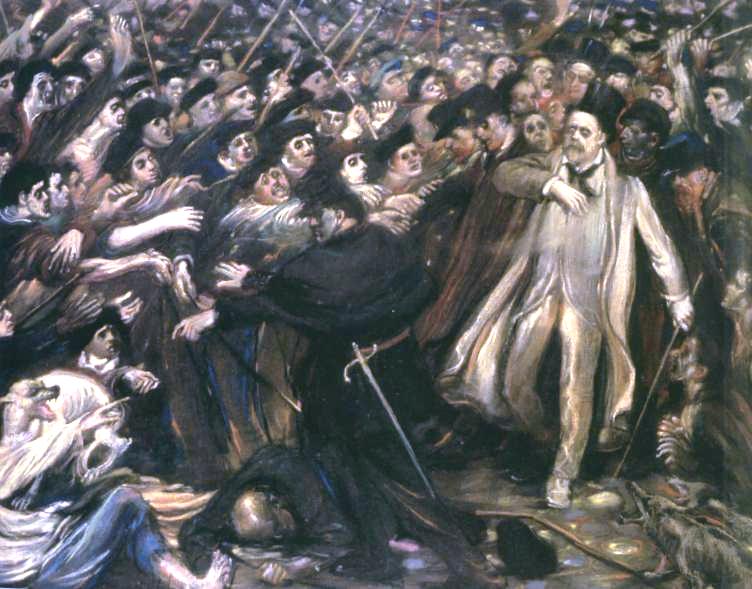
I’ve long seen anti-Semitism and homophobia as closely related psychologically. They are particular manifestations of group-hatred in as much as bigots of both kinds actually fear the power these groups allegedly hold, and their ability to pass for goyim or heteros. There’s almost a kind of admiration mixed in with the loathing, and often a sense that the groups conspire together in secret. Here’s what I wrote on the subject a while back:
In her book The Anatomy of Prejudices, the psychotherapist Elisabeth Young-Bruehl proposes a typology of three distinct kinds of hate: obsessive, hysterical and narcissistic. It’s not an exhaustive analysis, but it’s a beginning in any serious attempt to understand hate rather than merely declaring war on it. The obsessives, for Young-Bruehl, are those, like the Nazis or Hutus, who fantasize a threat from a minority, and obsessively try to rid themselves of it. For them, the very existence of the hated group is threatening.
They often describe their loathing in almost physical terms: they experience what Patrick Buchanan, in reference to homosexuals, once described as a “visceral recoil” from the objects of their detestation. They often describe those they hate as diseased or sick, in need of a cure. Or they talk of “cleansing” them, as the Hutus talked of the Tutsis, or call them “cockroaches,” as Yitzhak Shamir called the Palestinians. If you read material from the Family Research Council, it is clear that the group regards homosexuals as similar contaminants. A recent posting on its Web site about syphilis among gay men was headlined, “Unclean.”
The reason I bring this up is because newly declassified documents from the Dreyfus affair in fin de siecle France reveal the connections and the complexities of the two identities. Two key sources framing Dreyfus as a treasonous Jew turned out to be two high-level spies from Italy and Germany. And they were having a torrid homosexual affair. It was to cover up this affair that the dossier (much of which was forged) was not made public. So homophobic gays were closeted and protected by the state in order to provide false evidence to convict a Jew.
And the fact that the dossier was kept secret for these reasons led to speculation about Jewish conspiracies to keep its details under wraps. In fact, the French government didn’t want to “disgrace” the envoys of Italy and Germany, by revealing the affair. The phobias fed each other, in other words, with the closet – both Jewish and gay – intensifying everything.
But the best thing about Caroline Weber’s column on the subject is this passage from Proust, where he compares the overlap between being gay and being Jewish in late nineteenth century France:
“Their honor precarious, their liberty provisional, lasting only until the discovery of their crime; their position unstable … excluded even, save on the days of general misfortune when the majority rally round the victim as the Jews rallied round Dreyfus, from the society — even the sympathy — of their fellows … but also brought into company of their own kind by the ostracism to which they are subjected, the opprobrium into which they have fallen, finally having been invested, by a persecution similar to that of Israel, with the physical and moral characteristics of a race … [finding] a relief in frequenting the society of their kind … forming a freemasonry far more extensive, more effective, and less suspected than that of the lodges … all of them required to protect their own secret but sharing with others a secret which the rest of humanity does not suspect, … playing with the other race … a game that may be kept up for years until the day of the scandal when these lion-tamers are devoured; obliged until then to make a secret of their lives.”
That man could write. Although taming lions is not as good as Wilde’s “feasting with panthers.”
(Painting: Emile Zola, besieged by angry mobs after his testimony defending his defense of Dreyfus. By Henry de Groux, 1898.)
The Murder Of A Gaza Child, Ctd
The UN report recently found, contrary to earlier reporting, that Hamas, not Israel, was responsible for a child’s death. I asked for a correction. Max Fisher, who wrote one of the pieces I objected to, follows up:
Matthias Behnke, a representative of the UN office that authored the report, has since clarified to the Associated Press that the report is indeed referring to Mishrawi’s family. Behnke explained that the report does not “unequivocally conclude” that Mishrawi was killed by a Hamas munition, but said that evidence did point toward a rocket fired by a Palestinian group. … A BBC story expresses some doubt about the UN report. The BBC’s Jon Donnison writes, “The Israeli military made no comment at the time of the incident but never denied carrying out the strike. Privately, military officials briefed journalists that they had been targeting a militant who was in the building.” Donnison adds, “The Israeli military had reported no rockets being fired out of Gaza so soon after the start of the conflict.”
How Racism Was Made, Ctd

Readers debate the issue using a variety of historical snapshots:
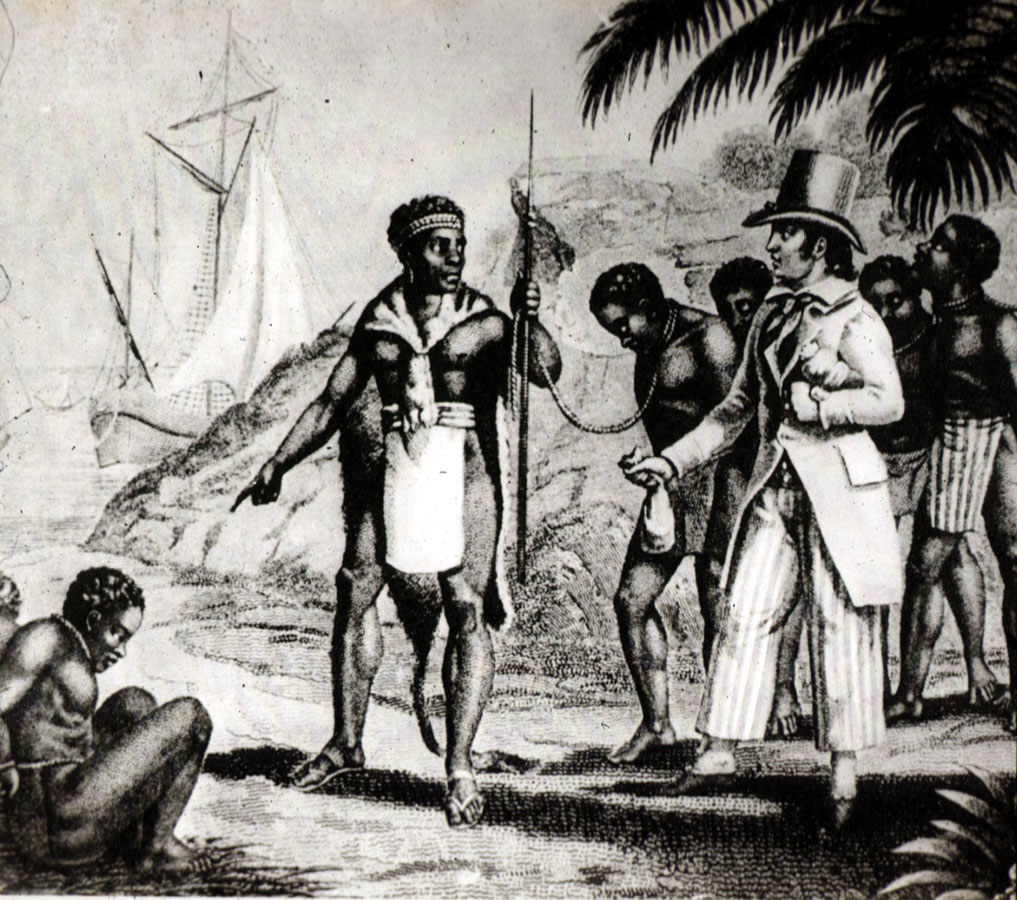
You say that “I don’t think group hatred will ever end in human consciousness.” I suspect this is true, but it’s also irrelevant. The ways that groups have defined themselves changes over time and from one place to the next. “Race” as a concept didn’t exist until the 17th-18th century, which is what academics mean when they say race is “constructed.” Before that, Europeans disliked Africans and vice versa because they spoke different languages and followed different religions and had different cultural norms. Neither side had the modern idea that some people are biologically different as a group, and that these different groups are visibly distinguishable from each other. Of course Europeans knew that Africans had darker skin. But they typically thought this was a natural consequence of living in hot areas for generations, not that people with dark skin somehow belonged to a separate category.
Back then, Spanish Christians thought that practicing Islam or Judaism left a kind of ineradicable spiritual taint that could be passed on from parent to child, a belief that “justified” persecution of converts and the children of converts. Few people believe this now. TNC is suggesting that our ideas of race could pass out of favor in a similar way. I don’t see why this couldn’t happen, with some luck. Probably it is impossible to eliminate hatred, as you say, but it is not impossible to push back on a type of hatred.
Another:
American racism isn’t just about us vs. them. It’s all wrapped up in the doctrine of white supremacy, which seeks to diminish or entirely deny the humanity of non-whites. They had slavery in the classical world, obviously, but it was a state in which human beings, through misfortune, found themselves. A slave then was a human being with a really bad job.
Another:
One of the most surprising revelations of Hugh Thomas’s great book, The Slave Trade, is the persistence and continuity of slavery in the Mediterranean world from classical times through the nineteenth century. For most of that time racism was not an ideology used to justify slavery, which was seldom thought to require justification. A religious prohibition emerged among Christians and Muslims not to enslave members of their own faith, but for most of history the accidents of conquest, not a philosophy of racial inferiority, determined who served whom.
In fact, as Thomas describes it, the movement of the slave trade down the African coast was accompanied by admiration for the physical and mental hardiness of the slaves who thereby became available because they were better able to survive the rigors of the transatlantic trade and American plantation slavery than North Africans. In the writings of sixteenth and seventeenth century slavers, it is the superiority of these southerly people, not their inferiority, that rendered them appropriate objects for purchase.
Another:
As you speak to this topic, you continue to state things that are completely at odds with the historic record. “I don’t dispute this, but equally, the slave trade itself, along with colonialism everywhere, presumed a racial inferiority before the Southern states codified it so precisely along Nuremberg lines.” That is simply false. The slave trade was owned and operated by … Africans! Europeans tapped into it as an easy supply of necessary labor for the brutal conditions of plantation staple crops (specifically sugar), but Europeans were entirely incapable of penetrating beyond the coastline due to the disease environment. European involvement altered a long standing slave trade along the Slave Coast, with fascinating political and economic dynamics. However, racism had nothing to do with the enslavement of Africans.
Another offers an excellent historical narrative that supports both sides of the debate:
The debate you are having with TNC and Jamelle Bouie about the roots of American racism is one that has a long tradition in academic historiography. TNC referenced Edmund Morgan’s 1977 work, American Slavery, American Freedom, which argues, in effect, that the establishment of the system of African slavery in Virginia was a conscious decision by wealthy elites, and that racism grew out of slavery.
The gist of the argument is that the growing population of landless whites in late 17th-century Virginia became a threat to wealthy landowners, who turned to legal means (increased terms of service for minor legal infractions) to try to keep them subservient. However, most of the landless poor were English, and they came from a cultural tradition in which they could claim the “rights of Englishmen” that guaranteed them certain legal protections (access to courts, trial by jury, property rights, and liberty of their persons). Because of this heritage, wealthy elites realized they couldn’t create a system of perpetual servitude for English subjects, so they settled on imported African slave labor as the solution.
According to Morgan, this strategy “allowed Virginia’s magnates to keep their lands, yet arrested the discontent of the repression of other Englishmen.” Though the white society that emerged would be highly stratified and unequal, the presence of a debased class of enslaved black that inhabited the bottom of the racial hierarchy effectively became a release valve for class antagonisms within the white community. If some whites weren’t as rich as others, they were at least always above the permanent caste of enslaved blacks. And thus the rise of an institutionalized anti-black racism in Virginia and later the United States.
Though Morgan’s interpretation has become standard within the academic community, there are dissenting voices. A historian by the name of Winthrop Jordan wrote a book a few years before Morgan called White Over Black, which argued that Europeans in general, but the English in particular, had a cultural predisposition to view blackness as “a symbol of baseness and evil.” When they encountered black Africans for the first time, the English came to view them as the antithesis of whites – uncivilized, sinful, irreligious, over-sexed, and dangerous. His evidence for this interpretation ranges from English travel narratives to a brilliant exegesis of the sexual imagery of Shakespeare’s Othello, which was, for its time (1965), cutting edge. Ultimately, for Jordan, it was the combination of economic expediency and preexisting cultural prejudice that caused the English to make what he calls the “unthinking decision” to embrace African slavery.
If you subscribe to Jordan’s interpretation, Bouie’s argument that “white Europeans had contact with black Africans well before the trans-Atlantic slave trade without the emergence of an anti-black racism” is historically inaccurate. In fact, Jordan’s interpretation is probably closer to your contention that there is a “deep evolutionary urge to determine friend from enemy.” In this case, the English tendency to see blackness as debased and evil – inculcated and reinforced, as Jordan argues, over countless generations – was far more important in the flowering of anti-black racism than was the economic logic of African slavery or the need to relieve intra-community social pressures amongst whites through the creation of a black underclass.
Of course, I’m not sure how comforting it is to think that the English were inherently racist before they even encountered black Africans. But then again, you’re of Irish ancestry, so you probably understand English racism – er, “group loyalty” – at an instinctual level.
Another:
Bouie’s claims that racism among white Europeans was non-existent prior to the trans-Atlantic slave trade is demonstrably false. Consider, for example, the notion of blue-blooded royalty,which arose in Spain at some point around the 9th century, during the early stages of the Reconquista. While the first legal codification had to wait until Toledo in 1449, pale white skin – which allowed blue veins to show through -was a sign of royalty since the early days of the Spanish aristocracy. Much more research refuting Bouie’s claims can be found on the Wikipedia page on “Racism in the Middle Ages“.
The image to the right is of a 13th century slave market in Yemen. Another reader:
The most interesting theory I’ve heard about modern racism is that it is actually a subset of anti-Semitism, and it has roots in the Spanish Inquisition. A little odd, perhaps, but I find it fascinating for several reasons. For one thing, for most of European history (and the history of Christendom), if a Jew or Muslim converted to Christianity, then he ceased to be a heretic and the rules of Christian society applied to him. Talk of Africans or strange folks from other parts of the world were along those lines. It was a wholly religion-based society, and xenophobia and other ugliness were defined in religious terms.
Then in 1492, with the Spanish expulsion of the Jews and forced conversions, for the first time you had the theory that baptism was not enough – that there was something in the blood that was different and stronger than the power of baptism. Generation by generation after 1492, Spain increased the blood purity needed by conversos to be considered real Christians. Xenophobia became a blood issue for the first time.
(Top image via Wiki: “An illustration from the influential American magazine Harper’s Weekly shows an alleged similarity between “Irish Iberian” and “Negro” features in contrast to the higher “Anglo-Teutonic.” The accompanying caption reads “The Iberians are believed to have been originally an African race, who thousands of years ago spread themselves through Spain over Western Europe. Their remains are found in the barrows, or burying places, in sundry parts of these countries. The skulls are of low prognathous type. They came to Ireland and mixed with the natives of the South and West, who themselves are supposed to have been of low type and descendants of savages of the Stone Age, who, in consequence of isolation from the rest of the world, had never been out-competed in the healthy struggle of life, and thus made way, according to the laws of nature, for superior races.”)
Is There A Cure For Missing Research?
In his new book, Bad Pharma, Ben Goldacre exposes the shady side of the drug industry:
The best currently available evidence, which is from a systematic review of all the studies ever done on this question, which amounts to dozens, shows that about half of all clinical trials that are for the treatments we use today have never been published. It also shows that trials with positive results are about twice as likely to be published as those with negative results. This means the evidence that we use is incomplete, but it’s also systematically distorting and exaggerating.
For that situation to have arisen in the first place should be extraordinary enough. But we’ve known about it since at least the 1980s and we’ve failed to fix it. We’ve failed several times over. Every set of regulations, legislation, codes of conduct and so on that have been tried have failed. And worse than just failing, they’ve delivered false reassurance that the problem has gone away, so we’ve stopped trying to fix it. And that’s the position we’re in today.
Read an excerpt from the book here.
Getting Better In Pro Sports, Ctd
While the NFL struggles with homophobia among players and coaches, the UFC is making surprising strides:
[Ultimate Fighting Championship] President Dana White, trumpeted as a kind of mad-genius sports executive for his mix of social-media savvy, marketing, and unapologetic quest for world sports domination … [has] been making very public strides to fight an image of homophobia, transforming a negative conversation about attitudes toward gay people in general into something of an open dialogue about gay fighters in the cage. In late 2011, White urged any gay fighter in the UFC to come out of the closet: “I’ll tell you right now, if there was a gay fighter in UFC, I wish he would come out,” White said a press conference. “I could care less if there’s a gay fighter in the UFC. There probably is and there’s probably more than one.”
And the league just put its first open lesbian in the cage:
At the end of 2012, the organization started its first women’s division at 135 pounds. The very first women’s title fight was between inaugural champion Ronda Rousey and Liz Carmouche, a former Marine who also happens to be openly gay. The fight happened on February 23, and while Carmouche ended up losing, it remained a significant moment for her and for the sport, which has grown at an even faster clip since its national TV deal with Fox began last year. It was the first time a women [sic] fought in the UFC, and the first time an openly gay fighter of either gender has fought in the UFC — not that White thinks she’ll be the last. Asked after the Rousey-Carmouche fight whether he could see a straight male fighter potentially refusing to fight a gay male fighter, White shot down the idea and promised retribution if a fighter were to ever utter outwardly homophobic biases again. “Most of the guys that are in this sport are really good people,” he replied. “I honestly don’t see a situation where that would happen, but if it did, I’d fix it.”


