The Survival Of The Judgmental

The Dish is delighted to announce the debut of The Mind Report, a collaboration with Bloggingheads.tv and a team of cognitive scientists at Yale University. Each week, one of these leading-edge thinkers will find someone whose work they consider important and provocative and interrogate them about it. The goal is to bring you the latest thinking on how humans think – and how we feel and behave and navigate the social landscape and make sense of our universe.

This week features Kiley Hamlin of the University of British Columbia, who has used puppet shows to demonstrate that infants have a basic sense of right and wrong. Hamlin considers humanity’s innate morality and why we naturally judge others with Jonathan Phillips of Yale:

This embed is invalid


You can watch the entire video here, and subscribe to The Mind Report here.

Thinking Like A Fox

Sixty years ago Isaiah Berlin published his famous essay on Tolstoy, “The Hedgehog and the Fox,” in which he declared, “The fox knows many things, but the hedgehog knows one big thing.” Robert Zaretsky believes the philosopher should be counted among the foxes:

His landmark essays in political thought, particularly on the notions of negative and positive liberty, as well as his critique of historical determinism, reveal Berlin’s attachment to the values of pluralism. Not only do the variety and density of historical and human experience undermine any effort to reduce them to a solitary truth, he declares, but there is also a variety of ways of attempting to understand those experiences. In his essay “Historical Inevitability,” he is categorical about the wrongheadedness of believing that there is just one legitimate category: “The same facts can be arranged in more than one pattern, seen from several perspectives, displayed in many lights.”

Levi Asher complicates this argument:

[W]e can be foxes and hedgehogs on many levels at once, and I think Zaretsky calcifies the distinction when he suggests that a pluralist must be a fox. I think the determining factor between a hedgehog and a fox has more to do with a person’s style of thinking than with their metaphysical beliefs. … In one sense, as Zaretsky emphasizes in his article, a hedgehog is a monist and a fox is a pluralist. But in another sense, a hedgehog is simply single-minded about something, anything, while a fox exists in a passive mental state, observing and reacting rather than projecting a strong vision of reality.

Quote For The Day

“In the Gospels Jesus is always talking to the crowds in parables, which he later ‘explains’ to his disciples. The dynamic is odd in a couple of ways: either the parables are obvious, and the explanations seem almost patronizing, or they are opaque, and the explanations only compound their opacity. (Or could it be—and I confess to relishing this possibility—that the explanations illustrate Christ’s wry sense of humor, which is nowhere else evident?) In any case, the notable point is just how little the explanations amount to, how completely the ultimate truths of the parables—just like dreams and poems—remain within their own occurrence.

Behind every urge to interpret is unease, anxiety. This can be a productive and necessary endeavor, whether it’s literary criticism or theology or even the dogmas and rituals of a religion (since all religion is, ultimately, an attempt to interpret God and numinous experience). Such effort deepens and complicates our initial response, even as it gives us an aperture through which to see our moments of mystery, crisis, and revelation more clearly—to give them ‘meanings,’ to integrate them into our lives. The trouble comes when the effort to name and know an experience replaces the experience itself. Just as we seem to have grasped every level of meaning in a poem, the private and silent power that compelled us in the first place seems to drain right out of it. Just as we plant the flag of faith on a mountain of doctrine and dogma it has taken every ounce of our intellect to climb, our vision becomes a ‘view,’ which is already clouding over, and is in any event cluttered with the trash of others who have fought their way to this same spot. Nowhere to go now but down,” – Christian Wiman, “Hive of Nerves”

Previous Dish coverage of Wiman’s writing here, here, here, and here.

Forging Words

In an August 2011 interview conducted just after he was named Poet Laureate, Philip Levine described his work:

Mark Levine recalls taking a seminar with the former Poet Laureate:

He seemed uninterested in interpreting poems, which was at first mystifying to a student like me, who had been trained to believe that the most valuable response to a poem was finding something clever or unexpected to say about it. He thought that the right words in the right sequence held a power that was magical and instantaneous. He read poems to us — W.B. Yeats, Thomas Hardy, Wilfred Owen, Elizabeth Bishop  — with a passion I had never before encountered. His voice was rough and magisterial. Words were alive in him. He read with a clenched jaw and his body almost shaking. He described John Keats’s letters and made clear his sense that the imagination was a sacred place breeding authenticity in words. He insisted that the poem be lived. One student turned in a poem that used the word “lion” a single time, to symbolize power. Levine almost blew up. “Goddamn it,” he shouted, “if you’re going to put a poor lion in your poem, I want that lion to be there.” He seemed to hunger after the texture of reality, which took many forms, but which was instantly recognizable to him.

Raining On His Pulpit

Kerry Howley takes a stab at highbrow humor, using real excerpts from their books to imagine an exchange between the feel-good megachurch pastor Joel Osteen and the 19th century philosopher of pessimism, Arthur Schopenhauer:

OSTEEN: Well, guess what, Arthur! Our life is a gift from God, and the appropriate response to His gift is joy.

SCHOPENHAUER: Human existence, far from bearing the character of a gift, has entirely the character of a debt that has been contracted. The calling in of this debt appears in the form of the pressing wants, tormenting desires, and endless misery established through this existence…

OSTEEN: The Bible says, “Rejoice in the Lord always.” One translation says, “Be happy all the time.”

SCHOPENHAUER: The inmost kernel of Christianity is the truth that suffering—the cross—is the real end and object of life. That in recent times Christianity has forgotten its true significance, and degenerated into dull optimism, does not concern us here.

Has The Novel Lost Its Faith? Ctd

J.L. Wall examines an exception to Paul Elie’s much debated claim that the “novel of belief” is disappearing – fiction by Jewish-American writers:

Even novels that aren’t explicitly about belief have taken to depicting—sometimes in great detail—the lives of traditional believers. The imagined Alaskan Jewish community in Michael Chabon’s The Yiddish Policeman’s Union is defined by the small but visible “Verbover” Hasidic sect. Chabon’s corrupt, conspiring Verbovers are less sympathetic than [Zoe] Heller’s sometimes abrasive but genuinely caring Monsey Orthodox, but in painting his Jewish world Chabon still needs to include the Orthodox…

Jewish novelists are, I would wager, no more likely to be traditional believers now than they were a generation ago. Of the three mentioned above, Henkin and Chabon describe themselves as practicing Judaism—but not the Orthodoxy which defines their believers. Yet Jewish life in New York City—which remains (somewhat to the chagrin of this lifelong resident of flyover country) the capital of both American Jewish and American literary life—is increasingly lived in relation to Orthodoxy. Everyone has a frum (religious) cousin and if you think you don’t—the joke goes—then he’s you. Knowing or being related to someone who has turned to traditional Jewish belief and practice is increasingly common. Even, one suspects, among secular literary figures.

“From Time To Time, We Produce Miracles”

miracles

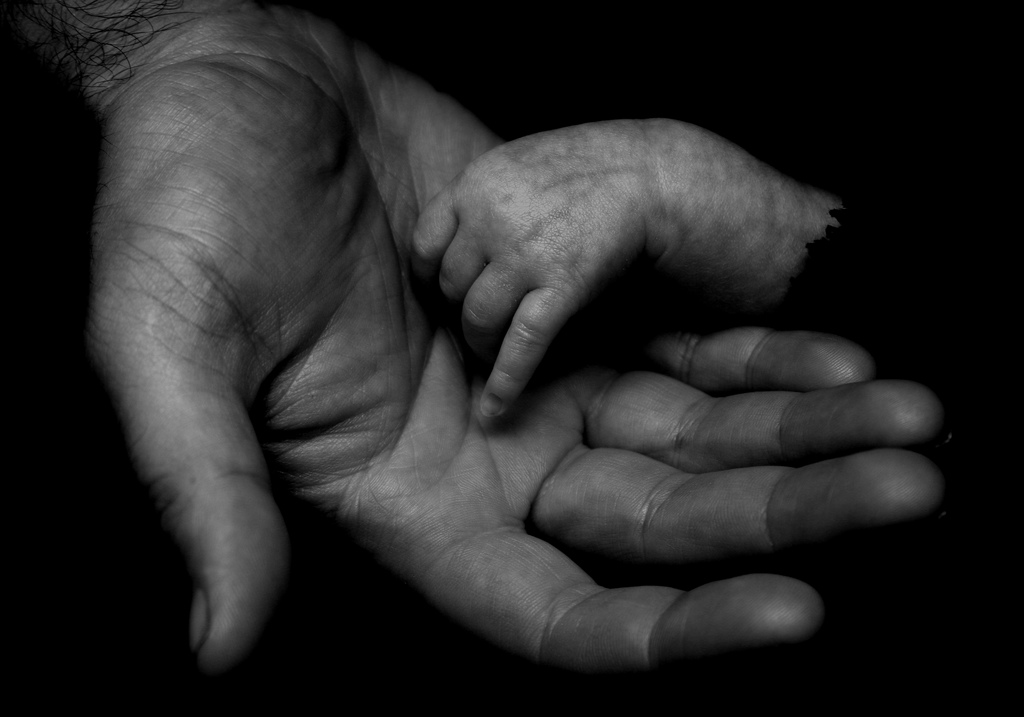
Conor P. Williams writes to his newborn child:

Humans are many things; we are users, choosers, planners, dreamers, and so much more. No one of these roles defines us on its own. We are a multitude of different potentials. And many of these roles reveal us to be cruel and selfish. … We are ingenious justifiers of our basest instincts. We are destructive dissemblers, though we rarely recognize it.

But—and now I’m finally getting back to you—we are best when we are creators. We have strange, unpredictable capacities for transcending our own petty selves and their concerns. From time to time, we astonish ourselves by making something that is unquestionably good. From time to time, we produce beauty that is almost wholly illuminated by the wild possibilities therein contained. From time to time we produce such shining potential that the daily grind of human life becomes not just tolerable, but comprehensible. From time to time, we produce miracles.

It is no accident that our most sublime moments usually burst forth from partnership. Human love is the only antidote to our selfishness. It forms the other option of our lives. We flit through time, living at turns for ourselves or for others…but our greatest triumphs always come with the latter. We are best when we love.

(Photo by Anthony Kelly)

Incapable Of Quitting

In an excerpt taken from his memoir, Blood Horses, John Jeremiah Sullivan movingly reflects on his father’s tobacco-related death:

Late one night, in the room where I slept whenever I stayed with him, I sat down at his old desk, his father’s desk. In the drawer were his “quitting journals”, as he called them, special notebooks, set apart from the others, filled with his rapid, loopy script. He would start a clean one with each new attempt to kick cigarettes. I had glanced at them once or twice when he was alive. Now they belonged to me, along with all of his “creative work”, under the terms of the will. They were largely self-excoriations, full of black thoughts, efforts to locate and take hold of his own willpower. How badly he wanted to change. Worse than any of us could have wanted that for him. (There was a notecard on the table by the bed, written when he was going to a support group: “Reasons to quit: 1. It worries my children.”) I flipped through one of the notebooks. He was writing about how embarrassed he was every morning when he would start to cough and could not stop, and he knew the neighbours could hear him through the thin walls. Turning the page, I found a one-sentence paragraph, set off by itself. When I read it, I knew that I would never look at the journals again. “If I should not wake up tomorrow,” he had written, “know that my love is timeless and fond.”