Past And Present: March 3, 2003

U.S. Marines In Kuwait Prepare For Looming Iraq War

This month, the tenth anniversary of the beginning of the Iraq War, I’ve decided to re-publish some of my posts from March 2003. Call it masochism or basic journalistic accountability or the Internet’s revenge. But I was wrong. I was wrong in good faith. But I was wrong. And it’s worth, ten years’ later, to show just how wrong I was in order to understand better my massive error of judgment (let alone of tone). So here we go. From March 3, 2003:

The capture of KSM is big news. In fact, it’s surely the biggest news in the war on terror in months. The nabbing followed previous arrests and interrogations, all of which have clearly helped stymie and disorient al Qaeda. In terms of the broader debate about the war, one conclusion is obvious. It’s time to retire the frayed notion that somehow we cannot go to war against Saddam and al Qaeda at the same time. In fact, it would be hard to think of a more perfect refutation. Could the administration be more preoccupied with Iraq than it is today? It’s a little hopeful to think that this phony argument against waging war on more than one front will now be retired. But it is useful to remember that, as an argument, it was never based on any actual assessment of how the government works. It was an argument entirely designed to make the Democrats look tough on terror while they were counseling appeasement of Saddam. It was a pretty obvious ploy at the time. Now it’s transparent. I’m glad we’ve finally cleared it up.

So let’s re-clear it up. Maybe among some cynics it was a ploy. But from ten years’ later, it seems clear that it wasn’t easy to fight Saddam and al Qaeda at the same time, or at least that the Bush administration was simply far too incompetent to pull off both. I was wrong. I was onto something about KSM – but little did I know or dream that it would be a key milestone in the illegal, secret torture program in earnest.

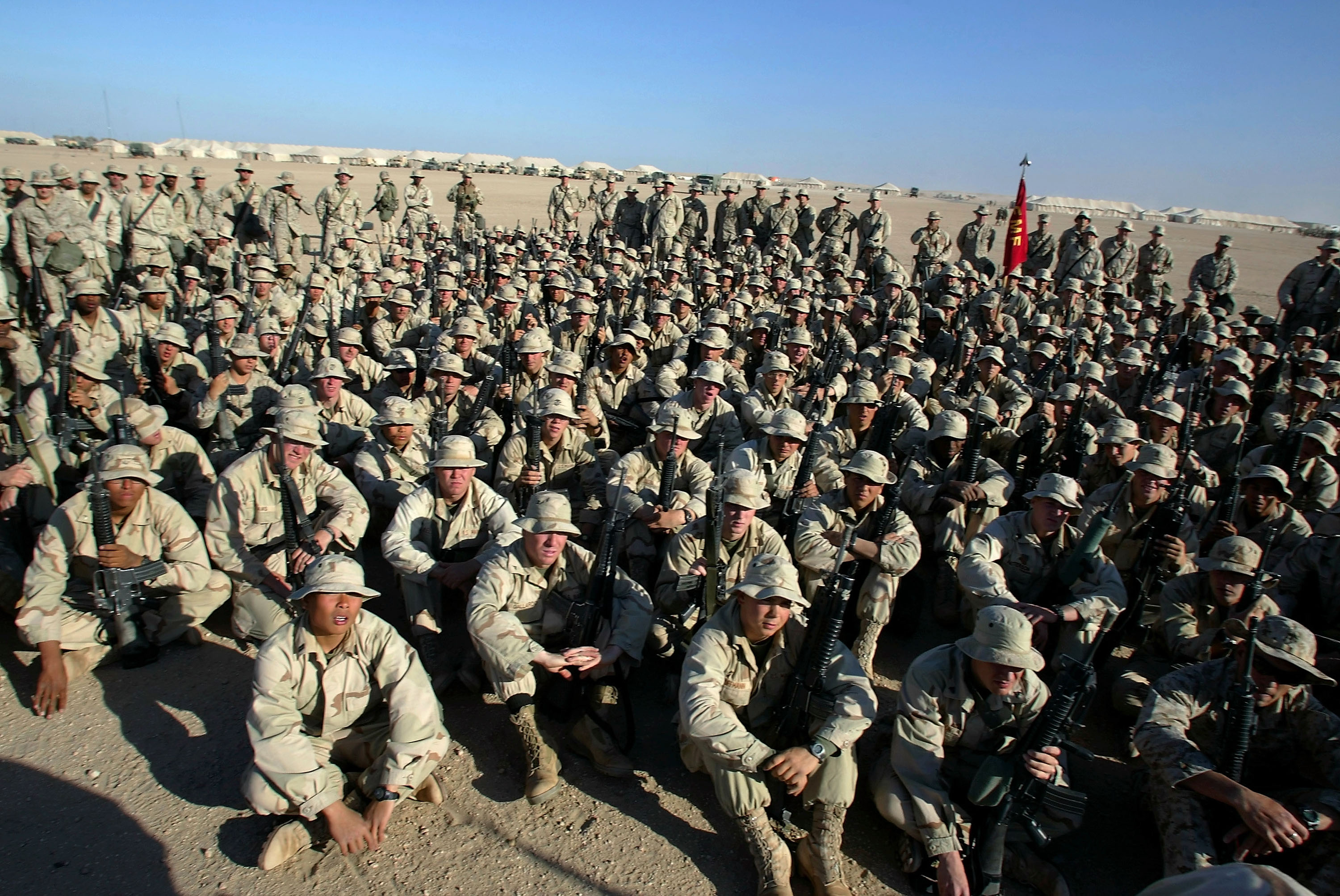
(Photo: U.S. Marines from the 1st Marine Division, 3rd Battlion, 7th Regiment listen at a pep talk at Life Support Area 7 March 8, 2003 in northern Kuwait, 20 miles south of the Iraqi border. By Robert Nickelsberg/Getty Images.)

[Updated – to remove some early, solipsistic blather about Lent.]

Green Shoots On The Right, Ctd

The First Day Of Spring At Kew Gardens

National Review actually comes out in favor of including GOProud and Chris Christie at CPAC this year. Money quote:

GOProud is the most conservative gay group of note (perhaps the only gay group rightly called conservative), and that conservatism extends to its circumspection about many planks of the so-called gay-rights agenda. … Conservative opinion on the intersection of homosexuality and politics is not monolithic, especially among the college-aged set that makes up the better part of CPAC attendees. And a gathering that hopes to speak for the conservative movement will be better equipped to do so if it represents the overlapping gamut of views included in it.

There is, of course, the not-so-small matter of marriage equality. GOProud, despite being a far-right splinter group who’s chummy with Ann Coulter, is still in favor of marriage equality. There are plenty of conservative and Republican gays – but almost none who oppose the conservative cause of full gay inclusion in the family. There are no gay conservatives on marriage like black conservatives on, say, affirmative action. Which is itself telling. Even Roger Ailes couldn’t find any.

Obviously, the editorial is a teensy shift away from theoconservatism. And K-Lo sits up straight and notices:

I tend to agree with Robby George, who last year expressed to me here his concern that conservatives need to keep our priorities straight. Marriage ought to be one, we need to be clear that it is not ours to redefine.

That doesn’t quite capture the tone of the piece, which was by Lopez herself:

“[GOProud] has just written “crazy social issues” out of what it means to be conservative.

That “crazy social issues” phrase comes from a comment made by its chairman, Christopher Barron, during an MSNBC appearance this fall — and it underscores the reasoning behind the boycott. At best, GOProud is indifferent to the issue of defending traditional marriage; it supports letting the states figure it out. But in practice, GOProud has proven itself to be opposed to the defense — and defenders — of marriage.

And now National Review is arguing for inclusion of a pro-marriage equality group in CPAC. One step at a time …

(Photo: Snowdrops and Daffodils emerge at Kew Gardens on March 1, 2013 in Kew, England. Today marks the first day of Spring, though the Met Office have said that temperatures are likely to be below average throughout March. By Dan Kitwood/Getty Images.)

The End Of His Road

Jack Kerouac On The Radio

Justin Nobel travels to France to explore the setting for Jack Kerouac’s second-to-last novel, Satori in Paris (1966), an autobiographical work about the Beat writer’s search for a town in Brittany that bore his family’s name. In one scene, drunkenly arriving at an airport, Kerouac realizes the next available flight is to Florida – a destination Nobel sees as an emblem of the the great writer’s decline:

Florida? That doesn’t sound like a Kerouac sort of place. But at the time he was living in a small house in Orlando with his mother. And so there it is, the mighty Kerouac traveled to France to find his roots, drank himself into a series of stupors and rushed home to read the comics. You begin feeling bad for Kerouac. The boozy womanizing thing can only go so far. Youth lets a writer flick off the world, and sometimes it even makes for exceptional writing, but you get just one On the Road. After that there are two options, stop writing and disappear, a la Rimbaud, letting your work stand as a pure but narrow tongue of fire, or progress along with your ideas. I’m not sure Kerouac ever did.

Nobel’s conclusion:

I still call On the Road the most important book I’ve ever read. It showed me that you don’t have to live the life set out for you, that you can juke and waver, making the rules up as you go along. But looking back now I see how much Kerouac actually missed in life. The spontaneous prose that moved the country may really just have resulted from his inability to think through his own thoughts. Kerouac invented a style that ensured he would never have to face his weaknesses as a writer. And in that we see an odd sort of irony: the man who lived more freely than anyone had barricaded his own mind.

Update from a reader:

I swear, every time I read someone saying that On the Road is Kerouac’s “spontaneous prose” and he never did anything else as good, I just remind myself that this is how the canon works.  People like Justin Nobel read On the Road, and don’t know enough of the details, but figure that going on their own road trip to “find” Kerouac is somehow deep.  But then they write things that show they don’t know their Kerouac from their elbow.

Nobel is surprised to find Kerouac was a raging alcoholic as late as 1966?  He was one in the 1940s.  Surprised that Kerouac seemed like “an over-the-hill frat boy”?  He was a fading frat boy, had been since getting kicked out of Columbia.  Kerouac was a goddamn scholarship football player.  He was always a frat boy, just one tortured by his own sexuality (probably at least bi, maybe very deeply closeted gay, which would explain the many failed heterosexual relationships and perhaps even the alcoholism and mother-fixation (sorry, that’s a 40’s/50’s Freudian read on gayness: but that’s what Kerouac would have been steeped in. . . )) and booze.   Kerouac’s last publication?  An essay in the Chicago Tribune in support of the Vietnam War, decrying hippies.  Yet writer after writer confuses the media image with the man, and, even worse, On the Road with his whole oeuvre.

On the Road is not his finest aesthetic achievement by a longshot.  Either The Subterraneans or Doctor Sax, both novels written after he finished “the road book” and before On the Road was edited half to death and finally released by Viking only AFTER Howl and other events made the Beats potentially marketable, are better examples of what’s truly revolutionary about his prose.

But everyone stops with On the Road, is surprised when Kerouac’s biography doesn’t live up to the myth of the media image of his life.  And laments.  Read The Subterraneans. Read Doctor Sax. Read the poetry.  That’s where Kerouac matters.

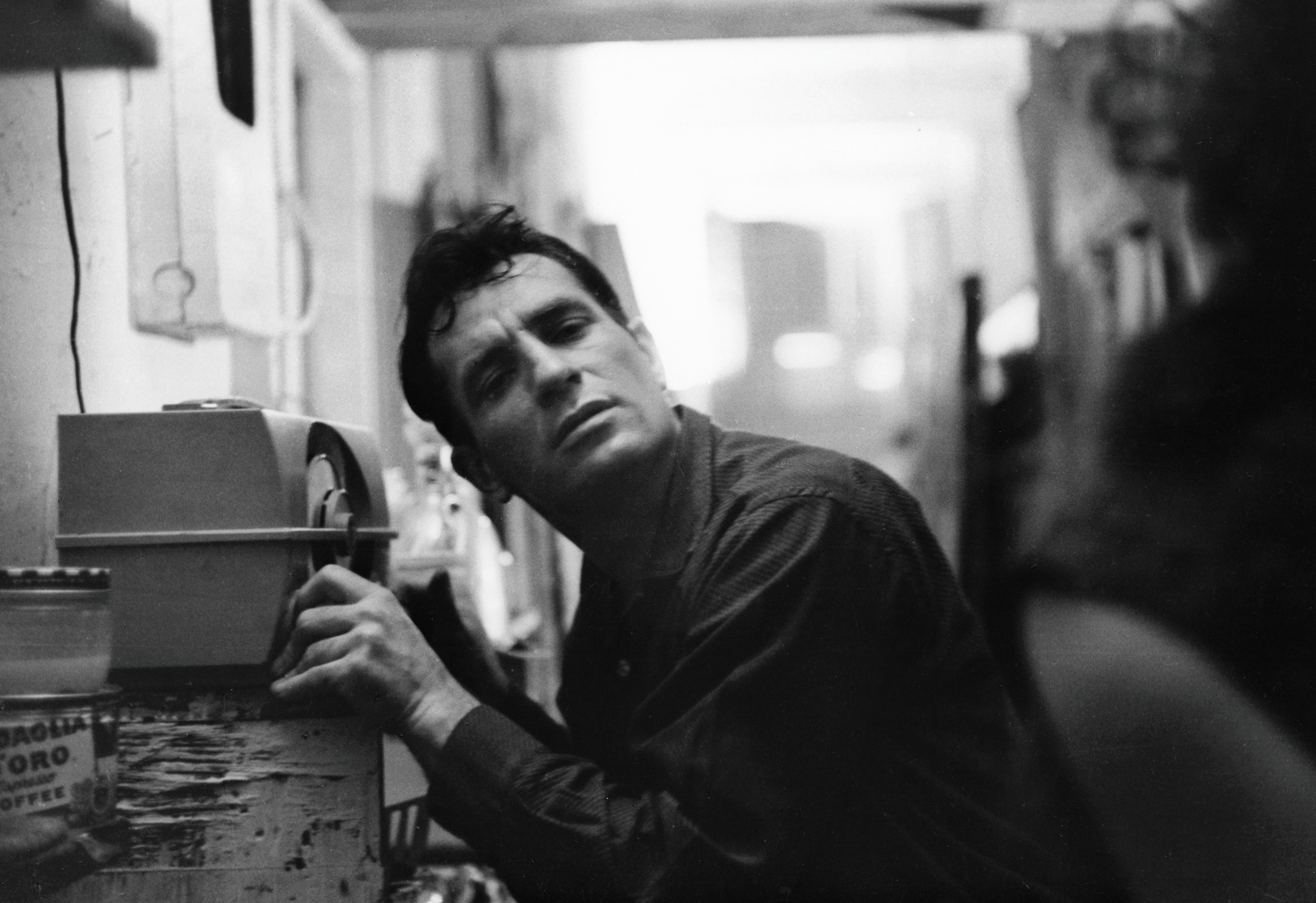
(Photo: American Beat writer Jack Kerouac (1922 – 1969) leans closer to a radio to hear himself on a broadcast, 1959. By John Cohen/Getty Images)

The Great Healthcare Scam, Ctd

ER Visits

A recent study in PLOS ONE supports Steve Brill’s alarming conclusions about healthcare prices. Lindsay Abrams summarizes:

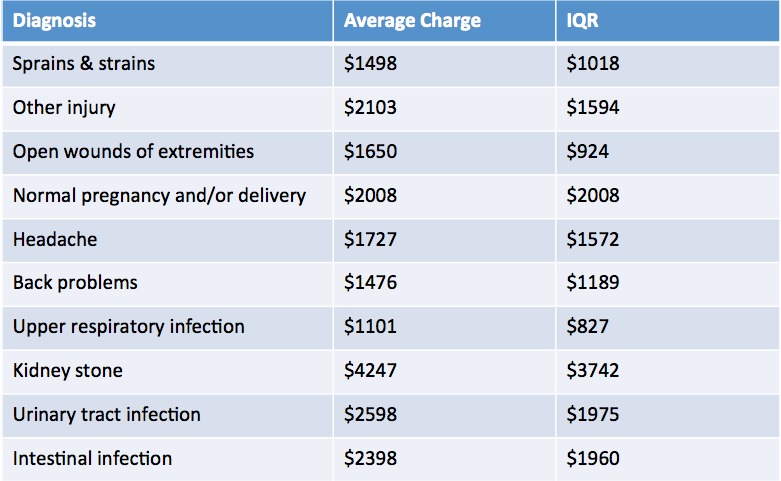
 The median ER visit costs 40 percent more than what the average American pays in monthly rent. But the discrepancy in ER charges is so great, according to the study’s authors, that patients have no way of knowing how much they can expect to be billed. The average cost of a visit to the ER for over 8,000 patients across the U.S. was $2,168. But the interquartile range (IQR), which represents the difference between the 25th and 75th percentile of charges, was $1,957 — meaning many patients were paying a lot more or a lot less than that.

An ER doc in the comments section objects:

These prices sound so arbitrary, like it’s just some crap shoot of what you’ll get depending on what the doc feels like billing that day, but there is a lot more to the system than the article would lead one to believe. Kidney stones are a prefect example. The diagnosis “kidney stone”, covers a wide spectrum of patients. The work up for a 20 year old that has a known history of stones, who comes complaining of his typical pain, and is there simply for pain relief is worlds different than a 60 yr old that has totally new onset of symptoms, yet they’d both be lumped together in this study. The 1st may get out of the ED with nothing more than a simple urine dip for blood and some pain meds, while for the later, anything less than a contrasted CT for a possible leaking abdominal aneurysm would be malpractice.

Meanwhile, Uwe E. Reinhardt proposes one way to limit healthcare pricing unfairness:

Mr. Brill once again illustrates why dubious policies such as he describes can persist. He offers a bewildering potpourri of little tweaks here and there, including huge taxes on the salaries of hospital executives and hospital profits, capping profits on lab services, changes in patent laws and, of course, the eternal stalwart, malpractice reforms. That is a scattershot response to the central problem he lays bare: the pricing of hospital services in general and to uninsured middle-class people in particular.

Here is a simpler approach. Why not make it illegal for hospitals to charge uninsured people more than X percent of what Medicare pays for a procedure? That maximum price would certainly cover the true incremental cost of serving uninsured middle-class people, with handsome contribution margins to overhead and, most probably, to profits as well.

Your Sunday Cry

This is worth reading in full. It begins:

The story of how Danny and I were married last July in a Manhattan courtroom, with our son, Kevin, beside us, began 12 years earlier, in a dark, damp subway station.

Danny called me that day, frantic. “I found a baby!” he shouted. “I called 911, but I don’t think they believed me. No one’s coming. I don’t want to leave the baby alone. Get down here and flag down a police car or something.” By nature Danny is a remarkably calm person, so when I felt his heart pounding through the phone line, I knew I had to run.

A Poem For Sunday

2011/365/45 Pretty Roses / Empty Bed

“Final Notations” by Adrienne Rich:

it will not be simple, it will not be long
it will take little time, it will take all your thought
it will take all your heart, it will take all your breath
it will be short, it will not be simple

it will touch through your ribs, it will take all your heart
it will not be long, it will occupy your thought
as a city is occupied, as a bed is occupied
it will take all your flesh, it will not be simple

You are coming into us who cannot withstand you
you are coming into us who never wanted to withstand you
you are taking parts of us into places never planned
you are going far away with pieces of our lives

it will be short, it will take all your breath
it will not be simple, it will become your will

(From Later Poems: Selected and New, 1971-2012 © 2013 by The Adrienne Rich Literary Trust, 1991 by Adrienne Rich. Used by permission of W. W. Norton & Company, Inc. Photo by Flickr user cogdogblog)

Collecting Self Worth

Lisa Hix catches up with collectors of African-Americans dolls:

“My parents made sure to get us a lot of black dolls in a wide variety of hues and shapes,” Samantha Knowles [creator of the documentary Why Do You Have Black Dolls?] says. “We didn’t have exclusively black dolls, but we had mostly black dolls. After I started working on the film, I had a lot of conversations with my mom, and she would say, ‘Oh, you don’t know what I had to go through to get some of those dolls!’”

Many black doll enthusiasts, like Debbie Behan Garrett, the author of “Black Dolls: A Comprehensive Guide to Celebrating, Collecting, and Experiencing the Passion,” feels the same way as Knowles’ mother.

“I’m emphatic about a black child having a doll that reflects who she is,” Garrett says. “When a young child is playing with a doll, she is mimicking being a mother, and in her young, impressionable years, I want that child to understand that there’s nothing wrong with being black. If black children are force-fed that white is better, or if that’s all that they are exposed to, then they might start to think, ‘What is wrong with me?’”

Challenging The Highest Authority

Reviewing Noel Malcolm’s massive new scholarly edition of Hobbes’s Leviathan, David Runciman shows that it was not the text’s authoritarian political doctrines that provoked the scorn of his contemporaries; rather, what “scandalized them were the parts of the book that modern readers skip over: the assault on religion”:

[B]etween the political parts – the first two sections and the final one – come parts three and four, which are concerned with religion. This bit of the book, which makes up nearly half the total, is entirely uncompromising. Hobbes uses it to demolish all those claims to religious authority that he despised, whether coming from Presbyterians or Catholics, bishops or Bible-bashers. He deploys a combination of selective biblical citation and his own materialist philosophy to lay into every absurd religious idea he can find: demons, fairies, the holy spirit, the life everlasting, the immortal soul. Life, for Hobbes, means motion, and when motion ceases, there is only death.

This all-out assault on religious superstition and stupidity is what makes Leviathan a very different book from De Cive, which contains no equivalent. Hobbes’s urgency in 1649–50 derived in large part from his fear that a new political order might provide a fresh opportunity for the peddlers of religious charlatanry to get their hooks into the state. Parts three and four also reinforce the impression that what marks out Leviathan is not simply that it was written in English, but the kind of English in which it was written. The prose is expansive, sometimes wild, replete with metaphors and the occasional extravagant insult. Hobbes was taking the fight to his enemies.

Wanted: A Modern Pope

Progressive theologian Hans Küng describes the characteristics he’d like to see in the next pope:

A pope who is not intellectually stuck in the Middle Ages, one who does not represent mediaeval theology, liturgy and religious order. I would like to see a pope who is open first to suggestions for reform and secondly, to the modern age. We need a pope who not only preaches freedom of the Church around the world but also supports, with his words and deeds, freedom and human rights within the Church — of theologians, women and all Catholics who want to speak the truth about the state of the Church and are calling for change…

The best man for the job should be elected. There are no more candidates who belonged to the Second Vatican Council. In the running are candidates who are middle of the road and toe the Vatican line. Is there anyone who won’t simply continue on the same path? Is there anyone who understands the depth of the Church’s crisis and can see a way out? If we elect a leader who continues on the same path, the Church’s crisis will become almost intractable.

Similarly, Peter Steinfels hopes that the next Pope institutes drastic reforms, from women voting in the conclave to a new conception of term limits:

To begin, Pope Novus, as we might call him, should declare that his predecessor’s wisdom in resigning reveals a permanent insight into the realities of a modern papacy. Henceforth, popes will either serve a term of twelve years or resign at the age of eighty-two, the choice depending on each pope’s reading of the church’s needs at the moment. Papal interventions to determine the church’s choice of a successor, something Benedict has adjured but another pope might not, will be formally prohibited.