The Right And Marriage Equality

Another green shoot from the Cato Institute’s Ilya Shapiro. Cato, of course, has long been one critical part of the conservative coalition not hostile to the equality and dignity of gay citizens. Money quote:

Prop. 8 denies gays and lesbians the liberty to marry the person of their own choosing, places a badge of inferiority on same-sex couples’ loving relationships and family life (with the full authority of the state behind it), and perpetrates an impermissible injury to these individuals’ personal dignity. It thus directly subverts the principle of equality at the heart of the Fourteenth Amendment, and is an affront to the inalienable right to pursue one’s own happiness that has guided our nation since its founding.

Canine Cannabis

2187877117_25ed7e0038_b

Julia Szabo reports on rogue veterinarians and pet owners who risk arrest to ease the pain of sick dogs. Dr. Doug Kramer lost a much-loved Husky to cancer:

After studying the latest research on cannabis, he was moved to develop a homemade tincture and saw firsthand how it restored Nikita’s appetite and allowed her to enjoy her final months to the fullest. After Nikita’s death, Kramer resolved to safely harness medical marijuana, aka MM or MMJ, to benefit other animals with incurable and terminal diseases. He’s become an outspoken, tireless advocate of pain control for animals and has established a veterinary practice, Enlightened Veterinary Therapeutics, specializing in palliative and hospice care. He’s the first vet in the country to offer cannabis consultations as part of a comprehensive treatment plan for pet patients.

In doing so, Kramer is putting his professional reputation on the line and risking jail time. Veterinarians cannot prescribe MM for patients; it is illegal because cannabis is defined as a Schedule I drug by the FDA. “The decision was an easy one for me to make,” he says. “I refuse to condemn my patients to a miserable existence for self preservation or concerns about what may or may not happen to me as a consequence of my actions. My freedom of speech is clearly protected by the First Amendment to the Constitution. This is an issue of animal welfare, plain and simple. Remaining silent would represent a clear violation of the veterinarian’s oath I took when I was admitted into this profession.”

(Hat tip: MeFi. Photo by of a dog with lymphosarcoma by Flickr user carterse)

The Cracks In Keystone

Michael Grunwald sticks up for the anti-Keystone activists, who a few weeks ago held, in the words of Bill McKibben, “the biggest global warming rally in history”:

[There’s] an emerging consensus-among newspaper editorial boards, respectable-centrist pundits, even the magazine Nature – that the rabble-rousing activists who have tied themselves to the White House gate and clamored for President Obama to reject the Keystone XL pipeline are picking the wrong fight. Stopping Keystone, these critics point out, wouldn’t prevent catastrophic warming. It might not even prevent the extraction from Canada’s dirty tar sands. It wouldn’t cut emissions as much as new coal regulations or clean-energy subsidies or carbon pricing. Meanwhile, approving the pipeline would create jobs and reduce our dependence on petro-dictators while signaling that Obama isn’t as radical as the tree huggers protesting outside his house.

Well, I’m with the tree huggers. The pipeline isn’t the worst threat to the climate, but it’s a threat. Keystone isn’t the best fight to have over fossil fuels, but it’s the fight we’re having. Now is the time to choose sides. It’s always easy to quibble with the politics of radical protest: Did ACT UP need to be so obnoxious? Didn’t the tax evasion optics of the Boston Tea Party muddle the anti-imperial message? But if we’re in a war to stop global warming — a war TIME declared on a green-bordered cover five years ago — then we need to fight it on the beaches, the landing zones and the carbon-spewing tar sands of Alberta.

Mari Hernandez highlights an alternative to Keystone: Canadian hydropower.

Fighting Fire With Holograms

[youtube http://www.youtube.com/watch?v=OQOS57QEJ1c]

Emily Elert reports on a breakthrough in optic technology that would allow firefighters’ infared cameras to see clear images of victims behind smoke and flames:

[I]n the midst of a raging inferno, heat from the flames will overwhelm the camera’s sensors and obscure nearby objects. Researchers in Italy may have found a solution: a digital imaging system that captures infrared signals in 3-D and converts them to holographic video in real-time, thus allowing firefighters to distinguish flames from heat-emitting objects behind them.

Your Cell Phone Still Won’t Kill You

Following a dubious new report on the health risks of wifi, Keith Kloor decries the media’s ongoing flirtation with the “technology-causes-sickness” trope, which often not only ignores or distorts science but can actually bring about a negative psychosomatic effect:

[R]esearchers used a BBC documentary on the alleged dangers and health effects of electromagnetic fields. Participants watching the documentary–who were led to believe they were being closely exposed to a WiFi signal (they weren’t)–exhibited symptoms associated with exposure to electromagnetic fields. (I’ve previously discussed this Nocebo effect with respect to Wind Turbine Syndrome.) Those most symptomatic were also found to have pre-existing anxieties and sensitivities that made them more susceptible.

Hi-Tech Tats

Charles Q. Choi imagines a world where wireless flexible electronics could be applied like temporary tattoos and allow people to communicate without talking:

When people think about talking, their throat muscles move even if they do not speak, a phenomenon known as subvocalization. Electronic tattoos placed on the throat could therefore behave as subvocal microphones through which people could communicate silently and wirelessly. “We’ve demonstrated our sensors can pick up the electrical signals of muscle movements in the throat so that people can communicate just with thought,” [electrical engineer Todd Coleman] says.

Alan Boyle highlights other possibilities:

The tattoos could have more down-to-earth applications in the medical field: In the future, such sensors could be used to monitor a newborn’s brain for any signs of abnormality, or an older person’s brain for signs of cognitive impairment. “As we age, our ability to respond, or to modulate our attention to different new types of inputs, will start to slow down,” Coleman said in a video interview distributed by AAAS. “Imagine if we could … mount a sticker to the forehead that can provide quantitative outputs — measurements of that.”

(Image courtesy of UC San Diego Jacobs School of Engineering)

Getting Rich To Give It Away

Ethicist William MacAskill encourages young people who want to make a difference to work on Wall Street instead of a non-profit. He calls the strategy “earning to give“, arguing that it’s “better to earn a lot of money and donate a good chunk of it to the most cost-effective charities”:

In general, the charitable sector is people-rich but money-poor. Adding another person to the labor pool just isn’t as valuable as providing more money so that more workers can be hired. You might feel less directly involved because you haven’t dedicated every hour of your day to charity, but you’ll have made a much bigger difference.

The monetary value of that difference:

Annual salaries in banking or investment start at $80,000 and grow to over $500,000 if you do well. A lifetime salary of over $10 million is typical. Careers in nonprofits start at about $40,000, and don’t typically exceed $100,000, even for executive directors. Over a lifetime, a typical salary is only about $2.5 million. By entering finance and donating 50% of your lifetime earnings, you could pay for two nonprofit workers in your place—while still living on double what you would have if you’d chosen that route.

The Daily Wrap

Pope Benedict XVI Steps Down And Officially Retires From The Papal Office

Today on the Dish, Andrew bid a not-so-fond farewell to Benedict XVI and fisked Bob Woodward’s claim of White House intimidation. Amy Davidson analyzed the bottom line for marriage equality while Jesse Green anticipated a wave of same-sex divorces, Erick Erickson reminded conservatives about the basics of reporting, and the Supreme Court entangled privacy advocates in a Catch-22.

As sequestration loomed, Mike Riggs grinned at the possibility of DEA budget cuts and we predicted that the gradual phase-in will slow but not stop growth. We debated whether smart people had “flip-flopped” on the deficit, contemplated the long-term Republican strategy, and Kornacki put Hillary at the head of the 2016 Democratic class. In foreign policy coverage, Douthat found reason for optimism in Rand Paul and we considered America’s next step in Syria in light of restrained interventionism at home.

In assorted new and views, Christina Larson sifted through Chinese secrecy on soil pollution while we struggled to adapt to melting at the poles. Andras Forgacs manufactured meats, 3-d printing redefined the parameters of the gun control debate, and Robin Sloan butted up against online language barriers. Ivory Toldson pulled apart the stats on college-bound black men, Sarah Kendzior worried over the effect of internships and adjunct professorships, Andrew Mason shocked us with his honest resignation, and readers looked for alternative motives in Yahoo!’s ban on working from home. The trans community found a surprising ally in its push for insurance coverage and A. Barton Hinkle condemned cities for being choosers when it came to beggars.

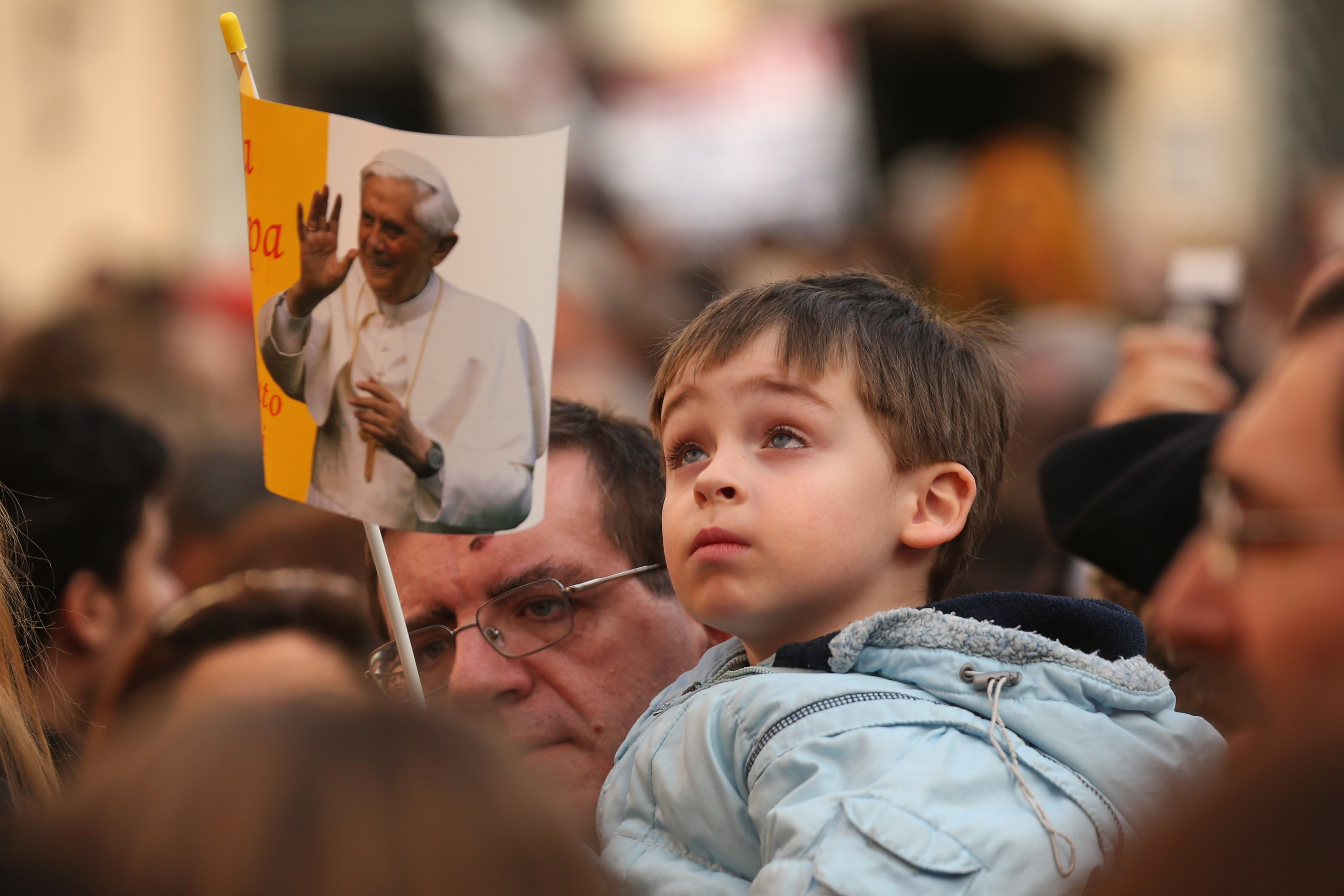
Elsewhere, Benjamin Lennett forecast trouble for Netflix addicts, Keith Ellison expressed ambivalence about deleted scenes, we deconstructed hatred for Anne Hathaway, and watched an audition for Lena Dark Thirty. John Patrick Leary shared tales of untimely doggie deaths, gluten-free diets elicited mixed feelings, and we exposed the sinister side of a sartorial movement. A young pilgrim waved a goodbye to the outgoing pope in the FOTD, drought knocked out a Texas dock in the VFYW, and we gesundheit’d through a super-cut of canine sneezes in the MHB.

– D.A.

(Photo by Oli Scarff/Getty Images)

The Staggeringly Bad Judgment Of Bob Woodward

Well, he asked for it. He is a stenographer, who is very, very well connected to the old Washington (which Obama’s online political revolution disturbed), and a dutiful gatherer of whatever those in power say they do and have done. But after his implosion over the last 24 hours – exposed as a whiny liar by his own email – Chait puts the boot in:

His more recent books often compile interesting facts, but how Woodward chooses to package those facts has come to represent a barometric measure of a figure’s standing within the establishment. His 1994 account of Bill Clinton’s major budget bill, which in retrospect was a major success, told a story of chaos and indecision. He wrote a fulsome love letter to Alan Greenspan, “Maestro,” at the peak of the Fed chairman’s almost comic prestige. In 2003, when George W. Bush was still a decisive and indispensable war leader, Woodward wrote a heroic treatment of the Iraq War. After Bush’s reputation had collapsed, Woodward packaged essentially the same facts into a devastating indictment. Woodward’s book on the 2011 debt negotiations was notable for arguing that Obama scotched a potential deficit deal. The central argument has since been debunked by no less a figure than Eric Cantor, who admitted to Ryan Lizza that he killed the deal.

The Shock Of The Truth

You never really expect to read it – especially in the business world where lies and public relations and reputation management are endemic. And then suddenly, it pops up, shocking in its candor. Here’s the resignation letter of Andrew Mason, Groupon’s CEO:

“People of Groupon,

“After four and a half intense and wonderful years as CEO of Groupon, I’ve decided that I’d like to spend more time with my family. Just kidding – I was fired today. If you’re wondering why . . . you haven’t been paying attention. From controversial metrics in our S1 to our material weakness to two quarters of missing our own expectations and a stock price that’s hovering around one quarter of our listing price, the events of the last year and a half speak for themselves. As CEO, I am accountable.

Now if only the Pope could have been as honest.