The Shrinking Workforce

Douthat worries about it:

The non-employed working age Americans of the 1950s were mostly married women with wage-earning partners and children at home, with meant that they were members of income-producing economic units and embedded in strong social networks even if they weren’t holding down a 9-5 job. If today’s shrinking employment-to-population ratio were mostly a post-feminist variation on that theme, driven by a combination of married men staying home with the kids while their wives work and professional women taking time off during their prime childbearing years, then it would be less troubling that what we’re seeing today. But instead today’s decline in work is concentrated among the unmarried and less-educated — populations, that is, that tend to lack precisely the sources of social capital and economic advancement that participation in an even a low-paying job can help supply.

So while a decline in workforce participation is not inherently problematic, the fact that it’s happening among people who lack other sources of community and other means of socioeconomic ascent means that it’s more likely to compound existing trends toward stratification and atomization, hardening the lines of class and making individual lives unhappier even if the economic pie continues to grow.

Against “The Good Old Days”

Amber Forcey uses Flannery O’Connor’s famous short story, “A Good Man is Hard to Find,” to critique the concept:

Essentially, a “good old days” response to the problems of our time is a form of blind self-righteousness, an attitude that says we and our time (or the time we yearn after) would have never committed the same errors of the present age; people were at one time good (or polite, kind, safe, etc.), but no longer.

However, as Christians, we cannot accept this attitude. First of all, we must continually be aware of and preaching that since the Fall, all men are broken and evil, from all times and places. The pendulum of culture and civilization swings from one extreme to another, but each time, each era and century and decade, has its flaws, most of which are unrecognized by those within it. As believers, we must do the work of first reminding ourselves of our own personal and cultural brokenness (both in the present and the past) and of working to make ourselves aware of the real vices of our own age, vices which we are most likely unaware of. Second, we must work to rid ourselves of this subtle and dangerous form of self-righteousness, one that masks itself in fuzzy nostalgia. We must recognize that all people, past and present, including (and especially) ourselves, are all Misfits in need of the only One who ever raised the dead.

When Climate Change Hurts Work

On hot and humid summer days, our bodies are less able to cool themselves due to the moisture in the air around us. Joseph Stromberg explains the impact this might have as the planet warms:

According to a study published yesterday in Nature Climate Change, increased heat and humidity has already reduced our species’ work capacity by 10% in the warmest months, and that figure could rise to 20% by 2050 and 60% by the year 2200, given current projections.

The Princeton research team behind the study, led by John Dunne, came to the finding by combining the latest data on global temperature and humidity over the past few decades with American military and industrial guidelines for how much work a person can safely do under environmental heat stress. …

[T]hinking about how the study defines “work” can lead to a troubling conclusion: in 2100, throughout much of the U.S., simply taking an extended walk outdoors might not be possible for many people. The economic impacts—in terms of construction and other fields that rely upon heavy manual labor—are another issue entirely. Climate change is certain to bring a wide range of unpleasant consequences, but the effect of humidity on a person’s ability to work could be the one that impacts daily life the most.

Lauren Morello provides some comparisons:

The combined heat and humidity in Washington, D.C., would be more stressful than conditions in today’s New Orleans. New Orleans, in turn, would experience more heat stress than Bahrain does now. And in Bahrain — an island in the Persian Gulf where temperatures already hit 120°F in summer months — heat stress would creep close to the limit that humans can endure for more than a few hours at a time.

Life And Death In The Ring, Ctd

A reader writes:

I’m a long time reader, but this is the first time I’ve felt compelled to write a response to one of your posts. Bullfighting is a subject I’m familiar with, but I find most Americans are not. An ethical option does exist.

My family is of Portuguese ancestry; specifically, my grandparents were all born in the Azores Islands, landing on American shores around a century ago. Most Azorean-Americans have settled in Massachusetts and Central California. I’m not certain about Massachusetts (maybe some Mass. readers will weigh in), but here in California you can find legal, Portuguese-style, “bloodless” bullfighting. You see, the Portuguese do not kill the bull. We actually find the blood sport of slaughtering the beast in the arena to be disgustingly cruel and wasteful. Portuguese bulls are put back to stud, where in the U.S. and the Azores they live the life of an average farm bull (and sometimes reused in the arena), and in mainland Portugal they’re pampered stud animals, with the best commanding the highest fees for their services. In fact, the bullfighting industry in Spain often uses Portuguese bulls for stud since they’ve wasted their own.

California bullfights are not allowed by law to spill a drop of blood, so a Velcro pad is placed over the bull’s shoulders where the Velcro tipped bandarilhas (small spears) attach. This is done primarily by cavaleiros or cavaleiras (horsemen or horsewomen) riding beautifully adorned horses skilled in dressage. In Portugal some blood is drawn this way since a small dart is stuck into the fatty hump between the bull’s shoulders (as pictured in your post). It looks messy, but it only serves to piss the bull off and make him all the more dangerous. Personally, I prefer the Portuguese-American Velcro method.

After the cavaleiros, traditional matadores finish tiring the beast out, and then it’s time for the most amusing part: forcados, or the “suicide squad” as we call them here in Central California.

Eight young men, usually in their late teens and early twenties, often slightly sauced-up on some liquid courage, line up single file facing the bull. It’s the job of the lucky first in line to coax the bull into charging where he takes the full force of the hit with a pega de cara (face plant), wrapping his arms around the horns and riding backward into his buddies who pile on. One will grab the tail, and often hands full of bullshit, while they all try to bring the animal to a full stop for a few seconds to declare victory. If they get scattered like bowling pins they were not successful, but they can lick their wounds and be happy they survived to risk their lives all over again at the next occasion.

Believe me, it’s the forcados who get injured, not the bull. A successful, but hard-fought, attempt in Portugal [seen above] here and very unsuccessful attempt in California here.

After the forcados spectacle is over, a small herd of cows is ushered into the arena so the bull will follow them out to his retirement. Many years ago, while I was attending a bullfight on the Azorean island of Terceira, one of the cows refused to leave, causing the matadores to run for cover. They were genuinely more afraid of a scrawny cow than they were an 1,100 to 1,600 pound, pissed-off, testosterone-pumped bull! I turned to my dad and asked why. He grinned at me and replied; “Cows don’t close their eyes when they charge.” It took men with shields and very long poles poking the cow in the forehead to get her to leave.

Animal rights activists who take issue with rodeos also take issue with bloodless bullfights. I respect their concerns about the well-being of the animal, but as Nusbaum mentioned, which life and death would be preferred? I’m sure many readers will disagree with me, and I may just be old fashioned and as enamored with my ancestral culture as those who support bull-killing are, but I can’t consider it inhumane to simply torment a huge (my father always claimed the head alone weighs around 300 pounds), dangerously aggressive beast for less than an hour when he’s going to live a life of leisure and copulation for many years to come.

The Tensions Of Tradition

Noah Millman contemplates the meaning of “liturgical conservatism,” arguing that “a living tradition is one that inspires a kind of passionate engagement” with a faith’s formalities:

There’s a tension in any modern person approaching a traditional liturgy, between two conflicting desires. On the one hand, there is the desire to say what you mean. Praying for, say, the restoration of animal sacrifice feels to a lot of people I know problematic – because they don’t want to see the Temple literally rebuilt and animal sacrifice restored (and, in fact, there’s rabbinic warrant for questioning whether the messianic age would really require such restoration). On the other hand, there is the desire to mean what you say, to have the words transform you by saying them. Praying for, say, the resurrection of the dead feels problematic to some people because it feels like a literal absurdity – but on another level, that’s precisely why you pray for such a thing, because it is an absurd hope.

Rejecting that kind of tension – resolving it neatly either by eliminating anything you don’t feel “comfortable” saying or by rejecting out of hand the possibility of emendation – strikes me as a spiritual mistake. It’s not true that our ancestors never changed anything, and if we act as though we have no right to change anything, we’re saying, in some sense, that we are a lesser sort of being. The implication is that the liturgy can’t mean for us what it meant for them – and that seems to me like a dangerous concession. By the same token, only somebody who doesn’t really care about the object of prayer would cavalierly make our own psychic “comfort” the proper standard by which to judge the adequacy of the liturgy.

Dreher adds:

Latin Mass Catholics, archconservatives who prize the pre-Vatican II liturgy, are probably outliers here. They are the ones who make us think that liturgical conservatism goes along with moral and cultural conservatism, but it’s just not true. It seems like it ought to be true, but somehow, it isn’t. In my experience, high-church Episcopalians tend to be quite liberal, but hold on to the more conservative liturgical practices because of their aesthetic beauty. When I lived in DC years ago, the most gay-friendly, liberal Episcopal parish was also the one known for having the most elaborate liturgies. Which makes its own kind of sense, if you think about it…

The Evangelical Who Tackled AIDS

Michael Specter eulogizes C. Everett Koop, the late surgeon general under Reagan:

Koop turned out to be a scientist who believed in data at least as deeply as he believed in God. And he proceeded to alienate nearly every supporter he had on the religious and political right. To fight the growing epidemic of AIDS, Koop recommended a program of compulsory sex education in schools, and argued that, by the time they reached third grade, children should be taught how to use condoms. He did not consider homosexuality morally acceptable—and he never changed his view about that. But he understood that viruses have no religion or sexual orientation and that H.I.V. was a virus. He campaigned vigorously against smoking in public spaces, saying that tobacco should be eliminated from American society by 2000. He was the public official to state categorically that second-hand smoke causes cancer. Tobacco companies—and Jesse Helms, their biggest congressional ally—could hardly believe Koop’s treachery.

Cord Jefferson has more on Koop’s critical approach to AIDS:

In an effort to help cut through a lot of the bigoted nonsense, in 1988 Koop authored an informational pamphlet called “Understanding AIDS” and mailed it to all 107 million households in the United States. Despite his personal Christian conservative beliefs, Koop’s pamphlet dispatched a lot of paranoid misinformation swirling around AIDS in favor of frank talk about sex and prophylactics. For instance, while “Understanding AIDS” advocated abstinence and monogamy as “safe behaviors,” it also heralded condoms, recommended early childhood sex education, and suggested Americans do whatever they could to help AIDS patients in need “without fear of becoming infected.” What’s more, all of this came during a time when President Reagan himself would hardly mention AIDS, let alone say “the rectum is easily injured during anal intercourse,” as “Understanding AIDS” noted.

Are Doctors Overpaid?

Yglesias believes so:

The last time the OECD looked at this (PDF), they found that, adjusted for local purchasing power, America has the highest-paid general practitioners in the world. And our specialists make more than specialists in every other country except the Netherlands. What’s even more striking, as the Washington Post’s Sarah Kliff observed last week, these highly paid doctors don’t buy us more doctors’ visits. Canada has about 25 percent more doctors’ consultations per capita than we do, and the average rich country has 50 percent more. This doctor compensation gap is hardly the only issue in overpriced American health care—overpriced medical equipment, pharmaceuticals, prescription drugs, and administrative overhead are all problems—but it’s a huge deal.

Doctors aren’t as politically attractive a target as insurance companies, hospital administrators, or big pharma, but there’s no rational basis for leaving their interests unscathed when tackling unduly expensive medicine.

In a follow-up, he suggests decreasing the cost of medical school:

Making medical education much cheaper in exchange for pushing doctors’ reimbursement rates down should be a total no-brainer, and the exact level of financial assistance could be tied to assessments of needs of particular kinds of doctors (i.e., more generous terms for GPs than plastic surgeons).

The View From Your Window Contest: Winner #142

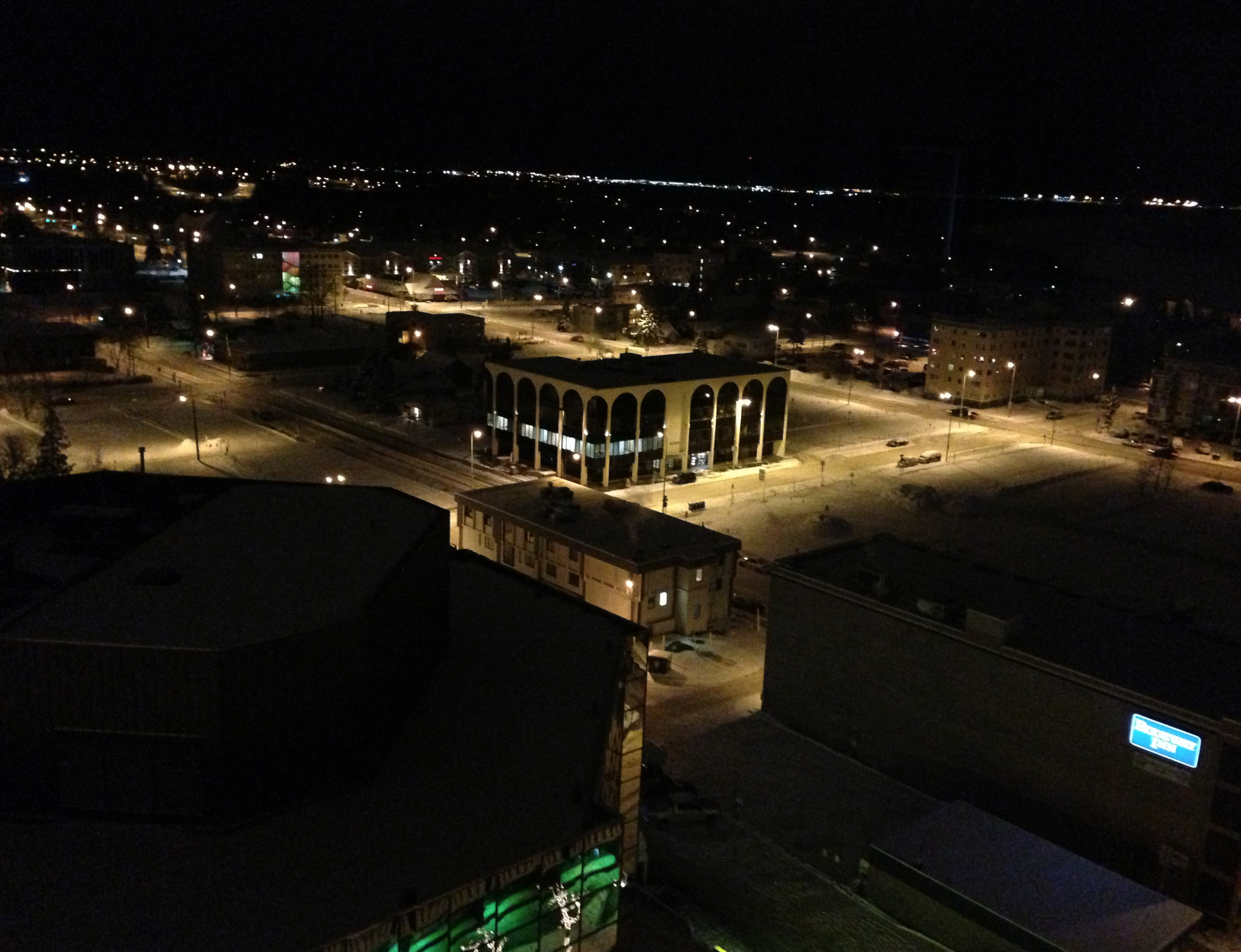
vfyw-ds

A reader writes:

Snow. US. Flat. Midwest-looking. How about Kansas City, MO, post blizzard?  I realize this isn’t precise enough to win in all likelihood, but why not try.

Another writes:

Well this is my first entry in the window contest and pretty sure I am off on the city and most likely the state, but I am sure it is in the northern portion of the United States, as there is snow and pine trees.  Looks like the West, as there seems to be a decent amount of sprawl.  Possibly next to an airport, as there looks to be a Hilton or Marriot in the distance and a Rodeway Inn on the right. So I am going to go with Boise, Idaho.  Hope someone gets this one; it wasn’t easy with a night-time picture.

Another:

This is one of too many grassy knoll cities in the Rust Belt. Grassy knolls replacing older buildings of character knocked down in a thoughtless enthusiasm for the new that never arrived to fill the spaces left behind. So a piece of architectural dreck fills the center of this photo with plenty of parking to spare. Probably isn’t South Bend, but I’ve been there and with the snow and USA cars this week’s VFYW shines as sister city to that strange place, now existing on the crumbs thrown by its neighbor, Notre Dame University.

Another:

Issy-les-Moulineaux, France? I was there for a conference years ago and it was the first place that popped into my head when I saw the photo. Post-industrial suburban Paris. Can’t wait to learn where it really is!

Another:

Your profile caught my mind and heart and i cherish you so much. Please contact me so we can know each other better and i can send you my pictures for you to see more of me. I have something about me i will like to share with you. Distance, religion, skin color or other geographical difference has nothing to do with a sincere heart that seek for love and care. I will be wait you email, till then remain bless and take good care of yourself as i will always think about you because you caught my fantasy and passion.

Nice try, spam bot. Another:

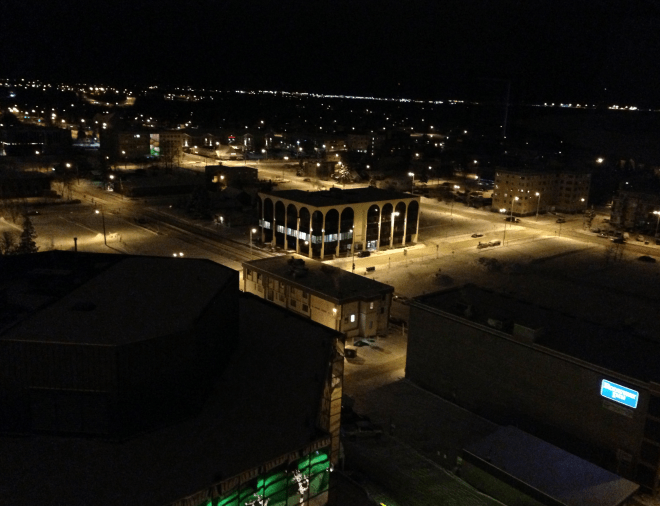
Oh, goodie. It’s dark outside. There goes narrowing it down by landscape. But just because it’s nighttime doesn’t mean it’s impossible. There’s plenty of information to quickly narrow it down to city, state and country, namely the fact that a) there’s snow on the ground and b) there’s a giant Rodeway Inn sign in the lower right-hand corner.

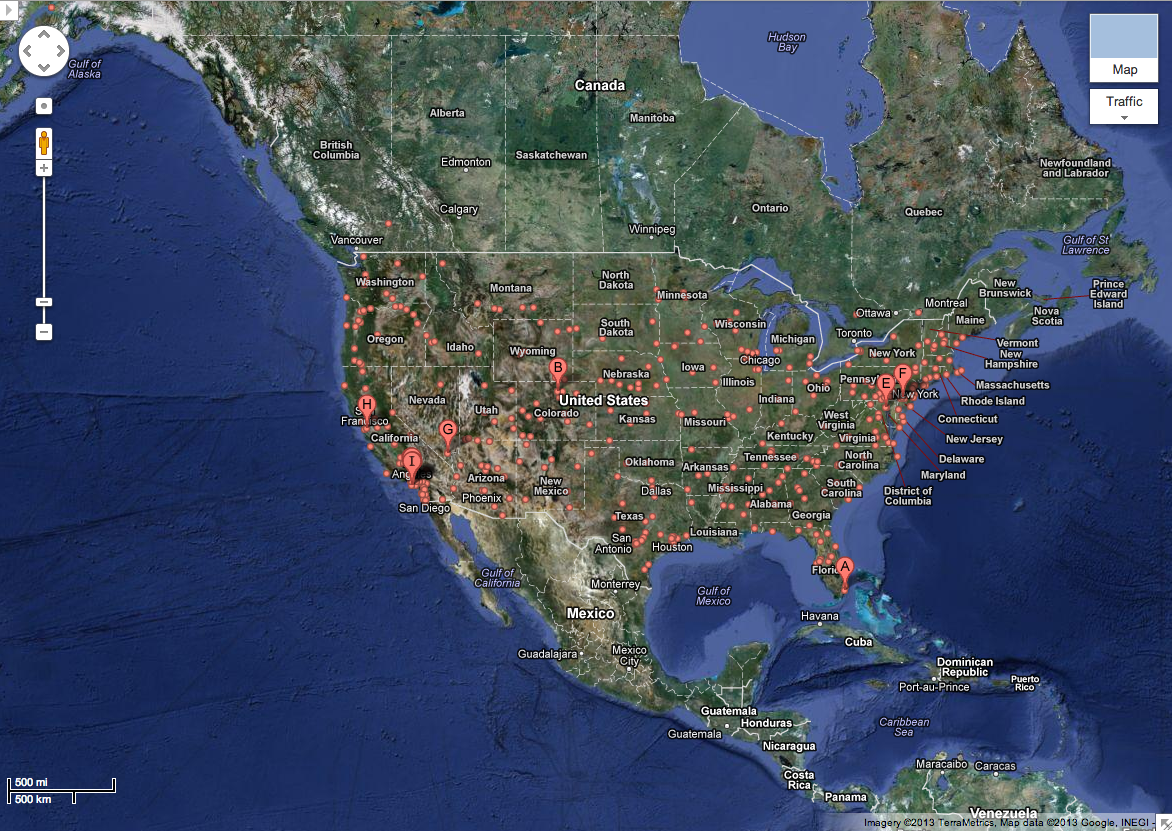
Another lays out all the possible Rodeways:

image

That should make it easy right? Just find the right Rodeway Inn?

Another:

I give up. After looking at dozens of Rodeway Inns via Google Maps, I’m just going to pick one at random that I haven’t looked at yet: Cedar Rapids, Iowa.

Another:

Having just spent half an hour looking at photos of Rodeway Inns across the United States, I have to assume that this week’s VFYW is some very subtle “native advertising.”

He’s onto us. Another nails the right Rodeway:

Woo-hoo! Alaskan here, born and bred (now DC-bound), and first time VFYW contest entrant!

I knew this was Anchorage at first glance – not really sure how. The Rodeway Inn sign was an easy confirmation. The white arched building in the middle is home to the Alaska Legal Services Corporation (ALSC), a “nonprofit law firm established in 1967, that provides free civil legal assistance to low-income Alaskans.” The multi-colored lit stairwell is the home of Anchorage Dept of Health and Human Services, which I’m guessing is to provide some cheer in the dark Alaskan winter. The rest of it just has the look of old-school downtown Anchorage: flat, snowy, uncrowded by either people or buildings.  Across from the Roadway Inn is the backside of the venerable Captain Cook Hotel, where the photo was obviously taken from. This is where my parents stayed in Anchorage when they were feeling flush – we traveled up from Kenai once a month or so. A little history here from the hotel website:

An earthquake in 1964 leveled much of downtown Anchorage, and many in town were hesitant to rebuild. Walter J. Hickel was more optimistic. The Kansas native—who had arrived in Alaska in 1940 at the age of 20, with only 37 cents to his name—had already been investing in Alaska’s future for decades, building hotels and business centers as well as serving as Alaska’s governor, all with an eye to making Alaska the American gateway to the Pacific Rim. The Hotel has prospered and expanded with the times: the first Tower opened in 1965, followed by Tower II in 1972 and Tower III in 1978.

More from another reader:

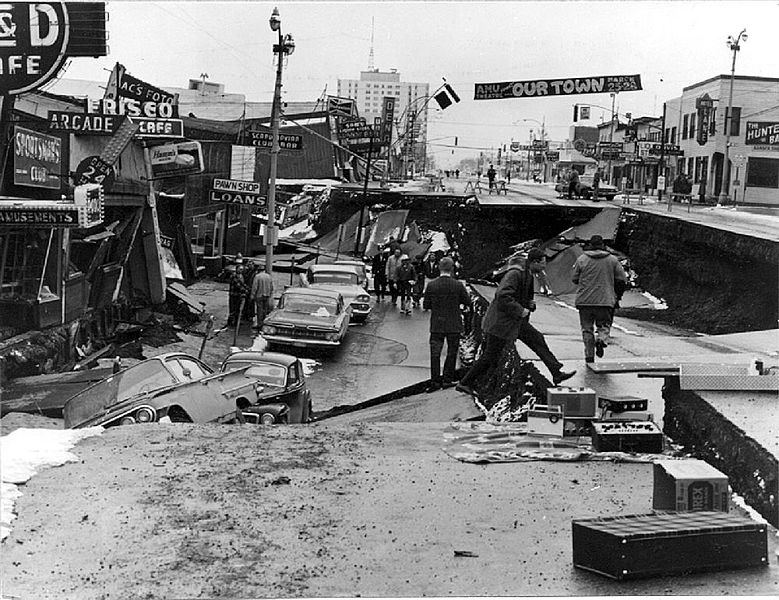
779px-AlaskaQuake-FourthAve

The Captain Cook’s developer built the hotel in 1965, in the wake of the Great Alaskan Earthquake of 1964 (also known as the Good Friday Earthquake) that measured 9.2 on the Richter scale and destroyed much of the city, not to mention other parts of Alaska. The picture from the Wikipedia page was taken a few blocks away from the hotel’s location, to give an idea of the magnitude of the landslides that affected the city.

A lovely view of the restored city today:
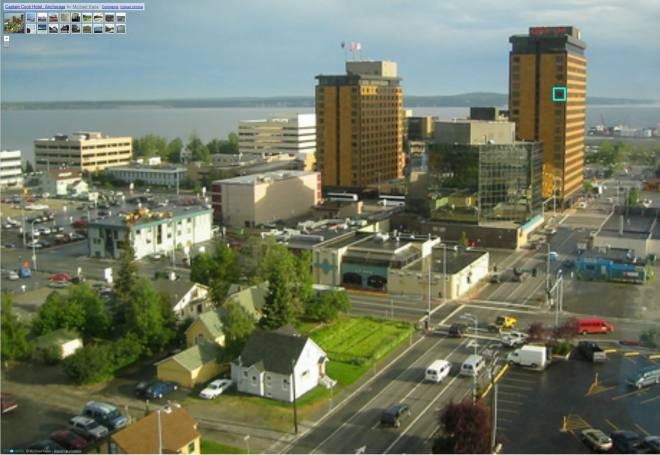
CCHotel1

Another:

Very easy VFYW this week … the Rodeway Inn sign is readable and there are only 150 of them in the world. Not too many of them are located in downtowns, so my wife found the right one quickly by googling “rodeway inn downtown”. Not sure of the exact floor, but we’re guessing 10th, since we’re a few floors above the top of the octagonal building across the street which looks to be about 7 stories. We’ve won before, so this is just for pride.

Another:

I traveled to Anchorage for the first time this past Christmas to visit my sick aunt. The city struck me as strangely empty and quiet, but I assumed this was due to it being a holiday. As the days passed, however, the quietness remained.

Another:

I’ve been showing your VFYW photos to my kids, ages 10 and 5, since the start of the contest.  It’s a great way to expose them to the rest of the world from our living room, and has led to some great discussions.  Unfortunately we haven’t recognized many of them.  However, what a thrill today as they both recognized this one as our hometown, Anchorage, Alaska!  The tip off?  The building in the background with the stairway lit with different colors.  That’s the Federal Building Annex at the corner of 8th and L Street.  The building across the street is the Benihana where we celebrated my daughter’s 10th birthday a few months ago.  The photo was taken from the Hotel Captain Cook, probably from about the 8th floor facing southwest.  The line of lights in the distance is the runway at the Ted Stevens International Airport.

Another gets down to street level:

Slide1

Another:

I have no interesting story about the Hotel Captain Cook or the Rodeway Inn.  I have never been to Anchorage.  I used a little good deduction to trip into the answer early, perhaps because I work in hotels and knew how to search.  I first tried hitting the Rodeway Inn website, but you can’t just pull up a list of all Rodeway Inns.  So after taking a first guess at looking up all Rodeways within 100 miles of Kansas City (snow, grids, open space, and you just posted that window view of Olathe, KS), I hit upon an idea.  I went to Trip Advisor, simply typed in “Rodeway Inn”, and looked at the pictures in the listings that appeared.  They aren’t alphabetical, but the Anchorage Alaska Rodeway came up early (page 2), and it looked about the size of the one in the window view.  Google an address, and that octagonal neighboring building was an immediate giveaway.

Another:

The VFYW was taken from the 10th or 11th floor of the east tower of the hotel Captain Cook looking southwest. The lights in the distance are on Russian soil.

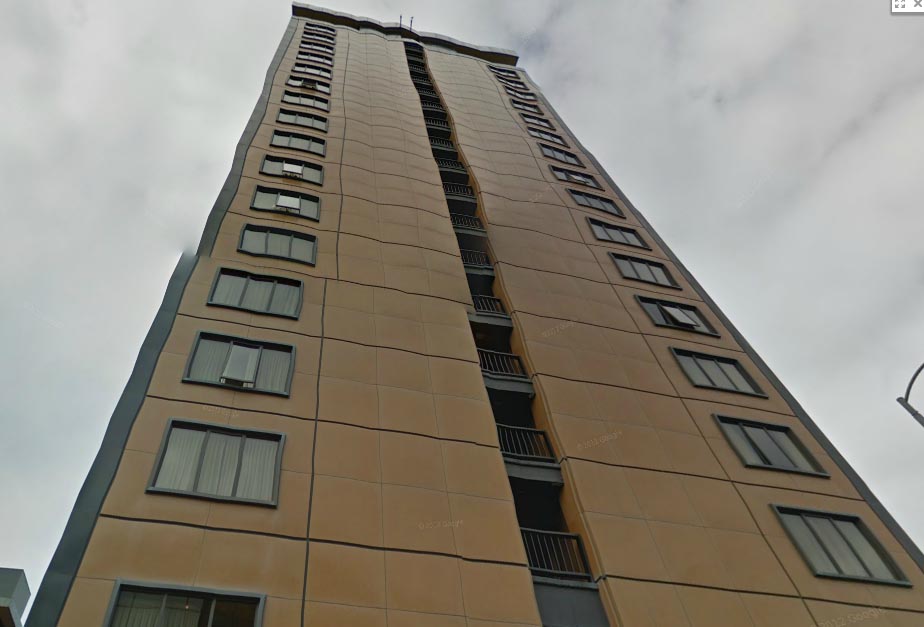
Heh. Another gets up close to the hotel:
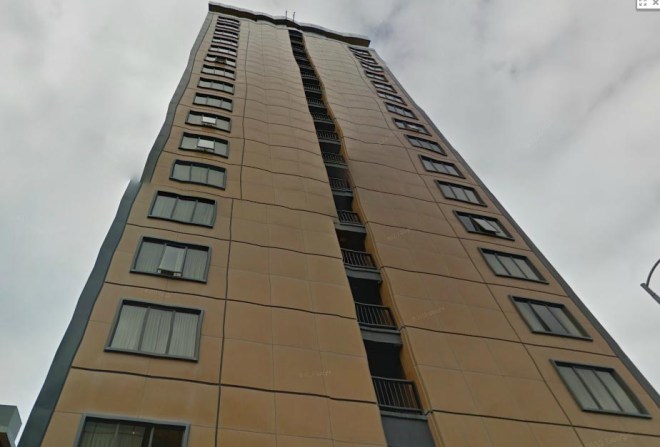
vfyw(2)

Another one of the hundred or so readers who answered Anchorage:

Greetings from Germany. It appears to be the higher of the two towers in the “Captain Cook” hotel. I can only guess as to the correct floor – I’ll go with the 12th floor. I don’t expect to win, as you must have a few readers in Anchorage who will probably have better guesses as to the right floor and/or room. But getting this for the first time ever totally made my day!

Another:

I’m happy just to finally identify a window, but I would be thrilled to win the contest, in part because the VFYW book contains one of my own winter shots. Incidentally, you also recently posted my “View From Your Blizzard” (Kitchener, Ontario). I’m going to try to make sure the next time I participate in any way with VFYW it does not involve snow.

On to the winner – the only reader who nailed the correct floor of the Captain Cook hotel (the actual room was 1778):

Curses, Andrew Sullivan, I have been so good about walking away from the contests in the past few months. But you got me this time with the Rodeway Inn clue. My OCD kicked in, and I was painfully trying to find a Rodeway Inn in one of the Northern states (flat, snow-covered), when my 8 yr old plonked on my lap and suggested Alaska. Smarter than I or kid’s intuition? Probably both.

It’s a view from the Hotel Captain Cook in downtown Anchorage – 939 W 5th Ave, Anchorage, AK  viewer99501. A view looking southwest from a corner room on the 17th floor? The hotel has 3 towers and my guess is attached. The building in the center of the frame is the Alaska Legal Services Building, and the lights on the horizon might be from the Ted Stevens airport.

My husband and I spent our honeymoon in Alaska – camping for 2 weeks in the Alaskan fall 10 years ago. But we just flew in and out of Anchorage without spending any time there. We were fortunate enough to get a cloudless view of Mt. McKinley, we met a bear in downtown Juneau, huffed and puffed on a gruelling hike to the Harding Icefield, watched brilliant blue glaciers cleaving with thunderous roars, and stayed up to catch the Northern Lights but never did. Such fun. This drab night view is such a clever pick for Anchorage, considering the characteristic stunning views one usually associates with the city, and Alaska in general.

This is just the second time in all these years that I have found the contest location. The first was the Balmora Lodge window in New Zealand, but I guess it does not count since I sent the entry to the wrong address.

I’ve still not signed up. It’s one of the first things I will do once I get a job; I now feel like a moocher when I am reading the Dish. Love the new layout, higher resolution VFYW Contest photos and the endless scroll. Good luck to you and the team. And thanks.

(Archive)