You want to look away. More beard coverage – of how religions have shaped the male face for aeons – here.
Freezing The Fat Off
Former NASA material scientist Ray Cronise believes cold temperatures can spur weight loss. Steven Leckart reports on the research:
Cronise got the idea back in 2008 while watching a TV program about Michael Phelps. The coverage claimed that, while training, the Olympic swimmer ate 12,000 calories a day. At the time, Cronise was on a diet of 12,000 calories per week. (He was carrying 209 pounds on his 5’9″ frame and wanted to get back down to 180.) Something didn’t add up. Even if Phelps had an exceptionally high metabolism and swam three hours a day, he still should have turned into a blob. Then it hit Cronise: Phelps was spending hours every day in water, which was sucking heat from his body. He was burning extra calories just to maintain his core temperature of 98.6.
That fall, Cronise grew obsessed. He avoided warmth altogether: He took cool showers, wore light clothing, slept without sheets, and took 3-mile “shiver walks” in 30-degree weather wearing a T-shirt, shorts, gloves, and earmuffs. In six weeks he shed 27 pounds, nearly tripling his weight-loss rate without changing his calorie-restricted diet.
The science is still uncertain:
Scientists are racing to separate the real science from the pseudo. They’re investigating the precise mechanisms by which the body adjusts to cold temperatures and reaching new insights into the ways our bodies burn fat. They’re even trying to come up with a new kind of weight-loss pill—a longtime ambition of the pharmaceutical industry—that can mimic those processes and make us thinner faster, with less effort.
Dances With iPhones

Andy Cush applauds a new project that catalogues our gadget habits:
There’s the “Security Blanket” (checking your smartphone for no particular reason when faced with the slightest discomfort in a social situation), the “Halfway Courtesy” (taking one earbud out in order to show a person you’re listening to them), the “Haunted Interface” (performing actions an interface can’t react to, like shaking a video game controller), and many others. All of the actions are collected in a free ebook called Curious Rituals.
Mark Wilson nods:
“It’s actually a chicken-and-egg situation where both the design of the object and the way we look in public influence the gesture,” researcher Nicolas Nova explains, and he would know. Over five years of studying gesture interfaces at Near Future Laboratory, Nova began to notice trends–”common threads”–in how people postured themselves in response to everything from laptops to VR goggles.
Check out more great images from the book (PDF) and blog here.
The Payoff For Kids
Bryan Caplan recently praised Jonathan Last’s What To Expect When No One’s Expecting, as “the best-written, most engaging, and funniest book on the social cost of low birth rates and population decline.” But, in a follow-up post, Caplan takes issue with some of Last’s facts:
Contrary to popular opinion, children have never been a remunerative retirement plan. In pre-modern times, people rarely lived long enough to collect their “pension.” This has been verified by anthropologists and economic historians alike; see Ted Bergstrom’s excellent review in the JEL. Long before the birth of the welfare state, buying land and money-lending (and even hiding money under your mattress!) made far more financial sense than having kids.
Indeed, as I argue in Selfish Reasons to Have More Kids, kids are a better deal in modern societies than in traditional societies. In purely financial terms, they’re still a money pit. But at least nowadays you’ll probably live long enough to collect two or three decades of non-financial assistance and companionship.
Ruy Teixeira recently tackled Last’s prescriptions for how to increase America’s fertility rate:
He argues instead that we should make it easier for people to have all the children they want by reducing the costs of child-rearing. Fair enough. In this cost-cutting spirit, how about paid family and medical leave, flexible work schedules and, especially, affordable, quality child care? Expanding government programs to make college more affordable would also bring down the higher education costs of child-rearing and encourage parents to have as many children as they desire.
But these obvious proposals are rejected out of hand by Last. His solution is to exempt parents from part or all of their payroll taxes. (Have three kids and you pay nothing at all!) The resulting funding shortfall for Social Security and Medicare, not to mention inevitable political conflict arising from the creation of two classes of taxpayers, could kill off both programs pretty fast. But those possibilities do not seem to bother Last.
Last responds to Teixeira here.
Holy Father, Holy Mothers
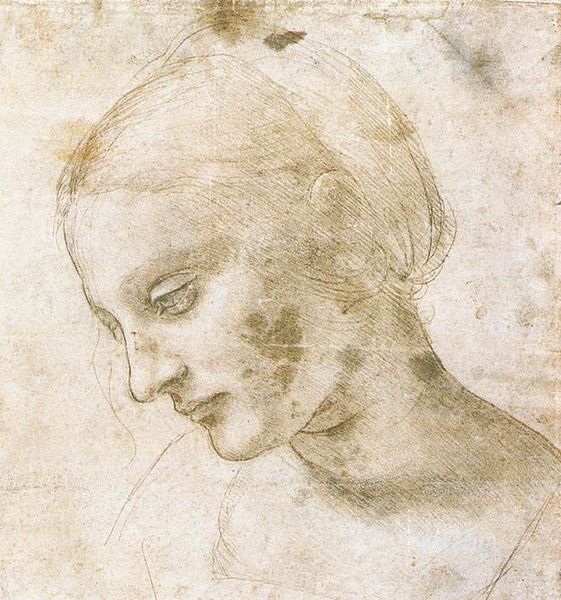
There are many reasons Western women are having a harder time belonging to the Catholic church under this hierarchy than ever. One is motherhood:
The Catholic Church is so busy absorbing the shock of the Holy Father’s decision to quit, it is missing the point. Holy mothers are quitting too.
I’m a Catholic. Was a Catholic. Am a sort of Catholic. Am hardly a Catholic? Is there a word for what I am anymore? I’d like to be a better Catholic but it is just not cutting it for me. And why is that? Because the Catholic Church has nothing to say to an educated woman with socially liberal views – nothing, except “Please give us your children.”
I have so far – given them my children. Two of them – the boys, have taken their First Communion in red ties and polyester sashes, in part to keep my elderly and very Catholic parents happy. Now the Church wants my daughter. She is seven, and somehow, I am more reluctant to put her through the whole fandango of instruction.
The wonderful blogger Judith O’Reilly unpacks her new reservations further here.
I think of three generations of mothers in my family. My Irish grandmother – the seventh of thirteen kids – wearing her veil to mass and rattling through the Rosary like a freight train of higher consciousness; my mother, devoutly bringing her children up in the Church, but finding it over the years less and less accessible. “Is it a sin that I just don’t like this Pope?” she asked me a while back. Then my sister who began to bring up her kids as devout Catholics in the 1990s and then lost heart after the revelations of the epidemic of child-rape, the treatment of women, and the constant condemnation of gay marriage. My niece and nephew were just baffled that their priest would be so harsh about their uncle Andrew, whose wedding was the first either had attended. My niece – now as brilliant a teen girl as you can imagine – memorized the vows and was a ring-bearer. My sister could not explain or defend. To hear the shameless protectors of child-rapists mount a campaign against her own brother’s chance to love and be loved was too much. They have all drifted away.
Without women, the Church will die. One of the more obviously radical things Jesus does in the Gospels is to treat women as complete equals. Yet the Church that was constructed after Him was based on male supremacy and eventually male segregation in the priesthood – forbidding by celibacy even the influence of wives and daughters. Of course this creates a circular, hermetically sealed worldview. But I’ll tell you this: if women had been priests or priests had ever had kids, the child-rape scandal would have been stopped in its tracks. The criminals would have been busted, not protected.
If the hierarchy still refuses to get this, if it does not shift on women and married priests, it will, in the West, lose the mothers. And once you lose them, the church is all but over. They are, in so many ways, the church. Two women – my grandmother and my mother – taught me to love my faith, cherish it, protect it. They both gave me life, but they also gave me faith. For so long they have been taken for granted – and even, as with the American nuns, persecuted and investigated for doing God’s work.
When the church gives holy mothers the same respect it gives one Holy Father, it will begin to regain its moral authority. It will begin to turn back towards the one so many seem to have forgotten: Jesus.
(Painting: study of a woman’s head by Leonardo Da Vinci, c. 1490.)
3.5 Percent
We’re slowly getting a sense of how many TGBQLX people there are in America. I.e. how many homosexuals, lesbians and transgenders there are in the population. When I was a newbie gay, the mantra was 10 percent. We were “one in ten”. Seriously.
This immediately struck me at the time as a) obviously propaganda and b) ridiculously insecure. There was no way to know for sure, given the ubiquity of the closet back in the 1980s, but ten percent is a hell of a lot of people: 30 million. Why did I keep bumping into faces I recognized wherever I was in the US? If it were really ten percent, where were they all?
And why on earth does it matter if we make up 10 percent or 1 percent? A minority’s civil rights are not dependent on how many of them there are or how large a segment of society they form. Do we say: sorry, guys, you only form 2 percent, you don’t meet the minimal bar for becoming a minority? It’s not like running for the Knesset. It struck me then and now as part of a wearying tendency among some gays to think that every straight dude is just a few beers away from being gay (that’s not how it works); or a desperation to feel somehow more significant because of larger numbers.
Which simply make it all the more of a relief to see that Gallup has finally come up with a believable number of around 3.5 percent. (Check how gay your state is here.) DC is the super-gayest “state” – but that is a little distorted since DC is really the inner city of a larger metropolitan area and the gays tend to congregate there. But there’s also the attraction of politics for gay men. If you’ve ever spent much time among the staffers on the Hill, you’ll know what I mean: the US capitol makes the Vatican look straight.
My pet theory for why this is the following.
For many young gays in the past – and who knows if this will continue in the same way now the stigma has waned so much – the prospect of dating girls was so scary and the prospect of dating boys so impossible that they buried themselves in some kind of nerdiness. I threw myself into scholarship, my repressed homosexuality enabling me at the age of 17 to translate English into different Latin styles, following Cicero or Tacitus. Man, repression can make you smart. Others went into baseball scores; or entertainment trivia; or obsession with PSB B-sides; or knowing how many Republican votes could be found in some Cuyahoga County. Some kind of virtual life – lived with passionate intensity.
Hence the political gay. Hence Mehlman and Ambinder and Nagourney and McGreevey and Wofford and Zeleny and Bruni and Brock and Berke and on and on. Because repression is declining, we may never again get someone obsessed enough to produce the Almanac of American politics. But if that future person exists, chances are they’ll be living in DC. So much gayer than New York.
A Poem For Sunday

“The Boat” by Stevie Smith:
The boat that took my love away
He sent again to me
To tell me that he should not sleep
Alone beneath the sea.The flower and fruit of love are mine
The ant, the fieldmouse and the mole,
But now a tiger prowls without
And claws upon my soul.Love is not love that wounded bleeds
And bleeding sullies slow,
Come death within my hands and I
Unto my love will go.
(From Collected Poems of Stevie Smith © 1966 by Stevie Smith. Reprinted by permission of New Directions Publishing Corp. Photo by Justin Ackerman)
Wilde’s Wife
Reviewing the new biography Constance, Elizabeth Powers ponders what exactly she knew about her husband’s gay affairs:
How much did Constance suspect of Oscar’s transition from dandyism to debauchery, especially since the press contained numerous not-so-subtle allusions to his behavior and since, by 1893, he had “effectively
entered into a new marriage, with Bosie [Lord Alfred] Douglas,” distancing himself for weeks, even months, at a time from home and hearth? Were her many activities attempts to avoid the obvious? Did none of her friends enlighten her? Was “the Love that dare not speak its name” so unspeakable that she literally could not think it?
Moyle concedes that Constance’s avoidance “is hard to explain, except perhaps in terms of her fleeing from a situation that she did not wish properly to confront.” I wonder if this reticence did not also affect Oscar, who had descended so much into licentiousness that he seemed unable to grasp the extent of his own danger. Friends recommended fleeing abroad after the libel trial, allowing the uproar to die down, but he refused.
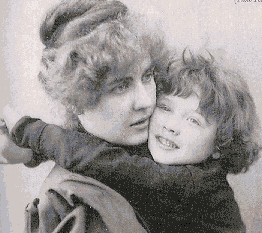
(Photo: Constance Wilde with their child Cyril in 1889)
The Limits Of Orwell
Patrick Kurp cites Irving Howe:
“Part of Orwell’s limitation as a literary critic is that he shows little taste for the prose of virtuosity: one can’t easily imagine him enjoying Sir Thomas Browne. If some windows should be clear and transparent, why may not others be stained and opaque? Like all critics who are also significant writers themselves, Orwell developed standards that were largely self-justifying: he liked the prose that’s like a window pane because that’s the kind of prose he wrote.”
I think that’s why he was so accessible to me as a boy and played such a big part in persuading me that writing was a career well worth pursuing. Because it was so easy to read, so close to the conversational English of actual speaking. Reading Evelyn Waugh or Oscar Wilde is to be transported by sheer style. Reading Orwell, one forgets style altogether. And one meets reality.
Postmodern Passion
Benjamin Nugent describes how a number of his favorite recent novels are stories of romance and courtship, and “get away with great warmth…by using a particular cold vocabulary, the vocabulary of theory.” One example? Jeffrey Eugenides’ The Marriage Plot:
Sometimes, in these novels, discussions of theory are merely juxtaposed with love scenes. But the best ones are those in which theory provides the language that enables the lovers to communicate. In Eugenides’ book, two Brown students, Leonard and Madeline, meet in a semiotics class. When Madeline tells Leonard she loves him for the first time, he finds an ingenious way to slam on the brakes: He digs in her bag for her copy of Barthes’ “A Lover’s Discourse” and points to the section on the words “I love you.”
“The figure refers not to the declaration of love, to the avowal, but to the repeated utterance of the love cry … Once the first avowal has been made, ‘I love you’ has no meaning whatever …”
He smirks, she throws the book at his head. A young lover rejecting another in naturalistic dialogue might feel melodramatic, too hot, too familiar to allow a reader to feel the sting. But because Leonard’s cruelty comes in the form of a quotation about a “figure,” an “utterance” — that is, in the cold jargon of literary criticism — the moment of cruelty feels unconventional, real.

