FedExing The Internet

Randall Munroe wonders when, if ever, “the bandwidth of the Internet [will] surpass that of FedEx”:

Cisco estimates that total internet traffic currently averages 167 terabits per second. FedEx has a fleet of 654 aircraft with a lift capacity of 26.5 million pounds daily. A solid-state laptop drive weighs about 78 grams and can hold up to a terabyte. That means FedEx is capable of transferring 150 exabytes of data per day, or 14 petabits per second—almost a hundred times the current throughput of the internet. …

Cisco estimates internet traffic is growing at about 29% annually. At that rate, we’d hit the FedEx point in 2040. Of course, the amount of data we can fit on a drive will have gone up by then, too.

A Heavenless Sky

With next year marking the 450th anniversary of Galileo’s birth, Adam Gopnik celebrates the astronomer’s genius:

He took the competitive, empirical drive with which Florentine painters had been looking at the world and used it to look at the night sky. The intellectual practices of doubting authority and trying out experiments happened on lutes and with tempera on gesso before they turned toward the stars. You had only to study the previous two centuries of Florentine drawing, from the rocky pillars of Masaccio to the twisting perfection of Michelangelo, to see how knowledge grew through a contest in observation. As the physicist and historian of science Mark Peterson points out, the young Galileo used his newly acquired skills as a geometer to lecture on the architecture of Hell as Dante had imagined it, grasping the hidden truth of “scaling up”: an Inferno that big couldn’t be built on classical engineering principles. But the painters and poets could look at the world, safely, through the lens of religious subjects; Galileo, looking through his lens, saw the religious non-subject. They looked at people and saw angels; he looked at the heavens, and didn’t.

Quote For The Day

“It is not without significance that the real saints of history, as distinguished from morbid, self-flagellating ascetics, have a delightful sense of humor, as had Francis of Assisi for instance. This sense of humor is based upon a curious quality of disillusionment which has not resulted in either bitterness or despair. It is without bitterness, because judgments of the fellowman are tempered by the forgiveness which is prompted by repentance. It is without despair, because no evils in the world can disturb the firm faith in the goodness of God and his ultimate triumph over evil. This quality of mirthful serenity is unlike the innocency of childhood which knows no evil. It has looked into the abyss of evil and is no longer affrighted by it,” – Reinhold Niebuhr, from “Childhood and Maturity” in Beyond Tragedy: Essays on the Christian Interpretation of History.

A Poem For Sunday

sunwindow2

“The Speed of Belief” by Tracy K. Smith:

In memoriam, Floyd William Smith 1935-2008

I didn’t want to wait on my knees
In a room made quiet by waiting.

A room where we’d listen for the rise
Of breath, the burble in his throat.

I didn’t want the orchids or the trays
Of food meant to fortify that silence,

Or to pray for him to stay or to go then
Finally toward that ecstatic light,

I didn’t want to believe
What we believe in those rooms:

That we are blessed, letting go,
Letting someone, anyone,

Drag open the drapes and heave us
Back into our blinding, bright lives.

(From the “The Speed of Belief,” a sequence of poems in Life on Mars © 2011 by Tracy K. Smith. Reprinted with the permission of Graywolf Press. Photo by Flickr user .reid)

Face Of The Day

fotdsun

Julia Sklar marvels at a very old visage:

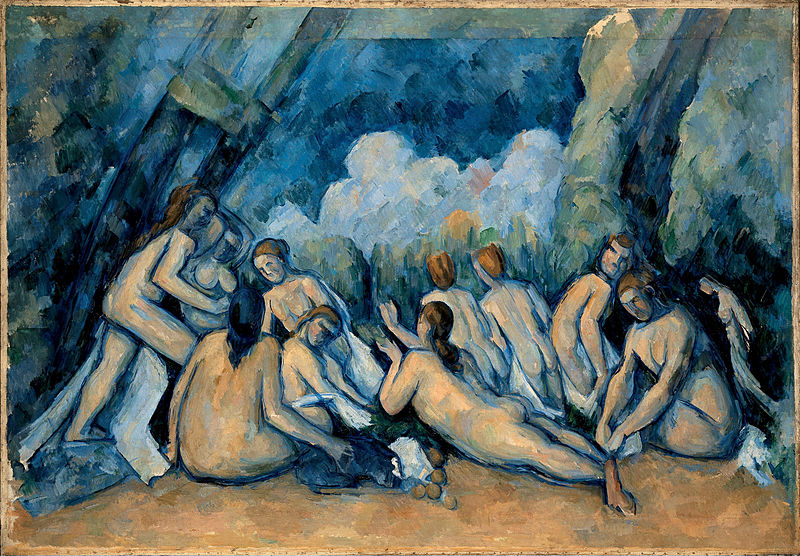
Twenty-six thousand years ago in the Czech Republic, one of our ice-age ancestors selected a hunk of mammoth ivory and carved this enigmatic portrait of a woman – the oldest ever found. By looking at artefacts like this as works of art, rather than archaeological finds, a new exhibition at the British Museum in London hopes to help us see them and their creators with new eyes. Human ancestors date back millions of years, but the earliest evidence of the human mind producing symbolic imagery as a form of creative expression cannot be much older than 100,000 years. That evidence comes from Africa: this exhibition explores the later dawning of representative art in Europe and shows that even before the remarkable paintings of the Lascaux cave, France, humans were able to make work as subtle as the expressive face above.

(Image: The oldest known portrait of a woman sculpted from mammoth ivory found at Dolní Věstonice, Moravia, Czech Republic. c.26,000 years old. Height 4.8 cm. Courtesy of the Moravian Museum, Anthropos Institute)

Naming The Little Things

In 2005, Yale University Press published, for the first time in English, Ernst Gombrich’s charming children’s book, A Little History of the World. A new companion volume, A Little History of Science was released recently, and Suzanne Klingenstein believes its author, William Bynum, captures something essential for children and adults:

He begins his second triad of 13 chapters with Bacon and Descartes, zooming in on Descartes’s insights that he had to start over again, and that he had to gain perfect clarity about the difference between matter and mind. In this second triad, Bynum moves—by way of Newton, Linnaeus, Lavoisier, Maxwell, Darwin, and many others—from the mind-body split to the sighting of bacteria. Bynum begins his third triad with the discovery of the mechanisms underlying infectious diseases, and moves in a grand sweep onward to discoveries of ever-smaller particles in physics and biology, until he arrives at bosons and the molecular building blocks of genes. And then, miraculously, one is tempted to say, the reversal happens: Out of these tiniest of particles, one of which (the Higgs boson) is still a conjecture, the huge blueprints of life emerge, a potential “theory of everything” via string theory and the Human Genome Project—both of which have come within cognitive reach only through splitting the world into ever-smaller elements. …

In the biblical “beginning,” the world is divided into ever-smaller units, ending in the emergence of the consciousness that names them.

Ordinary Enchantments

800px-Paul_Cézanne_048

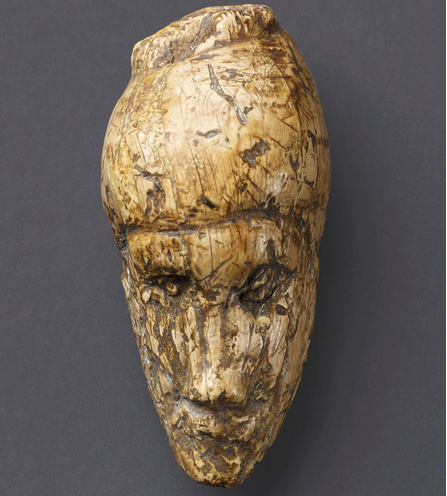
Daniel Siedell praises the painting of Cézanne, arguing that he recovered “the inescapable and indescribable mystery and terrible beauty of nature”:

One of the more important insights of the Reformation was to restore the dignity of the human being as a creature and the world as a gift. If Athanasius claimed that God became man so that man could become god, Luther argued that God became man so that man could once again become a creature, could take delight in his created, contingent, creaturely nature – become a happy human rather than a grumpy god. As Oswald Bayer writes, through Christ “we enter into a new worldliness.”

Perhaps this is Cézanne’s singular achievement. He returned painting to the realm of the creation. These paintings are worldly, creaturely. The critics noticed this. One hostile critic claimed that Cézanne could even paint bad breath. Too often art is regarded as a means to ascend the ladder of divine ascent, to aspire to the heavens and commune with the divine. For Cézanne art is a creaturely practice, one that revels in the givenness of nature.

(Image: Cézanne’s “The Bathers,” via Wikimedia Commons)

A Poet’s Parable

Stumbling upon a nearly forgotten anthology of fiction by and about women, Bitches and Sad Ladies, Rowan Hisayo Buchanan found herself transfixed by the late poet Anne Sexton’s tale, “The Letting Down of The Hair,” the story of “a modern Rapunzel who has locked herself in a stone room”:

Her hair receives fan letters, pilgrims, and gawkers. The hair is filmed for television. Although the setting is modern, Sexton plays with fairy tale logic. Honey is preferred to shampoo. A woman is only a vessel for her hair. A wish causes a death.

Sexton has the poet’s skill of condensing meaning. The speaker informs us: “I’d had a normal life, men and lipstick, daiquiris and sunburns.” And we immediately know the sort of woman she has been—without names of men, without dates, or history—we know. Ruth, the speaker’s shorthaired confidant, becomes emotionally vivid in two lines: “After years of therapy, [Ruth] gave it all up for Zen. She watched her mind as a cat watches over a fish tank.” The sentences stay thrumming in the reader’s mind.

The prose is as wild and strange as the woman it describes: “I have never cut my hair. That’s something you ought to know right off. It fills the room the way ten giraffes would, twisting and twisting, their long and innocent necks.” Before Ruth dies, she writes to the speaker telling her that Christ has revealed the hair is a parable for the life of the poet. The speaker doesn’t know what to do about this, doesn’t even fully understand it. And after Ruth dies, she has no one to ask.

Mental Health Break

MeFi explains the inspiration:

Buck 65 covers Leonard Cohen in a new video directed and choreographed by Jacob Niedzwiecki. The video for ‘Who By Fire’, inspired by the motion of a pendulum, just had its world premiere at New York’s Lincoln Center as part of the 2013 Dance on Camera Festival.

In Defense Of A Dead Language

Reviewing The Classical Tradition, a massive compendium of essays on ancient Greece and Rome, Stephen Greenblatt and Joseph Leo Koerner note that the volume’s contributors had to “scramble to fill in what they know will be for many people a succession of blanks.” The reason why? Our relatively recent refusal to learn their language:

The Latin-centered educational system remained largely intact well into the twentieth century. Its downfall in the United States may be symbolically dated to 1931, when Yale University—quickly followed by other institutions—decided to abolish the Latin requirement for all secondary school applicants. With it vanished a shared linguistic possession that had been handed down, at least among the entire educated elite, since ancient times.

The vanishing is not a matter of language alone: Latin was traditionally taught by means of ancient literary texts. This means that virtually all educated men (and women, as soon as they could gain access to what had been a male privilege) were steeped in the same books. When Shakespeare went to the King’s Grammar School in Stratford in the 1570s, he read Plautus and Terence, Virgil and Ovid, and this core curriculum remained more or less the same for centuries, through Isaac Newton and John Locke, Thomas Jefferson and Woodrow Wilson. In the latter half of the twentieth century this whole structure collapsed. As anyone who has recently set foot in a college or university knows, few students arrive with even a fragmentary knowledge of ancient literature and culture, and, what is more, only a small number of these same students graduate with any more knowledge of the classics than they brought with them.