
Essex Junction, Vermont, 7.32 am
On Sunday, Tyler Cowen embraced sequestration:
Half of the sequestration would apply to the military budget, an area where most cuts would probably enhance rather than damage future growth. Reducing the defense budget by about $55 billion a year, the sum at stake, would most likely mean fewer engineers and scientists inventing weaponry and more of them producing for consumers.
Ryan Avent agrees that defense spending “isn’t great stimulus” and thinks the key question is “whether the cuts can go through at acceptable economic cost”:
Where the payroll-tax cut could quite reasonably be expected to lapse as the economy improves (before it improves enough, as it happens), we can’t count on defence cuts being back on the table in a few years. Taking that into consideration alongside the Fed’s recent actions I’m not at all convinced that the sequester hitting would be a net negative for America. It’s not the policy I’d choose. But that is basically never a realistic possibility.

Joshua Holland defends the breed:
According to the American Veterinary Medicine Association, “controlled studies have not identified this breed group as disproportionately dangerous.” The American Temperance Testing Society (ATTS) puts thousands of dogs – purebreds and spayed and neutered mixed-breeds – through their paces each year. The dogs are tested for skittishness, aggression and their ability to differentiate between threatening and non-threatening humans. Among all of the breeds ATTS tested – over 30,000 dogs through May 2011 — 83 percent passed the test. How did pit bulls do? They showed an above average temperament, with 86 percent making the grade. Pit bulls are the second most tolerant breed tested by ATTS, after only golden retreivers.
Pit bulls do not have special “locking jaws” – that’s pure mythology. They don’t demonstrate some sort of special shaking action when they bite – all dogs display similar biting behavior. Pit bulls do not exert an unusual amount of bite-force for their size. Multiple studies have found that bite force correlates to body-weight, and tests of three breeds conducted by National Geographic found that the American pit bull terrier exerted less bite-force than German shepherds or Rottweilers.
Earlier Dish debate on pit bulls here.
(Photo by Flickr user audreyjm529)
Marin Cogan admits that she has a hard time telling politicians apart:
It’s possible that I’m the world’s worst congressional reporter. But it’s not just me. Nearly every reporter I got to know in my two years covering the Capitol has some cringe-worthy story of confusing the identity of a member of Congress. It’s easy to understand why it happens. Every couple of years, our schizophrenic electorate reshuffles the deck, casting out some of the middle to older aged white men who still overwhelmingly dominate the ranks of our Congress for a new class of middle to older aged white men (with some notable exceptions).
A new tumblr features images of cards sent to Newtown in the wake of the Sandy Hook tragedy. Newtown resident Ross McDonald explains:
Walk into the Newtown town hall and you see bin after bin of cards and letters—some 500,000 at least, more arriving every day. They line both sides of the long main hall, and fill up the branching halls and offices. Posters, paintings, quilts, and flags cover the walls. There are banners from students at Columbine and Virginia Tech; there are letters from school kids across America and from people as far away as France and Australia. And there are boxes of Kleenex on every table for those who read them. …
We already have thousands of images, we’re gathering more, and we’ll be publishing batches every day until we run out. We have approached town officials about creating an extensive digital archive; it is my hope that we might also find a physical home for all these letters. Because the wisdom they express should not be lost to history.
Dexter Filkins recalls the drone strike civilian victims he has interviewed. His view of the drone war more generally:
[I]f there is one overriding factor in America’s secret wars—especially in its drone campaign—it’s that the U.S. is operating in an information black hole. Our ignorance is not total, but our information is nowhere near adequate. When an employee of the C.I.A. fires a missile from an unmanned drone into a compound along the Afghan-Pakistani border, he almost certainly doesn’t know for sure whom he’s shooting at. Most drone strikes in Pakistan, as an American official explained to me during my visit there in 2011, are what are known as “signature strikes.” That is, the C.I.A. is shooting at a target that matches a pattern of behavior that they’ve deemed suspicious. Often, they get it right and they kill the bad guys. Sometimes, they get it wrong.
Rove wants the GOP to nominate candidates who can, you know, win:
In order to accomplish Rove’s goal, Jonathan Bernstein suggests that GOP elites elevate “real issues that have immediate material effects on large primary electorates, as opposed to purely symbolic issues”:
The drawback to relying on symbolic issues is that sane candidates are at a disadvantage. After all, they tend to be constrained by reality, and so they’re less likely to outbid the nuts when it comes to who loves the flag the most or who hates the “Ground Zero Mosque” the most; they’re more likely to slip up and admit that all candidates are patriotic or that not every Muslim community center is necessarily part of a jihadist plot. If the debate is on real policies with real consequences, however, reality-based conservatives are playing on ground that favors them.
Kornacki wonders whether Rove’s plan will backfire:
[W]hile it’s possible the Conservative Victory Fund could save the GOP a few seats in 2014, there’s also the potential that its existence will only strengthen the right’s resolve to fight the party establishment – and to help the very candidates it’s designed to stop.
Angela Evancie reviews Andrew Shaffer’s Literary Rogues, which covers the mundane internships, grunt jobs and general kicking around that preceded the rise of literary giants:
[W]hat is most remarkable about Shaffer’s history is the way in which it colors that liminal space between writers’ obscurity and their eventual fame – not just with tales of weeklong benders, but also with portraits of sacrifice and stubbornness. Literary Rogues is far from a how-to, but it’s strangely reassuring: Success isn’t always instantaneous, and the antics don’t really have anything to do with it. After all, Hemingway wasn’t famous because he drank – he was famous because he wrote.
Related Dish thread on “achievement anxiety” here.
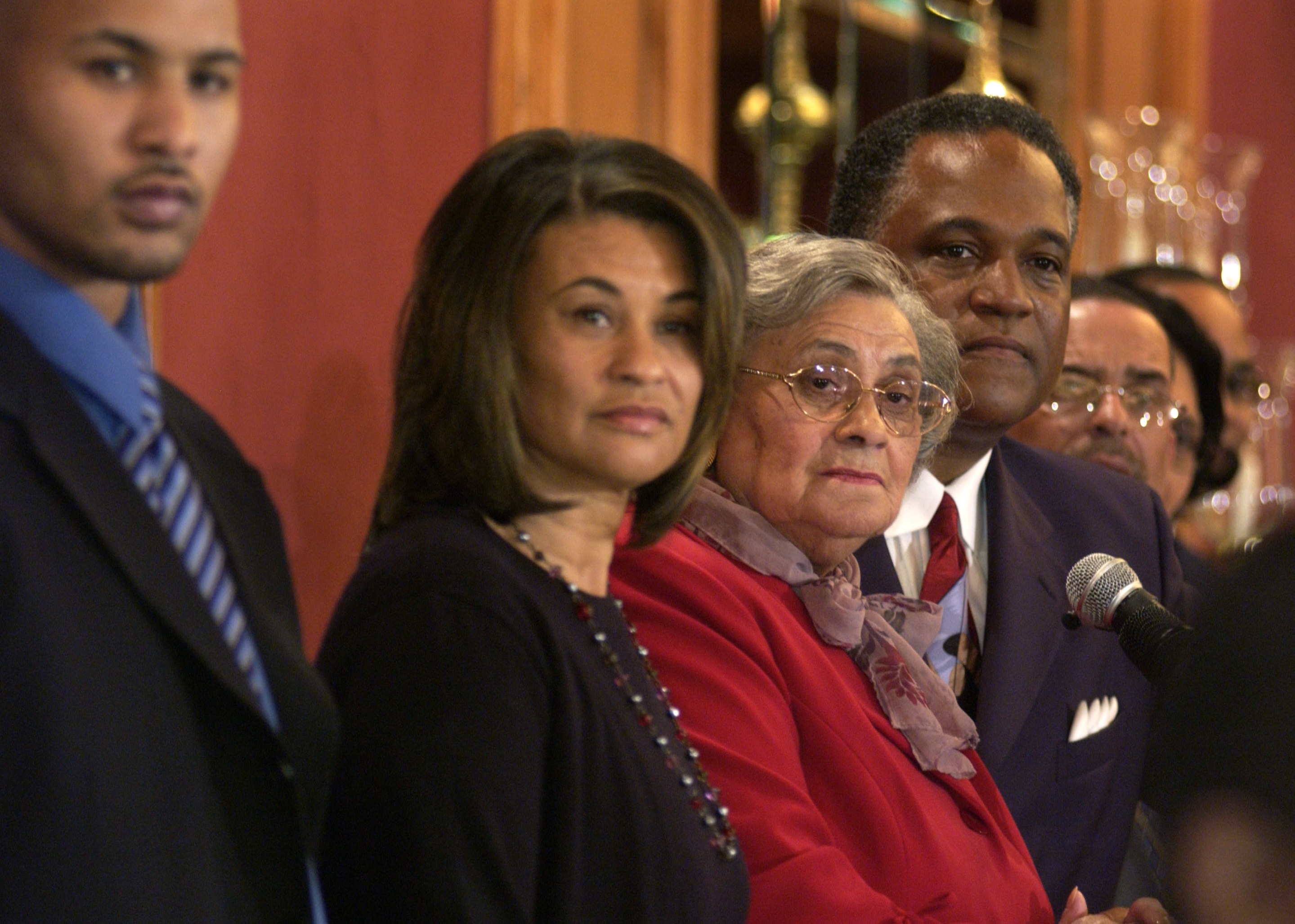
Essie Mae Washington-Williams, the child Strom Thurmond had with a black maid, passed away on Monday. Jelani Cobb reflects on the racial realities her life presented:
James Baldwin once remarked that segregationists weren’t truly driven by the cliché concern of preventing black men from marrying their daughters. Rather, he said, “You don’t want us to marry your wives’ daughters—we’ve been marrying your daughters since the days of slavery.” This is a truth that is forgotten among whites and rarely spoken among blacks. Revelations of the type Washington-Williams made in 2003 were shocking only to those privileged enough to not have this knowledge inflicted upon them personally or etched into their lineage and shaded—literally—into their family history.
In 2003, when the hazy borders between current events and reality TV were still intact, we processed Washington-Williams story as a political scandal, albeit a posthumous one. But in truth this was an affair of an altogether different genus than the family-values pol caught in a brothel or the homophobic pastor found to be conducting a same-sex affair. Hypocrisy may be the price we pay for having our biases catered to in public, but Thurmond’s actions weren’t so much hypocritical as they were surreptitious: not uncommon, just unspoken.
(Photo: Essie Mae Washington-Williams (2nd R), during a news conference Wednesday December 17, 2003 in Columbia, South Carolina, says that Senator Strom Thurmond acknowledged her privately as his daughter and provided financial support for her starting in 1941. Flanking Williams are her daughter, Wanda Terry, son Jason Terry and her attorney Frank Wheaton (R). By Stephen Morton/Getty Images)
Madeleine Schwartz tallies the cost to the federal coffers:
In 2002, the Bush administration diverted over $100 million dollars from existing welfare programs to create the Healthy Marriage Initiative, a national program to disseminate the importance of matrimony. Displaced funds included $14 million from child welfare, $6.1 million from a child support enforcement program, $9 million worth of support for refugees, and $40 million from a development strategies program focusing on Native Americans. Three years later, the US government sanctioned up to $150 million more per year to support “healthy marriage and responsible programs.”
A change of political parties has not tempered the flow: in the last fiscal year, Congress approved $75 million in spending on marriage promotion activities and $75 million for responsible fatherhood initiatives. This, of course, does not include the cost of marriage to individuals themselves (the average American wedding costs over $27,000, according to Reuters). That’s a lot to spend on an institution with a known failure rate of about 50 percent.

