An Ode To Shitty Beer

David Chang explains why he prefers a frosty Bud Light to artisanal microbrews:

I remember watching my grandfather mow the lawn on a ninety-degree day in Virginia, and as soon as he finished, he’d ask me to fetch him a can of ice-cold beer. He’d tell me, “One day, you’ll understand what it’s like to drink a really cold beer when you’ve earned it.” I was like, “What the fuck does that mean?” In high school, we drank cheap beer because we could afford it—we’d buy it by the case. But when I became a cook, I learned what that beer meant to my grandpa. Working alongside the Hispanic guys who really work in a restaurant kitchen, I learned that the world south of Texas makes amazing bad beer: Imperial from Costa Rica, Presidente from the Dominican Republic, Tecate from Mexico—all excellent bad beers.

For all the debatability of my rant here, let me make one ironclad argument for shitty beer: It pairs really well with food. All food. Think about how well champagne pairs with almost anything. Champagne is not a flavor bomb! It’s bubbly and has a little hint of acid and tannin and is cool and crisp and refreshing. Cheap beer is, no joke, the champagne of beers. And cheap beer and spicy food go together like nothing else. Think about Natty Boh and Old Bay-smothered crabs. Or Asian lagers like Orion and Singha and Tiger, which are all perfect ways to wash down your mapo tofu.

A Poem For Saturday

3824326434_d48d848445_b

Dish poetry editor Alice Quinn writes:

James Laughlin, the founder and publisher of New Directions, shepherded a list, from 1936 until his death in 1997, which Peter Glassgold describes in his introduction to The Collected Poems of James Laughlin, 1935-1997 as one that “steadily expanded to include an astonishing pantheon of contemporary authors, primarily of the Modernist avant-garde, and quite literally changed what educated Americans read and the way American writers wrote and the kinds of poetry and fiction that were taught in our schools.” Today, ND is just as vital a force in contemporary literary culture, and the backlist is, of course, astounding.

Laughlin considered himself primarily a love poet and was encouraged by a number of his treasured authors—among them William Carlos Williams, Thomas Merton, Kenneth Rexroth, and Guy Davenport, who has praised his poems as “witty, elegiac, sexy, satiric, naughty, poignant, wise.” But Ezra Pound whose “Ezuversity” in Rapallo, Italy proved foundationally crucial to Laughlin’s literary education “ruled them hopeless,” he recalled. When prodded as to what path he should take, Pound replied, “ Go back to Haavud to finish up your studies. If you’re a good boy, your parents will give you some money and you can bring out books.” And so they did, launching one of the great publishing houses of the century.

Glassgold tells us that more than three-quarters of the 1,250-odd poems in the new volume date from Laughlin’s last fifteen years. When I was at The New Yorker, we published a number of his poems, which I found so captivating and dear. I loved the one below, which we wanted to publish but couldn’t because I discovered it had already appeared in a book. When I called to give J (as he was called) the sad news, he replied, mischievously, “Poor Gramps—ejected on a technicality!”

“Grandfather” by James Laughlin:

Sits on a chair at the
Kitchen table shelling
Peas into a bowl. He
Looks contented, even
Happy, smiling as he
Works. If you ask him
A question he probably
Won’t answer. He has
No idea what my name is,
Or even, I guess, that
I’m his grandson. He’s
93 but he has to be kept
Busy or he’ll start to
Root around in closets
All over the house. What
Does he think is lost?
No matter, he has been
Asked to shell peas.
He’s happy doing it. And
We’ll have peas for lunch.

(From The Collected Poems of James Laughlin, 1935-1997, edited with an introduction and notes by Peter Glassgold © 1995 by James Laughlin. Used by permission of New Directions Publishing Corporation. Photo by Nicki Dugan Pogue)

A Short Story For Saturday

This weekend’s short story is Nick Ripatrazone’s “Advent,” first published in the Blue Mesa Review in December 2012. Here’s how it begins:

People said that Father Mark was working at Macy’s. It all started with his sermon during the last Mass of Thanksgiving weekend. Evening services drew two crowds: those who slept-in, and others who enjoyed the nearly empty church, silent from music. Father Mark was a traditionalist: no female altar servers, no Eucharistic ministers, no deacons, and he always delivered his sermons from behind the pulpit. No roaming the aisles like a motivational speaker.

Most of that particular sermon was usual Thanksgiving fare: this is the time of year to bring families together, whether we like them or not, because to like is lower than to love. We can dislike, we can perhaps even hate, but we must love. Fair enough. Easy for you to say, some thought, you without a wife and in-laws and needy cousins. But what Father Mark said next passed most by, stomachs still full, Christmas shopping and decorating already on their minds.

He said that during this time of year, we should think of those beyond our families. We should include our friends, our coworkers and colleagues, and others in the community. This was the time of year for sadness and depression, and that some groups were more inclined toward such malaise. He said the Catholic Church is really a place of inclusivity. And that it needed to start acting like that when it came to those with alternate lifestyles. It needed to recognize those differences and rejoice in them. Amen.

Read the rest here. The story also can be found in Ripatrazone’s just-published collection, Good People. Check out our previous SSFSs here.

Verse Before Vows?

In a review of Poets in Their Youth, Eileen Simpson’s 1982 memoir of her marriage to John Berryman, Lisa Levy contemplates what inspired the poet and his contemporaries Robert Lowell and Delmore Schwartz – and what drove them apart from their spouses:

To get an idea about how important poetry was to these men — not their wives, who significantly seemed to tolerate the poetry talk rather than participate in it — it’s best to think about if the World Series, the Superbowl, the Stanley Cup, and the NBA Playoffs all happened at the same time with teams like Milton, Yeats, Eliot, and Shakespeare competing.

Randall Jarrell was fond of a game called The Best Three, which he made his fellow poets play obsessively — the best three lines of Milton, of the “The Waste Land,” of Lear, etc. Reading about it in Simpson reminded me of how my friends and I were about music in the 1980s: What’s the best live band you’ve ever seen? Best Stones record? Best UK Punk band before the Clash? Current band from Minneapolis? Band to ever play CBGBs? But while we were obsessed with the new, the poets were wildly concerned with lineages, through lines from the Elizabethans to the Romantics to the Moderns to themselves. The theory is that the generation before — Yeats, Eliot, Pound — would be sure to overshadow this one, no matter how hard Berryman, Schwartz, Jarrell, and Lowell wrote. But that was wrong. If they wrote hard, though, they lived harder, and were extremely hard to live with. It’s not shocking that they took mistresses and to the bottle: poetry was the only thing they could be faithful to.

This was a pivotal time in poetry, and they were the first generation of “professional poets,” a class made possible by MFA programs, generous fellowships, and an actual reading public (as well as popular public readings). Yet despite all of this machinery, the idea of the poet maudit, roaming the streets composing verse about lost loves and sad lives, possessed them. Does it follow that they were then cursed with lost loves and sad lives? One of their constant arguments was about poetry as a vocation versus poetry as work, which seems a false dichotomy. Doesn’t it have to be both?

Oh Baby, He’s A Wilde One

1200px-A_Wilde_time_3

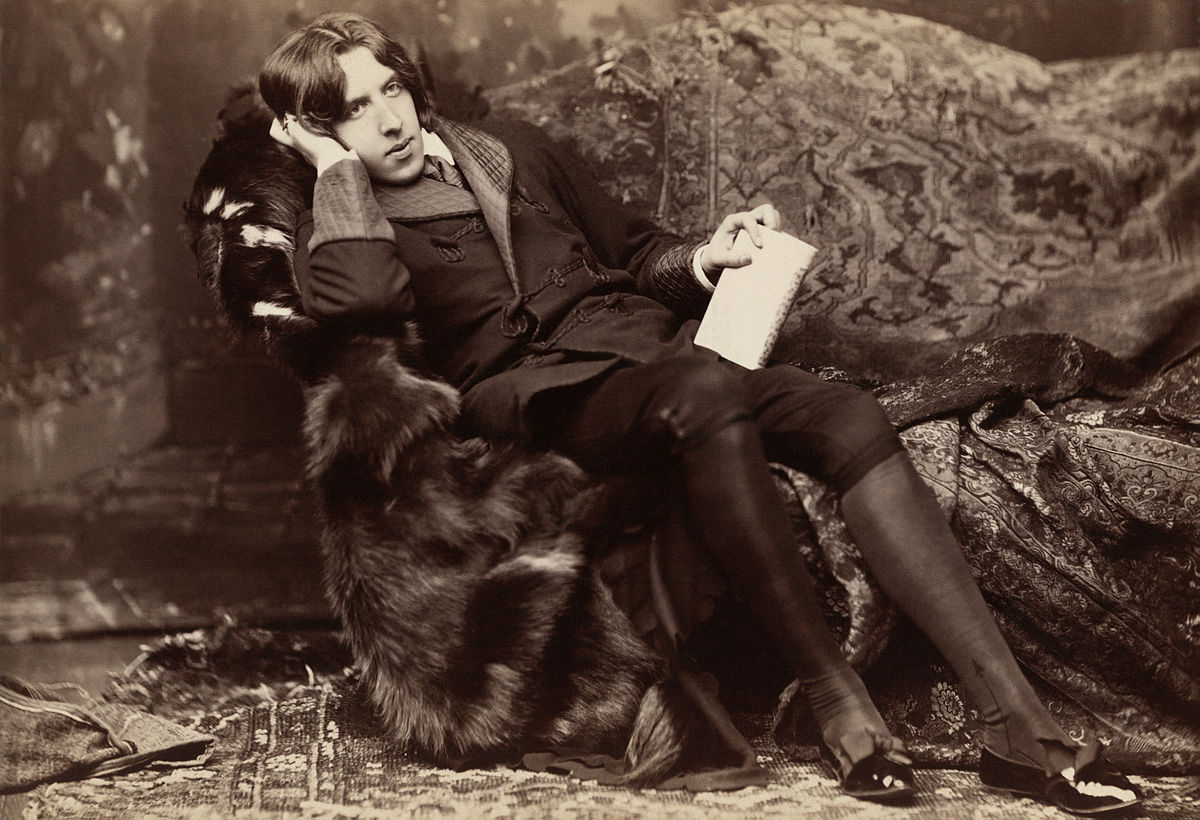
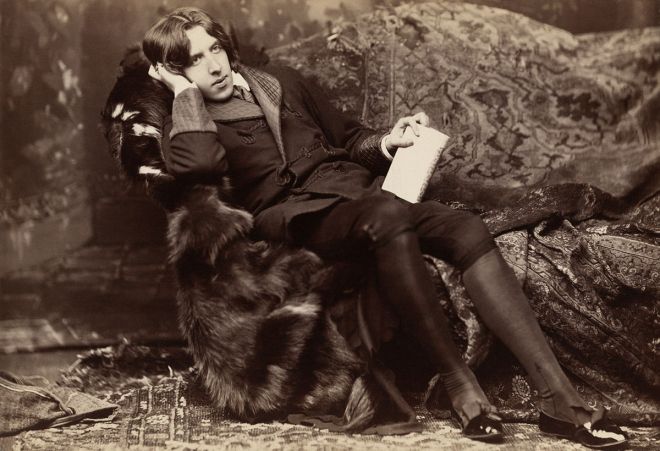
Thursday marked the 160th birthday of Oscar Wilde. To celebrate, TNR republished a classic essay from their archives by George Woodcock, who pondered the writer’s enduring appeal:

Wilde’s broadest appeal lies in the mood of daring thought and enthusiasm from which such insights emerged. It is significant that he had always attracted the adolescent, and in this way has influenced the literary and intellectual awakening of each generation that has followed his own. “I have met no one who made me so aware of the possibilities latent in myself,” said William Rothenstein, remembering his own youth, and many young people who have met Wilde only through his writings have found there an invaluable stimulus at certain stages of their development. This peculiar appeal to the young arises not only from the romantic iconoclasm of Wilde’s ideas, but also from the almost adolescent zeal with which he champions them. … “Disobedience,” he reminds us, “is man’s original virtue. It is through disobedience that progress has been made, through disobedience and through rebellion.” Here the best of the nineteenth century speaks through its most wayward representative.

Richard Ellmann, who wrote a Pulitzer Prize-winning biography of Wilde, details a bit of that rebelliousness in an account of his years as a student at Oxford:

Wilde seems to have enjoyed subverting authorities.

At the examination in Divinity which he had to take at the end of his second year, he went up to the proctor to obtain the examination paper. The proctor inquired, “Are you taking Divinity or Substituted Matter?” (The substituted matter was for non-Anglicans.) “Oh, the Forty-Nine Articles,” Wilde replied indifferently. “The Thirty-Nine, you mean, Mr. Wilde,” said the proctor. “Oh, is it really?” asked Wilde in his weariest manner. (He would talk later of the Twenty Commandments; by miscounting them he discounted them.) The examiner on this occasion was W.H. Spooner, later Warden of New College. Spooner reproved Wilde for being late, to which Wilde replied airily, “You must excuse me. I have no experience of these pass examinations,” meaning that an examination where one simply passed or failed was beneath his notice.

Spooner, himself in orders and a nephew of the Archbishop of Canterbury, reprimanded him by telling him to copy out the twenty-sixth chapter of Acts in Greek. After a time, seeing that Wilde was toiling away industriously, Spooner relented, “You have done enough.” But Wilde continued to write. Spooner said, “Did you hear me tell you, Mr. Wilde, that you needn’t write any more?” “Oh yes, I heard,” said Wilde, “but I was so interested in what I was copying that I could not leave off. It was all about a man named Paul, who went on a voyage and was caught in a terrible storm, and I was afraid that he would be drowned; but do you know, Mr. Spooner, he was saved; and when I found that he was saved, I thought of coming to tell you.”

And of course, it’s hard to mention Wilde without noting his sexuality. Maria highlights his love letters to Lord Alfred Douglas, including this one:

My Own Boy,

Your sonnet is quite lovely, and it is a marvel that those red rose-leaf lips of yours should be made no less for the madness of music and song than for the madness of kissing. Your slim gilt soul walks between passion and poetry. I know Hyacinthus, whom Apollo loved so madly, was you in Greek days.

Why are you alone in London, and when do you go to Salisbury? Do go there to cool your hands in the grey twilight of Gothic things, and come here whenever you like. It is a lovely place and lacks only you; but go to Salisbury first.

Always, with undying love, yours,

Oscar

For more Dish on Wilde, check out this post on the time he (almost certainly) had sex with Walt Whitman.

(Image: Oscar Wilde in New York in 1882, via Wikimedia Commons)

Rembrandt At Last

dish_rembrandt

Critics are raving about the show featuring Rembrandt’s later works at London’s National Gallery:

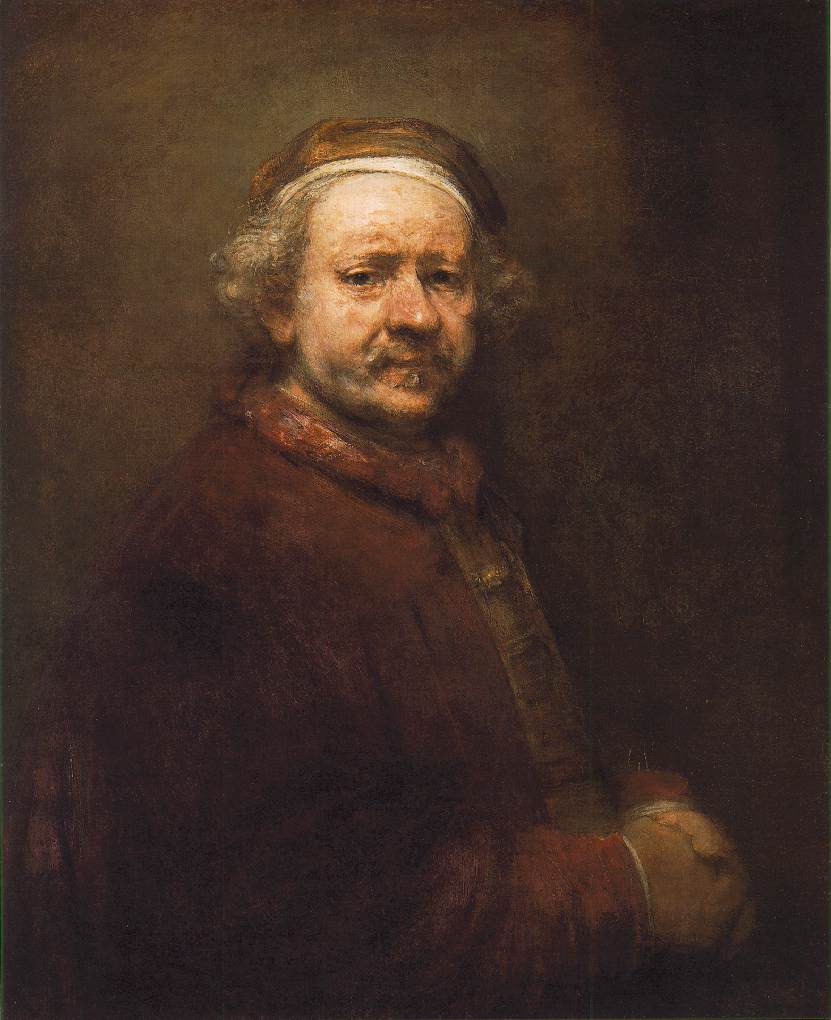
This show is a blockbuster, make no mistake. You know it from the instant you step into the first room, housing four spectacular self-portraits. Dark, lit only by the soft spotlights that illuminate the canvases, it’s as if you’ve walked into a Dutch painting. This room, in which Rembrandts stare unblinkingly out at the spectator—painted between the ages of 53 and 63 (the final year of his life)—boldly proclaim the painter’s unwavering belief in portraying nature in all her pocked, wrinkled, hoary, fragile, unadulterated glory. …

[I]t is the emotional acuity that shines through all these works that makes your heart sing.

Jacob blessing the Sons of Joseph (1656) is such a tender depiction of age and frailty, the hesitant reach of the elderly man for the young child will be recognizable to anyone who has ever known a grandparent. Lucretia (1666), her knife in her hand and blood beginning to stain her shift, rings on a bell to call her family, to alert them to what she has done—she has stabbed herself following her rape by the Roman king Tarquin, rather than live with the shame. Her pallid young face, brow sweating with fear and pain, yet resolute and stiff with sorrow, makes you want to cry.

J.W. at The Economist maintains that “at the heart of everything were, of course, the self-portraits”:

Rembrandt painted himself throughout his career. In his late period he worked repeatedly to catch varying moods of stress and resignation. One self-portrait … done in the final year of his life, shows a man who has lived and knows suffering, who gazes at us with some irony, but with contentment too: sadness leavened by the absolute conviction that this painter knows himself and that only he is able to depict the fact.

It is this that makes late, self-reflective Rembrandt elusive. There was no commercial imperative to paint himself and questions remain. Why did he do it so often? What was he trying to find? Some answers will surely lie in this magisterial National Gallery display. At this stage of his career Rembrandt was often painting, from inside himself, what it is to be human.

In other Rembrandt news, Bendor Grosvernor recently recounted how the number of authentic Rembrandt works has plummeted – from an estimated 600-650 in the first half of the 20th century to around 250 in recent decades:

In 1968, the Rembrandt Research Project (RRP) was established with an admirable objective – to say definitively what was and was not a Rembrandt. But two key factors doomed the RRP’s approach. First, it tried to make attributions by committee, thus allowing indecision and groupthink to reign. It is easier and less risky to say “no” to a picture than to say “yes”. In such situations, the hardest-to-please scholars gain kudos for being “disciplined”, and influence others.

Second, connoisseurship itself fell out of fashion. “New art history” (which became dominant from the late 1970s onwards) believed that connoisseurship was a redundant, elitist practice, and was no longer taught as a key skill for art historians and curators. Social, economic and philosophical generalisation was the order of the day. As a result, the wide and informed debate that should have taken place every time a Rembrandt attribution was questioned didn’t happen. Few ever came to Rembrandt’s defence. As the RRP began to wield its attributional axe, others joined in too, including major museum curators. Rembrandt scholarship became gripped by doubt – if picture X was no longer “right”, then surely pictures Y and Z, which were painted in a similar manner, must be “wrong”.

(Image: Self-portrait at the age of 63 by Rembrandt, 1669, via Wikipedia)

Fake Limbs That Work Like Real Ones, Ctd

Last weekend’s post about mind-controlled artificial limbs left a reader his shaking head:

It frankly drives me crazy to watch videos about developments in myoelectric upper-extremity prosthetics like the one you posted and to read commentators like Victoria Turk “herald this breakthrough.” Yes, I can choose not to watch or read, but I’m an upper-extremity amputee, and I’ve worn a body-powered prosthesis most of my life. So why wouldn’t I let my curiosity reign?

Reports like this are crazy-making because for me, the products they tout inevitably disappoint. Indeed, I probably wouldn’t wear the prosthetic device with implanted electrodes, even in the very unlikely event that I were offered the opportunity. They evoke the hoary sci-fi cliché of the melding of man and machine, and while mildly interesting, they aren’t the answer for the everyday, prosthesis-wearing amputee.

I once tried a myoelectric arm with surface electrodes.

I promptly went back to my body-powered prosthesis, which is fitted with a hook for a terminal device. It’s far lighter, easier to manipulate, more dexterous, and more robust, and it’s not subject to the involuntary opening and closing of the surface electrode prosthesis. It also doesn’t discolor in the sun (that ‘hand’ is a silicon glove, of course) or run out of power.

Look at the video and see what the terminal device (the hand itself) can do: open and close. The end. It’s gross motor movement, at best. Dexterity at the individual finger level is coming, but it’s still a long, long way off (decades, if you ask me) from what you, the ‘handed’ majority, enjoy and take completely for granted. As it is, given the prosthetic hands in this video, give me a hook any day.

Then, there’s the bottom line: price. Who pays for these fantastically expensive myoelectric limbs? My new arm cost $7,500 and is as basic as they come. A myoelectric starts in the tens of thousands of dollars. One with implants? Few know, but I imagine that we’d likely start the conversation at $100,000. Impractical, in other words, for anyone but the well-off or those lucky enough to live where the state funds their prostheses (I live in Canada, and the state paid 65 percent of my artificial-limb cost. My supplementary, work-paid health plan covered the rest, but it would have capped at $3g).

For the working man, the poor, those who live in countries where state health care is weak, or in other words, likely for the majority of upper-extremity amputees in the world, simple, body-powered prostheses are the past and for the moment, also the future.

Forgive the rant, but this touched a nerve, as it were.

The View From Your Window Contest

VFYWC-227

You have until noon on Tuesday to guess it. City and/or state first, then country. Please put the location in the subject heading, along with any description within the email. If no one guesses the exact location, proximity counts.  Be sure to email entries to contest@andrewsullivan.com. Winner gets a free The View From Your Window book or two free gift subscriptions to the Dish. Have at it.

Browse our previous 226 window view contests here.