A Grim Update From Libya

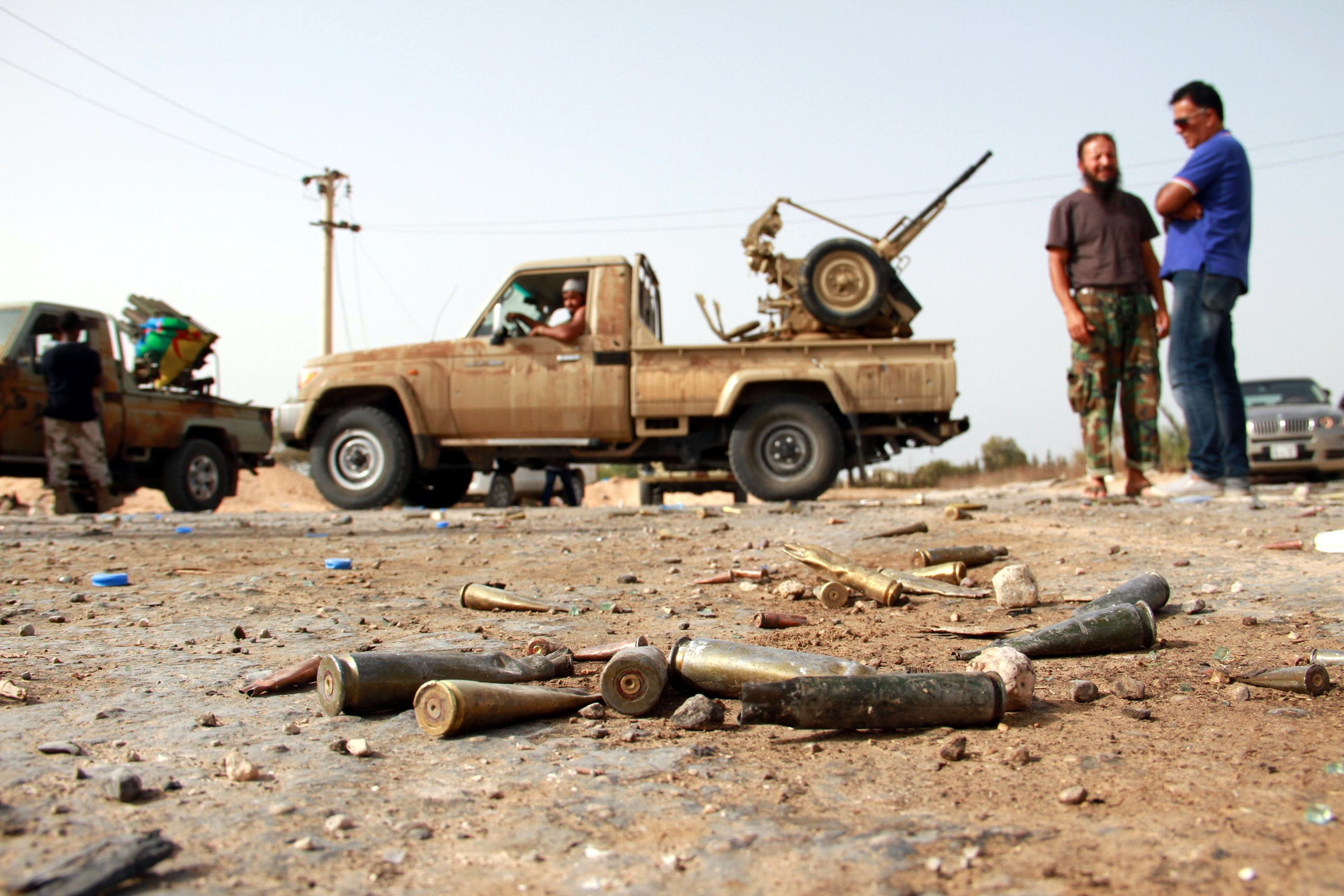
Sign of clashes near 27th Bridge of Tripoli

The situation is increasingly chaotic:

Leaders of the Islamist militias that have been wreaking havoc across Libya have unleashed an army of loyal, unemployed, and mostly uneducated followers to carry out a campaign of intimidation.

They are threatening, kidnapping, and targeting the relatives of politicians and civil society activists. “Militia leaders are now using an army of young people who will carry out their orders without any questions,” said prominent activist Ahmed Ghedan, who had to flee Libya to Tunisia after he spoke out against the militias. These foot soldiers have been bribed into joining the militia-gang culture. For activists, dealing with this army of brainwashed criminals is much harder than dealing with the militia bosses, who are leading from behind. The new recruits are clueless about the intent and consequences of their actions, and their loyalty simply lies with those who pay their checks. Political groups with links to the militias are taking advantage of this chaos to take out their opponents one by one.

These same groups are also targeting journalists and activists, who have found their lives and livelihoods threatened in myriad ways. For example, their movement is being restricted, and they have been unable to travel around or out of the country, since airports are still under the control of the militias. Not only does this threaten their reporting ability – a blow to press freedom – but the detours require them to travel by land through areas in which they could be stopped, identified, and either prevented from traveling or kidnapped.

(Photo: Empty cases, sign of the clashes, are seen near 27th Bridge in Tripoli, Libya on September 24, 2014. By Hazem Turkia/Anadolu Agency/Getty Images)

McEnglish

In an excerpt from The Language of Food, Dan Jurafsky considers the logic of junk-food brand names:

Across most languages of the world, front vowels tend to be used in words for small, thin, light things, and back vowels in words for big, fat, heavy things. It’s not always true, but it’s a tendency that you can see in any of the stressed vowels in words like little, teeny, or itsy-bitsy (all front vowels) versus humongous or enormous (back vowels). Or Spanish chico (front vowel, meaning “small”) versus the gordo (back vowel, meaning “fat”). Or French petit (front vowel) versus grand (back vowel). …

Since ice cream is a product whose whole purpose is to be rich, creamy, and heavy, it is not surprising that people seem to prefer ice creams that are named with back vowels. Eric Yorkston and Geeta Menon at New York University found that participants asked about a hypothetical ice cream named either Frish (front vowel) or Frosh (back vowel) rated Frosh as smoother, creamier, and richer than Frish.

Do manufacturers make use of this subconscious association of back vowels with richness and creaminess? I checked to see whether commercial ice creams (like Häagen-Dazs and Ben & Jerry’s) were more likely to use back vowels in their flavor names, and conversely whether thin, light foods like crackers would have more front vowels in their brand names. The result? Lots more back vowels in ice cream names: Rocky Road, Jamoca Almond Fudge, Chocolate, Caramel, Cookie Dough, Coconut. And lots more front vowels in cracker names: Ritz, Cheese Nips, Cheez It, Wheat Thins, Krispy, Triscuit, Thin Crisps, Chicken in a Biskit, Ritz Bits.

The Best Of The Dish Today

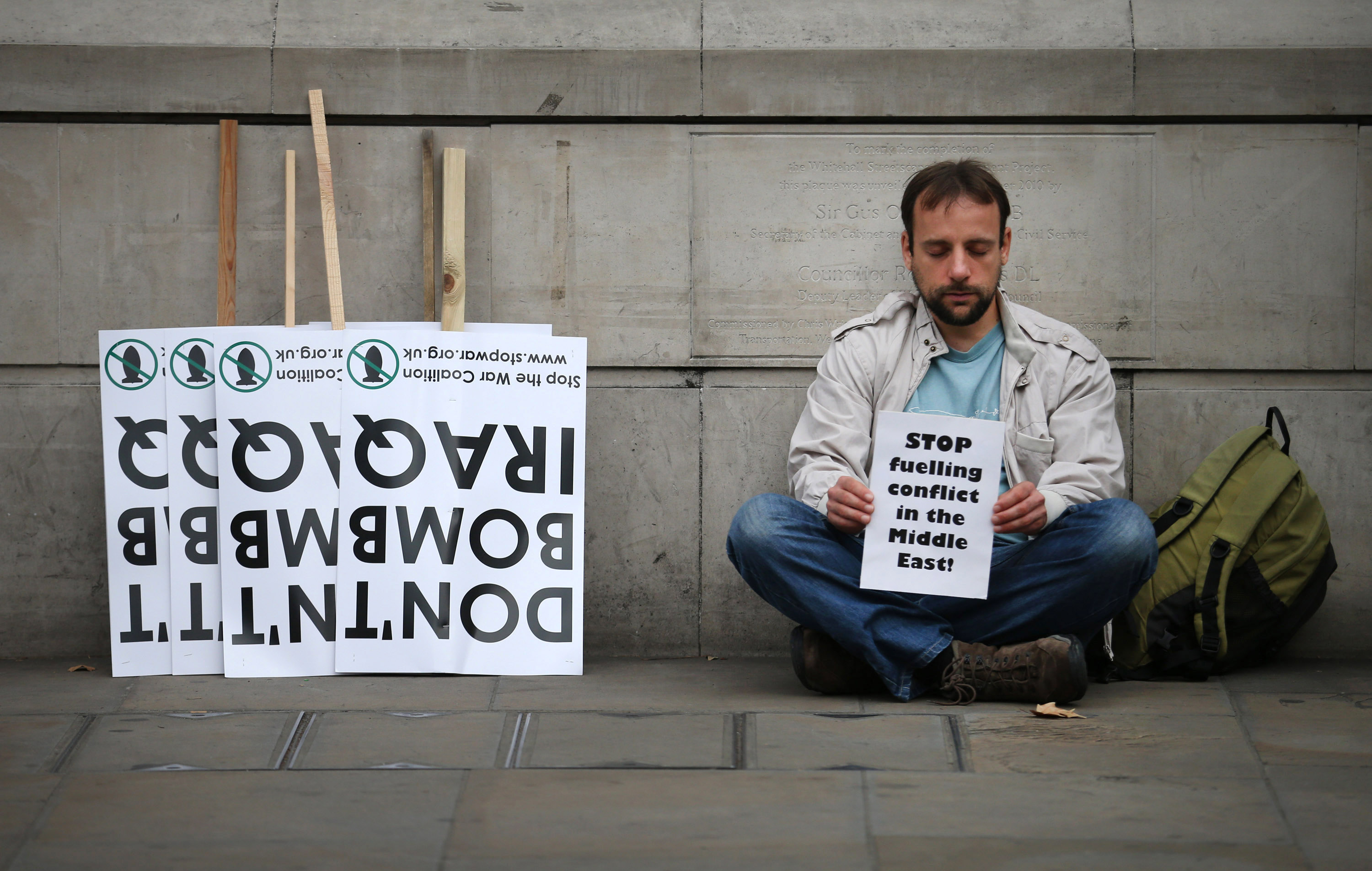
Anti-War Demonstration Outside Downing Street

The debate we had today about the new war in Iraq was one of the reasons I’m still doing this after fourteen years. I get to make an argument and have the smartest critiques come back at me pretty damn quick. It’s like my own personal interactive Wikipedia of ideas. I’m not persuaded by most of the emails, but I have shifted a little bit toward a less deeply bleak mood. I hope Dish readers realize that what matters is not what I have to say but what the Dish itself slowly unearths after my sundry provocations.

And they lead to further questions. Mulling some of this over this afternoon, I think much of my misgivings comes from the fact that I see no way to put “Iraq” back together. I’m not simply emotionally reacting to being so wrong in the early stages last time around; I’ve internalized some of the things I thought I had learned. Among them: sectarianism matters. In 2003, we thought we were going there to depose a dictator and establish a democracy. What Iraqis saw was the removal of a Sunni dictatorship in favor of a Shiite autocracy. To move a country like Iraq from one sectarian column into another is a huge event in the long-running Shi’a-Sunni battleground.

Bill Kristol, among others, insisted that sectarianism no longer existed in Iraq. But we discovered it was by far the most powerful thing in Iraq once the dictatorship ended. Which brings me to a simple point: I don’t believe the Sunnis will ever give up the struggle. With a weak Shiite government, a Sunni insurgency is now permanent. The only way this will be resolved is through a struggle between the Sunni autocracies and Shiite Iran in a contest to forge a new boundary for the sectarian divide. And that struggle will go on for a very long time. The idea that the US can intervene to end this, instead of merely exacerbating it in the medium term, goes against the entire experience of the 2003 – 2011 occupation.

Maybe the forces of global order have to be brought to bear. But my fear is that those forces do not ultimately bring order. They brought about ISIS in the first place. Is this far too pessimistic? Maybe. I wonder if there has been a previous example of a major Middle East state switching its sectarian allegiance from Sunni to Shi’a. But pessimism in the Middle East is often merely realism. And what we’re trying to do now is surreal.

You can follow the full debate here and here and here. My further thoughts here. We covered the suspension of Bill Simmons from ESPN – and the future of independent journalism – here and here. We also noted that the NFL’s current crisis has a real historical precedent. Plus: talking zombies!

Many of today’s posts were updated with your emails – read them all here.  You can always leave your unfiltered comments at our Facebook page and @sullydish. 24 more readers became subscribers today. You can join them here – and get access to all the readons and Deep Dish – for a little as $1.99 month. Buy a gift subscription for a friend here. Dish t-shirts and polos are for sale here.

A reader cheers us up more than he knows:

I just want to say the Dish has been great the last few months. Even during your time off as the world crumbled, we got great insight from the people who guest-blogged and general staff. It was great seeing such a focus on climate change, and really was awesome to get a woman’s touch on the blog and talking about abortion from a perspective different than yours. Since you’ve been back, you’ve rightly been critical of Obama and this nonsense going on in the Middle East. I’m fully inclined to agree with your assessment of his actions, while I hold out a Howler Beagle (tr)sliver of hope that this doesn’t escalate, and he finds some excuse to cut the strikes off after allowing the hawks to get their beaks wet.

But the reason I want to write you most of all, is I’m amazed at how much more I read the Dish compared to other websites I enjoy (Vox, Slate, Salon, Mother Jones). Do you know why I read the Dish more? It’s not because I don’t want to read articles on those sites. I’m not too turned off by the tone of stupid articles that occasionally appear (all publications have articles I find stupid).

No, it’s because of their god damned ADS! I could deal with banner ads. I could deal with rollovers that cover the entire screen until I hit “X” and push the ad back to the top of the page. But now, every single one of those sites runs video ads that launch when you open the site. In the side of the page, a video plays. Guess what happens next? My fucking Internet browser freezes or crashes. As much as I want to read these sites, the people running the sites are making it impossible for me to do so. So impossible, in fact, I find myself reading them less and less.

I work in digital ad sales. User experience matters to us at our site. You know what website has the best interface that I can hang out on all day? It’s the Dish of course. Thank you for being ad-free.

See you in the morning.

(Photo: An anti-war demonstrator sits near Downing Street on September 25, 2014 in London, England. Parliament will vote on possible military action against Islamic State when it meets on Friday. By Peter Macdiarmid/Getty Images.)

Unflattering Photos Are Forever

Maureen O’Connor tried to remove every old, embarrassing photo of herself from the Cloud. She describes the experience as “the most arduous thing I have ever done on the Internet”:

More arduous than navigating Con Edison’s bill-pay website. More arduous than an Obamacare insurance exchange. (The fact that I had to request something like a dozen username reminders, then reset as many passwords, did not help. If Sisyphus lived today, he would be chained to a computer clicking hyperlinks to reset his password and sign back in, all day long.)

In the age of cloud-computing, deleting pictures is like slaying the hydra: Every time you kill one archive, you discover two more. Photos were hiding not just in my iPhone’s Camera Roll, but in every photo-editing, messaging, and dating app I’d ever downloaded. Photos were lingering in ancient text-message threads. Shared photo albums I’d forgotten had been updating without my knowledge. I felt like the Donald Rumsfeld of selfies: There were known knowns (caches I knew to review) and known unknowns (apps I suddenly realized might be saving photos) and unknown unknowns that I could not anticipate but will surely terrorize me later (a fear that the Xbox Kinect motion camera will someday unleash hours of clumsy Dance Central 3 footage keeps me up at night).

I long ago gave up any interest in controlling any aspect of my physical appearance in photographs. Like everything on the web, the only way to stay sane is to let it go. So there are photos of me with a big black beard, a big brown beard, a big grey beard, hunched over in a Subway, lolling about in Dupont Circle, wading into water looking like a fat-ass, and all those ghastly TV screen shots. One of the most popular was taken when I was at a libertarian conference in Amsterdam and got a weird beard-cut under the influence of God knows what, and presto! I was re-branded, even as my eyes could barely open. And then there’s the infamous butt scratch. At some point, I reminded myself that all of this was merely a minor form of mortification and it is good for the soul to endure it. The humiliation is particularly acute in my case because there are many photos of me from 20 years ago and in retrospect, most people would think I was way cuter back then. That 1993 Annie Leibovitz Gap-ad shot hangs over me like some reverse Dorian Gray – forever young, while my actual head turns into a mildly ravaged potato.

But every now and again, someone will say something, and I will even be flattered. It can still happen.

Takedown Of The Day

Larison shows how it’s done:

[Ted] Cruz’s view is more or less what Paul Miller described as “killing lots of people and then going home,” except that the approach Cruz favors would make it unlikely that the second part–going home–ever happens. Cruz really does represent the worst of both worlds in that he wants to intervene in the affairs of other countries while remaining oblivious and indifferent to their political realities. That isn’t a “middle ground” between Bush and Obama or between McCain and Paul, but rather a dangerous and mindless foreign policy of “shoot first and don’t ask any questions.” It’s as if Cruz looked back at the caricature of Reagan that Reagan’s opponents created and chose to become that caricature in real life.

Beinart raised similar concerns earlier this week. Cruz increasingly strikes me as a menace on a national scale.

Face Of The Day

Syrian Kurds fleeing from clashes crossing into Turkey

A Syrian Kurdish woman holds her baby in her arms as she waits at the border line in the Suruc district of Sanliurfa, southeastern province of Turkey, on September 25, 2014. Syrian asylum seekers fleeing the conflict between Islamic State of Iraq and Levant (ISIL) and Syrian-Kurdish Democratic Union Party (PYD) in the Tell Abyad district of Ar-Raqqah are coming to border line in the Suruc district of Sanliurfa, Turkey. By Ibrahim Erikan/Anadolu Agency/Getty Images.

Who Will Fill Holder’s Shoes?

Ed Morrissey ponders the timing of Holder’s resignation:

The White House is apparently worried that a Republican takeover of the Senate will make confirmation of Holder’s replacement very difficult unless Obama appoints someone Republicans like. Resigning now allows Obama to appoint a replacement soon, and Senate Democrats to schedule the hearings during the lame-duck session (and don’t forget Harry Reid’s rule change on filibusters for presidential appointments, too, which expires at the end of this session).

But naming a replacement for Holder carries significant political risks if it happens ahead of the midterms, too; if Obama picks someone too radical, Republicans will jump all over the choice in Senate races, and warn that the Democratic incumbents (or challengers, as the case may be) will be a rubber stamp for confirmation. It really puts the rubber-stamp issue front and center in the Senate races, which is exactly what Democrats who are trying to distance themselves from Obama didn’t need.

Scott Lemieux runs through a handful of possible replacements. The one currently getting the most attention – even for his facial hair:

Some administration sources have suggested that the Solicitor General is already a top candidate to replace Holder. [Don] Verrilli, a corporate lawyer without [Massachusetts Governor Deval] Patrick’s civil rights experience before becoming the nation’s top lawyer, is far from an exciting choice (that mustache notwithstanding). He’d also seem particularly unlikely to demonstrate any independence whatsoever from his boss. But having already gone through the Senate confirmation wringer and as a well-known Obama confidante, he’d be a safe choice who would require a minimum of political capital to get confirmed, something that (for better or worse) has always been important to Obama.

Dylan Matthews provides some background on Verrilli:

Perhaps Verrilli’s most significant private client was the Recording Industry Association of America, and he worked on a number of copyright-related cases on the side of copyright holders. He successfully argued MGM Studios v. Grokster, in which the Supreme Court held that entertainment companies could sue peer-to-peer services like Grokster for copyright infringements committed by their users. Before joining the Obama administration as associate deputy attorney general in 2009, he coordinated an infringement lawsuit by Viacom against YouTube that has since been settled after a number of court rulings in favor of YouTube and its parent company Google.

So it’s not too surprising that copyright reform activists are skeptical of Verrilli.

Waldman expects fireworks at the confirmation hearings:

[T]here’s no doubt that the fact that [Holder] has been involved in so many racial controversies is the key reason why he is the second-most-hated member of the Obama administration among conservatives.

When Republicans get a chance to question the person nominated to replace him, each and every one of those issues is going to come up. The nominee is going to be asked to repudiate everything Eric Holder did. And when that doesn’t happen, Republicans in Congress will turn on the nominee with everything they can muster, in a demonstration to their base that they feel their anger.

In 2009, Holder got confirmed in the Senate by a vote of 75-21. It’s going to be a lot closer, and a lot uglier, this time around.

Relatedly, Harry Enten points out that “the confirmation of an attorney general has been the most contentious of any Cabinet position”:

Attorney general nominees are by far the most likely to face serious resistance. The average number of “no” votes for all Cabinet position is just 4.5. AG nominees average 13 more than that — 17.4 “no” votes — far ahead of labor secretary nominees at No. 2, who have averaged 10.3 votes.

A lot of these averages, though, are skewed by one or two confirmation votes in which the nominee was particularly controversial. For example, defense secretary nominees would average half as many “no” votes if we didn’t count John Tower’s 1989 confirmation — 53 senators opposed him.

That’s why the median column is quite instructive. The median attorney general nominee received 21 “no” votes. That is, the majority of AG nominees since 1977 have faced combative hearings.

Follow all of our Holder coverage here.

What The Hell Is Happening In Yemen? Ctd

YEMEN-UNREST-ANNIVERSARY

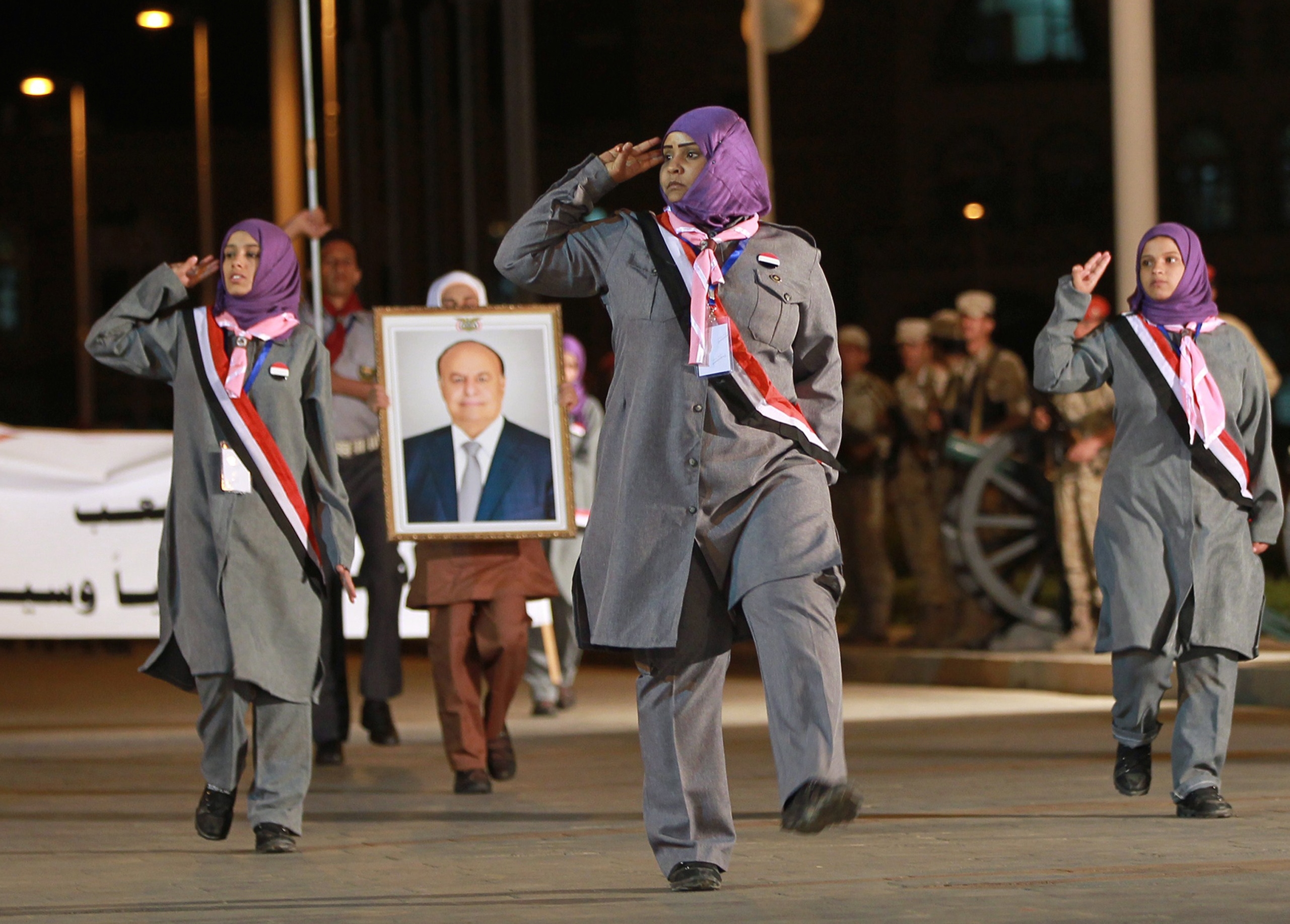
The State Department ordered some US embassy workers to leave the country today, following this weekend’s Houthi takeover of the capital. Adam Baron says the events in Sana’a reveal the myth of the so-called “Yemen model,” which he describes as “a general steamroller of a narrative casting the United States’ intervention in the country as a multifaceted success”:

Yemen’s internationally-brokered transition, we were told, was a model for a region in post-Arab Spring upheaval; the Obama administrations cooperation with the Yemeni government, Obama trumpeted roughly two weeks ago, had lead unparalleled progress in the battle against the Yemen-based Al Qaeda in the Arabian Peninsula (AQAP). Both narratives have come to a head with an increasingly disparate reality as of late, as rebel fighters belonging to the Zaidi Shi’a lead Houthi movement managed to seize virtual control of Sanaa, the Yemeni capital, with little resistance from the Yemeni military, raising immediate questions regarding the utility of hundreds of millions of dollars in US military aid and a US-sponsored program of military restructuring, to say nothing of the viability of Yemen’s already fraught transition. …

Regardless of the ultimate fallout – which remains unclear – the fact remains that such issues as the battle against Al Qaeda in the Arabian Peninsula (AQAP) cannot be dealt with as separate issues from the larger challenge facing Yemen at the moment:

the establishment of inclusive, accountable governance and the shoring up of state authority – which, at the moment, verges on nonexistent – across the country. As the US-supplied military equipment currently being paraded in the streets of Sanaa by jubilant Houthi militants demonstrates, a counter-terrorism centered policy risks missing the forests for the trees.

The UN humanitarian news agency IRIN suggests the turmoil in Sana’a will have “significant” consequences for the Yemeni government’s fight against AQAP:

In recent months the group, the virulent local franchise of the extremist organization, has been stepping up its activities and rhetoric, with at least 20 people killed in attacks on military outposts by the group in August. Earlier this year the military launched a major campaign against AQAP, but it has struggled to make gains; the offensive has not been able to significantly weaken the group, which has even expanded its presence in the eastern province of Hadramawt.

There are also fears that the Houthis’ power play could encourage the Sunni Islam AQAP to increase violence in Sana’a as they seek to fight back against the Shia group.In mid-September a regional leader of Ansar al-Sharia, an AQAP offshoot which does much of its work on the ground, announced that the group was increasing its presence in Sana’a in preparation for a fight with the Houthis. Government officials say the standoff and fighting with the Houthi rebels distracted the military – which is both weak and divided – from the fight. “I think the Salafists and Al Qaeda will use the opportunity to strengthen their presence in Sana’a; that would be logical for them,” said a senior government official. “Al Qaeda are attacking the army and the PSO [intelligence agency] … This is a good environment for Al Qaeda.”

Meanwhile, a reader responds to our previous post with some personal history:

How fitting that this week of turmoil and chaos in Yemen is also the 52nd anniversary of the Great Revolution. Well, there have been government changes, and coups d’etat, and uprisings since then, but this one was the most significant, since it ended the centuries long monarchy and propelled Yemen into a Republican state. There have been subsequent Great Revolutions, and not many of the young people know much about the one in 1962.

The monarch, Imam Ahmad, died Sept 18, 1962, and his son Muhammed al-Badr assumed power. My family arrived in Taiz on September 23, where my father would take up his new post as political officer in the US Embassy. Communication in those olden days meant that, between the time we left Washington, DC (which was in the throes of the Cuban Missle Crisis), then sailed across the Atlantic and the Mediterranean to Athens, from whence we flew to Cairo, and then to Aden (then a British Colony), and then drove a jeep up the rough unpaved roads to the mountain lair of Taiz, a whole revolution had occurred.

Egypt’s Gamal Abdul Nasser, wishing to set up a puppet government that he could control in his conflicts with Saudi Arabia, appointed a Yemeni Army Colonel named Sallal to head the government. The heir Muhammed al-Badr could not get the support of Yemeni Army officers, so he disappeared from Sanaa and escaped to the northeast, near the Saudi border, where his tribal supporters gathered. I heard rumors that al-Badr couldn’t get enough support from tribes because he was believed to be a homosexual, but I’ve found very little documentation to that effect, outside of my own late mother passing along gossip, and the beliefs of Arabists who knew all of the monarchs in the 1950s and 1960s.

That Revolution ended up being a disaster for Yemen and even moreso for Egypt, which was committing 50,000 soldiers a year for the conflict, plus it was very expensive. It was subsequently known as “Egypt’s Vietnam”, since there was never any real resolution, despite the presence of UN Peacekeeping forces.

Sadly, things just got worse for Yemen. The new dictators, especially Saleh, were really mediocre rulers, only interested in extracting graft for their relatives. The Saudi oil boom from the 1970s on meant that working-age Yemeni men were leaving in huge numbers to work all over the kingdom, as well as in the Gulf States, which meant that Yemen’s former excellent agricultural infrastructure collapsed, and farmers resorted to growing more khat and less food. The birth rate was, at one point in the past 20 years, the highest in the world. Urbanization, overcrowding, political chaos, religious chaos, and then add jihad on top of it, and it’s a really sad country.

I’m so sorry to see it deteriorate even further. The Yemenis were the kindest, most pleasant nationality I encountered in my life as the daughter of a Foreign Service Officer, and Yemen had a special place in my heart. It’s devastating to realize that the people of this country are living among such violence and chaos, and there is no end to it in sight.

(Photo: Yemeni girls scouts salute as they take part in a parade marking the 1962 revolution that established the Yemeni republic, in the capital Sanaa on September 25, 2014. President Abdrabuh Mansur Hadi warned earlier this week of “civil war” in Sunni-majority Yemen, vowing to restore state authority, as Shiite rebels cried victory over their apparent seizure of much of the capital. By Mohammed Huwais/AFP/Getty Images)
The Fight Holder Didn’t Pick

Danny Vinik wishes the soon-to-be-ex AG had taken on Wall Street:

Prosecuting the banks with their well-funded legal teams for criminal crimes wouldn’t have been easy. But the DOJ has a lot of legal firepower as well. Holder simply never tried to use it to hold Wall Street executives accountable. That is a major blemish on Holder’s record. Bankers sleep easier at night thanks to his decisions. And when the next financial crisis hitsand when we discover that financial fraud was a major cause of itHolder will deserve blame as well.

Wonkblog explains Holder’s reluctance to tackle the banks:

In defense of his agency, Holder has stressed the difficulty of bringing criminal charges against top-level executives who are rarely involved in the day-to-day operations of their firms. Prosecutors, he has said, need evidence of culpability, the kind of proof that often comes from cooperating witness or whistleblowers. Just last week, Holder called for Congress to increase the whistleblower award as an incentive for Wall Street executives to come forward with information.

Danielle Kurtzleben adds more rationales:

There are all sorts of reasons why the department might have been timid — going up against banks’ well-funded legal defense teams would be tough, particularly when trying to prove wrongdoing to a jury in the byzantine world of finance, says James Angel, associate professor at the Georgetown University McDonough School of Business. In an article in the July/August edition of Politico Magazine, Glenn Thrush writes that a test criminal case against bankers ended in an acquittal, which scared Holder away from actual prosecution against individual bankers.

In addition, the Justice Department simply had a lot of other things on its plate in the last few years: terrorism and voting rights, for example. But if the Obama DOJ simply doesn’t have the manpower to handle all of the problems thrown at it, that may signal that it’s time for a new structure, says one expert.

If You Think Today’s Concussion Crisis Is Bad

1385662546-1

Take a trip to 1905:

Like the recent Time magazine cover featuring a 16-year-old who died playing the game, Americans are starting to ask, “Is football worth it?” Football has been here before, at a time when it was actually much more vicious. In 1905, 19 college football players died from injuries sustained while playing the sport; with five times as many college players participating today, the modern equivalent would be 95 on-field deaths. The San Francisco Call listed off the year’s fatalities: “Body blows, producing internal injuries, were responsible for four deaths, concussions of the brain claimed six victims, injuries to the spine resulted fatally in three cases, blood poisoning carried off two gridiron warriors, and other injuries caused four deaths.”

That year, amid calls for the abolition of football, Roosevelt hosted “an extraordinary private meeting” at the White House with the coaches of the three largest college teams:

Some say Roosevelt gave the coaches an ultimatum: Change the game or I’ll abolish it by executive order. But [historian John J.] Miller says that Roosevelt, characteristically, spoke softly, merely asking the leaders to save the sport by reducing the violence in whatever manner they could figure out among themselves. Given the fact that Roosevelt elevated the issue to the level of a presidential meeting, however, his implication was clear: It was time to fix football. “He didn’t have to say anything like a read-between-the-lines threat,” Miller says. “He wanted to nudge them in a direction.”

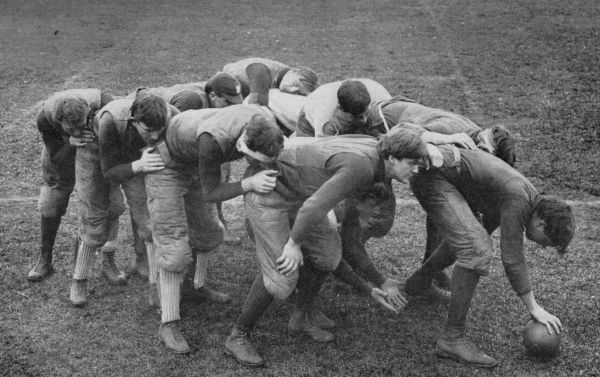
Miss Cellania notes, “Though he never played the game, partially due to his reliance on glasses, Roosevelt was a devoted fan.” She also provides context for the above image:

During the late 1870s, American “foot ball” resembled a combination of soccer and rugby with a riot mob mentality. Almost anything went: Players could carry the ball, kick it, or pass it backward. Starting in 1880, Walter Camp, a Yale player now known as the father of American football, introduced a series of changes to make the game more strategic. Unfortunately, some ended up making the game more dangerous. The most infamous example was Harvard’s “Flying Wedge,” inspired by Napoleonic war tactics: Offensive players assumed a V-shaped formation behind the line of scrimmage, then converged en masse on a single defensive lineman. “Think of it—half a ton of bone and muscle coming into collision with a man weighing 160 or 170 pounds,” wrote The New York Times in 1892.

For lots of Dish on today’s concussion crisis in football, go here. Update from a reader, who reiterates a key point about physics discussed throughout our coverage:

The issue with today’s concussion crisis – and why I personally think the NFL is in very, very bad shape long-term over it – is the intractable problem of F = dp/dt.  Simple physics, really.  Force is the first derivative of momentum with respect to time.  The intractability of the problem is that the object with the momentum in this equation is the player’s brain, and the thing which is rapidly inhibiting the brain’s momentum is the player’s skull.  The inside of their skull.

Football helmets are designed to prevent skull fractures and they do so quite well.  I don’t know that I’ve ever heard of an NFL player getting a skull fracture in my viewing life, from about 1980 to the present.  Maybe there’s been one I can’t remember, and perhaps there have been some in college football, which I have never followed very closely.  But they cannot lessen the kinetic impact of the brain, once it has been given a certain velocity, upon the inside of a rapidly decelerated skull.  Nor can they lessen it when a stationary brain is struck by a rapidly accelerating skull.  I don’t know if there’s any helmet or other device that we could design that ever could.

Lawsuits by former NFL players are such a threat to the league that it has changed its rules and settled for untold billions of dollars.  That an entity with as much power as the NFL flinches at the prospect of these lawsuits gives you an idea of how dangerous they are, but former high school and NCAA players have not sued their leagues and schools for the damage they likely suffered.  Not yet, at least.  I assume that some day they will, and I also assume that it will only take one or two judgments in their favor to create panic among university presidents and school board administrators – and the insurance companies that insure them.  These programs will either be unable to obtain insurance or it will become too expensive for only the richest programs to afford.

Not only that, but a large proportion of parents of high school-age boys will bar them from playing football, seeing the damage the plaintiffs in these cases have suffered.  Schools will no longer field teams and those that do will have a dearth of players to pick from.  The NFL’s talent pipeline will slow to a trickle, the product on the field will degrade, and sponsors and TV networks will balk at the prices the NFL and colleges demand for broadcast rights.

This may take the next 40 years to play out, but unless someone can come up with a solution to the problem of F = dp/dt, I don’t see how the league survives it.  They could of course keep changing the rules, making violent hits ever more rare, but diehard NFL fans are already distressed over the “wussification” of football already.  Much more and they’ll abandon it.  There might be an upstart league that gets started, promising all the hits from the good ol’ days of the NFL, and it will try to indemnify itself from the issue, but the problem is going to be with the high schools and the colleges, not the professional league.

Another physics nerd:

I love your work too much to let you get bamboozled by some bad physics logic. A reader wrote that helmets do not help to prevent concussions because of basic physics. He or she cites the right foundational formula, Newton’s 2nd Law in the calculus-snob form F = dp/dt, then fails to apply it properly.

First, let’s drop the calculus, because we don’t need it to understand this collision problem, and rearrange terms to get delta-p = F delta-t, or change in momentum during a collision equals force (the thing that cracks skulls and concusses) times the time elapsed during the collision. The change in momentum is roughly the same regardless of whether a helmet is worn: brain is moving before collision, brain stops moving after collision. So the left side of the equation is fixed which means the product on the right must also be fixed. The job of a helmet (or airbag, or baseball glove, or iPhone case) is to decrease the average force, F, by increasing the collision time. The right side of the equation must stay fixed, so by whatever factor we increase time we also decrease F.

That explains why a helmet prevents skull fractures: the cushion in the helmet provides a longer collision time which means less average force on the skull at any given instant, and therefore less risk of exceeding the minimum force required to cause a break. Now we just need one more important bit of logic to protect the brain: force transmission, which is really just a combination of Newton’s 2nd and 3rd Laws. The skull, being pretty solid, transmits the force from the helmet directly to the skull. So if the average force on the skull is decreased during the collision, then so is the average force on the brain. QED.

Drop me a line if you ever want some science fact checking. It’s what I do.