Face Of The Day

by Dish Staff

dish_fotdsep6

Sara Barnes provides context:

If you happen to find yourself in Nantes, France, be sure to head to Jardin des Plantes, a large botanical garden. There, you’ll find this adorable topiary sculpture titled Poussin endormi (Sleepy Chick) by French artist Claude Ponti. It features a larger-than-life baby bird whose relaxed pose looks like it’s in the middle of a nap.

The delightful work showcases Ponti’s great skill in crafting a topiary. He makes evenly-textured, rounded forms that are punctuated with metal details like long, thin legs and a bright yellow beak. There are even tiny eyelashes that dot the bird’s closed eyes!

The exhibition runs through October 20th.

(Photo by Jean-Pierre Dalbéra)

A “Meta-Fictional Masterpiece”

by Dish Staff

Critics are raving about Ben Lerner’s new book, 10:04:

Like Lerner’s first novel, Leaving the Atocha Station, 10:04 is a conceptual novel of sorts, by which I mean that it takes what it wants from any number of genres (fiction, poetry, art criticism, autobiography) and corrals the results under the roof of “novel.” Readers and critics less familiar with this approach may spend time wondering about the novel’s taxonomy; those who regularly read and love writers such as Édouard Levé, Hervé Guibert, Violette Leduc, Eileen Myles, Marguerite Duras, W. G. Sebald, Lydia Davis, Fernando Pessoa, Karl Ove Knausgaard, and Roberto Bolaño will likely take 10:04 on its own terms, and appreciate its autofictions, its elegant structure (its action is bracketed by two superstorms, 2011’s Irene and 2012’s Sandy), its meticulously constructed sentences, its deployment of poetic tropes (parataxis, refrain, dialogue that floats and rushes, semantic and syntactical leaps that treat the reader like a grown-up), and its facility in analyzing a wide range of political, cultural, and aesthetic artifacts, from Ronald Reagan’s speeches to artist Christian Marclay’s The Clock to Donald Judd’s sculptures to the ’80s hit comedy Back to the Future (from which the novel’s title derives).

Maureen Corrigan calls the novel “mind-blowing,” appreciating that the plot “is way out of the box”:

When 10:04 opens, our narrator and his agent are celebrating at an expensive restaurant in Manhattan. There, they ingest baby octopuses that have been literally massaged to death by the chef. Our narrator tells his agent that he plans to expand his story into a novel by “project[ing] myself into several futures simultaneously … [by working] my way from irony to sincerity in the sinking city. …”

That, of course, is also an overview of 10:04 itself, the hyper-aware novel Lerner writes for us. Bookended by two historic hurricanes that threatened New York City (Irene and Sandy), 10:04 projects our narrator into several possible plotlines. For instance, he receives a diagnosis of a serious aortic heart valve problem as he also consents to be the sperm donor for a close friend who yearns to have a baby while he also leaves town for a writers’ retreat in Texas. Lerner’s dazzling writing connects and collapses all these storylines into one.

The effect is thoroughly contemporary:

If fiction, as William H. Gass once wrote, is in the business of creating a reality rather than reflecting one, the reality Lerner creates takes the form of collage, a collection of moments that, in combination and repetition, are recuperated by narrative almost accidentally. It’s like the phenomenon of pareidolia, he suggests: the brain’s tendency to make meaning even among randomness, seeing faces in the clouds.  At one point, Alex and the protagonist view Christian Marclay’s The Clock — a twenty-four-hour video montage composed of found footage involving time, by means of which “fictional time [is] synchronized with nonfictional duration.” In its assemblage of “found” text, 10:04 too is written, as it were, in “real time,” both fiercely contemporary — global warming, iPhones, and Wikipedia articles as more than just set-dressing — and a form of time travel, fusing the now of the reading onto the now of the text.

Admitting that “it’s hard to describe a Ben Lerner novel to someone without it sounding kind of terrible,” Emily Temple hails the book as a “meta-fictional masterpiece”:

This novel, which is so much about literary creation and reflection, also feels like the way the mind works: in patterns, in dialogue, in mirrors. Lerner returns again and again to the idea of the world “rearranging itself” around him to allow for new information, new perspectives. We return again and again to certain moments, viewing them through various veils of fiction, of fraudulence. Lerner’s narrator meditates on time flux or lack thereof (the title refers both to Christian Marclay’s The Clock and Back to the Future). The book swirls in on itself, like our minds do. It gets stuck on things. It gets unstuck. It worries. You may not think you need a book to worry for you, but it’s a surprisingly pleasant feeling.

Christian Lorentzen is on the same page:

This is a beautiful and original novel. Lerner’s book is marked by many reminders of death and dying: Ben’s faulty aorta, the ecological turmoil suggested by two superstorms. But 10:04’s prime theme is regeneration, biological and artistic, and it signals a new direction in American fiction, perhaps a fertile one.

The View From Your Window Contest

by Dish Staff

vfywc-221

You have until noon on Tuesday to guess it. City and/or state first, then country. Please put the location in the subject heading, along with any description within the email. If no one guesses the exact location, proximity counts.  Be sure to email entries to contest@andrewsullivan.com. Winner gets a free The View From Your Window book or two free gift subscriptions to the Dish. So have at it, and just be happy you don’t have to compete against these guys:

Browse our previous window view contests here.

Why We’re Doomed (Plus a Plug)

by Alex Pareene

As some of you know, I’m the executive editor of a forthcoming digital magazine (or “website”) headed by Matt Taibbi and published by First Look Media. We have already put together a great team of writers and reporters, with a few more hires yet to come. (If you know a great story editor, story designer, or illustrator, please send them our way.)

Were I better at promotion, I would have some sort of link to share with you, where you could go to be kept abreast of what this project is and when it will launch, but for now, I guess just follow Matt and me on Twitter (or just Matt – he tweets less often, which I’ve increasingly come to see as the single best characteristic of a Twitter user) and we will eventually let everyone know what we’re building in here.

My experience helping to put together a new media organization this summer is what led me to write so much about the press this week, and before I go I’ll share a few more un-asked for thoughts on “the future of journalism.” (FYI, I am actually just auditioning to become an incredibly well-compensated “futurist” media guru consultant/speaker.)

There is, rather suddenly, a lot of fresh money in journalism (and media in general), but much of that money is going to spread the same rather predictable viewpoints, from the technocratic center-left Beltway wisdom of Vox to Bloomberg’s attempt to launch a high-profile new politics brand built around horse-race enthusiasts Mark Halperin and John Heilemann. (Bloomberg will air a daily show hosted by Mark Halperin and John Heilemann, modeled on ESPN shout-fest “Pardon the Interruption,” called “With All Due Respect,” presumably because this FX show already took the name “You’re the Worst.”)

Vox does some good work, and I’m sure Bloomberg Politics will have some good work in it as well, but the supposedly democratizing effect the Internet was supposed to have on Big Media has turned out to be a bit lame.

A few large online publishers — BuzzFeed, the Huffington Post, Vox Media — and massive corporate “legacy” media – like the sites run by ESPN – are the industry’s biggest “success stories,” and for all those players, success came in large part because they already had a lot of money to begin with. I, obviously, am part of that big money media sphere now, though First Look Media has already and will (I hope) continue to distinguish itself by hiring iconoclastic and irreverent voices like Glenn Greenwald (and my boss Matt), while also investing in actual reporting, which, as many would-be saviors of journalism tend to forget, costs quite a bit of money.

That last inescapable fact is the root of my main fear for the future of this industry: Nothing will replace statehouse reporting, because there’s no money in statehouse reporting. Unless you happen to live in the New York tri-state area or near the Beltway, there’s a good chance that hardly anyone is keeping on eye on your state legislature and governor, to say nothing of your city council, mayor, school board, and police department. And no one has come up with a plan to replace the people who used to do this. (Can we get some billionaire to fund a “Teach for America,” but for local journalism?) (I guess I could ask my billionaire.)

On that dour note, I sign off from the Dish. I’d like to thank Andrew Sullivan for letting me play at his site, even though there was always a very real possibility that I would just use this perch to make fun of him. (A friend suggested I begin my guest-blogging stint writing a series of posts strongly urging military intervention in Iraq, and then, gradually, completely reverse my position over the course of the week. I slightly regret not doing this.) And I’d especially like to thank the entire team at the Dish – Chris, Patrick, Chas, and everyone else – who do a bang-up job keeping this operation running smoothly. Please tip your servers.

The Decline Of Housewives As Political Volunteers

by Dish Staff

Women Politics

Seth Masket wonders what effect it has had:

Barry Burden investigates the role women have played in polarization. More specifically, he’s looking at the decline of housewives as party activists and their replacement by more ideologically motivated men.

Why we can’t draw firm conclusions:

This is one of those projects that just screams for more data. Unfortunately, there just aren’t great mass surveys prior to the 1950s, and studies of campaign activists are even more recent than that. … But at least tentatively, we have a plausible account for at least some of the shift in the parties since the 1950s. The parties are different because very different people are working for them now.

A Short Story For Saturday

by Dish Staff

A reader emails: “It’s time to resurrect that one-time Young Adult staple, Shirley Jackson’s ‘The Lottery,'” and we agree. How the story begins:

The morning of June 27th was clear and sunny, with the fresh warmth of a full-summer day; the flowers were blossoming profusely and the grass was richly green. The people of the village began to gather in the square, between the post office and the bank, around ten o’clock; in some towns there were so many people that the lottery took two days and had to be started on June 2th. but in this village, where there were only about three hundred people, the whole lottery took less than two hours, so it could begin at ten o’clock in the morning and still be through in time to allow the villagers to get home for noon dinner.

The children assembled first, of course. School was recently over for the summer, and the feeling of liberty sat uneasily on most of them; they tended to gather together quietly for a while before they broke into boisterous play. and their talk was still of the classroom and the teacher, of books and reprimands. Bobby Martin had already stuffed his pockets full of stones, and the other boys soon followed his example, selecting the smoothest and roundest stones; Bobby and Harry Jones and Dickie Delacroix – the villagers pronounced this name “Dellacroy” – eventually made a great pile of stones in one corner of the square and guarded it against the raids of the other boys. The girls stood aside, talking among themselves, looking over their shoulders at rolled in the dust or clung to the hands of their older brothers or sisters.

Keep reading here (pdf), or check out the story in the collection Shirley Jackson: Novels and Stories. Previous SSFSs here.

Our Freelance Future

by Dish Staff

In the wake of Dish editor Jonah Shepp’s appreciation of freelance war reporters and Steven Greenhouse’s reporting on the temp economy comes Elizabeth Nolan Brown’s analysis of the news (pdf) that a third of US workers are freelance:

When it comes to millennials, we see an even more freelance-heavy generation. About 38 percent of those under age 35 are freelancing, compared to 32 percent of those 35 and older. Millennial freelancers are also more likely to look for job with a “positive impact on the world”—62 percent of the younger group said this was important, versus 54 percent of older freelancers. Finding freelance work that’s “exciting” is also more important (62 percent versus 47 percent).

I’m happy to say that this all squares up with what I wrote about millennial workers for Reason’s latest (and millennial-themed) issue. And I’m also glad someone’s dug a bit deeper into the demographics of freelance workers (with all due respect to the 2004 report, a few little things may have changed since then).

Justin Fox also weighs in:

Back in February, in an exhaustive (and maybe exhausting) look at the numbers on self-employment, I tried to square the grand claims with the pretty inconclusive data by arguing that long declines in old-style independent work in agriculture and small-scale retail and services were probably masking a rise in white-collar independent work. But while there’s some evidence to back this up, such as the Census Bureau’s annual tally of “nonemployer businesses,” which shows a 29% rise from 2002 to 2012, government data on the phenomenon is pretty spotty.

This new survey of 5,052 U.S. adults, conducted by the research firm Edelman Berland in July for the Freelancers Union and Elance-oDesk, is a welcome attempt to fill in the picture. To really get a sense of where we’re going, though, they will need to keep paying for identical surveys for years to come (the back-office firm MBO Partners has been doing this for a narrower population of “independent workers” for three years now). When I asked Freelancers Union founder and executive director Sara Horowitz if that’s the plan, she said yes. “Having real longitudinal data would be very helpful for everyone.”

That Other Arab Country

by Jonah Shepp

8501145481_1586ba7a35_o

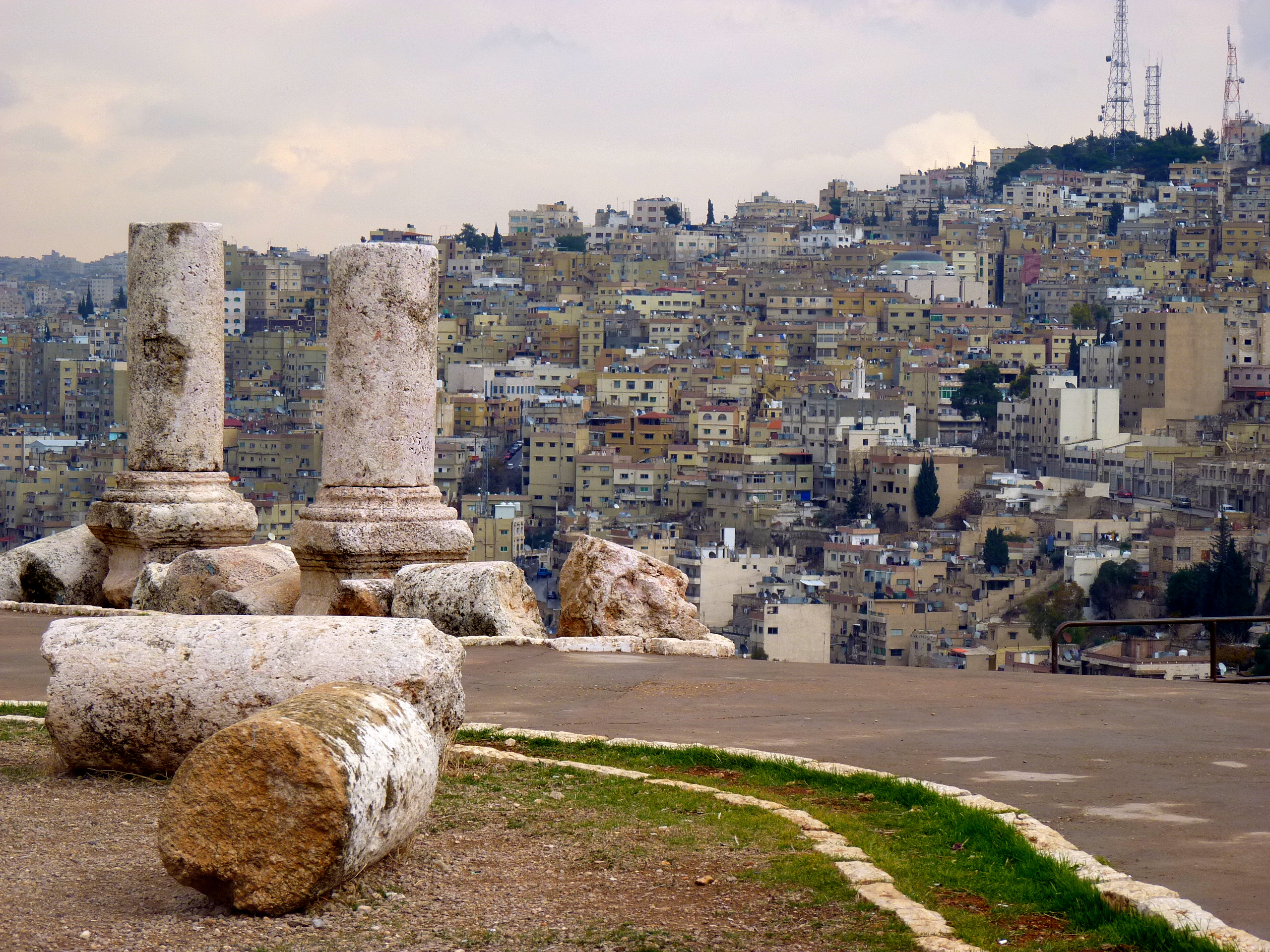
When I tell people I used to live in Jordan, I often get responses like “Jordan? That’s upstate, right?” It doesn’t get nearly as much coverage in the Western press as its neighbors, and Jordanians probably aren’t too upset about that, considering why its neighbors are in the news. Jordan hasn’t experienced a major conflict within its borders since the early 1970s, but squeezed in among three active war zones, it has suffered indirectly from all of the region’s major conflicts, mainly as a dumping ground for refugees. Jordan bore the brunt of the Palestinian exodus that year, and again in 1967. More recently, it took in a huge wave of refugees from Iraq after 2003, and since 2011 has struggled to accommodate a growing population of displaced Syrians, now numbering over 600,000.

It’s a relatively tiny country, but plays an outsized role in the region, so I thought I’d use my guest-blogging stint to give Dishheads a quick look at a place most American don’t hear much about. I reached out to a few friends and former colleagues in Jordan to see how the country is faring today in coping with the Syrian refugee crisis, the threat of ISIS, the complex diplomatic challenges of the Israeli-Palestinian conflict, and day-to-day challenges. Here’s what they had to say.

“Jordan, at the grassroots and official levels, does not fear a face to face confrontation with ISIL,” writes my former boss Mahmoud al-Abed, a managing editor at The Jordan Times, “but the fear is from sleeper cells that might attack soft or hard targets.” He informs me that the General Intelligence Directorate, a domestic intel agency analogous to the NSA and also known as the mukhabarat (literally “informers”), has been making many arrests in connection with these potential sleeper cells. Another JT editor, Rand Dalgamouni, tells me that there have been some demonstrations in support of the “caliphate” in the poorer cities of Maan and Zarqa. Dozens of Salafists have been picked up by the police for expressing support for ISIS or participating in pro-ISIS rallies. She observes that “there seems to be a difference of opinion over the group between the old Salafist leaders and the young ones”, pointing to statements from jihadist leaders “that the young, gullible Salafists have fallen for ISIS’s bullshit”.

My friend M, a politically engaged young woman who asked not to be named here, offers her take on how Jordanians outside political and media circles are talking about the Islamic State, and what the crisis means for non-radical Islamists like the Muslim Brotherhood, which runs Jordan’s largest organized political party but isn’t much beloved by the state:

Average people, who don’t identify with extremism nor do they belong to any one party, worry about their safety (and rightfully so) when they see ISIS taking over parts of the Levant willy-nilly, or murdering people left, right and center. I feel there is a strong counter-movement under cover, but nothing is being said openly about fighting Islamists in Jordan. I think a more accurate way of describing their status quo is that they’re being watched closely (in Maan or otherwise), and anything they do that has the slightest potential of compromising Jordan’s safety and stability is shot down at the very early stages, i.e. they’re being kept under control. I think it’s safe to assume that Jordan’s relationship with Ikhwan [Muslim Brotherhood], or non-radical Islamists, is quite strained right now, not because of a particular thing they did, but because they’re basically the gateway to something bigger than any of us, and that is ISIS.

Jordan, which has been a close American ally since the early years of the Cold War, is also likely among the regional partners the US is counting on to help effect a durable solution to the ISIS crisis. As Obama mentioned in his press conference in Wales today, Jordan is one of the NATO partner countries with which the alliance is looking to bolster its security cooperation. King Abdullah II participated in this week’s NATO summit, and it will be interesting to see what role Jordan plays in the anti-ISIS coalition. I suspect that role will be mostly sotto voce, though, as Amman is generally loath to take public positions that could hurt its relationships with neighboring governments, even those it doesn’t much care for. “I think it’s only a matter of strategy for Jordan to forge a better relationship with NATO,” my friend M. writes, “because if ‘shit hits the fan’ in the region, Jordan will need all the help it can get.”

For three years, Jordan’s government has charted a tricky course on the Syrian civil war, declining to intervene directly out of fear of antagonizing a major trade partner, but also allowing the CIA to train rebel fighters on its territory. The conflict, meanwhile, has wreaked economic havoc on Jordan, reducing its already modest GDP growth by as much as 2 percentage points last year, to say nothing of the human toll of the refugee crisis. Just last week, the country issued another massive aid appeal to help cope with the refugee burden and other spillover effects of the Syrian war.

“As far as I am concerned, I believe that Amman wants neither Assad nor the terrorists to hold the reins of power in Syria,” Mahmoud tells me. “There is no third option now except a dragged-on conflict that might take 10 years with de facto division of Syria. In the face of such a scenario, Jordan’s only option is to defend its security and interests day by day, and think of alternatives to Syria as a key trade partner.”

The Gaza conflict, Rand and Mahmoud tell me, has galvanized support for the Muslim Brotherhood, and most Jordanians seem to agree that the outcome was a win for Hamas and the Palestinian cause in general. Rand writes: “I would say the majority in Jordan celebrates Gaza’s truce as a victory (some blocked the streets at night in celebration), but I disagree–too much devastation, deaths and displacement. It may be a success of sorts for Hamas, since the goal of the war was to obliterate them. I think Jordan’s government wouldn’t have minded to see Hamas destroyed though.”

Meanwhile, as they are wont to do, the regional security crisis has enabled some worrying legal and constitutional changes that threaten to undermine Jordan’s long-drawn-out democratization and curtail civil liberties. Rana Sabbagh highlights two proposed constitutional amendments that would give the king formal power to appoint army and intelligence chiefs directly, rather than acting on the recommendations of his cabinet. Although these amendments won’t substantially change the way decisions are made, Rand explains to me that they are controversial because “if the King starts appointing these two positions without government interference, there is no one to answer to Parliament if the appointed leaders screw up.” A new anti-terrorism law is also raising some concerns about its potential for abuse, which seems to be more a feature than a bug of anti-terrorism laws in general.

This is hardly a complete picture of what’s going on in Jordan today, but I hope it sheds a little light on the view from inside one of the places that has a whole lot to lose from the chaos engulfing the region and much to gain from setting these conflicts on a track toward permanent resolutions. My guest-blogging week is coming to an end, but I’d still love to hear your comments on this, especially from readers in Jordan and elsewhere in the Middle East, so don’t hesitate to write in if you have something to add.

(Photo of Amman by Maya-Anaïs Yataghène)

Where Do Audiences Come From?

by Dish Staff

Ann Friedman searches for the answer in a new book:

In The Marketplace of Attention: How Audiences Take Shape in a Digital Age, James G. Webster, a communications studies professor at Northwestern, takes an exhaustive look at the research about how such audiences form. Or rather, how audiences are formed. It’s tempting to focus on what readers say they want, assuming their decisions are based on those desires. What Webster argues quite convincingly is that even if users do have some idea of what news and information they want (and it’s not entirely clear they do), they don’t know how or where to find it. And they might not have the time to figure it out. So users are more susceptible to the manipulations of algorithms and the biases of their social networks than many would like to believe. People make “pull” decisions—seeking out news about their favorite football team, or the latest from their favorite op-ed columnist—but also can be “pushed” into consuming media. Outside the digital realm, this can mean bundling hard news with soft, or scheduling a new sitcom in between two already popular shows. Online, it often means encouraging clicks with lists of suggested articles and other algorithmically fine-tuned prompts. An audience, in other words, is not something that exists on its own. It must be constructed.

One of Friedman’s take-aways:

Rather than complaining about the proliferation of clickbait, journalists should understand that their audiences’ high-minded desires don’t always align with the choices they make—in part because those choices are nudged by algorithms and popularity. The wealth of information has made editorial judgment more important, not less, because consumers need help to find what’s important and relevant to them. If they aren’t presented with an easy way to keep up on the news from Gaza, they’ll default to clicking on quizzes on checking sports scores. They need our help.