The Short Shrift, Ctd

by Dish Staff

Screen Shot 2014-09-01 at 8.02.25 PM

A reader writes:

I enjoyed Phoebe’s commentary regarding Jezebel’s Disney character nude-rendering piece. However, I don’t agree with the generalized notion that women are purported, or at least depicted, to not care about men’s looks. I think Phoebe slightly underplays the spectatorial role of women that women have obtained in hetero-normative dating. The height thing is a real thing; in my experience, it’s the most likely deal breaker to be found on most online dating websites (it’s certainly the most verbalized one). Perhaps online dating contains a different dynamic than dating in general, but the general gawking, ogling and just plain fantasizing about ideal men and their bodies types seems rather abundant at this point.

Another:

Your post interrupted my work and dragged me out of my “Andrew’s on vacation” lethargy and back into Post Mode. Women and men’s height: really? You’re shocked that women are interested, concerned – no – even fixated on height?

I’m a whopping 5′ 6″ (plus a 1/2″ on a good day).

It’s never bothered me, and I’ve been extremely happily married for 22 years to an incredible, beautiful, powerful, successful woman, but … I oh so remember my high school-college-pre-marriage days of dating. Do you know how many times I was told to my face that I wasn’t tall enough? How many times I was set up on dates only to see the woman’s face fall when she met me saw and I wasn’t (much) taller than her? How many female friends said they would never date men their height or shorter, that is was “weird,” and lived by the mantra of “TALL, dark, and handsome?” (BTW: I’m considered good looking, smart, and have a terrific sense of humor, so it’s not that I’m a hideous looking asocial troll. Just for the record!)

There are SO many women who worry about a man’s height, who want someone to be taller than they are even when wearing heels, who worry what their friends will think. Ah! There it is. If it’s true that only a minority of women really insist on taller men, then I’m sure there is a larger, sizable group that is concerned about what other women would think of them dating someone who was “short.” (I’m not going to address the “Daddy” thing, as I have no idea if needing a “Big, strong man” is related to daddy-fixation or not.)

And, I have to ask you: how many times do you see women walking hand-in-hand with men on the street and yet towering over them? Like the idea that no one complains about Harrison Ford’s love interest being in her 30s while he is in his 70s – it may be  wrong, but no one complains about the “law” that men must be taller than their women. Sorry, but it’s way too common to be a “fetish.” It’s more the rule I believe.

And another:

As a 5’10” straight guy who is single and looking, I think the issue isn’t that women prefer tall men to short men. The issue is what women consider “short.” I saw a recent study that found that 80% of women prefer a man who is 6 feet tall or taller. Well, only 15% of men in the US are that height. Do the math.

Let’s look at male sex symbols who aren’t tall enough for most girls by that standard: George Clooney, Johnny Depp, Brad Pitt, Matt Damon, Daniel Craig, Sam Worthington, James Franco, Colin Farrell, Jeremy Renner, Zac Efron, Joseph Gordon-Levitt, Tom Hardy, Taylor Lautner, Joaquin Phoenix, Orlando Bloom, and Mark Wahlberg – just to name a handful of sub-6 foot “shorties.” And throw in the actor whom many consider the most beautiful man who ever lived: Paul Newman, a sad 5’10”. And that little wimp, Steve McQueen, also 5’10”. And that midget, James Dean, at 5’8″. And all of The Beatles.

I blame the Internet. 6 feet is a nice round number for your online search preferences. At 5’10” (average male height in the US), it never occurred to me that my height could be an obstacle for me – after all, I look down at as many guys as I look up at – until I started online dating. Suddenly a number was put on my height for all to see, and that little 2-inch gap between me and 6 feet apparently makes me far less of a man to the female height-shamers, many of whom probably wouldn’t consider my height an issue if we met in person rather than online.

For a lot more reader input on the subject, check out the long Dish thread, “The Bias Against Short Men“.

(Screenshot from an OKCupid profile)

Can NATO Stop Putin?

by Jonah Shepp

Michael Peck doubts the new rapid response force NATO is proposing to establish in Eastern Europe would be much of a deterrent to Russian aggression:

[A] NATO quick-reaction force is unlikely to actually deter Russia. For starters, a deterrent is only as effective as it is credible. And military credibility is what the new force will lack. Prepositioning mechanized units in Eastern Europe is a possibility. But as U.S. troops discovered when moving from Germany to Bosnia in 1995, it’s hard moving tracked armor long distances. Harder when you have to move fast. It seems more likely that the new force will include light infantry, wheeled armor and special forces—all easier to move by air or road than heavy tanks. While these light troops might have a fighting chance against irregular troops such as Ukraine’s eastern rebels, they wouldn’t stand a chance against a Russian tank regiment. To say nothing of Russian warplanes.

Judy Dempsey also suspects that the new strategy won’t pose much of a challenge to Putin, and that the real threat comes from elsewhere:

NATO strategy still leaves Eastern Europe highly vulnerable. The last thing that Poland, Sweden, Finland and the Baltics want is for Eastern Europe to be turned into a new cordon sanitaire. It would, in fact, create a new, divided and highly unstable Europe, which is why these countries are determined that the EU prevent this from happening. …

What could deter him is his own combustible southern flank and Islamic State, which Russia would be very unwise to ignore. It is these threats that are far, far more dangerous to Russia than NATO’s limited intentions in Poland and the Baltic states. These threats are also more dangerous than the EU, whose openness has hugely profited Russian companies and ordinary Russian citizens. If Putin thinks NATO and the EU are his big threats, competitors and enemies, he hasn’t seen anything yet.

Dempsey alludes to something important here regarding the relationship between the Russia-Ukraine and Iraq-Syria conflicts, and I wish her article explored it in greater depth. ISIS may be a threat to Europe, and even to the US, but it threatens Russia more directly. Could that threat be leveraged to talk Putin down from his war horse? I don’t know, but it will be interesting to see whether the NATO summit touches on it. These crises don’t exist in bubbles. The War on Terror divided NATO, but John Cassidy argues that Putin is helping the alliance overcome its post-9/11 sclerosis:

American officials charged that the Europeans weren’t carrying their weight. (Alliance members are supposed to spend two per cent of their G.D.P. on defense, but few of them do.) European officials muttered about the United States using its hegemony to destabilize things rather than calm them down. Looking ahead, the future of the alliance seemed increasingly uncertain. A 2013 brief from the Atlantic Council warned, “The world is changing rapidly, and if NATO does not adapt with foresight for this new era, then it will very likely disintegrate.” Then, along came the reëlected Putin, singlehandedly providing the NATO members with what all allies need: a common threat. And not only a common one but a familiar one, too: a Russia itching to expand its power and influence.

Meanwhile, Eli Lake highlights some new American sanctions legislation that “would amount to an economic nuclear bomb against the Russian federation” (My goodness. Phrasing!):

The Daily Beast has obtained a draft of proposed legislation from Sen. Mark Kirk, the Republican lawmaker who co-authored the crippling sanctions against Iran. In short, Kirk proposes to do to Russia what he and his Democratic colleague, Sen. Robert Menendez, did to Iran: make it all-but-impossible for any Western bank to do business with the state. If passed, the draft legislation would essentially make Moscow a pariah economy. Specifically, Kirk’s legislation, still circulating among his colleagues, would impose strict limits on any bank that does business with Russia’s central bank to participating in the U.S. banking system. In an interview with The Daily Beast, Kirk also said he supported moves to compel President Obama to support kicking Russian banks out of the SWIFT interbank payment system, a move that would stymie the ability of Russian businesses to efficiently pay foreign companies for goods and services.

Harder sanctions on Russia make sense, and might even be more effective than beefing up the NATO presence in the Baltic countries. My fear, though, is that we will end up with another “all stick, no carrot” approach that does a lot of economic damage without offering the Kremlin a way out. Coercive diplomacy is all well and good, but putting pressure on an aggressive state only goes so far when that state doesn’t see any benefit to behaving more responsibly. After all, we still don’t know for sure that the sanctions we imposed on Iran worked, and every time the nuclear talks have broken down it’s been because the Iranians didn’t think we were serious about lifting the sanctions if they played nice. Rewarding a bad actor for being less bad isn’t exactly justice, but war is much worse.

Modernism’s Not Dead

by Dish Staff

1024px-Catedral_metropol (1)

Sarah Williams Goldhagen lauds this year’s Venice Biennale for its nuanced take on the architectural movement:

In architecture, [Modernism] is commonly understood to have produced a more or less deplorable “international style” that made every office building, elementary school, town hall, and housing 
project into something resembling a taller or shorter flat-roofed factory. Modernism’s trajectory from the 1920s to the 1980s is held to be one in which 
misguided architects cluelessly ambled down this technology-smitten path to its inevitable dead end, when architecture, reinvigorated in part by the Historic Preservation movement, remade itself in an efflorescence of eclectic post-modernism. …

The Biennale’s national pavilions offer a completely different and far more accurate account of recent architectural history. Whether we look at Italy, Finland, or Brazil, we find that modernism was never – 
not in its earliest days in Europe, not in the many countries around the globe to which it eventually spread – an arid, landless, technology-smitten movement that privileged steel frames and concrete connections over the particularities of local 
geographies, cultural traditions, and human needs. Instead, modernism in architecture was akin to classicism: a highly malleable practice that over time produced a wide range of family-resemblance-type styles.

(Photo: Brasília’s Catedral Metropolitana Nossa Senhora Aparecida (1970) via Wikimedia Commons)

Coming Out Is (Still) Hard To Do

by Dish Staff

Vanessa Vitiello Urquhart, who “started coming out” in high school, has trouble telling people about her wife:

“So, what are you doing here in Knoxville?” asks every single person in Tennessee immediately after meeting me. (Apparently my presence here is in need of some sort of explanation.) And, since it’s the truth, there’s really nothing for it but for me to tell them, honestly, that my w-w-w-wife is here for grad school. My, uh, uh, my w-w-wife. My—ulp—w-wife, Cassie. Because, try as I might, I can’t quite say it without stuttering. … Since I believe that my marriage ought not to be more controversial or upsetting than these other topics, I’ve attempted to rid myself of these telltale signs of nervousness. I’ve tried giving myself little pep talks about how no one cares these days, and I’ve even tried practicing the line in front of a mirror. But when those moments come, I just can’t seem to lose the stutter.

A Generational Split Personality

by Dish Staff

Jesse Walker pans Millennials Rising by Neil Howe and William Strauss:

A generation, Strauss and Howe wrote, is “a society-wide peer group, born over a period roughly the same length as the passage from youth to adulthood (in today’s America, around twenty or twenty-one years), who collectively possess a common persona.” They accepted the existence of exceptions and edge cases, but they insisted a core persona is there.

Contrast that with Karl Mannheim’s “The Problem of Generations,” a 1923 essay that has become a touchstone for sociologists studying generational change. Like Strauss and Howe, Mannheim defined a generation not just by when its members were born but by the events that shaped their worldviews in their youth. Unlike Strauss and Howe, Mannheim did not write as though those events shape an entire generation the same way. Instead he wrote of different “generation units” with different reactions to their formative experiences. The Napoleonic wars, he elaborated, produced “two contrasting groups” in Germany, “one that became more and more conservative as time went on, as against a youth group tending to become rationalistic and liberal.” (For a more recent example, consider the ways different American boomers reacted to the upheavals of the 1960s.)

For Mannheim, those opposing units still belong to the same social cohort: “they are oriented toward each other, even though only in the sense of fighting one another.” But they did not have the “common persona” that Strauss and Howe imagined.

Old School

by Dish Staff

Teacher_and_children_in_front_of_sod_schoolhouse._Woods_Co.,_Okla._Terr.,_ca._1895_-_NARA_-_516448

Elizabeth Green contends that the US lags behind educational powerhouses such as Finland and South Korea in part because “our school system is earlier”:

It dates back to the 19th century, and in many ways the one-room schoolhouse is the model of our system, where an adult is working alone. One adult. Japan, South Korea, Finland – these were systems that were completely reformed after World War II. There is a lot more modern or contemporary thinking that has gone into these systems. We are still living with the legacy of an early 19th century education system.

Decentralization is another factor:

Those countries also have very strong national governments, so they set standards for the schools and have a much greater power at the level of implementation. Our federal government only controls 13 percent of local school funding. Through incentive programs, the Obama administration has actually been very successful at getting local schools to do things because they want every last dollar they can get. And yet once they promise to do something like evaluate teachers in new ways, there’s actually nobody watching at the implementation level to make sure they do it in a smart, strategic way. We have these top-down reform priorities and the federal government is successful in getting schools to adopt them, but there’s no quality check on that process. That’s fundamentally different than other nations.

Another fundamental difference: the US population is 2.5 times larger than Japan’s, 6 times larger than South Korea’s and a whopping 58 times larger than Finland’s, with far more regional diversity than all three. That vastness certainly makes educational reform more difficult for the US than other national governments.

(Photo: Teacher and children in front of sod one-room schoolhouse in Woods County, Oklahoma Territories, ca. 1895 via National Archives and Records Administration and Wikimedia Commons)

Weed Growers Of The Corn

by Dish Staff

Several years ago, while inspecting a cornfield,  Kaitlin Stack Whitney discovered five marijuana plants “each standing about eight feet tall, in the middle of our survey plot and bursting with buds ready to harvest.” Apparently, this isn’t unusual:

Once a corn field is planted and herbicide applied, many farmers don’t return to a given field until harvest time. The biotechnological and labor-saving innovations that have reduced costs for corn farmers mean that literally no one walks into the average corn field during the growing season. Which presents a major opportunity for marijuana growers. Indeed, entire Internet forums devoted to sharing tips for growing marijuana in other people’s corn fields have sprouted. …

Growing marijuana in cornfields keeps it better hidden than growing in remote forests, albeit in plain sight. Helicopters and thermal imaging are only able to detect large patches of marijuana by color difference. So marijuana growers use GIS technology and handheld GPS devices to spread out their growing into distributed networks of small patches, like the one I stumbled across. This tactic also reduces the risk of losing one’s marijuana crop: If one patch is found and destroyed, the rest of the plants are in other locations, known only to the GPS and the marijuana grower. Man-made patterns in natural areas are a telltale sign of marijuana to enforcement agencies; growing it in corn renders that giveaway moot, as everything is in rows. The growing conditions for marijuana are also better in cornfields than remote forested land: Every input that corn farmers carefully measure and apply to maximize their crop growth—fertilizer, herbicide, irrigation—benefits the marijuana plants, too.

Putting Women In A Light Box

by Dish Staff

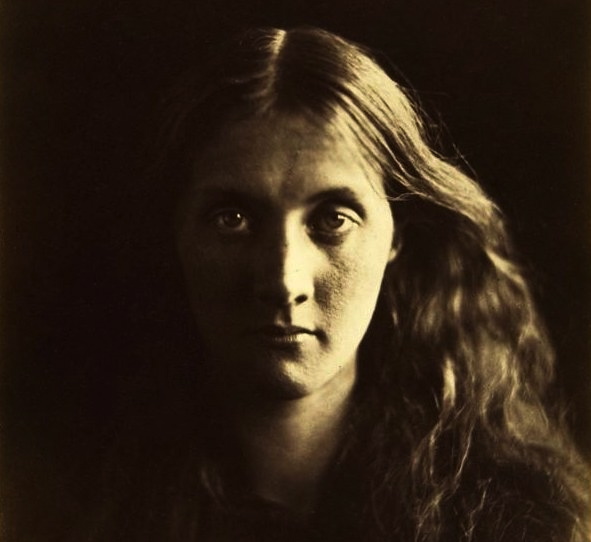
Cameron_julia_jackson

Alex Heimbach suggests that books such as Women Photographers: From Julia Margaret Cameron to Cindy Sherman perpetuate a “gender ghetto”:

The book collects the work of 55 practitioners, from pioneers of the form to contemporary photojournalists. [Author Boris] Friedwald also includes short bios of each artist as part of his goal to present “the variety and diversity of women who took – and take – photographs. Their life stories, their way of looking at things, and their pictures.” Sounds admirable enough. Yet it’s impossible to imagine an equivalent book titled Men Photographers: From Eugène Atget to Jeff Wall. Male photographers, like male painters, male writers, and male politicians, are the default. The implication, intentional or not, is that no matter how talented, female photographers are women first and artists second.

Ideally, endeavors like Friedwald’s serve to illuminate lesser-known artists, who may have been discounted because of their gender (or race or sexual orientation or class). But more often such exercises become a form of de facto segregation, whether it’s a BuzzFeed quiz on how many of the “Greatest Books by Women” you’ve read or a Wikipedia editor isolating female novelists in their own category. These projects are often undertaken in a spirit of celebration, but their thoughtlessness generally renders them pointless at best and misogynistic at worst.

(Photo: Julia Jackson by Julia Margaret Cameron, 1867, via Wikimedia Commons) Update from a reader:

Lovely post.  What your readers may not know is that Julia Jackson was the mother of Virginia Woolf, one of four children from her second marriage.  Julia died in 1895 at the age of 49, when Woolf was 13, precipitating the first of Woolf’s terrible battles with what was probably a severe a bipolar disorder.  Before she became the perfect “angel in the house” Victorian wife to two husbands and the mother of seven, Julia was famous for her beauty and frequently photographed by her illustrious and pioneering aunt, Julia Margaret Cameron.  Needless to say, Woolf, author of A Room of One’s Own, would have been the first to object to relegating the work of women to a separate (but equal?) category.

Writing Tip: Don’t Write

by Dish Staff

Overcoming writer’s block took years for Bill Hayes, who advises that “not writing can be good for one’s writing; indeed, it can make one a better writer” (NYT):

Then I woke one day, and a line came to me. It didn’t slip away this time but stayed put. I followed it, like a path. It led to another, then another. Soon, pieces started lining up in my head, like cabs idling curbside, ready to go where I wanted to take them. But it wasn’t so much that pages started getting written that made me realize that my not-writing period had come to an end. Instead, my perspective had shifted.

Writing is not measured in page counts, I now believe, any more than a writer is defined by publication credits. To be a writer is to make a commitment to the long haul, as one does (especially as one gets older) to keeping fit and healthy for as long a run as possible. For me, this means staying active physically and creatively, switching it up, remaining curious and interested in learning new skills (upon finishing this piece, for instance, I’m going on my final open-water dive to become a certified scuba diver), and of course giving myself ample periods of rest, days or even weeks off. I know that the writer in me, like the lifelong fitness devotee, will be better off.