France Cracks Down On Free Speech

Quelle surprise!

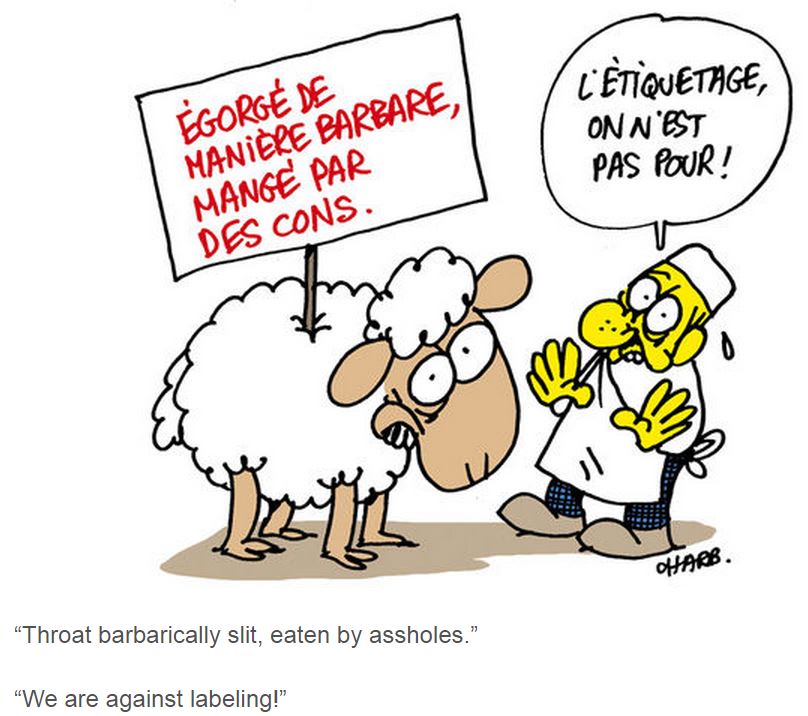
[Dieudonné] was detained for questioning on Wednesday for writing on his Facebook account he felt “Charlie Coulibaly,” a word play combining the widespread “I am Charlie” vigil slogan and the name of one of the three gunmen.

And he isn’t the only one. According to the AP, French authorities said “54 people had been arrested for hate speech and defending terrorism in the last week.” So the French are arresting people for committing acts of free speech just after a massive rally defending those principles.  Dieudonné, for one, claims he is being misunderstood:

What he had meant to say on Facebook, he said, was  that “I am considered like another Amedy Coulibaly when in fact I am no different from Charlie.” His original statement on his Facebook page was as follows:

“After this historic, no legendary, march, a magic moment equal to the Big Bang which created the Universe, or in a smaller (more local) way comparable to the crowning of the (ancient Gaullish king)  Vercingétorix, I am going home. Let me say that this evening, as far as I am concerned, I feel I am Charlie Coulibaly.”

The very idea that one can be arrested for writing such a thing is appalling – but par for the course in much of the West. Josh Lowe provides background on Dieudonné:

Originally called Dieudonné M’Bala M’Bala, the comedian is the son of a French woman and a Cameroonian man. His jokes have frequently got him into trouble, in particular those deemed to be anti-Semitic. Last year, the French government issued a strong recommendation to local authorities across France to cancel his scheduled shows, on the grounds that he had repeatedly violated French laws against inciting racial and religious hatred. In 2003, he appeared on French TV dressed in orthodox Jewish garb, performing a Nazi salute and crying “Israheil!” He makes fun of the Nazi atrocities in a song called Shoananas which mixes the French word for “holocaust” with that for “pineapple.” He began his career in the early 90s as part of a controversial double act with the Jewish comic Elie Semoun. Since the pair went their separate ways, however, Semoun has criticised him, writing (in an open letter to Libération in 2004) that: “You and me, we made fun of everyone, people loved it… but that’s why I feel so betrayed. You are not the same Dieudo.”

Tom Reiss profiled the comedian back in 2007:

“Dieudonné is the spokesman, the godfather, the icon of a new kind of anti-Semitism,” Alain Finkielkraut, the philosopher and memoirist of Jewish identity, told me. “It is an explicitly anti-racist anti-Semitism, which inverts traditional anti-Semitism by asserting that the Nazis today are in fact the Jews. The idiom of anti-Semitism is no longer racism; it is now anti-racism. Dieudonné’s followers say that they don’t hate Jews, they hate Jewish racism. They say that Israel is like Nazism, like apartheid.”

So of course he must be punished! Matt Welch expects the arrest to backfire:

Any speech made criminally taboo will thrive unchallenged in the shadows, rather than be refuted and ridiculed out in the open. If you’re alarmed by Dieudonné’s infamous quenelle gesture, how popular do you think it will get if he’s behind bars?

Très. Greenwald uses the arrest to question the motivations of Charlie supporters:

It is certainly true that many of Dieudonné’s views and statements are noxious, although he and his supporters insist that they are “satire” and all in good humor. In that regard, the controversy they provoke is similar to the now-much-beloved Charlie Hebdo cartoons (one French leftist insists the cartoonists were mocking rather than adopting racism and bigotry, but Olivier Cyran, a former writer at the magazine who resigned in 2001, wrote a powerful 2013 letter with ample documentation condemning Charlie Hebdo for descending in the post-9/11 era into full-scale, obsessive anti-Muslim bigotry).

Despite the obvious threat to free speech posed by this arrest, it is inconceivable that any mainstream western media figures would start tweeting “#JeSuisDieudonné” or would upload photographs of themselves performing his ugly Nazi-evoking arm gesture in “solidarity” with his free speech rights. That’s true even if he were murdered for his ideas rather than “merely” arrested and prosecuted for them. That’s because last week’s celebration of the Hebdo cartoonists (well beyond mourning their horrifically unjust murders) was at least as much about approval for their anti-Muslim messages as it was about the free speech rights that were invoked in their support – at least as much.

Although I find Glenn’s refusal to admit the link between terror and Islam befuddling, I do think he is right to point out the double standards of some of the free speech crowd. Once you establish limits on free speech, the consistency of their application matters. To have different rules of censorship for anti-Semites and anti-Muslims is to deepen the conflict even further. Sullum rightly fears that the criminalizing of speech “teaches people that the use of force is an appropriate response to words and images that offend—a principle that is poisonous to free speech and conducive to violence”:

Since the French government has announced that offending the wrong people by saying the wrong thing in the wrong context can be treated as a crime, it would not be surprising if some people, convinced that their rights had been violated and that they could not count on the courts to vindicate them, resorted to self-help.

Other countries that criminalize “hate speech,” including Germany, the Netherlands, the U.K., Sweden, and Canada, are likewise sending a dangerous message that offending people with words or images is akin to assaulting them with fists or knives. Instead of facilitating censorship by the sensitive, a government truly committed to open debate and freedom of speech would make it clear, in no uncertain terms, that offending Muslims (or any other religious group) is not a crime.

Amen. And particularly religion, which should be open to the most merciless attacks and denunciations and mockery precisely because of the grandeur of its claims and the power of its social authority. A true believer is relieved to see the all-too human institutions of church or mosque or synagogue ridiculed, precisely because those institutions are prone to corruption on a vast scale. And faith should easily survive mockery. Jesus himself encouraged his followers not to be dismayed when they are maligned or disparaged because of their faith. It is not something Christians should avenge; it is something that at times Christians should even seek. But even a spiritual figure like Jesus was ignored for millennia once Christianity got worldly power. When Muhammed himself authorizes a hit on someone who insulted him and Allah, the journey is going to be considerably longer.
“No Basis To Believe That An Incident Occurred”

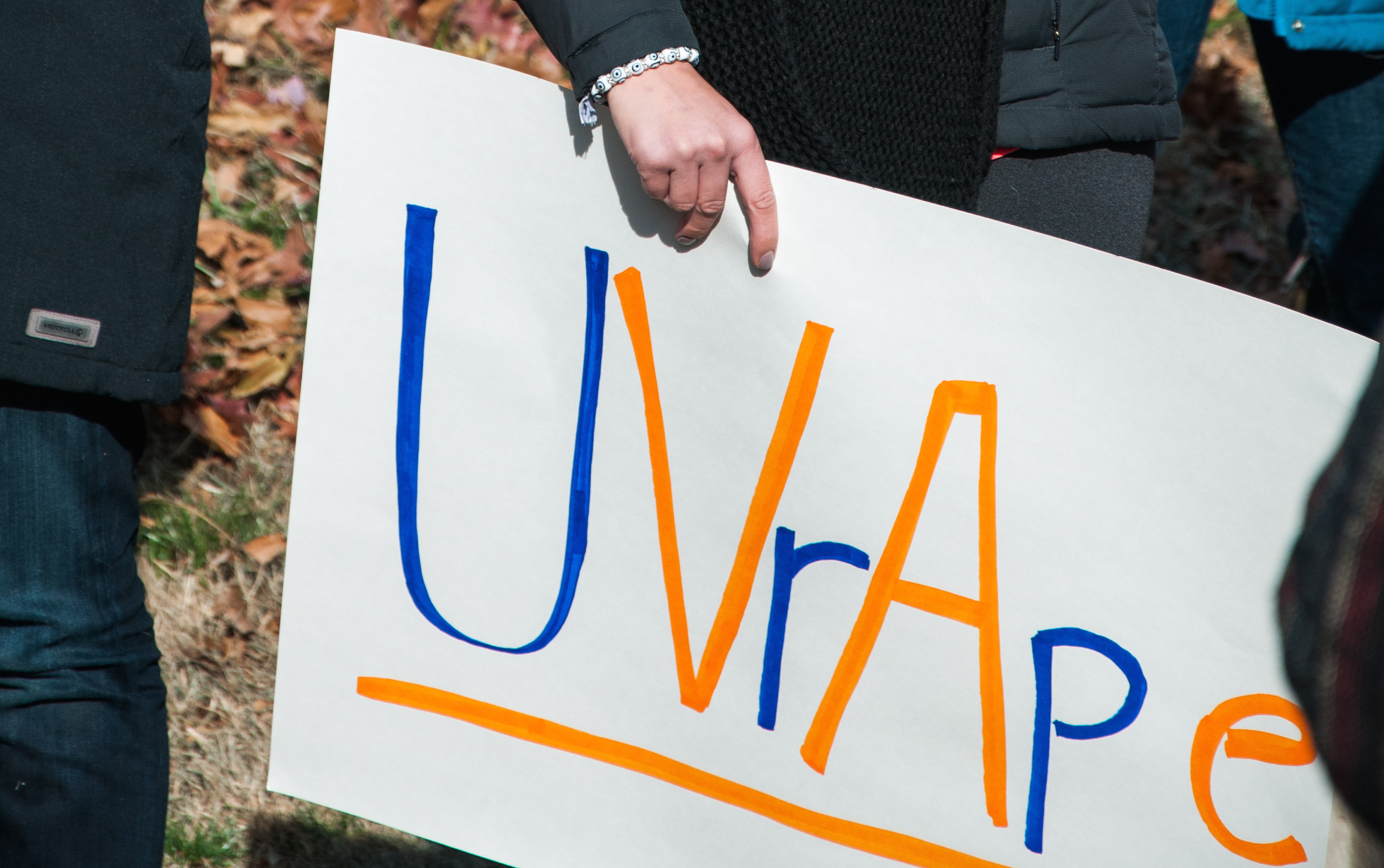
UvrApe

Phi Kappa Psi, the frat accused of gang rape by Rolling Stone, is no longer suspended:

As the spring semester started at UVA, the school reinstated its chapter of Phi Kappa Psi, saying police have cleared the frat, for now. Charlottesville police Captain Gary Pleasants confirmed that while they’re still investigating the case, “We found no basis to believe that an incident occurred at that fraternity, so there’s no reason to keep them suspended.”

Friedersdorf feels that the frat deserves apologies:

The fact that Phi Kappa Psi’s membership was falsely accused of this crime does not mean that most rape accusations are false–the opposite is true–or that there isn’t a need to reduce the number of rapes and sexual assaults that happen on college campuses, even granting that some activists overstate the number of victims.

It should be possible to push for reforms that would reduce the too-high number of rape victims while advocating against rushes to judgment in individual cases. All credible rape accusations should be investigated. Before the results are in the accuser should have the private support of friends and various resources. But nothing is gained when angry mobs with no particular knowledge of a case gather en masse to shout epithets at people who weren’t even accused as individuals.

Amen, Conor. Erik Wemple points out that the “awful Rolling Stone story continues to drive reforms”:

To diminish the chances that drugs will get dropped into drinks, the changes ban kegs, require “sober brother monitors” at parties and ban “pre-mixed drinks, punches, or any other common source of alcohol.” Examples of actual journalism rarely land with such impact.

But some frats are resisting the new rules:

Alpha Tau Omega and Kappa Alpha have released nearly identical statements refusing to sign U.Va.’s new requirements that fraternities alter their activities following a two-month suspension on social activities. The new rules require a certain number of fraternity brothers to be sober and present and different places around the house and set limits on what kinds of alcohol can be served and in what containers.

I think that’s a  splendid idea. At Burning Man, a highly organized party, each camp had designated sober members every night on watch for trouble or accidents or anything else. If 60,000 partiers in the Nevada desert can organize that, I don’t see why a frat cannot. Eliza Gray wonders if the reforms will do any good:

[I]t appears that UVA may not be doing much to enforce the reforms—a reflection of the tricky nature of governing private organizations on campus. According to ABC News, UVA spokesman Anthony de Bruyn said the university would not provide staff to monitor the fraternities to because they are privately owned. “The University will work closely with Greek leadership to support them in seeking compliance with the new practices by their members,” de Bruyn told Time. “Should violations be brought to the University’s attention, as has been the case it the past, the Dean of Students Office will investigate, and any appropriate next steps would be based upon the details of each case.”

The lack of formal monitoring raises questions as to whether the reforms will have any teeth.

(Cropped photo from a protest against Phi Kappa Psi by Bob Mical.)

What Is Paul Ryan’s Game?

Earlier this week, he ruled out a presidential run. Ezra sees this as a power play:

If Ryan was running for president in 2016 — or if Republicans even thought he might run for president in 2016 — they would assume his work at Ways and Means was really preparatory work on behalf of Ryan 2016. Worse, his fellow potential candidates would have to distance themselves from Ryan’s ideas, as he would be a threat to them. But now Ryan can work to shape all their agendas simultaneously, and they will have to compete for his favor — they’ll want both his endorsement and, if they win, his help.

Ryan has been better at understanding how much power ideas can have in American politics than pretty much any member of Congress in recent years. This shows that he’s got a clear-eyed view of how much power congressional process holds, too. If he was running for president in such a crowded field, odds are that he probably wouldn’t win — and, thus, neither would his ideas. But now that he’s forsworn any interest in the presidency while making clear he’s going to really use the power of the House Ways and Means Committee, no Republican will be able to win and govern without adopting Ryan’s ideas.

Reihan has mixed feelings about Ryan’s absence from the race:

He would have been the candidate of ideas and would have pressed his Republican rivals to think seriously about upward mobility and the need to modernize America’s safety net, among other issues conservatives tend to neglect.

Yet there is a silver lining in Ryan’s decision not to run, which is highlighted by the sweeping tax overhaul just proposed by House Democrats. Though Ryan is more open-minded and intellectually serious than we have any right to expect from an elected official, on tax policy, at least, he’s failed to come to terms with how the country has changed. A supply-sider to the bitter end, Ryan has made it clear that his first priority in reforming the tax code is to lower tax rates for everyone, including high-earners. In a conversation this summer with John McCormack of the Weekly Standard, Ryan insisted that “the best way to help the economy is to reduce rates across the board” and that “if you want faster growth, more upward mobility, and faster job creation,” lower tax rates are “the secret sauce.” Well, this is a secret sauce that is past its expiration date.

Who Does Torrenting Hurt? Ctd

Everything is Free from Rain Perry on Vimeo.

Gillian Welch’s lovely 2001 lament is as relevant now as ever. Released at the height of Napster, Welch saw the plug pulled on musicians’ ability to make a living, and correctly predicted what’s happening now – the music business is circling the drain. The single is available for purchase at CDBaby (cdbaby.com/cd/rainperrymarkhallman). (iTunes is coming.)

A former freeloader writes:

Here I was, having just done my little trick to get around The Dish’s pay-meter, only to read the piiiissed artist’s argument … and now I’m a subscriber.

You can join him and 30,462 others here! Another subscriber:

I used to torrent a ton. I used to download 17 TV shows a week, plus movies, plus an artist’s entire discography at once. I don’t anymore. I have Hulu, which has freed me from my physical TV and even my cable package. I have Pandora and Spotify for my music needs. I have Netflix for on-demand movies and DVD rentals. So I don’t need to pirate anymore. I pay less for all of that than I did for cable (which I had to offset my pirate guilt). And the Industries are still getting screwed! It’s a win/win for me!

Another former pirate:

Forgive me if I don’t shed a tear for the music and film industries; they brought this on themselves. Like the rest of the Napster generation, growing up I pirated everything – music, movies, sofware, you name it.  The thing is, now that I’m older, with a job, I’d rather just pay and get something legit. I can afford it, and in theory it should be less hassle. The ease of buying music on iTunes was the main reason I started paying money for things.

Having said that, trying to be a good citizen with TV and movies is the worst. Three brief anecdotes:

  1. At Christmas I discovered my girlfriend has never seen It’s a Wonderful Life, and decided to remedy that.  So I loaded up iTunes on my laptop, paid for a rental copy, then went to beam it onto our TV.  Only “You cannot play this movie as your TV does not support Copy Protection”.  Great work fellas.  You know what movie can be played on my TV? The pirated version I downloaded 10 minutes later.
  2. The very same girlfriend, it also turned out, hadn’t seen Wall-E.  Well that won’t do; a day or so later I went to rent a copy.  Unfortunately, Wall-E is only available for purchase – at three times the cost of a rental – which is hardly worth it when we only want to watch it once.
  3. A year or so ago a friend recommended I check out Battlestar Galactica; so I went to buy it online.  The cheapest digital version I could find was £50.  The same thing on DVD was £19 from Amazon. In what universe is the digital copy of a TV series significantly more expensive than a physical copy requiring warehouse space and shipping costs?

Three times there, I was at the brink of spending some money and was thwarted by the stupidity and greed of the TV industry.  Legit copies of things cost more than they should, are burdened with horseshit copy protection and other restrictions, or aren’t available at all.  The only way to beat piracy is to offer a superior product, and right now, that isn’t happening.

Another reader on how people are willing to pay for content as long as the industries can get with the times:

When I think about buying data, I want it to be mine. If I want to store backups, that shouldn’t be technically illegal. If I want to compress a movie so it fits on my portable drive, I should be able to. Ditto if I want to, for example, add a subtitle track, delete an audio track I don’t need, or even just trim a movie down to a selection of favorite clips. I have been stopped from doing all these things, with data that I paid to own, by Digital Rights Management. And then there are horror stories about purchased content simply disappearing from your devices one day, or becoming inaccessible because that old DRM format is no longer supported.

I recently paid a high price for an indie film because it was available online in a DRM-free format (independent distributor). Felt great. And kudos to the music industry for already caving on this one.

Another looks back to the early days:

I think it is worth looking back at how torrenting started.  Namely Napster.  At that point in time you did not have an option to buy a song.  It just didn’t exist.  I could go out and buy a shitty CD with one good single for $18.99 (while the much more expensive to make cassette only cost $9.99) or I could do without.  So I had pricing that didn’t make sense and the inability to buy the product I wanted.  You bet I stole a lot of music.

Eventually Apple started the iTunes store.  I could buy at a reasonable price what I wanted and I did.  Furthermore, there seemed to be an explosion of smaller labels (probably always existed but I just wasn’t aware) that put out albums that played solid from beginning to end.  I bought lots of those.  Most the people I know who stole music went legit once there was a decent way to do so.  Today I subscribe to Spotify, buy music on iTunes if it isn’t on Spotify, and occasional buy a physical album if I love it or want to support the artist.  Also, I go to shows, which I think is still the best form of revenue for an artist.

I do, however, torrent (okay, steal) TV shows, live sports, and occasionally movies.  I always look to buy first but sometimes it just isn’t an option. Want to watch ESPN? Subscribe to cable.  Want to watch Game Of Thrones? Subscribe to cable and HBO.  Want to watch Battle Star Galactica?  Go buy physical copies of the seasons.

Napster put pressure on the record industry to change their model, and now torrenting is putting pressure on the television and the movie industry to do the same.  I subscribe to Netflix and I’m an Amazon Prime member.  You can bet if HBO is offered at a reasonable price I would buy that as well.  With the football playoff I would probably pay to watch ESPN as a standalone (cheaper than a bar tab I’m sure). I would buy lots of things if I did not have to maintain a cable subscription or go to movie theater to get them.

Follow the whole thread here. More of your emails soon.

Is My Husband’s Not Gay Really Worth Getting Upset About?

The trailer for TLC’s special, which aired on Sunday:

Zack Ford provides some background:

When TLC announced it would air a one-hour special called My Husband’s Not Gay about Mormon men with same-sex attractions who pursue relationships with women, the LGBT community was understandably upset. Over 75,000 signed a petition calling on the network to cancel the show because it “promotes the false and dangerous idea that gay people can and should choose to be straight in order to be part of their faith communities.” GLAAD President Sarah Kate Ellis denounced the show as “downright irresponsible” and potentially harmful to young people.

Juzwiak defends the show:

I did not find the [“same sex attraction” (SSA)] guys aspirational, just like I don’t find the majority of people on reality TV aspirational.

I think much of what they do is ridiculous and the show is peppered with winking moments that reveal the underlying absurdity of their situation (“I don’t feel like I fit the mold of guys that are attracted to other men by other then my deep and abiding love for Broadway show tunes and my attraction to other males. Those are the things that are kind of gay about me,” says the single guy, Tom). We read story after story about the failure of reparative therapy, and if you know anything about sexuality, you know how suppressing it is a setup for failure.

But look, what My Husband’s Not Gay presents is an actual phenomenon within American culture, an imperfect way that people negotiate themselves with their religion.

But Vanessa Vitiello Urquhart finds fault:

The fact that most gay men do not experience attractions to the opposite sex, or feel that their sexuality is fluid, is not addressed. It is, however, referenced briefly by a guy identified as Shaun, who spends a few seconds acting as a pro-gay foil for the show’s protagonists. Shaun says that he feels no attraction to women, only to be told that his lack of ”familiarity with the equipment” doesn’t mean that he could never learn to enjoy sex with a woman. In that moment, when a gay man’s assertion that he is not and could not be attracted to women is challenged, the pretense that the show deals only with these particular men’s individual experience evaporates. They do not believe that they are different from gay men because they are also attracted to women; they believe that it is possible for gay men to become attracted to women, and they explicitly say so.

Emma Green levels a different sort of complaint:

The show is a pre-packaged TLC special on yet another group who “live their lives a little … differently,” offering neither the courtesy of creative production nor moments of true feeling. This makes it it very difficult to find empathy for these men, who believe God made them to be flawed, nor the women who love them. Watching My Husband’s Not Gay is like the passive emotional experience of wandering through a low-budget carnival, gawking at the sideshow freaks for a short moment before losing attention and moving on.

Moze Halperi denounces the special:

For every Mormon man who vocally discusses his attraction to men in order to move on to lead a normative existence, there’s a Mormon kid who might bravely come out as “gay, not SSA”, and who might be subjected to bigotry: getting excommunicated from the Church and ostracized by his families. This is the other story that My Husband’s Not Gay isn’t interested in showing. It won’t present actual tragedy, because it wishes to be amorally lighthearted.

J. Bryan Lowder, on the other hand, has difficulty getting outraged:

[M]y main reaction to the show was, to be honest, something of a shrug. Over the course of the hour, I did not see an advertisement for ex-gay therapy (despite some of the men’s involvement in related organizations), nor really a suggestion that “curing” homosexuality is even possible. (These men are very clearly still homosexuals, by the strictest definition, in theory if not practice.) What I did see was a model of living and relating to others that felt not only alien, but also pointlessly difficult and inadvisable—and yet, in no way offensive or illegitimate.

We can read all kinds of condescending things into the psychology and motivations of these men (and, for that matter, their wives and dates), but in the final analysis, it’s not really for us to judge the validity of how consenting, informed adults build their lives or pursue happiness: Gays should know better than most where that logic leads.

On this, I’m with Lowder. I watched the show and was riveted by it for a simple reason: it shows a big shift in social and religious attitudes toward the reality of gay people in religious faiths. I don’t expect their path forward to be linear; and I found the show oddly affecting. These people deserve to have their story told as well.

How Widespread Is Islamophobia?

Brendan O’Neill calls it a “myth”:

Sure, some folks in Europe and elsewhere no doubt dislike Muslims, just as other losers hate the Irish or blacks or women. But the idea that there is a climate of Islamophobia, a culture of hot-headed, violent-minded hatred for Muslims that could be awoken and unleashed by the next terror attack, is an invention. Islamophobia is a code word for mainstream European elites’ fear of their own populations, of their native hordes, whom they imagine to be unenlightened, prejudiced, easily led by the tabloid media, and given to outbursts of spite and violence.

The thing that keeps the Islamophobia panic alive is not actual violence against Muslims but the right-on politicos’ ill-founded yet deeply held view of ordinary Europeans, especially those of a working-class variety, as racist and stupid. This is the terrible irony of the Islamophobia panic: The fearers of anti-Muslim violence claim to be challenging prejudice but actually they reveal their own prejudices, their distrust of and disdain for those who come from the other side of the tracks, read different newspapers, hold different beliefs, live different lives. They accuse stupid white communities of viewing Muslims as an indistinguishable mob who threaten the fabric of European society, which is exactly what they think of stupid white communities.

Dreher is on the same page:

Are there people who hate Muslims simply for being Muslim? Sure. Are there people who respond to Islamic terrorism through acts of bigotry, even violence, against mosques and Islamic institutions? Yes. And shame on them all. Hunt them down, arrest them, throw them in jail.

But there are no anti-Muslim mobs massing in the streets. The mob that massed in the streets of Paris and other European cities on Sunday to protest jihad did not disperse and burn down mosques on their way home (unlike mobs in Muslim countries that torched embassies to protest Muhammad cartoons a few years back).We are not them. We once were, and are capable of becoming them again, as the history of the West shows, but we are not them now.

Friedersdorf counters:

My notion that Islamophobia, or irrational fear of mainstream Muslims, is a recognizable feature of post-9/11 America is informed by the several cities that have attempted to stop the construction of mosques, state attempts to ban sharia law as if we’re on the cusp of being ruled by it, fears that Barack Obama is a secret Muslim, profiling of Muslim college students for no reason other than their religion, the anti-Muslim training materials that the FBI somehow adopted and used after 9/11, and dozens of Muslims I’ve interviewed who say that other Americans are more fearful of them than was the case prior to the September 11 attacks.  …

There has not, of course, been a mass violent uprising against Muslim Americans, or British Muslims, or Australian Muslims, or French Muslims. The implication that it’s therefore irrational to worry about anti-Muslim bigotry or backlash is bizarre. A spike in hate crimes is enough to justify concern and attempts to preempt—surely it’s better to nip the impulse to exact group revenge on Muslims in the bud rather than to act only if a catastrophic backlash has already taken shape!

Another Cause Championed By Charlie

charlie-animal-rights

From the in-tray’s most frequent and passionate advocate of animal rights:

I give Charlie Hebdo the benefit of the doubt on allegations of racism and any other accusation of lack of compassion. Why? Because it has shown more compassion than virtually everyone else in the world when it came to the abuse of the most defenseless individuals: “Charlie Hebdo is the only French newspaper that dedicates a weekly column to animal rights, tackling issues such as bullfighting and foie gras.”

One example above. Nine more here.

The Showdown Over Keystone, Ctd

A reader huffs:

Regarding Dave Roberts’ comment that blocking Keystone “will show that there’s life in the climate movement”, I beg to differ.  Keystone is a symbolic victory without any substance; if the moral victory is to “show that people can mobilize around climate with the numbers”, congratulations, you just won a victory that has zero effect on climate change.

I’ve been an environmentalist since I was a kid roaming the mountains of New Hampshire and the backwoods of Maine, but I cringe at supporting any environmental group that is focusing on Keystone.  Today my charitable giving instead goes to groups like the Nature Conservancy that are actually working to protect forests, make coral reefs more resistant to climate change, and otherwise finding practical solutions instead of spending their resources fighting moral victories. If Roberts’ “climate movement” wants me to join them, start picking battles that actually matter – write a bill that sets national renewable standards, or that creates long-lasting incentives for non-carbon energy sources, or something that ACTUALLY MAKES A DIFFERENCE for the climate, and I’ll happily join the cause.

Another counters:

You quote a reader who says “Believing that stopping XL will benefit the environment is just sticking your head in the oil-sands.” Then you allow Dave Roberts to counter, with his claim that such commentators “apply wonk logic to an activist problem.”  Not at all.  If fact, it’s the “wonk logic” of your reader that’s off track.

Max Auffhammer, an environmental economist at UC-Berkeley, did the math last March and estimated that “not building Keystone XL will likely leave a billion barrels worth of bitumen in the ground.” All that bitumen simply cannot get out of Canada fast enough on trains.  If Keystone XL goes down, a lot of CO2 will never enter earth’s atmosphere. McKibben isn’t right on everything, but he’s at least partly right on this.

Another:

To the reader who asked for a dose of reality when it comes to building Keystone; yes, this Liberal will give you that the oil will come out regardless of whether or not Keystone is built.  Since we’re being honest, time for some honesty from the other side as well. First, stop saying this is about jobs.  Why do the oil companies want the pipeline? Because it lowers their cost to get the product to market.  The money they would pay to thousands of truck drivers and train companies they now get to keep.  Yes, there will be some temporary construction jobs created, but once the pipeline is built, it will take very little people to manage, so the net impact will be less jobs.

More honesty?  Whether Keystone is built or not, it will have zero impact on oil prices and therefore no impact on everyday Americans.  Even more?  Yes, the likelihood of a spill is less for the pipeline versus rail/truck, but the pipeline is carrying significantly more oil and a leak can go undetected for some time, so the chance is less but the impact is much, much larger.

So the last reality I’d like to reader to face is this has nothing to do with helping middle/lower class in this country.  This is about people in the oil industry making as much money as they possibly can.

On that note:

As you’re covering the Keystone XL activity today/this week, I hope you’ll include an important factor in these votes and debates that isn’t getting covered: the $721 million the energy industry spent in the 2014 midterms to put industry-friendly politicians in Congress.

It’s no surprise that congressional leaders are so focused on passing Keystone their first weeks back in Washington. Despite this clear connection, most of the Keystone coverage has not highlighted how much the fight for this bill on the House and Senate floors is directly tied to the fundraising dollars that politicians received from big oil. Here are few valuable resources for you if you’re looking into how big oil has influenced the movement on Keystone:

  • How oil and gas lobbying money and election donations have influenced votes in Congress, like promoting offshore drilling or stopping clean energy initiatives, that go directly against the interests of the majority of Americans;
  • How coal, oil, and gas industries have worked behind the scenes to encourage easing restrictions on private money in elections and to strip disenfranchised communities of their voting rights

The New Charlie Issue Sold Out

Charlie Hebdo #1178 January 14, 2015

This embed is invalid


Within minutes:

At a news kiosk across from Paris’ city hall early on Wednesday morning, there was already a line before sunrise at 7:15 a.m. – 45 minutes before the newsstand was supposed to open. The stand opened at about 7:50 a.m., and by around 7:55 a.m., there were as many as 40 people in line. By 8:15 a.m., the newsstand had sold out.

The newsstand’s owner automatically handed people copies of Charlie Hebdo when they got to the front of the line, knowing they weren’t looking to buy any other newspaper. He wouldn’t sell more than one copy to each customer — “I don’t have enough,” he explained.

And good luck trying to buy the magazine in the US:

The short answer: finding a copy outside France on Wednesday will be tough. But that may change in the days that follow, especially if there are additional printings.

However, you can browse the issue using the above PDF, which Prachi Gupta passed along. Tracy McNicoll reads through it:

Under extraordinary circumstances, the surviving staff of Charlie Hebdo has produced an issue that is perfectly true to type: Defiant, uncompromising, funny, sometimes bittersweet, but with nary a hint of the melodramatic. None of the murdered staffers are left out and, just as they would have liked, no target for ridicule is spared.

Ruinous Beauty

State-Hospital-1

In an interview about their work photographing abandoned buildings, Rusty Tagliareni and Christina Matthews respond to a question about the ethics of what they do and why the things they capture are more than just “ruin porn”:

To us this is history. Perhaps at its most raw, but also at its most accessible. We have spoken at school seminars from elementary to high school levels, about the importance of photojournalism. If you can gain someone’s attention, through interesting photos and videos, then you open them up to learning. It’s really that simple. Case in point:

a while back we spoke at a high school, one of the topics was about documenting abandoned asylums. Of course abandoned asylums are of interest to teenagers, they’re mysterious and full of ghost stories. The imagery of decaying buildings is a hook, upon which you attach information. Well, by the end of the 45 minute session the class knew all about the history of mental healthcare, evolution of modern day pharmaceuticals, and the de-institutionalization of the country. We know this because after each session we heard people in the hallway telling others about not only the abandoned buildings, but why they became abandoned, and why there are no longer a need for such large facilities. They all listened to what we spoke about, and they retained the knowledge because it was linked with things that piqued their interest. Our website is just a history lesson wrapped up in some cool aesthetics.

(Photo of Pilgrim State Hospital in Long Island, NY, at one time the largest psychiatric institution in the world. Used with permission of Antiquity Echoes)