How The Dutch Mourn

NETHERLANDS-UKRAINE-RUSSIA-MALAYSIA-CRISIS-VICTIMS

Russell Shorto admires it:

The Dutch are strikingly different from Americans in their gut reactions to things. When hit with a national shock, Americans will almost instinctively reach for ideology or ideals. People saw 9/11 as an assault on “freedom.” The Dutch have an innate distrust of ideology. You could relate that to World War II and their experience under Nazism, but it goes much farther back. It has something to do with being a small country surrounded by larger countries that have had long histories of asserting themselves.

It also stems from the fact that Dutch society grew not out of war against a human foe but out of the struggle against nature. Living in low lands on a vast river delta, the Dutch came together to battle water. Building dams and dikes and canals was more practical than ideological. For better or worse, the Dutch are more comfortable with meetings and remembrances than with calls to arms.

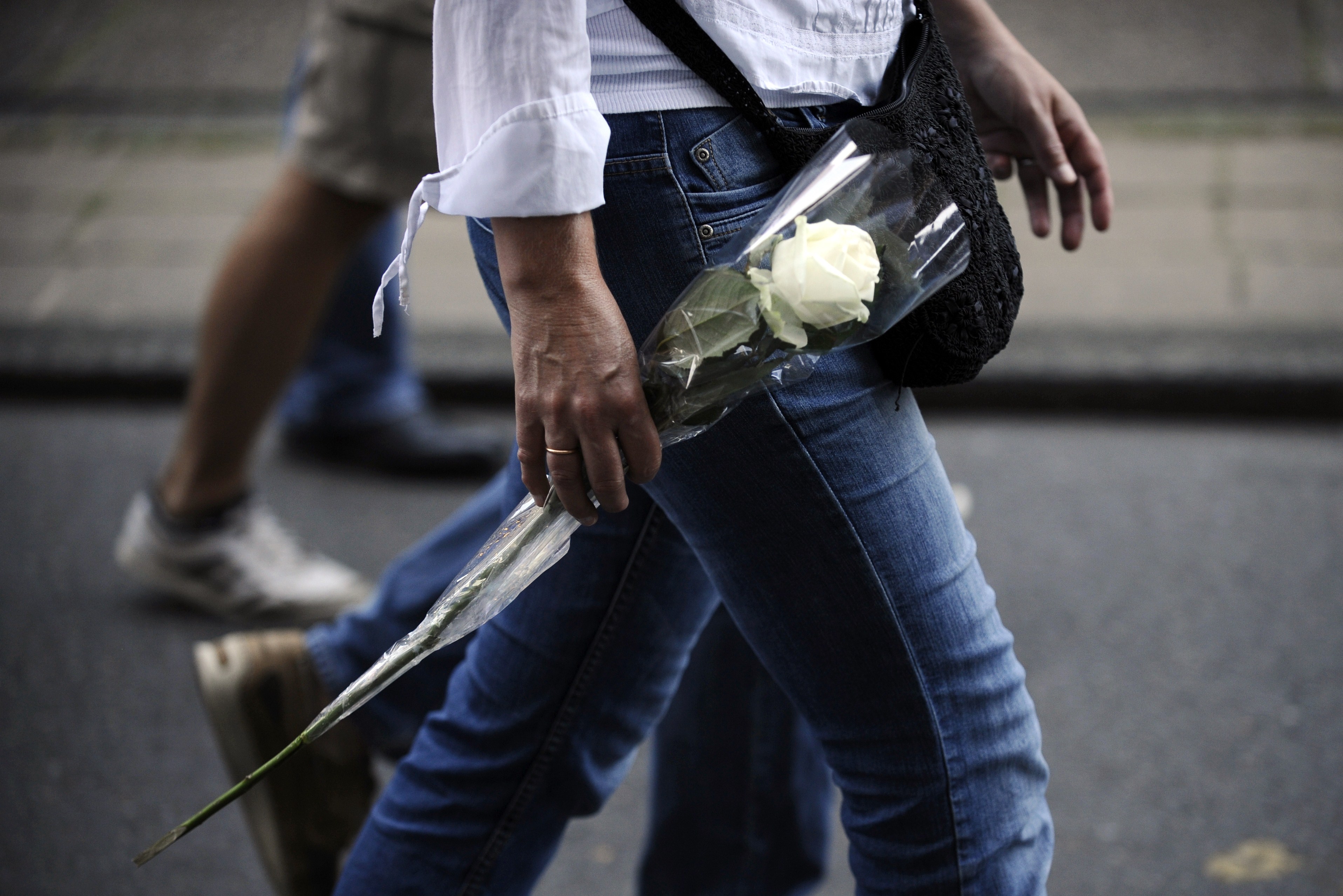
(Photo: A person holds a white rose during a silent march in memory of the victims of the downed Malaysia Airlines flight MH17, on July 23, 2014 in Amsterdam. By John Thys/AFP/Getty Images)

Torture-As-Execution

Ben Crair is troubled by Joseph Rudolph Wood III’s two-hour-long death:

Arizona chose to become just the second state to use the same two drugs that Ohio used for McGuire, despite the apparent problems with that execution. A full picture of Wood’s death has not yet emerged, but the execution dragged on so long that Wood’s lawyers were able to file an appeal in U.S. district court during the procedure. The Arizona Department of Corrections insists nothing went wrong with Wood’s execution. Given the properties of the drugs that were used, it’s less likely that Wood suffered pain than Wilson or Lockett, both of whom were given a paralyzing drug. But lethal injections are supposed to be quick procedures, lasting no more than 10 or 15 minutes. If you start counting from when the drugs began to flow (as opposed to when the executioners first attempt to establish IV access), then Wood’s execution may have been the slowest in U.S. history.

This is, quite simply, barbarism. The guillotine was more merciful. Hartmann passes along the government’s spin:

State officials insist that Wood was never in pain. Attorney general’s spokeswoman Stephanie Grisham reported that Wood “went to sleep, and looked to be snoring.” “This was my first execution, and I was surprised by how peaceful it was,” she told the Associated Press. “There was absolutely no snorting or gasping for air.” Charles Ryan, the director of the Arizona Department of Corrections, said Wood made no movements or facial expressions aside from the snoring. “Throughout this execution, I conferred and collaborated with our IV team members and was assured unequivocally that the inmate was comatose and never in pain or distress,” Ryan said.

Mauricio Marin’s first-hand account doesn’t make that process sound so peaceful:

James Wood appeared to fall asleep, albeit strapped down to a table, and he looked straight ahead at the wall. The first 10 minutes went according to plan.

Then, a hard gulp. I looked over to my left: the priest praying the rosary. To my right: the family watching on. Then dead ahead: the side of Wood’s stomach appeared to move, even after the Arizona state prison’s medical staff had announced he was sedated.

I saw a man who was supposed to be dead, coughing – or choking, possibly even gasping for air. I knew this because Wood’s stomach moved at the same time, just like it would if you were lying down and trying to breath. Then another of those gulps – those gasps for air, movements just from the throat area and sometimes from the stomach, too.

He counted “660 gasps and gulps.” Matt Ford highlights what we don’t know about the recent series of botched executions:

Because the states will not share them, we don’t know the dosages of the drugs administered. We don’t know the drugs’ manufacturers or their quality-control procedures. We mostly don’t know the credentials of those administering the drugs. More importantly, the defendants don’t know any of this, either. Without this information, those sentenced to execution cannot challenge the execution procedures in court nor check for possible medical complications. State execution-secrecy laws, routinely upheld by lower courts but untested before the Supreme Court, prevent this basic level of prophylactic Eighth Amendment protection. If death by torture is not cruel, defendants contend, what is?

I cannot see how this grisly torture scene should survive constitutional review. But a court that could parse the grammar of a law to strip millions from health insurance is not going to protect someone on death row, are they?

Best Cover Song Ever?

The in-tray is inundated with your submissions – over 800 so far. We might close the floodgates later today so we have time to process the Youtubes without hundreds more coming in. So send your top pick to contest@andrewsullivan.com. Cover songs that cross genres are especially preferred. On that note:

I’d like to nominate Cake’s cover of Gloria Gaynor’s “I Will Survive”:

The way it subverts a ’70s anthem with delightful sarcasm is brilliance!

More submissions after the jump. This genre-bender was especially popular:

The Gourds, an Austin alt country band, covered Snoop Dogg’s “Gin and Juice”. I’ve never liked rap or hip hop and these lyrics are offensive. But I love it:

Another picks Cobain’s haunting rendition of Lead Belly’s “Where Did You Sleep Last Night?“:

Nirvana’s Unplugged performance is legendary for so many reasons the random musical guests, unexpected covers, spooky (and supposedly intentional) funereal setting – but to me the performance’s timelessness comes from the simple fact that it was the last time many of Kurt Cobain’s fans saw him alive:

The band toured a bit after the show (mostly Europe, I think), but Cobain died five or six months after Unplugged originally aired. MTV ran it repeatedly after he died, and so the performance came to stand in as a kind of funeral or living memorial, again made all the more poignant by the lilies, candles, and dimly lit staging.

I was 12 when Cobain died – old enough to comprehend the loss and the complexity of what happened, but not quite old enough to really feel it in a personal way. I remember being shocked and confused initially, and sort of dumbfounded in the aftermath as the mourning took hold. At the time I identified with the music more than the person, and his suicide was a real eye-opener in terms of how dark life can be, and how none of us are immune from ourselves, and how the people we look up to are, in fact, people. This performance and this particular song truly marks a coming of age for my generation, and I can’t listen to it even now without feeling a rush of emotions.

Besides the historical/generational significance, the cover is simply amazing. Kurt’s voice has all the anguish, torment, and rawness the song requires. The words practically bleed from his mouth, and the band is so tight and restrained that you think they might explode at any second. He supposedly refused an encore because he didn’t believe he could possibly top that performance, and I have to agree.

This cover probably beats the original:

“Mad World” by Gary Jules and Michael Andrews for the Donnie Darko soundtrack:

But this version isn’t far behind:

Smeagol sings “Mad World”:

The artist not only captures Smeagol perfectly but adjusts the lyrics as if channeling the character.

Track the whole cover contest here.

Is Obamacare In Jeopardy? Ctd

Ezra very much doubts SCOTUS will uphold the decision:

For Halbig to unwind Obamacare the Supreme Court would ultimately have to rule in the plaintiff’s favor. And they’re not going to do that. By the time SCOTUS even could rule on Halbig the law will have been in place for years. The Court simply isn’t going to rip insurance from tens of millions of people due to an uncharitable interpretation of congressional grammar.

For five unelected, Republican-appointed judges to cause that much disruption and pain would put the Court at the center of national politics in 2015 and beyond. It would be a disaster for the institution. Imagine when the first articles come out recounting the story of someone who lost their insurance due to the SCOTUS ruling and then died because they couldn’t afford their diabetes or cancer treatment. Imagine when every single Democrat who had any hand at all in authoring the law says the Court is completely wrong about what the law meant. Imagine when every single Democrat runs against the Court.

Yglesias isn’t so sure:

[A] decision by the Supreme Court to overturn Halbig would entail a substantial act of ideological apostasy by one or more justices. Apostasy isn’t impossible. Justices Roberts committed a major betrayal by voting to uphold the Affordable Care Act’s individual mandate, and Justices Kagan and Breyer committed one in the opposite direction (perhaps as part of a deal) to strike down some of its Medicaid clauses.

But acts of apostasy are psychologically, socially, and professionally difficult. It would be a mistake to simply assume Roberts will commit another one. And it would be an even bigger mistake for liberals to draw excessively broad conclusions from their own media diet. On the right, Halbig is broadly considered good law and five of the nine Justices side with the right most of the time.

But Allahpundit finds it “hard to believe Roberts would have waved ObamaCare through when he had a shot to kill the law before it began only to blow it up five years later, after the country’s insurance system has been overhauled”:

Even the D.C. Circuit, despite having mustered the courage to rule as it did yesterday, said that it issued its ruling “reluctantly,” knowing that it would mean pulling the rug out from under millions of people who were counting on subsidies to reduce the cost of their new insurance. If the politics of undoing subsidies are that hot now, just nine months after ObamaCare went into effect, how much hotter will they be three years from now, when people have grown dependent on them? That was Ted Cruz’s whole point in pushing “defund,” in fact — that the law had to be stopped before it took effect because dependency would prevent it from being undone afterward.

Bouie believes that “Republicans celebrating the decision should hold their tongues because—whether they realize it or not—they’ve opened themselves to serious political danger”:

In Arkansas, where Republican Rep. Tom Cotton is running a tight race against the Democratic incumbent Sen. Mark Pryor, 40,000 people have paid premiums for health insurance on the federal exchange. If Halbig went into effect today, about 34,000 of those Arkansans would face huge increases in their premiums, given a national average increase of 76 percent, according to one study. That’s an unlikely outcome, but it shouldn’t (and likely won’t) stop Pryor from hitting Cotton as hostile to middle-class families and anyone else who needs health insurance.

Ponnuru counters:

I wouldn’t be so sure it works out that way. If tax credits suddenly get withdrawn and people have to pay a larger share of their premiums as a result, red-state Democrats probably will blame Republicans for causing the mess. But Tom Cotton neither wrote the flawed legislation, nor recklessly sent out tax credits in violation of it, nor filed the lawsuit against it. Wouldn’t he just parry by saying, “Obamacare has caused mess after mess”? Arkansas voters—who still dislike Obamacare—might well accept that version of events.

When Obamacare has run into difficulties before, its proponents have tried to blame those difficulties on Republican sabotage. The program would be working better, they have said, if Republicans had set up exchanges in the states or expanded Medicaid. None of that seemed to work beyond the liberal base. Maybe it wouldn’t work this time either.

Earlier Dish on Halbig here.

The Demographics Of Denialism

Warming

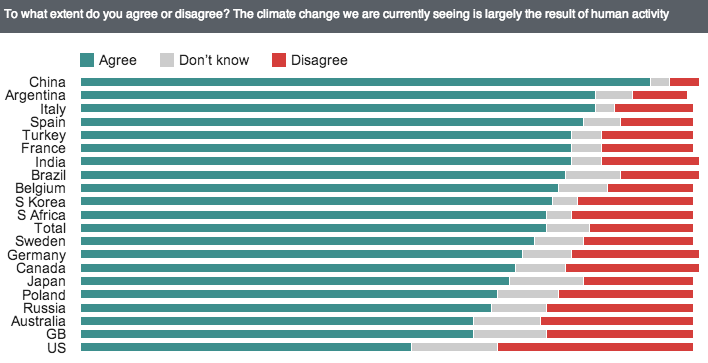
Climate-change skepticism appears to be especially common in Anglophone countries:

Not only is the United States clearly the worst in its climate denial, but Great Britain and Australia are second and third worst, respectively. Canada, meanwhile, is the seventh worst. What do these four nations have in common? They all speak the language of Shakespeare.

Chris Mooney speculates:

Why would that be? After all, presumably there is nothing about English, in and of itself, that predisposes you to climate change denial. Words and phrases like “doubt,” “natural causes,” “climate models,” and other skeptic mots are readily available in other languages

One possible answer is that it’s all about the political ideologies prevalent in these four countries. … Indeed, the English-language media in three of these four countries are linked together by a single individual: Rupert Murdoch. An apparent climate skeptic or lukewarmer, Murdoch is the chair of News Corp and 21st Century Fox. (You can watch him express his climate views here.) Some of the media outlets subsumed by the two conglomerates that he heads are responsible for quite a lot of English language climate skepticism and denial.

Meanwhile, a study out of New Zealand suggests that people who live on coastlines also tend to take climate change more seriously than those who live inland:

And that’s not just because lefties prefer beachfront property. The researchers polled several thousand randomly selected New Zealanders across the country. While political orientation and gender were the strongest predictors of climate-change belief, proximity to the ocean also had a significant, isolatable effect.

There are two compelling explanations why this might be the case. First, people living near the ocean are more likely to experience significant, climate-change related impacts, like flooding and storms. And second, these folks have probably pondered how they and their communities will adapt to a potential rise in sea-level. On the flip side, inlanders might have less first-hand experience (or expectation) of climate change impacts, and are therefore less likely to take the issue of climate change seriously – or even think it’s happening.

In addition, it seems that the scientifically literate are not immune from from climate-change skepticism:

Ars has previously covered Yale Professor Dan Kahan’s research into what he calls “cultural cognition,” and the idea goes like this: public opinion on these topics is fundamentally tied to cultural identities rather than assessment of scientific evidence. In other words, rather than evaluate the science, people form opinions based on what they think people with a similar background believe. … A key feature of Kahan’s work, though, comes when he measures general science literacy or propensity for analytical thinking. Rather than ameliorating differences on scientific issues, these properties exacerbate them. Those who should be best equipped to have a handle on the science are the most divided along party lines. It seems that people more familiar with science are better at coming up with explanations to defend whatever conclusions their cultural group has reached.

Book Club: Good News About Dying

A reader gushes:

I feel blindsided by joy and wonder reading Sarah Bakewell’s delightfully accessible book. I montaignehad no idea that this man from half a millennium past would give so many “that’s me” moments. Example: I’ve always felt that my forgetfulness was a plus. Something happens. I let go of it and it recedes to some far back place in my memory, unlikely to reappear. I’ve always referred to it as my Etch-A-Sketch mind. Lift up the plastic. All gone.

The other mindblower for me is allowing for doubt. This is a theme that has been mentioned many times in Dish posts. Its relevance in today’s world can not be overstated. Last year, I had a button-maker friend make me some “allow for doubt” buttons. I would notice many pitying looks when I wore it. I suppose nothing beats certainty.

This book club choice is a home run. It has expanded and reinforced my inquiry of life. Thank you.

A more reluctant fan:

I thought – essays? – on how to live? Heavy sigh. But I found the book at the library and decide that giving Montaigne a go probably wouldn’t kill me. I read the first chapter today while I sat at the pool during my daughter’s swimming lesson. It took me less than 15 minutes and I had time enough left to write a few pages.

It was a surprisingly light read. I was expecting tortured prose and deep, knee-bend navel gazing. But it was on death. An easy one and I was delighted to discover that Montaigne was a normal person for all his wandering in the mental back forty.bookclub-beagle-tr-2

I have been convinced for some time that dying – the actual moments – is not at all what it appears to be and doesn’t need to be prepped for in any specific way (unless that makes a person feel happy or better in some way, though Montaigne‘s suffering over it in his youthful years would seem to suggest otherwise). I feel not vindicated, but reassured, after this first chapter.

I have low expectations for this experience, but I am determined to read a chapter a day. I don’t think he is going to be my bestie in literary terms, but he has made a good first impression.

That struck me also as something that jumped out. Today, we live our lives in terror not simply of death but of dying. In fact, we seem more afraid of dying than death itself. And Montaigne insists this may not be necessary at all. Dying might actually be pleasant. And not because he had confidence in Jesus (although he did have a priest preside over his eventual death at the age of 59). It was because an early near-death experience gave him a whole new take on the subject. On the surface, he was knocked off his horse, lost consciousness, started puking blood and began tearing away at his doublet as if a great weight were on him. But on the inside, all was calm, even light:

It seemed to me that my life was hanging only by the tip of my lips; I closed my eyes in order, it seemed to me, to help push it out, and took pleasure in growing languid and letting myself go. It was an idea that was only floating on the surface of my soul, as delicate and feeble as all the rest, but in truth not only free from distress but mingled with that sweet feeling that people have who let themselves slide into sleep.

In this, as in everything, Montaigne seemed to trust his own nature, to let it be, to have confidence that, beneath the wandering flickers of our minds, something deeper endures, if only we can accept it. It’s that calm acceptance of what is, along with gladness for it, that makes Montaigne almost Taoist at times. P.M. Carpenter joins the conversation:

One non-political passage in Sullivan’s superb survey I identified with rather acutely:

If I were to single out one theme of Montaigne’s work that has stuck with me, it would be [his] staring of death in the face, early and often, and never flinching…. I was lucky in some ways – and obviously highly unlucky in others – that I experienced something like this early in my life as well:  the prospect of my own imminent death and the loss of one of my closest friends and soulmates to AIDS. There was Scripture to salve it all; there was friendship to shoulder it all; there was hope to sustain it all. But in the end, I found myself returning to Montaigne’s solid sanity, his puzzlement and joy at life’s burdens and pleasures, his self-obsession that never somehow managed to become narcissism.

In my young and soulfully beautiful wife’s death I never found comfort in Scripture–“mysterious ways” my ass, she died young because we pour tons more cash into weaponry than cancer research–although in our daughter, hope does sustain me. She is my best and dearest friend and she’s as soulfully gorgeous as her mother. The prospect of my own imminent death disturbs me little; I already know its cause–years of self-destructive behavior. This seems only fair. I knew what I was doing and I proceeded to do more of it. I deserve what I get. My wife did not.

So yes, there’s the unfairness of life’s departure, but more than that there’s its seemingly vile Screen Shot 2014-07-24 at 1.42.35 AMrandomness. Three years ago the universe ceased to make any sense to me, and its flagrant indifference to earthly justice I now find metaphysically offensive. What’s more, there’s the guilt–the pounding guilt: inhuman, senseless and random tragedies such as MH-17 occurred with grim regularity before my wife’s death, and yet I never wept over them. They failed to haunt me day after day as my wife’s death does a thousand times a day–and ruthlessly compel me to ask, “Why?” Thus I’m forced to conclude that I’m as indifferent to most human suffering as the universe is. And that’s a hard conclusion to accept.
To be clear, I’m not trying to pour my heart out here. See: Oscar Wilde. What I’ve instead attempted is a practical point which, I trust, Montaigne himself would have made: There are no plausible certainties about life, accept, perhaps, the one of the often dismaying utility of a searching skepticism. We can’t, and really don’t, know beans.

Follow the whole Montaigne discussion here. Buy Bakewell’s book here and share your thoughts at bookclub@andrewsullivan.com.

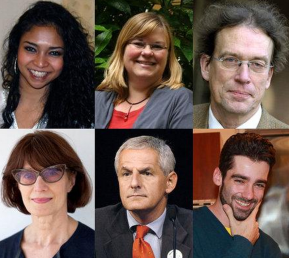
(Bottom image of victims from MH-17 via the NYT. Tweet translation from Dishtern Phoebe: “But as for death, we can only try it once; we are all apprentices when we get there.”)
God’s Foreign Policy

Christian followers of American Evangeli

Every now and again, the absurd that is familiar can become fresh again. What’s absurd is the lockstep support for anything Israel might do in the United States. It’s the only country which, in a conflict with a US administration, will have Congressional Republicans and Democrats backing a foreign government over their own – and being rewarded for it in terms of money and votes. It’s the only country in which a foreign leader can address the US Congress as a rebuke to the US president – and get a standing ovation. It’s the only foreign country that receives $3 billion in aid and still gets to dress down the US president in the White House itself.

And the most important reason why is Christianism. The commitment of America’s evangelicals to the maximalist claims of Greater Israel has only intensified over the last couple of decades. The leader of this movement is a crackpot – a man who believes that the end-times are imminent, that the anti-Christ will be the head of the EU, and that Russia will invade Israel as a harbinger of the Apocalypse. He was once famous for intensely anti-Catholic bigotry, arguing that “a Godless theology of hate that no one dared try to stop for a thousand years produced a harvest of hate.” He’s bonkers, but he’s fanatically pro-Israel, which is why his annual conference of Christians United For Israel attracts the likes of Bill Kristol and Charles Krauthammer, along with Butters.

Dave Weigel – peace be upon him – attended this year’s conference so you didn’t have to. And, of course, defending the Gaza war was at the top of the agenda this year. Now remember that this is called Christians United For Israel. And the message is clear:

American evangelicals needed to imagine themselves as Israelis, praise the “miracle” of the Iron Dome missile defense system, and understand that the Jews had a biblical mandate to the entire Holy Land. “I’ll bless those that bless you and I’ll curse those that curse you,” said Hagee, quoting from the book of Genesis. “That’s God’s foreign policy statement, and it has not changed.” …

Speaker after speaker gave the evangelicals ammunition for the next time someone criticized the Gaza operation, or shamed Israel over the body count. “Here’s a message for America: Don’t ever turn your back on Israel, because God will turn his back on us,” said South Carolina Sen. Lindsey Graham. “More Germans died in World War II than American soldiers. That didn’t make the Germans right.

My favorite moment from Dave’s account – the testimony of one IDF Sgt Benjamin Anthony. He said what even Butters might blush at saying:

What the IDF needed was a total victory. “Rocket factories can be destroyed,” said Anthony. “Weapon factories can be destroyed. Terrorists can be eliminated. Tunnels can be dug out.” But it could only happen if America resisted the temptation to criticize Israel or to stop the operation. “Hamas started this war,” said Anthony. “The soldiers of Israel must smash their skulls and break their spines.”

If there were ever the spirit of Jesus, there it is.

And yet wry humor at this point doesn’t quite capture the bizarreness of this entire enterprise. These belligerent fanatics take Greater Israel as a non-negotiable; they exercise enormous power in the Republican coalition; they foment a foreign policy that is based not on a prudent weighing of America’s national interests, but on reflexive aggressive support for a foreign country based on Biblical texts. In any sane polity, they would be treated as dangerous kooks. And yet they are addressed by Senators as a badge of honor.

(Photo: Christian followers of American Evangelical Pastor John Hagee chant slogans in support of Israel as they wave Israeli and US flags during a rally downtown Jerusalem on April 07, 2008. Several hundreds of Evangelicals, from the Christians United for Israel movement marched in Jerusalem in solidarity with the Jewish state. By Gali Tibbon/AFP/Getty Images.)

Strategic Countertrolling

The State Department is hip to the fact that jihadists are using social media to propagandize and recruit supporters, and its $5 million Center for Strategic Counterterrorism Communications is devoted to fighting back. The trouble, as Jacob Silverman reveals, is that they’re not very good at it:

The way the program works is fairly simple: The State Department’s analysts follow online chatter about the latest ISIL victory or news of a recent al-Shabaab massacre in Kenya, and then they try to insert themselves into the conversation. The idea is less to sway committed terrorists than to persuade fence-sitters not to join up or provide material support.

But State’s messages usually arrive with all the grace of someone’s dad showing up at a college party. The posts tend to be blunt, adversarial, and plagued by poor Photoshop work.

Typically, “Think Again Turn Away,” as the CSCC’s English-language Twitter account calls itself, delivers hectoring messages written in the schoolmarmish tone of Reagan-era “Just Say No” commercials – only this time it is terrorism, not drugs, they’re trying to scare everyone away from. And because the government’s tweeting is so flat and self-serious, few people—even those most sympathetic to its messaging—are motivated to share the CSCC’s posts. As anyone bidding for attention on social media knows, that’s a serious problem.

ISIL supporters, by contrast, can be playful and droll, though sometimes the humor is exceedingly macabre and only appeals to a certain sensibility. Many of the photos being circulated — such as one of a dead Shiite man floating in a body of water, alongside a joke about him being taught to scuba dive — are horrific, but they also make for popular jihadist memes. (That particular picture was retweeted nine times and favorited 15.) The plain fact is that, for now, groups like ISIL are far more sophisticated than the State Department in their messaging.

Previous Dish on ISIS’s social media campaigns here, here, and here.

Gaza’s Humanitarian Crisis

PALESTINIAN-ISRAEL-CONFLICT-GAZA

“While there have been many news reports on the number of people who have been killed (over 500) and wounded (over 3,000) in the Israeli offensive,” Elizabeth Ferris observes, “far larger numbers of people are being forced from their homes”:

In fact, displacement may turn out to be the defining characteristic of this terrible conflict. As the United Nations Relief and Works Agency for Palestine Refugees (UNRWA) spokesperson Chris Gunness said today, “This is a watershed moment for UNRWA, now that the number of people seeking refuge with us is more than double the figure we saw in the 2009 Gaza conflict. We are seeing a huge wave of accelerated displacement because of the Israeli ground offensive.” …

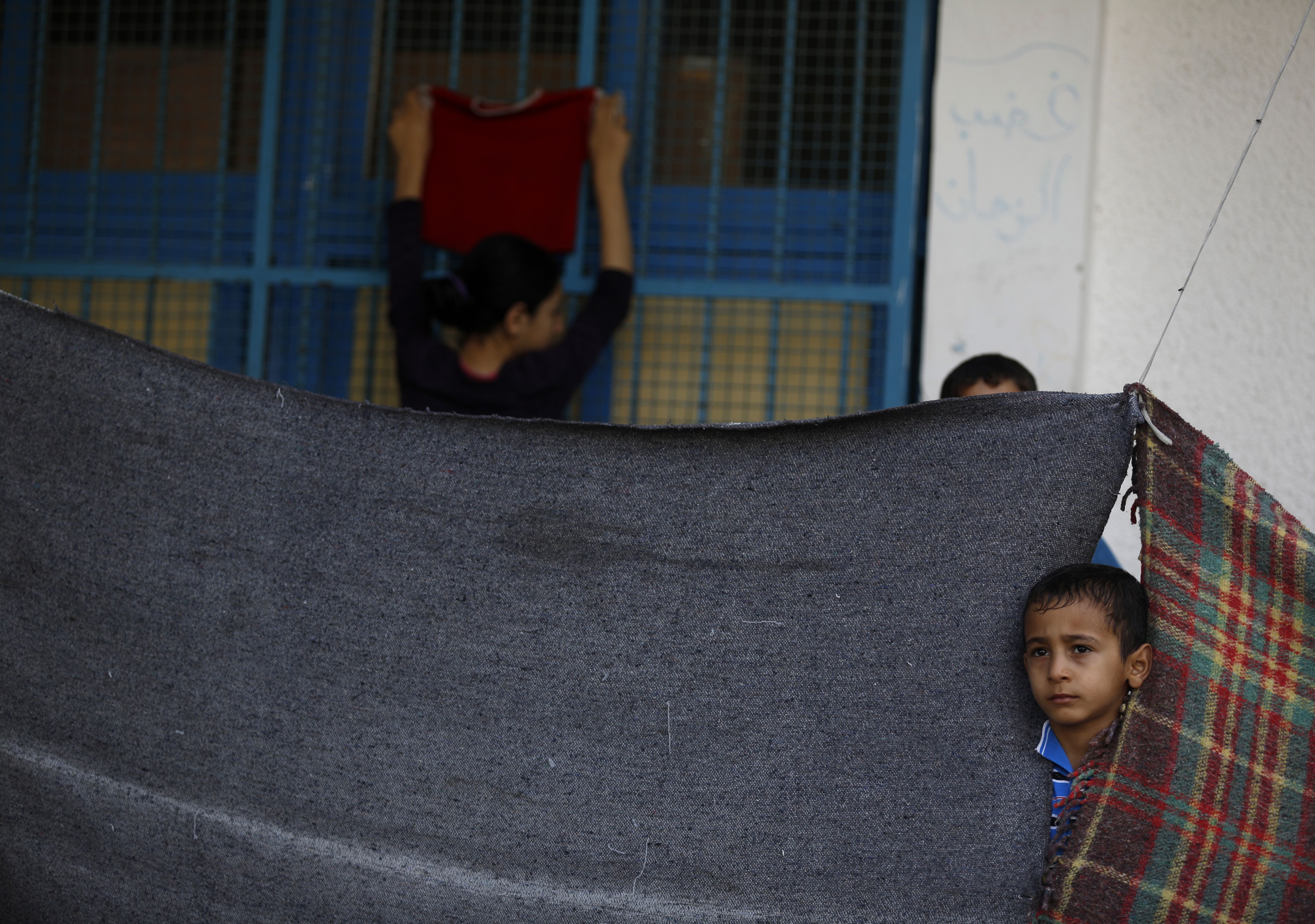
People are warned to evacuate by the Israeli forces, but there are not many places to go as Gaza’s borders are all but closed. Some have taken shelter with family or friends, some have even sought protection in a Greek Orthodox Church, but many have turned to U.N. facilities for protection. Yet UNRWA’s facilities are close to capacity and, as numbers increase, conditions are likely to worsen.  According to Doctors Without Borders, unhygienic conditions and overcrowding at UNRWA facilities “are extremely worrying.” UNRWA also may not be able to provide the protection which internally displaced persons (IDPs) are seeking. In fact, the agency reports that 64 of its buildings have been damaged in the offensive.

The war will also leave indelible psychological scars, particularly on Gazan children:

Three months after the last period of bombing ended, in January 2009, Abdelaziz Thabet, a child psychiatrist at Al-Quds University in the Gaza Strip, studied the effects of the bombing on Palestinian children. The Gaza war lasted three weeks and saw 1100 Palestinians killed and 13 Israelis. Of the 358 teenagers Thabet studied, 30 per cent were left with full-blown post-traumatic stress disorder. Most other children presented some PTSD symptoms, and only 12 per cent had no symptoms. The study was published in the May issue of the Arab Journal of Psychiatry, just a month before the current campaign. The rates of full-blown PTSD may be worse this time due to the intensity of the shelling, warns co-author Panos Vostanis at the Greenwood Institute of Child Health at the University of Leicester, UK. “I’d expect them to be at least 60 to 70 per cent in the three to six months afterwards,” he says.

Jesse Singal also warns of an epidemic of childhood PTSD:

Gazans do appear to suffer from PTSD to a greater degree than either Israelis or West Bank Palestinians, at least according to a 2009 joint Israeli-Palestinian study also focused on the fallout of the second intifada, which found that 6.8 percent of Israelis and 37.2 percent of West Bank Palestinians met the clinical criteria for the disorder …

There are mental-health resources in Gaza, but they’re overstretched and constantly disrupted. The infrastructure is provided by a mix of the Ministry of Health, NGOs, and UNRWA, Seita explained, with UNRWA providing “psychosocial counselors” at schools, health centers, and women’s centers that can refer patients to more serious treatment from the Ministry. There are many obstacles to treatment. Israel’s blockade (and Egypt’s to the south) has made it difficult for medical supplies to cross the borders into Gaza, and the same goes for people trying to temporarily get out: Gazans who require specialized care must travel to better-equipped medical centers in Israel or Egypt, and they often aren’t allowed to.

Previous Dish on Gaza’s children here. Atef Abu Saif offers a harrowing glimpse at day-to-day life in the Strip:

The first question I ask when I open my eyes is, “When is the truce?” Everybody is asking the same question. After 16 days of attacks, you wish, even harder than at the start, that it is all just a nightmare. Many times I have closed my eyes and thought, “What if I were just sleeping, and everything I saw was a dream?” I shake my head and look around. Everything looks real: The tree in the school yard moves in the wind, the sun shines, the lady next door is sitting in front of her house with other old ladies of the neighborhood, everything looks normal. No sign that this is a dream, a nightmare.

On Monday, more than 100 people were killed in Beit Hanoun and Shijaia. While sitting with my friends Faraj, Abu Aseel, and Wafi in Faraj’s place, smoking nargila as we do every night, Faraj keeps turning the dial on the radio, searching the news, trying to find an announcement that might calm him down. The voice on the radio announces that the total number of people killed during the last two weeks is 567. He starts to break this number down according to where they lived, according to their ages, their genders, the method of attack, and so on. A few hours ago a shell decapitated three kids. They were carried to the hospital headless. The radio reporter continues his presentation of the situation. The number of people injured has reached more than 3,300. Some 670 houses were destroyed, and more than 2,000 were partially damaged.

And here’s more on those families seeking sanctuary in Gaza City’s only Greek Orthodox church, hoping that Israel won’t bomb it:

The panicked search for someplace in Gaza that isn’t under fire has led about 1,000 people to claim refuge in Saint Porphyrios Church. “It’s for Christians so it won’t be targeted,” says Etadil al Saerky, 42, who is staying there with 12 members of her family. But, really, nowhere is safe. The church cemetery was hit with a rocket on Monday night. All that people are sure of is that a church may be a little safer than a mosque, since some 50 of those have been bombed because the Israelis believe weapons are stored in them.

Greek Orthodox Archbishop Alexios of Gaza, who has been organizing the food and shelter for those claiming refuge, refuses—despite all the suffering and fear around him—to focus only on the carnage and destruction in this latest, bloodiest Gaza war. He is determined to fulfill his mission of Christian charity, it appears, and he remains resolutely upbeat. He says a woman went into labor in the sanctuary on Monday during the shelling, and a healthy baby was delivered. “You see,” said the archbishop, “in Gaza there is also life, not only death.”

(Photo: A displaced Palestinian boy stands behind blankets serving as a separation curtain for his family on July 23, 2014 at a UN school in the northern Gaza Strip refugee camp of Jabalia where displaced families have taken refuge after fleeing heavy fighting in the besieged Palestinian territory. By Mohommed Abed/AFP/Getty Images)