When Dear Leader Can Do No Wrong

Xavier Marquez unpacks the political psychology referred to as the “good Tsar” bias, when leaders escape blame for the disasters and mistakes that happen under their rule – anyone or anything but the ruler is held accountable:

The “good Tsar” bias does not incline people to say that the world is just, or to rationalize injustice as somehow deserved, only to deny that those leaders who are closely tied to the symbols of the nation (the Tsar, the Führer, the King, etc.) bear responsibility for bad outcomes in everyday life; that responsibility, instead, is assigned to subordinates. In this respect, the bias appears to be more closely related to what Dan Kahan and others have called “identity-protective cognition“: the closer a leader is tied to the symbols of the nation or group with whom they identify, and the closer people’s identification with the nation or group is, the more difficult it should be for them to accept that the leader is responsible for bad outcomes, since such acceptance threatens one’s identity, and the more likely it will be for them to displace that responsibility onto subordinates as a protective measure. And leaders, like Hitler, who are the focus of high-intensity rituals associated with big national occasions — plebiscitary elections, victories in war, even set-piece speeches on the occasion of good economic news — are precisely the sorts of leaders who become associated with important community symbols; indeed, in important ways, they come to symbolize the community, as long as the rituals are successful.

Dreher applies the theory to various aspects of contemporary American life:

We saw it in Catholic circles post-Boston, with the desperate attempts by some conservative Catholics to wall of John Paul II from the catastrophe. If you were reading certain Catholic blogs at the time, the rationalizations for John Paul’s inaction were legion. The Holy Father was kept in the dark by disloyal subordinates. The Holy Father was too sick to act. The Holy Father has a secret plan to deal with the scandal. Et cetera.

There is no theological reason for this strategy. Papal authority, even papal infallibility, does not depend on the capability of a pope to govern prudently. Dante, in the Commedia, exemplifies the perfectly Catholic position: loyalty to the Church and to its teachings, including the papacy, but unleashing hell on the corrupt popes. The “Good Pope bias” here was not really a theological defense — a theological defense was not strictly necessary — but a psychological one.

It doesn’t have to be focused on a person. You’ve probably heard the line, “conservatism cannot fail; it can only be failed” describing, from a liberal perspective, the way movement conservatives rationalize the failures of conservative government. For these people, corruption, bad judgment, or ineptitude on the part of elected conservative leaders doesn’t disprove conservative ideas or principles; it only means they weren’t really tried. The failed presidency of George W. Bush had nothing to do with the wrongness of conservative ideas, you see; it was because Bush wasn’t sufficiently or genuinely conservative. In this case, the Good Tsar is not a person, but an ideology.

“Forgive Me” – Father, Ctd

Responding to criticism that Pope Francis hasn’t acted swiftly or decisively enough on the issue of sex abuse by Catholic priests, Garry Wills offers a theory why –  Francis realizes that “without addressing structural issues in the Vatican, meaningful action to restore trust in the priesthood and church authority cannot get far.” One issue is celibacy:

Yes, celibacy does not directly and of itself lead to sexual predation. There are many unmarried men and women who are not predators. But Catholic celibacy is not simply an unmarried state. It is a mandatory and exclusive requirement for holding all significant offices in the Church. This sets up a sexual caste system that limits vision, empathy, and honesty. It enables church rulers to be blithely at odds with the vast majority of their own people. According to a 2011 Guttmacher Institute study, 98 percent of American Catholic women of child-bearing age have had sex—and, of that 98 percent, 99 percent have used or will use some form of contraception. Yet celibate priests tell us they know what sex is really about (by their expertise in “natural law”), and in their view it absolutely precludes birth control. There is an induced infantilism in such cloistered minds, an ignorance that poses as innocence. This prevents honesty at so many levels that any trust on sexual matters begins in a crippled state, handicapping all treatment of sexual predation in the Church.

Another problem that stands in the way of true reform is clericalism:

The previous three problems [celibacy, homophobia, and patriarchy] converge on the clerical mindset that afflicts all bureaucracies, but especially sacred ones. Advancement of one’s career involves deference to those above, adherence to corporate loyalties, and a determination not to hurt the institution (demonstrated by signal loyalty). Questioning “church teaching” is subversion. This leads to support of one’s own in all ways possible—as far as one can go, for instance, in denying sin among one’s colleagues. This is the area in which Pope Francis has made some initial moves, challenging the power of the Curia (Rome’s bureaucracy).

But challenge is not change, and so long as these structural issues persist, it will be impossible to restore trust in the Vatican’s authority. No pope can change all these things all by himself, even one as winning as Francis is proving. If it is to be done at all, it must be by a joint effort of the whole People of God. Perhaps that is what Francis is waiting for. I suspect he would welcome it.

Recent Dish on the topic here.

The Many Sides Of Kierkegaard

Though Søren Kierkegaard wrote his theological works attached to his own name, he “published each of his philosophical texts under a different identity, each with a unique perspective, background, and set of beliefs — which may or (more likely) may not be those of Kierkegaard himself.” Eric Thurm explains:

Heteronymity, or the publication of works under an assumed identity constituting an entirely different character, distinguishes itself from pseudonymous works that dish_kierkegaard express the author’s opinions under a different name. In a sense, heteronymity requires two acts of creation: the invention of an author and the text produced by that author, placing further distance between the original author and the final words in a text. There’s some history for the practice distinct from its pseudonymous cousin, most notably in the works of Portuguese writer Fernando Pessoa, who coined the word “heteronym” to refer to the many voices he used to write poetry and letters, each with their own biography, influences, and style.

Kierkegaard’s work is particularly well suited to heteronymity’s abstraction from straightforward authorial intent. His intricate web of identities allowed him to tackle his central question — how to be a good Christian in contemporary Christendom — from a variety of perspectives, many of which openly disagreed, in the public sphere. (Were Kierkegaard alive today, he might well have been an avid user of multiple anonymous Twitter accounts.) Most of the heteronyms are in turn mocked, even while their arguments are serious — Johannes Climacus, who does not consider himself a Christian, recounts how he became an author through a winking “self-communion” and smoking multiple cigars, in which he decides to try to mimic those with worldly success “out of love for mankind.”

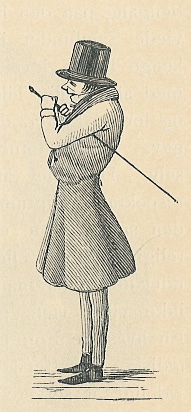
(Image of caricature of Kierkegaard, 1846, via Wikimedia Commons)

Do Christians Need To Be “Nice”?

Ellen Painter Dollar, a religion blogger, downplays “niceness” while contemplating how controversy plays out in the Christian blogosophere:

I resist the continual pressure from readers to be “nice,” which is frequently presented as the primary Christian value (it’s not) and a reason to avoid writing criticisms of Christian institutions, practices, or sociopolitical positions. Incensed readers hold up critique (miscast as un-Biblical judgment of fellow believers) as an affront to Christian unity.

Our deep cultural divisions, and an online milieu in which harsh name-calling and withering dismissal are the norm, do indeed challenge the unity to which Jesus called his followers. But unity achieved via tacit acceptance of other Christians’ opinions and practices, because to question them wouldn’t be “nice,” is not a valuable unity. Such superficial unity doesn’t require anything more than silence and good manners. True unity costs something; it happens in the midst of, not in the absence of, passionate disagreement and debate. …

It’s not that hard to manipulate the rampant divisions within American Christianity to benefit a writing career. It’s much harder to foster the thoughtful conversations that must happen for our faith to remain relevant and vibrant, because doing so costs something — a sharp retort held back because its target is someone I know, an opposing idea treated with respect instead of ridicule, my opinion offered to a diverse community of readers, knowing that some will reject me with the harshest language possible, in the hope that at least a few will engage with insight and kindness.

The Deadliest Day Yet

Shujaya neighborhood of Gaza full of dead bodies

(Photo: Paramedic team and few journalists access the Shujaya neighborhood of Gaza during the two-hour humanitarian ceasefire proposal from the International Committee of the Red Cross which was accepted by Israel on July 20, 2014. People frantically attempted to to pick up the dead and the wounded in the blood strewn area while plumes of smoke from the recent Israeli shelling lingered in the air. By Mahmood Bassam/Anadolu Agency/Getty Images)

A Man-Made Eden

4820634260_7b8109fdef_z

Trent Dalton visited the island of Espiritu Santo, Vanuatu, to talk with Steve Quinto, an American businessman who believes the world is “in the second phase of certain self-destruction.” But Steve and his wife, Ruth, aren’t worried – they’ve been building their dream retreat:

Steve’s utopia … [is] an 800ha living ark that he has spent the past eight of his 79 years creating, investing his life’s fortune in the shipment of 300 tonnes of materials from around the world to the very edge of human existence. Paradise. Salvation. A new world for when the old one dies. He calls it Edenhope.

Dalton goes on to describe his tour of Edenhope, which, Steve estimates, can comfortably accomodate 23 people:

The turning track straightens to a clearing and there it is:

the dream, Edenhope, a new world among the trees, a network of wooden bridges and paths and staircases weaving through manicured garden beds and rolling orchards with fruit trees in the hundreds and a kitchen hut and 10 octagonal bungalows made of high-end red hardwood timbers. The wondrous dreamscape includes wild blue flowers and bird of paradise plants and trees so big their root ­systems form houses of their own. There’s a communal library; a warehouse filled with ­endless tools and hardware; a surgery stocked with enough medicines to last two decades.

It’s a staggering work of human endeavour. Steve brought an earthmover and a front-end loader here from Canada. He rallied workers, paid and paid for their services for eight years; organised thousands of nine-hour sailing journeys back and forth between civilisation and sanctuary, hauling floors and sacks of concrete and machinery and miscellaneous goods in preparation for the apocalypse. He walks to a patch of dirt in the centre of his village. “It started here,” he says. “It was nothing but Ruth and I in two hammocks tied to trees.”

Steve closes his eyes and breathes his home in deep through his thin chest. “This is the birth of a new species,” he says. “This is the birth of beauty. This is the birth of dreams.”

(Photo of Vanuatu by Graham Crumb)

Quote For The Day

“Holy Writ declares those of us wretches who think well of ourselves: ‘Dust and ashes,’ it says to them, ‘what has thou to glory in?’ And elsewhere: ‘God has made man like the shadow, of which who shall judge when, with the passing of the light, it shall have vanished away?’ In truth we are nothing.

Our powers are so far from conceiving the sublimity of God, that of the works of our creator those bear his stamp most clearly, and are most his, that we understand least. To Christians it is an occasion for belief to encounter something incredible. It is the more according to reason as it is contrary to human reason. If it were according to reason, it would no longer be a miracle; and if it were according to some example, it would no longer be singular. God is better known by not knowing, says Saint Augustine; and Tacitus, It is more holy and reverent to believe in the words of the gods than to know them.

And Plato thinks there is some sinful impiety in inquiring too curiously into God and the world, and the first causes of things. And it is difficult to discover the parent of the universe; and when once you have discovered him, it is sinful to reveal him to the vulgar, says Cicero.

We say indeed ‘power,’ ‘truth,’ ‘justice’; they are words that mean something great; but that something we neither see nor conceive at all. We say that God fears, that God is angry, that God loves, Marking in mortal words immortal things (Lucretius). These are all feelings and emotions that cannot be lodged in God in our sense, nor can we imagine them according to his. It is for God alone to know himself and to interpret his works,” – Montaigne, “Apology for Raymond Sebond,” The Complete Essays of Montaigne.

A Poem For Sunday

3493333046_ee6f406674_b

“Husband, Not at Home” by Deborah Garrison :

A soldier, a soldier,
gone to the litigation wars,

or down to Myrtle Beach
to play golf with Dad for the weekend.

Why does the picture of him
trampling the emerald grass in those

silly shoes or flinging his tie over his shoulder
to eat a take-out dinner at his desk—

the carton a squat pagoda in the forest
of legal pads on which he drafts,

in all block caps, every other line,
his motions and replies—fill her

with obscure delight?
Must be the strangeness: his life

strange to her, and hers to him,
as she prowls the apartment with a vacuum

in boxers (his) and bra, or flings
herself across the bed

with three novels to choose from
in the delicious, sports-free

silence. Her dinner a bowl
of cereal, taken cranelike, on one

leg, hip snug to the kitchen
counter. It makes her smile to think

he’d disapprove, to think she likes him
almost best this way: away.

She’ll let the cat jump up
to lap the extra milk, and no one’s

home to scold her.

(From A Working Girl Can’t Win © 1998 by Deborah Garrison. Used by permission of Random House, an imprint and division of Random House LLC, a Penguin Random House Company. Photo by Jonathan Lin)