
[Re-posted from earlier today]
I don’t care for the “right side of history” argument with respect to gay rights for a few reasons. It’s horribly condescending to people who have a sincere view against gay equality; it presupposes some sort of inevitability where there isn’t any; and it fails to understand the nature of history. History is never as dull as the concept of “progress” would have you believe. It is always, as Oscar Wilde once put it, crowded with incident.
In no case is this truer than for gay America. Our story, if presented as a Hollywood screenplay, would be dismissed as too outlandish, too melodramatic and implausible, to be taken seriously. And yet it happened, and remains with us – so close it is hard to see it, and with several sharp twists and turns.
 From the extraordinary repression of the 1950s – the McCarthyite era when all gay people were threats to the republic – to the liberation of the 1960s and the frenzied libertinism of the 1970s, you had one powerful narrative. After centuries – no, millennia – of brutal sanctions against the love of one man for another, an unprecedented, ebullient flowering took place. In small enclaves, an openly gay culture began to thrive and express itself with all the understandable abandon of the suddenly free. It was still very much a subcurrent, among so many other social shifts in that era, and was surrounded by hostility and discrimination and stigma. But the sense of outsiderdom partly intensified the joy and the solidarity. The gay ghettoes of the 1970s and early 1980s did not much care about the world beyond them for a while. Freedom – even in one, small place – was exhilarating enough.
And then the plague. It is, quite simply, impossible to conceive of a more dramatic reversal. If gay men had finally struggled free from the internalized notion that they were sick, or enemies of God, or all but asking for divine retribution for their sins, that paradigm closed in with terrible, ironic ferocity. What else could explain a plague of that brutality and specificity but the wages of Satanic perversion? Jerry Falwell could not have dreamed of a more perfect scenario. Pat Buchanan, with his usual flair, intoned that the gays had declared war on nature and nature had therefore declared war on them. And in some dark way, many of us were tempted to believe it.
It would be absolutely understandable if gay men had simply collapsed under the weight of this paradigm. Some quietly did, their deaths hastened by shame and self-loathing and anger. “Tell my mother I hate her,” was one of my dying friend’s last wishes, as he languished alone in his hospital bed. My closest friend at the time both showed extraordinary courage in the face of his physical disintegration and yet also  painted on his naked back the words “Diseased Faggot.” The horror of the disease was compounded a million times by stigma. But the plague was also simply terrifying and terrorizing. No one knew what medieval bacteria would suddenly destroy his brain or liver or digestive system. No one knew who would be next.
I remember the intensified Provincetown summers of the early 1990s, where I had come to learn how to die. Each year, the band of infected brothers would come together and talk medications, buyers’ clubs, and drug trials, and care for the sick and mourn the dying and go to countless memorial services for the steadily mounting dead. (I suspect I will never go to as many memorial services in my seventies, if I last that long, as I did in my early thirties.) Some of us were intermittently crippled by the huge doses of experimental drugs we were then taking to keep the terror at bay. But we got past the nausea and the night sweats and the diarrhea to try and live before we died. We had a ramshackle night club in an abandoned house on Shank Painter Road, which we called the “Love Shack.” And every time you danced there with someone, you lost yourself in the eternal present, acutely aware that they might not come back next year, or you might not. It gave everything an intensity, a vividness, and an astonishingly fearful mindfulness.
Yes, medical progress was there, if tantalizingly distant for more than a decade. But in a perverse twist, as the medical gains fitfully continued, the deaths mounted. The worst year for deaths from AIDS was 1995 in a plague that had begun fifteen years before. And then, just as it seemed it couldn’t get worse, came the bewildering news of the breakthrough in treatments, the joy of those suddenly become Lazarus, and the deeper grief we had put off until the emergency was over. I sank into a deep depression that I subsequently came to understand as survivor guilt. Others – given a new lease on life but utterly bewildered about what to do with it – turned to drugs and sex and oblivion. Someone once observed that the members of ACT-UP after 1996 had three fates: they were either dead, crystal meth addicts or professional AIDS activists. What we had experienced during our most formative years simply made living hard, terribly hard, in the wake of survival.
Walter Armstrong has a wonderfully perceptive piece about this phenomenon that I recommend highly. The sexual oblivion of meth had its greatest appeal and took its greatest toll on the survivors:
Crystal methamphetamine took hold in urban gay communities in the late 1990s, soon after the first effective HIV drugs converted many death sentences and restored our generation to so-called normal life. Caring for the sick, burying friends and lovers, mourning the loss of entire sexual and social networks, and protesting in the streets had consumed much of our youth. Investment in the future, career building, saving money and all the other rigmarole of a middle-class US life had been jettisoned. The end of the crisis also meant an end to the intense sense of purpose and solidarity. Normal life could not compete.
As with other populations struggling with PTSD, a minority was collectively committing suicide, after surviving a war.
All of this was understandable, even predictable, given the powerful pressures crashing in on gay life. What was entirely not predictable is that the survivors also did something astonishing. Using the institutions and self-knowledge and smarts that had somehow defeated the 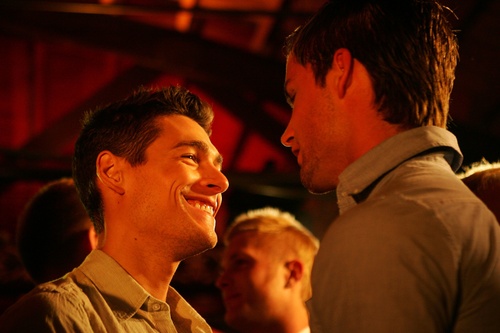 plague, gay men charted a future when nothing like this would happen again, when gay men would never be parted from their spouses on their death beds, when gay men’s physical and psychological health would never be treated as insignificant, when gay men would never suffer the indignity that so many endured in front of our eyes. And so we built the case for marriage equality and for open military service as a recognition of the self-worth our survival had given some of us, and to pay some kind of tribute to those who had fallen.
We went, in other words, from about the deepest hole you can imagine to a determination not just to get out of it, but to see the mountaintop in our lifetimes. I do not know exactly where this act of will came from. It was not inevitable. It was, in fact, highly improbable. A few generations of licking of wounds would have been understandable. So would a collective in-turning in grief and pain and memory. But it didn’t happen. And today, we look out at that mountaintop … and may be forgiven for feeling vertigo.
Within the next few years, it is perfectly possible to conceive of an America in which marriage equality exists in every state and in which HIV is on a fast track to disappearance. If I had told my best friend before he died that this would happen in twenty years, his eyes would have widened into saucers. And we talk so much about how this has changed America, that we don’t often examine how it has impacted gay men themselves – how it is possible psychologically and emotionally to have come from such depths to such heights in so short a period of time, and stay sane and balanced and happy.
The younger gay generations know nothing of it, of course.
Because gay kids do not have gay parents, by and large, they have not been told stories of the dark days of courage and cowardice, and of unspeakable devastation and trauma. The average gay 22 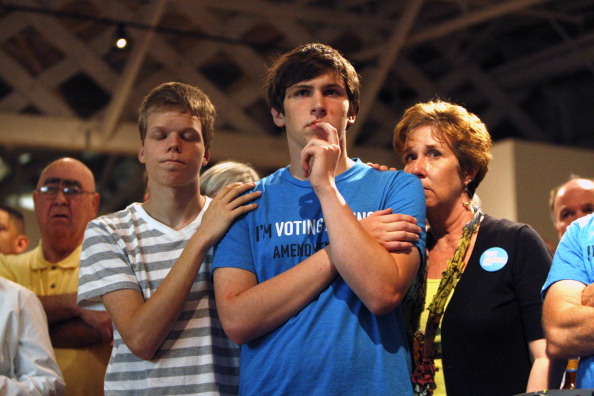 year-old today simply assumes that marriage is his civil right, and has only passing interest in how it came about. As for the AIDS years, he is about as informed as the average straight guy. And this is not a bad thing as such. The whole goal of all this ordeal was to create a world with only the trace of a robust equality, and not of lingering and persistent pain.
And yet the trauma of plague still reverberates in our heads – and that includes the young as well as the old. Sex for most of us has always been synonymous with fear – and that fear has had remarkable resilience over the decades, even as the reasons for it have waned. In another new must-read, Tim Murphy shows how this overhang is still with us, even for those who never went through the trauma of the worst years:
Over coffee and pie at the Blue Stove in Williamsburg not long ago, Adam, 33, a writer and filmmaker I know, mentions that he is exactly the same age as the pandemic. “The terror was at its height when I was coming of age, postpuberty,” he says. “The message from TV shows that was drummed into us as gay boys was that we could get this disease and die and make our parents very sad. I developed this intense fear when I was having sex with someone and not even doing anything risky. I’d still freak out the next day.”
And, of course this did not just make all sex fraught with anxiety on both sides, it also divided us into two camps, the positive and the negative. For a while, I vowed never to date someone negative, and sought sex partners online via HIV-positive sites. And within the HIV world, I often left condoms behind, as impediments to the full sexual intimacy I craved and to the HIV solidarity rubber-free sex generated. And then I was famously dragged out in public and shamed for this by HIV-negative activists who opposed my politics. It was a sign that the negative-positive divide was still deep and 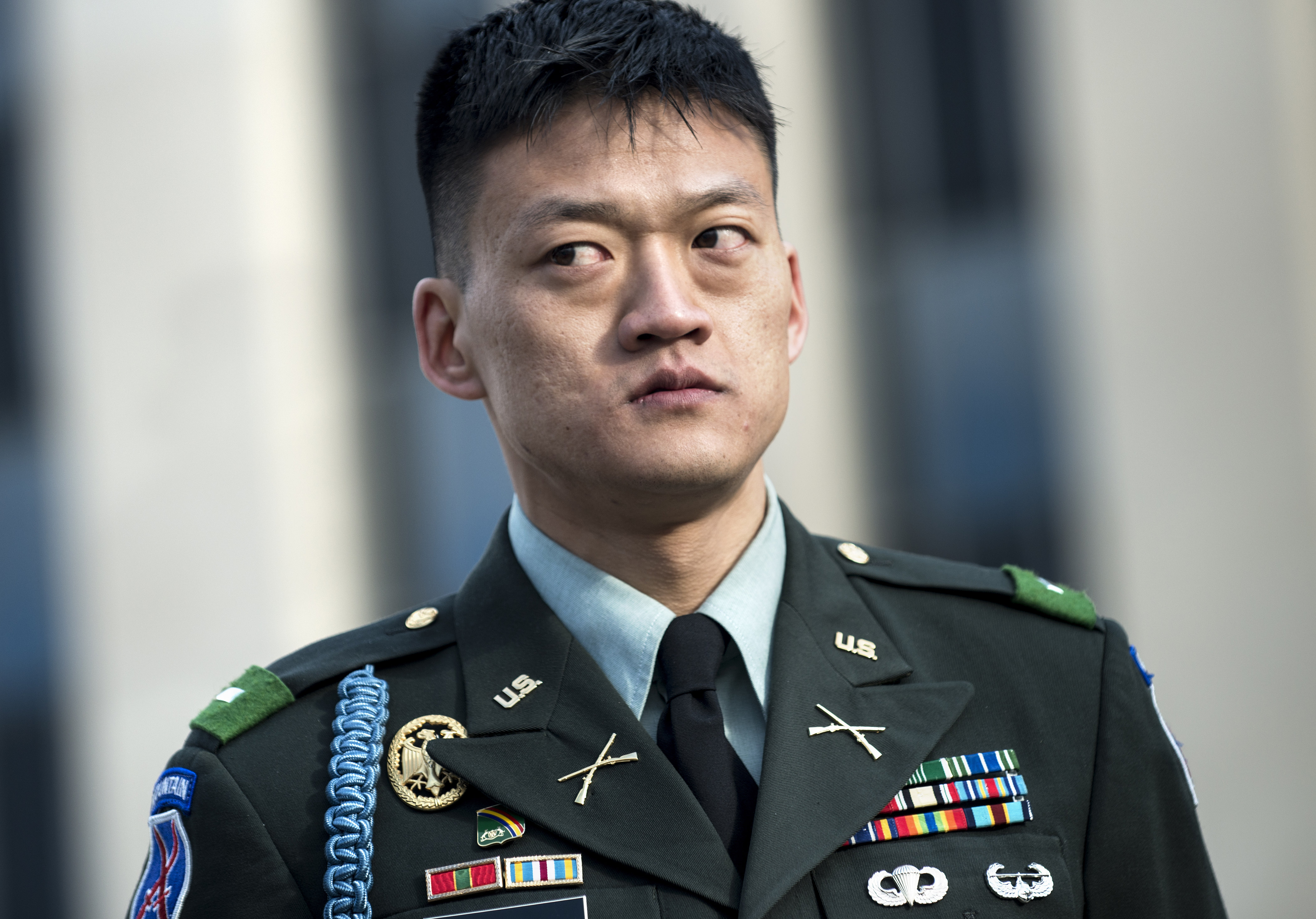 occasionally vicious. It still is. On the hook-up and dating apps, you see the following phrases all the time: “Drug/Disease-Free For Same”; “Clean”; “Negative for Same”. Since no one has tangible instant proof of being HIV-negative, it’s not particularly effective in HIV prevention. But it instills the divide that has stalked gay men during the plague and after.
But that too is now collapsing. The revolution of the last couple of years is a Rubicon. We now know that any HIV-positive man on meds is no more infectious than someone who is HIV-negative. We also know that an HIV-negative man who is on Truvada cannot get infected. This means that there is no more HIV divide in the gay world – or rather that its empirical basis has just been completely erased. Which means, quite simply, that gay men for the first time since 1981 can live without fear of HIV if they so wish.
And this of course is just one more bewilderment. As we adjust to marriage equality and all that comes with it, we are suddenly offered the chance for an infinitely less anxious and less dangerous sex life as well. Men whose entire sexual identities have been wrapped, literally, in rubber, now have to navigate an entirely new world. Of course there is resistance:
Another HIV longtimer—a Chelsea store manager named Steve, 58, diagnosed in 1996—tells me frankly that, though he supports Truvada usage in theory, it mostly just pisses him off on a visceral level.
“I was at the Eagle a couple months ago,” he says, referring to the West Chelsea leather bar, “and this hot little muscly Latin guy told me that he was on PrEP and that I could fuck him raw. Boom, he just said it so easily.” Steve has lost many people he loved to AIDS. He finds even the effervescent celebrations of Gay Pride tough to witness. “I want people to understand why they’re able to take this right now,” he says. “It’s on the backs of people who have died and suffered. All that needs to be learned and honored.”
It does indeed. But I have no doubt that the beleaguered gay men of the early 1990s would be amazed and thrilled that we have come this far. They did not die hoping that their legacy would be sustaining fear in future generations for ever.
But bewilderment is not out of place. I think of the year I arrived here, and had to sign a box in my immigration form denying that I was a “communist”, “criminal” or a “homosexual”. In that year, 1984, the AIDS epidemic was just beginning to stalk the land, culling, by the time it  was finally stymied, five times as many young men as died in the Vietnam War in roughly the same amount of time. I remember the exhilaration of coming out in the 1980s and the terror of watching men my own age die horrible, humiliating deaths in front of me. I remember finding out that I was HIV-positive and immediately knowing that, for that reason, I could be deported instantly, and living in America in that limbo for twenty more years, with no guarantee of success. I remember the deaths of my friends and lovers; and the shift in 1996 as long-term survival seemed possible for the first time. And I remember the countless speeches I would give to gay audiences about marriage equality, and the glassy-eyed, incredulous stares that came back at me. I remember my military friends, in constant fear and trepidation, fired at will, struggling to square their often conservative dispositions with a sexual identity that labeled them “queer.”
I remember … and I forget. I forget because in many ways, forgetting is the only way I can actually live with some measure of freedom from a past that will never let go of me and a future that still blinds with the abundance and clarity of its light. I am not alone. We are on this mountaintop together, even as so many dead lie round.
(Photos: The cover of One Magazine, June 1963; Dr. Richard DiGioia goes to George Washington Hospital to check on his patient, Tom Kane, on September 25, 1992. Kane is deaf. Dr. DiGioia hugs Kane before leaving. By James A. Parcell/The Washington Post via Getty Images; Thousands of people gather to view the AIDS Memorial Quilt on display on the Washington Monument grounds 10 October, 1992 in Washington, DC. By Renaud Giroux/AFP/Getty Images; A couple participates in a symbolic group commitment ceremony for same-sex couples to kick off National Gay Pride Month at The Abbey bar and restaurant on June 4, 2008 in West Hollywood, California. By David McNew/Getty Images; Seth Keel, center, is consolded by his boyfriend Ian Chambers, left, and his mother Jill Hinton, during a concession speech during an Amendment One opposition party on Tuesday, May 8, 2012, at The Stockroom in downtown Raleigh, North Carolina. Amendment One, which would ban gay marriage in the state, was well ahead at the polls. By Travis Long/Raleigh News & Observer/MCT via Getty Images; Former US Army Lt. Dan Choi (L), a gay rights activist and opponent of “Don’t ask Don’t Tell”, arrives at the E. Barrett Prettyman Federal Courthouse March 28, 2013 in Washington, DC. By Brendan Smialowski/AFP/Getty Images; Michael Knaapen and his husband John Becker react outside the US Supreme Court in Washington DC on June 26, 2013. By Mladen Antonov/AFP/Getty Images.)
 The Dish