Wed Again

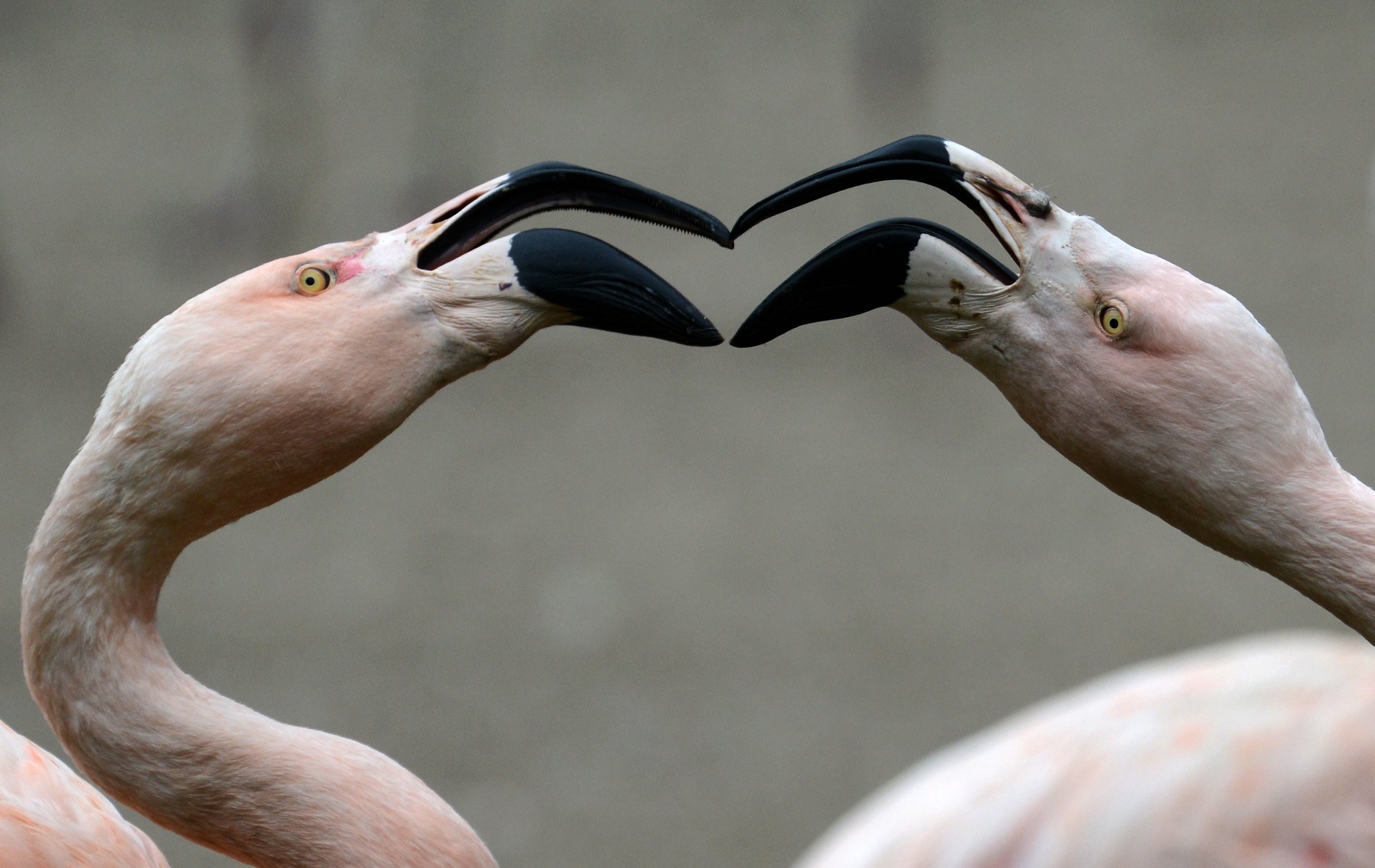
Rachel Vorona Cote ended a “brief and sad” marriage to her first husband when she was 25. She reflects on how she got over worrying about a second wedding:

[S]omewhere along the way I learned that relationships don’t gain moral strength simply because they have endured. Relationships are too messy for such clean parallels. So much humiliation and self-loathing comes of treating divorce as the dark underbelly of intimacy. We don’t get one shot at long-term monogamy—if monogamy is even what we want. It occurred to me that, whether or not I wanted to remarry—and in the beginning I was not sure—divorce did not render impossible fifty years of mutual love and couch co-habitation.

By the week of my second wedding, I was stunned by the bigness of love surrounding me.

Part of me had feared that the celebration would feel uncomfortably familiar, but it didn’t and it wasn’t. My family and friends gathered around me, affirming our bond. … And while it is true that I love Paul in a way that I did not love my first husband—and that this affection shaped our wedding day—what is most important here is not comparative. I loved my first husband too, in the best way that I could in that moment, and I loved—still love—so much about our wedding. My wedding to Paul had nothing to do with my first; it was an exquisite day in the life of our own romance. The wedding was ours, and if it is not unconnected to the rest of my life, it still claims singularity—in the little particulars and in its celebration of a romance that can only be lived by Paul and me, together.
The Con Of “Spirituality”

Jeff Sharlet, author of the new collection Radiant Truths, address that idea in an interview:

Every piece collected here touches on transcendence, but not all are explicitly religious. Reading, I was reminded of friends who say “I’m spiritual, not religious.” You’ve written elsewhere that you’re averse to the word “spiritual,” in the sense that you don’t like seeing your books filed in the Spirituality section of libraries and bookstores. Why is that?

Because I’m a curmudgeon. Here’s this word that millions of people find lovely and liberating — an alternative to all that seems calcified about religion, and what do I do? I complain. I think that in nine out of ten cases “spirituality” is a con — not a con by the person invoking it, but a con on that person. It offers the illusion of individual choice, as if our beliefs, or our rejection of belief, could be formed in some pure Ayn Randian void. For better and worse we make our beliefs and live our beliefs together. That’s what you get with the word “religion,” which means to tie, to bind. You may not want to be bound! I don’t. But we are. We’re caught up in a great, complicated web of belief and ritual and custom. That’s what I’m interested in, not the delusion that I’m some kind of island.

Update from a reader:

I guess I get what Mr. Sharlet means, but some of us don’t see the matter as being one of spirituality “vs.” religion. In the way that I look at it, faith has to be the deepest activity of “religion.”

Faith is that eternal ongoing journey for we mortal beings toward “Truth.” Spirituality can be another way of saying that, without getting bogged down in human prejudices toward particular religions. (If one thinks there might be other conscious life forms “out there” in our vast universe, does one assume they all have the “right” religion, or does one wonder how they approach their own journeys toward the ineffable Light?).

I get what Mr. Sharlet means about human responsibility via practical, proven means of association – aka religion. But religion has also had a lot to answer for over the centuries. Who are the very people who have broken the fundamental and basic promises to God that religious people say they are trying to keep? Often they’re the people who are merely “religious.” They are people who haven’t believed in their own connections to their Creator enough. They tend to be the people who worry about everyone else’s actions first, rather than seeing their challenge as being one of overcoming their own egos -fighting their own spiritual battles with the help of the Grace of God.

Religion can be a great thing if one doesn’t forget the faith that is supposed to live at the core of it. It can be a great thing if it unites the world’s peoples without dividing them. Some of us don’t think this is an impossible dream; it just requires the will to act on these ideals. For this reason, some of us think that focusing on what the various religions might have in common is a good thing: Faith, love, serving humankind (“even” in the form of one’s family and friends), actions that lead toward peace, justice, unity … even, God willing, a big dose of humility now and then.

So I guess while I think that the world would be, on the whole, in trouble without the good that religion (practiced the way it should) imparts, I have no problem discussing the deeper aspects of our relationship to our Creator, and how one lives one’s life, in terms of faith and spirituality – spirituality being another way of talking about “faith” in my view. In my own life, I think I’ve sensed the “Holy Spirit,” aka Love, active in a wide variety of religions; even if those religions might have added some goofy “man-made” ideas. This is why there can be so much confusion with religion – the Holy Spirit doesn’t “care” about man-made boundaries. It “blows” where it will, just as our physical sun shines down on “high” and “low” alike, or on the “good” and the “evil”.

Fishing For Philosophical Truths

Philosophy prof Robert Pasnau relays (NYT) a well-worn story usually told at the expense of his colleagues that goes something like this: Charles II summons a group of philosophers to ask them why a dead fish weighs more than a live one. After offering their creative, speculative answers, the king tells the philosophers that there was no difference between the two – and why didn’t they just weigh the fish? Pasnau rejects the implied criticism of his field:

The essence of philosophy is abstract reasoning – not because the philosopher is too lazy to attempt a more hands-on approach, but because the subjects at issue do not readily submit to it.

If we could simply weigh the fish, we gladly would. In recent centuries, philosophers in fact have discovered how to weigh that allegorical fish, in various fields, and on each occasion a new discipline has been born: physics in the 17th century; chemistry in the 18th; biology in the 19th and psychology in the 20th. The scientists, short on history but flush with their government grants and Nobel Prizes, cast an eye back on what remains of philosophy and skeptically ask: Why don’t you stop wasting your time and just weigh that fish?

It’s a question philosophers ask themselves all the time, and sometimes they despair.

How Pasnau frames his own defense of his field’s relevance:

[M]uch of what gives philosophy its continuing fascination is its connection with the humanities. To weigh the fish is doubtless desirable, but there is just as much to be learned in understanding where that fish came from, and in telling stories about where it might go.

If even philosophy is dismissed as a waste of time for being insufficiently scientific, where does that leave those other modes of humanistic inquiry? Reading Plato or Chekhov may not stop the planet from warming or cure a disease – or help build more accurate missiles – and it may not point the way toward a new science of ethics or will. Yet what of it? Does such inquiry not have a value of its own? That is of course itself a philosophical question.

Why Faith Belongs In Fiction

In an interview, Christopher Beha talks about why he chose to incorporate religion into his new novel Arts and Entertainments and why he thinks writers who exclude faith ignore a key part of life:

[T]he majority of people in this country (and on this earth) have sincerely held religious beliefs that they’ve integrated into their thoroughly modern lives. A quarter of the U.S. population — and 40 percent of the population of New York, where my novel is set — self-identify as Catholic. One of the most striking features of the city is that there are churches everywhere, from one of the world’s largest cathedrals to hundreds of storefront churches. And a bit of investigation will reveal that those churches fill up every Sunday. Not to mention the fact that there are more Jews in New York than in any other city in the world.

But for some reason the publishing industry in [New York] tends to view the introduction of religion into contemporary realist novels as a willful act that must have some strong rhetorical justification. From where I stand, the exclusion of religion is the willful act. Novelists never get asked why they don’t include religion in their books, or why the religion they do include — often just a species of madness — bears so little resemblance to religion as it is practiced by the majority of Americans. If they were asked, I suspect, most of these writers would not have a very good answer. It simply doesn’t occur to them. Whatever one’s beliefs, this seems like a basic failure of verisimilitude. Reality includes religion; realism should, too.

Feet Unbound

Jo-Farrell-Photography-5

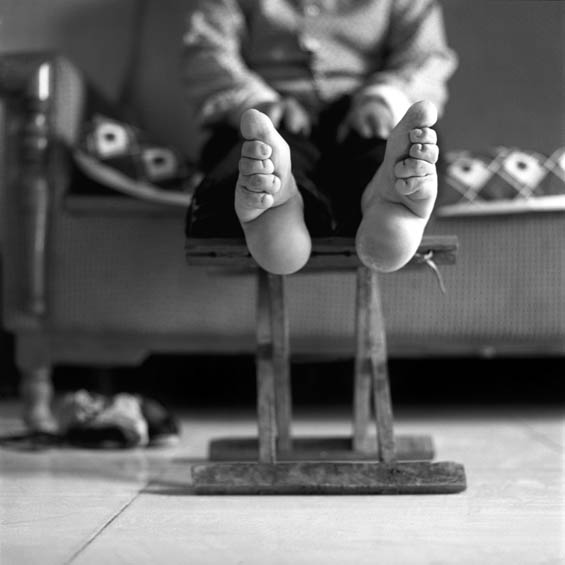
Jo Farrell captures the last remaining survivors of China’s foot binding tradition:

Her toes were broken when she was a kid, then constantly bound to make them smaller until she couldn’t walk straight anymore. At the age of 88, Zhang Yun Ying is among the last witnesses of China’s infamous tradition of foot binding.

It has been recently brought to attention by a British photographer Jo Farrell who is already known for documenting endangered traditions and cultures. Her ongoing project “Living History” captures the lives of some of the last remaining women in China with bound feet. According to Farrell, in the past year alone, three women she’s been documenting have passed away so she feels it is “imperative to focus on recording their lives before it is too late”.

See more of her work here, here, and here.

Beyond Our Wildest Hypotheses, Ctd

Recently we pointed to the debate generated by Barbara Ehrenreich’s recent memoir, Living with a Wild God, about a powerful, mystical experience she had at 18 and how she believes scientists could do a better job of understanding such brushes with the numinous. Reviewing the book, A.C. Grayling expresses disappointment at Ehrenreich’s edging away from the view that “it is the brain, and nothing mysterious outside it, that produces these experiences”:

It is well known and richly recorded that such episodes can be induced by dancing or repetitive whirling, as with the Sufi Dervishes; by starvation, fever, alcohol, hallucinogenic mushrooms, sexual activity, and much besides. Religious people, of course, attribute them to encounters with the divine, and it may well be that experiences caused in these ways lie at the root of humankind’s impulse to create religion. But the fact that empirical science today so well explains the causes and nature of these disturbances of normal neurological function is reason to guard against the supernaturalistic attempts at explanation, which were once the only resource our forebears had.

But alas, as her book approaches its end, Ehrenreich departs from rational ways of understanding her own experiences, and begins to sketch a view to the effect that there is indeed Something — she calls it the Other.

Why he believes such experiences shouldn’t change our view of reality:

No doubt having such experiences powerfully inclines one to project their cause to something outside the mind. We do not tolerate anomaly very well and need to give it a name and an explanation in order to cope. But the merest respect for economy of explanation should be a bulwark against externalizing the source of anomalous experiences before all the more likely explanations are exhausted. We should always remember that the mind is a great player of tricks: one can induce Ehrenreich-type experiences in the lab, or by popping certain kinds of pills, no Other and no Mystery required. It is accordingly a surprise and — let it be confessed — a disappointment to find so doughty a heroine of her causes sliding away from Athens to — well, if not to Jerusalem than to some other Eastern locus of the ineffable, the unnamable, and the smoky.

I repeat: it is a disappointment when a rational person’s thinking about the unusual, the unexpected, the extraordinary, the amazing experiences of transcendence and unity that many of us have at heightened moments of life, suffers a declension into quasi-religious or supernaturalistic vagueness. The human brain is complicated enough to produce all these experiences from its own resources; we need no fairies in the garden to explain how roses bloom.

Living The Fairytale

dish_snowqueen

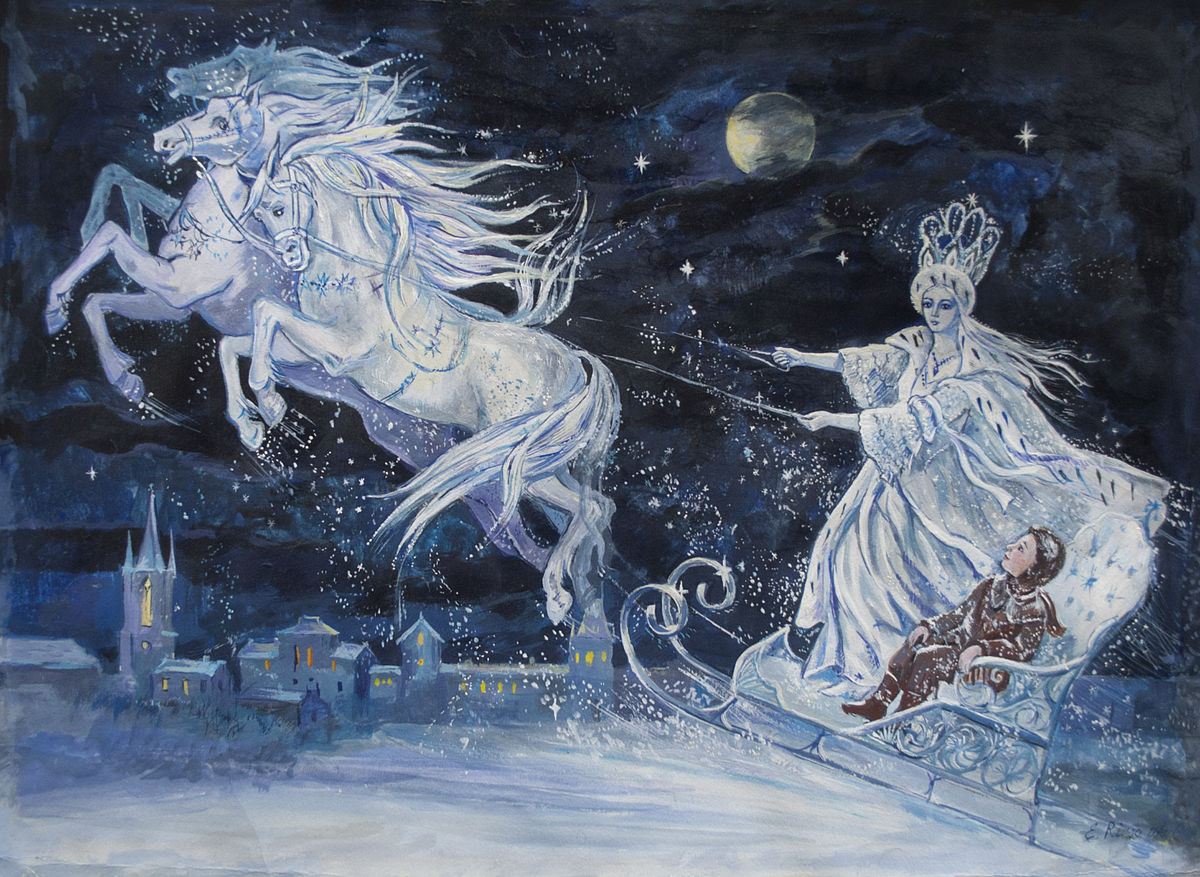
Hans Christian Andersen’s fantastical tales reveal an author deeply concerned with reality:

[He] believed in an untouched innocence at the core of every person. “She cannot receive any power from me greater than she now has,” says the Finn woman of Gerda in The Snow Queen, “which consists in her own purity and innocence of heart.” Children had special access to this innocence – animals and grandmothers did as well – but the innocence was inside everyone. Innocence could be hidden and emerge, or it could be apparent and then corrupted. See, for example, the devil’s mirror in The Snow Queen, which had the peculiar power to make everything good and beautiful seem like nothing. The loveliest landscapes looked like boiled spinach and the very best people became hideous or stood on their heads and had no stomachs.

To be wholly innocent was rare. To be wholly innocent, for Andersen, meant to be wholly yourself. It meant that you were free from the distorted reality of the devil’s mirror. There is a connection in Andersen’s work between innocence and reality, then, because innocence is truth. And just as truth is eternal, so is innocence. Though many of Andersen’s tales are tragedies, ending in death or humiliation, they all affirm the importance of a life lived toward an eternal, personal truth. This is what Andersen meant when he said, “Every man’s life is a fairytale, written by God’s fingers.” This doesn’t mean that every man’s life is a fantasy. It means that every man’s life is a quest toward reality.

(Image: Elena Ringo’s Illustration of The Snow Queen via Wikimedia Commons)

Quote For The Day

“I think that the type of oppression which threatens democracies is different from anything there has ever been in the world before. Our contemporaries will find no prototype of it in their memories. I have myself vainly searched for a word which will exactly express the whole of the conception I have formed. Such old words as ‘despotism’ and ‘tyranny’ do not fit. The thing is new, and as I cannot find a word for it, I must try to define it.

I am trying to imagine under what novel features despotism may appear in the world. In the first place, I see an innumerable multitude of men, alike and equal, constantly circling around in pursuit of the petty and banal pleasures with which they glut their souls. Each one of them, withdrawn into himself, is almost unaware of the fate of the rest. Mankind, for him, consists in his children and his personal friends. As for the rest of his fellow citizens, they are near enough, but he does not notice them. He touches them but feels nothing. He exists in and for himself, and though he may still have a family, one can at least say that he has not got a fatherland.

Over this kind of men stands an immense, protective power which is alone responsible for securing their enjoyment and watching over their fate. That power is absolute, thoughtful of detail, orderly, provident, and gentle. It would resemble parental authority if, father-like, it tried to prepare its charges for a man’s life, but on the contrary, it only tries to keep them in perpetual childhood. It likes to see its citizens enjoy themselves, provided they think of nothing but enjoyment. It gladly works for their happiness but wants to be the sole agent and judge of it. It provides for their security, foresees and supplies their necessities, facilitates their pleasures, manages their principal concerns, directs their industry, makes rules for their testaments, and divides their inheritances. Why should it not entirely relieve them from the trouble of thinking and all the cares of living?” – Alexis de Tocqueville, Democracy in America.