Epistemic Closure On The Left?

Zeljka Buturovic and Dan Klein have a new paper about which Americans understand basic economics. Todd Zywicki summarizes:

  • 67% of self-described Progressives believe that restrictions on housing development (i.e., regulations that reduce the supply of housing) do not make housing less affordable.
  • 51% believe that mandatory licensing of professionals (i.e., reducing the supply of professionals) doesn’t increase the cost of professional services.
  • Perhaps most amazing, 79% of self-described Progressive believe that rent control (i.e., price controls) does not lead to housing shortages.

And adds:

Note that the questions here are not whether the benefits of these policies might outweigh the costs, but the basic economic effects of these policies. Those identifying as “libertarian” and “very conservative” were the most knowledgeable about basic economics.  Those identifying as “Progressive” and “Liberal” were the worst.

Tyler Cowen cautions:

My own view is that "who in the general public understands economics best" is very sensitive to which questions we ask.  Libertarian-leaning voters have a better understanding of government failure, but left-leaning voters are more likely to understand adverse selection or aggregate demand management.  Which is a more important topic?  That may depend on the researcher's own point of view.  What's the closest we can come to a value-neutral test of whether elites or the "common man" understand economic reasoning better?


God, Justice, And Atheists

SUNFLOWERThomasLohnes:Getty

Stephen Clark reframes belief in God:

[T]o "believe in God" for the Abrahamic tradition is to believe in the possibility of Justice, of Freedom from oppression: "what does the Lord require of you", said the prophet Micah, "but to do justly, and to love mercy, and to walk humbly with your God?" Believing in God is believing that the orphan and the widow will be, must be vindicated. The first Abrahamic monotheists, like the first Christians, were in a real sense atheists: that is, they denied that the spirits evoked in most religious ceremonial deserved our worship, denied that kings and emperors were divine, and chose to remodel their personal and communal lives in the light of the demand for Justice.

How he brings God back into the equation:

If we are to trust in the possibility of Justice, must we not also believe that there really is such a thing, and that it will indeed prevail? Must we not, in fact, believe that God, the Spirit of Justice, does indeed exist, and that He will repay?

Norm Geras shudders:

To first define religion in a way that radically reduces its core, turns atheists into disguised people of faith and religion itself into a set of ethical and political commitments; and only later add belief in the existence of God as a necessary support for those commitments. Note also the logical fallacy of inferring an existence from a putative need. I might think that my future happiness depends on someone's securing for me a chauffeur-driven stretch limo and a supplementary barouche; but even if I do think it, I wouldn't let the hypothesis convince me that such a benefactor will eventually turn up.

For me, the core argument for some force behind the universe, revealed metaphorically in Scripture, is affirmed by science as we currently have it. Our universe came from nothing and is still expanding. What conceivable force made this possible? The second question is the nature of that force. The core revelation of Jesus – and the Buddha, for that matter, in some respects – is that the force is good, not evil. There is hope. Death is not what it seems. Love prevails. In this tragic, fallen, cruel world, this is not an easy doctrine. It cannot be inferred from the evidence. Which is why it is the gift of faith, from some source so deep, so great and so benign it defies any human description. Even metaphor fails.

To shear theology of its architecture and expose the rawest of its foundations is, I believe, part of what we need to do now as Christians. As our organized faith crumbles into archaism and fundamentalism, we need to re-imagine again what we already know, to take the so-familiar concepts, and make them real again.

(Photo: Thomas Hohnes/Getty.)

The Papal Nuncio’s Diplomacy

Most Washingtonians recall the lonely figure of John Wojnowski, who stood on Masachusetts Avenue for years with a placard accusing the Vatican of covering up the rape of children. Like many formerly mocked as a crank, he now seems prescient and on-target – so on target that each time the papal nuncio to the US, Archbishop Pietro Sambi walks past him in his new protest point, Embassy Row, he lashes out. Here are the following alleged insults hurled by this prince of the church at a man who claims to have been sexually abused by a priest at the age of 15:

"You are a loser. You are a loser with a camera. You are a total loser." (Sei un fallito. Sei un fallito come fotografo. Sei un fallito totale) March 19, 2010

"I do not speak with crazies" (No parlo con i pazzi, in response to Wojnowski's request in Italian for a brief chat with the Nuncio) May 3, 2009

"Imbecile. Cretin. I am ashamed of you, a gift to the enemies of the Church." (Deficiente cretino per mi vergogno di te, un dono hai nemici de la chiessa) March 21, 2009

"Cretin" (Cretino) Feb. 18, 2009

"Tool. Paid idiot." (Strumentallizzato. Idiota pagato.) Jan. 19, 2009

"Idiot" (Idiota) Jan. 10, 2009

"I am ashamed of you. You are a pig" (Mi vergogno di te. Sei un porco, Sambi's answer to Wojnowski's question: Excellency, are you ashamed to dress as a priest?) Dec. 28, 2008

"Imbecile. Cretin." (Imbecille. Cretino) Dec. 21, 2008

"Moron" (Deficiente). Nov. 20, 2008

"Perfect Moron" (Perfetto Deficiente) Nov. 1, 2008

"Shame. Shame. Shame. Shame. You are a fetid pervert." (Schemo. Schemo. Schemo. Schemo. Sei un pervertito fetente.) Oct. 21, 2008

"Crazy. Crazy. Moron," (Pazzo. Pazzo. Deficiente). Oct. 15, 2008

"I am not for sale, like you are" (Spoken in English) Sept. 5, 2008

"Paid Imbecile." (Pagato imbecile) Aug. 31, 2008

"You are paid. You have no dignity" (Ti hanno pagato. No hai dignita) Aug. 17, 2008

"So there, idiot. A paid idiot (Ecco Idiota, un idiota pagato) Aug. 16, 2008

Baby Morals

Paul Bloom studies the moral lives of infants:

[O]ur initial moral sense appears to be biased toward our own kind. There’s plenty of research showing that babies have within-group preferences: 3-month-olds prefer the faces of the race that is most familiar to them to those of other races; 11-month-olds prefer individuals who share their own taste in food and expect these individuals to be nicer than those with different tastes; 12-month-olds prefer to learn from someone who speaks their own language over someone who speaks a foreign language. And studies with young children have found that once they are segregated into different groups — even under the most arbitrary of schemes, like wearing different colored T-shirts — they eagerly favor their own groups in their attitudes and their actions…

The aspect of morality that we truly marvel at — its generality and universality — is the product of culture, not of biology. There is no need to posit divine intervention. A fully developed morality is the product of cultural development, of the accumulation of rational insight and hard-earned innovations. The morality we start off with is primitive, not merely in the obvious sense that it’s incomplete, but in the deeper sense that when individuals and societies aspire toward an enlightened morality — one in which all beings capable of reason and suffering are on an equal footing, where all people are equal — they are fighting with what children have from the get-go.

How Religions Differ – And Don’t

The Dish regrets having missed this Stephen Prothero article when it was published:

What the world’s religions share is not so much a finish line as a starting point. And where they begin is with this simple observation: Something is wrong with the world.

In the Hopi language, the word “Koyaanisqatsi” tells us that life is out of balance. Shakespeare’s “Hamlet” tells us that there is something rotten not only in the state of Denmark but also in the state of human existence. Hindus say we are living in the “kali yuga,” the most degenerate age in cosmic history. Buddhists say that human existence is pockmarked by suffering. Jewish, Christian, and Islamic stories tell us that this life is not Eden; Zion, heaven, and paradise lie out ahead.

Quote For The Day

   BLUEBELLSDanKitwood:Getty


"There is a certain wisdom of humanity

Which is common to the greatest man with the lowest;

The learned and studious of thought

have no monopoly of wisdom.

We owe many valuable observations to people

who are not very acute or profound.

The action of the soul is oftener in that

which is felt and left unsaid,

Than that which is said in any conversation.

We know better than we do."

– Ralph Waldo Emerson, "The Method Of Nature," as found in a wonderful new book, which presents quotes from Emerson and Lao Tse, "The Tao Of Emerson," edited by Richard Grossman.

(Photo: Bluebells in the English woodlands, by Dan Kitwood/Getty.)

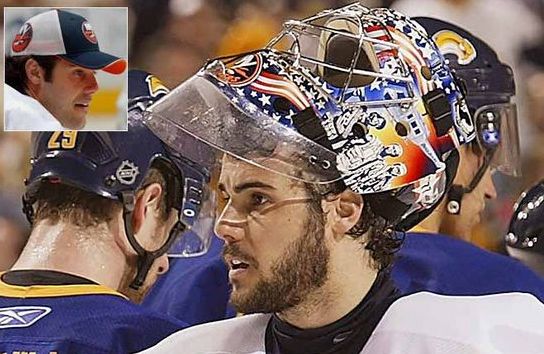
Playoff Beards

  6a00d83451c45669e20133ed63a793970b-550wi

A reader writes:

Given your rigorous defense of facial hair on the Dish, I though you might find the concept of the "Playoff Beard" amusing.  Since the hockey playoffs can last for two months, depending on how your team performs, it's traditional for hockey fans to stop shaving for the duration. Here in Pittsburgh the phenomenon is pretty popular and there's even a charity based around it dubbed Beard-A-Thon. You get the satisfaction of seeing your beard grow in proportion to your team's success, and if they lose you get the psychological validation of shaving off whatever bad mojo resulted in defeat. Next time somebody's giving you flak about having a beard you can prove that facial hair is a bonna fide sports-related cultural phenomenon.

Players do it too.

(Photo: Rick Stewart/Getty Images, Scott Cunningham/Getty Images)

“Ritual Genital Cutting Of Female Minors,” Ctd

A reader writes:

I'm totally for confronting misogynistic bigots. Knowing how they typically respond to confrontation, and considering that it is the daughters of said bigots that are in danger here, wouldn't it be at least be worth considering that this might help some fathers that are under pressure from their families or communities to mutilate their daughters to subvert the pressure with a 'token' mutilation? I don't disagree with PZ's thoughts on this in the slightest, but the bigotry in these communities is going to take time to go away, and in the meantime if – IF – this means that a lot of girls who would have gotten the full mutilation just get a token scar instead, wouldn't that be worth the dirty feeling that even I am getting just by writing this?

Another writes:

I am a member of the American Academy of Pediatrics, and I lived in Kenya for two years right out of college. Jomo Kenyatta's doctoral thesis, which was published as "Facing Mount Kenya", clearly states the reason behind female circumcision among the Kikuyu: to deny women any sexual pleasure, so that they would not be unfaithful.  This practice, as horrifying as it may be, was adopted by a primitive society to maintain social order.  Kenyatta also said that an uncircumcised woman would be considered undesirable by any Kikuyu man.

I can assure you that the bulk of AAP membership consists of wonderful people who are oriented toward serving others and are obviously not in medicine for the money.  However, there are some who could be poster children for political correctness. They tout a cultural relativism that is very well-intentioned but has run seriously amok. American citizenship should entail saying no to primitive customs that ensured social order centuries ago: honor killings, female illiteracy, and yes, female genital mutilation. 

Another:

I'm a physician and at one point was taking care of a Nigerian woman in labor. It was my first exposure to female 'circumcision'. In this case her clitoris had been completely removed and replaced by a mass of scar tissue. It was a horrible thing to see and hard to see how such a procedure could be justified. With a male circumcision at least sexual function and response remains.

I used to do newborn circumcisions but reached a point where my conscience could not justify doing it any longer. The arguments for reduced urinary tract infections and HIV (to me) are not justification for doing an elective surgical procedure because the parent wants it done.

Tracy-Clark Flory and Katy Kelleher join the debate.