
Fayetteville, Arkansas, 6.35 pm
Fayetteville, Arkansas, 6.35 pm
Chait doesn't understand the GOP financial regulation game plan:
So now the Republicans are trying to bluff in poker when they and their opponent know they have the weaker hand, and their opponent has heard them admit that their strategy is to bet for a couple rounds and fold before the end. Why not just cut their losses now? This makes zero sense.
And that is a change from everything else they've done to self-destruct as a serious governing party since 2009?
Manzi responds once more to Andy McCarthy:
If [me and Andy] end up opposing many of the same policies, why, then, don’t I just quiet down? There are two ways to answer that.
The first is that we all have our jobs to do. The job of a writer is to do his best to write things that he believes to be correct. This has been my motivation (as far as it is possible to know my own mind) in writing what I have on the topic. One implication of trying to reason forward from facts to conclusions in this specific case is that the current scientific evidence about the level of climate change threat does justify some actions: primarily, in my view, investing in “break-glass-in-case-of-emergency” geo-engineering technologies, so that we have options available to us in the unlikely event that climate change turns out to be much worse than currently anticipated. Another is that if future scientific evidence of a more severe threat from global warming comes to light, then one should respond to that information rationally by changing policy preferences, and not view this as some kind of philosophical defeat.
The second answer is the more tactical. Though this has not been my motivation, it is my view that by attacking the scientific process, conservatives have needlessly disadvantaged themselves in achieving their desired policy outcomes.
First, it has prevented conservatives from rolling the ball downhill from widely-accepted scientific findings to the policy conclusion that the costs of emissions mitigation don’t justify the benefits – which would put climate policy advocates in the position of arguing that the science is wrong, or that it is suddenly changing, or that we ought to do give up trillions of dollars for what is in effect a massive foreign aid program, or whatever. And second, it takes away what seems to me to be a position in reaction to proposals for new carbon taxes or cap-and-trade that normal voters would see as natural and believable coming from a Republican / conservative politician: Problem exists; solution costs too much.
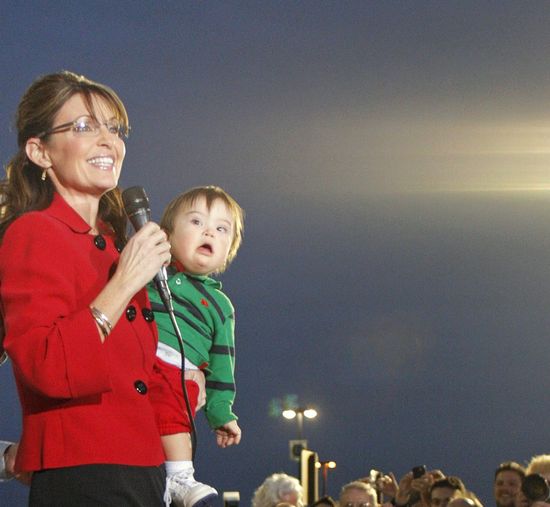
New York's cover story convinces Josh Green that Palin isn't running:
Palin's prospects in the Republican Party are a good deal dimmer than her star wattage suggests. She's tallied middling performances in early straw polls and shows no inclination to embark on the grassroots work required of a presidential candidate. More to the point, this article makes clear that, were there any doubt, her preoccupying concern is "building her brand"–less in a political sense than a financial one. Palin may yet make a bid for the White House. But all evidence suggests that when the time comes to choose between earning money and running for president, Palin will choose money.
This is the conventional view in Washington. I think it's completely wrong, dangerously complacent, and out of touch with profound shifts in media, fundraising and politics. The political parties are weaker than they once were. The elites cannot control grass-roots Internet-driven phenomena. Look at Obama. He seems a natural president now, but Washington dismissed his chances – as they are now dismissing Palin's – right up to the Iowa caucuses. And because Palin is such a terrifying – truly terrifying – prospect for the US and the world, I think such complacency, rooted in cynicism about Palin's mercenary nature, is far too reckless.
Look: what we have seen this past year is the collapse of the RNC as it once was and the emergence of a highly lucrative media-ideological-industrial complex. This complex has no interest in traditional journalistic vetting, skepticism, scrutiny of those in power, or asking the tough questions. It has no interest in governing a country. It has an interest in promoting personalities and ideologies and false images of a past America that both flatter and engage its audience. For most in this business, this is about money. Roger Ailes, who runs a news business, has been frank about what his fundamental criterion is for broadcasting: ratings not truth. Obviously all media has an eye on the bottom line – but in most news organizations, there is also an ethical editorial concern to get things right. I see no such inclination in Fox News or the hugely popular talkshow demagogues (Limbaugh, Levin, Beck et al.), which now effectively control the GOP. And when huge media organizations have no interest in any facts that cannot be deployed for a specific message, they are a political party in themselves.
Add Palin to the mix and you have a whole new machine in American politics – one with the capacity, as much as Obama's, to upend the established order. Beltway types roll their eyes. But she's not Obama, they say. She doesn't know anything, polarizes too many people, has lied constantly and still may have dozens of skeletons in her unvetted closets.
To which the answer must be: where the fuck have you been this past year?
It doesn't matter whether she's uneducated, unprincipled, unaware and unscrupulous. The more she's proven incapable of the presidency, the more her supporters believe she is destined for it. It's a brilliant little gig she's devised. She may be ignorant, but she is not stupid. She has the smarts of all accomplished pathological liars and phonies. And this time, she will not even bother to go on any television outlets other than Fox News. She will be the first presidential nominee never to have had a press conference. She will give statements by Facebook. She will speak directly to the cocoon that is, at least, twenty percent of Americans. The press, already a rank failure in exposing her fraudulence, will be so starstruck by the chance to make money that we will never have a Couric-style interview again. it will be Oprah all the time. Because Palin lives in an imaginary world, the entire media world will be required to echo it or be shut out.
More to the point, creating a false narrative around a total phony and peddling her as a savior has no financial downside for the FNC/TalkRadio party. So this phenomenon will grow and grow. I mean: can you imagine Romney or Pawlenty inspiring this sort of fervor? Check this out in the New York piece:
Nowadays, for both poles of the political spectrum but especially for the right, politics is a business—the entertainment business. The freak show, as Mark Halperin termed it, has been turned into a fully merchandised product. It was Fox’s Roger Ailes who had the insight that the American right was an underserved market, one with a powerful kind of brand loyalty. Fox News has turned a disaffected segment of the populace into a market, with the fervor and idiosyncratic truth standards of a cult. Wingnut-ism has been monetized, is one admittedly partisan way of looking at it. Palin stokes the disaffection of her constituents and then, with the help of Fox, offers to heal them, for a price. And—surprise—they’re more affluent than most Americans. Fifty-six percent make over $50,000 a year, according to a Times/CBS poll. Running for president is no doubt part of her business model. But forget elections (as many Palin supporters already seem to have done); she’s already the president of an alternative America—and also its CEO.
And with that power and that potential funding, how can someone who said she wanted to be president as long ago as 1996 resist? Josh can dream all he wants. She is the biggest political power after Obama in this country. And, unless the full truth emerges with such force it cracks even the FNC/RNC sealed universe, she will run against him in 2012.
Benjamin Schwarz reviews Melvin Konner's tome:
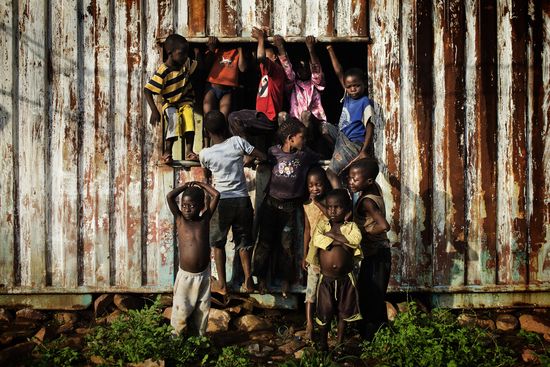
Konner is especially interested in play, which is not unique to humans and, indeed, seems to have been present, like the mother-offspring bond, from the dawn of mammals. The smartest mammals are the most playful, so these traits have apparently evolved together. Play, Konner says, “combining as it does great energy expenditure and risk with apparent pointlessness, is a central paradox of evolutionary biology.” It seems to have multiple functions—exercise, learning, sharpening skills—and the positive emotions it invokes may be an adaptation that encourages us to try new things and learn with more flexibility. In fact, it may be the primary means nature has found to develop our brains.
Well, yes, maybe. But once one leaves the reductionism of evolutionary biology, can we not see play as also, well, play? And play is defined by its uselessness, its freedom, its ability to resist productivity. It is a form of ultimate freedom – in my view, the freest human beings can be. Because a game has no known winner in advance, if it has any winner at all. It is about being together and engaging together without an ulterior purpose.
That's why I see play as something close to the divine. That's why I believe Jesus loved children. Because, in play, they had found a way to be with each other without any other over-arching purpose.
(Photo: Angolan children play in an abandoned container on the road to Namibe province on the outskirt of Lubango on January 23, 2010. By GianluigiGuercia/AFP/Getty Images.)
If Nick Clegg emerges as the king-maker in the British election, his core demand will be a change in the electoral system to some sort of proportional representation. Currently, the system is like the American: all voters are organized into geographic constituencies, and the candidate with the most votes in each goes to parliament. This obviously penalizes third parties, who can do very well – say 20 percent of the vote – and yet get a tiny number of seats. You can see the point most clearly in the current polling.
Check out the poll above. The Lib-Dems are now solidly in second place and have stayed there for a week or so. They are getting 30 percent of the vote, compared with Labour's 27 percent. But in parliament, the Lib-Dems would get a mere 85 seats and Labour would get 226. A system which rewarded a third party more fairly makes democratic sense, but it all but guarantees that Britain's political system would become like Germany's. Instead of clear, one-party, accountable governments, there would be permanent coalition politics, with the Liberal Democrats (like Germany's Free Democrats) in the role of power-broker. The Liberals have long dreamt of this, and tried to get it in the 1970s when the parties were in the last deadlock similar to today.
I'm against it. Why?
I like clear, strong governments with clear mandates that can be held accountable at elections. My hope is that the Liberal Democrats will slowly overtake Labour – as Labour overtook the Liberals in the early part of the twentieth century. At that point, Labour becomes the third party (yay!) and Britain can oscillate between a Whiggish Toryish and a Tory Whiggism.
This is highly unlikely in the short term – but this election suggests some kind of deeper shift may be taking place. The likeliest result looks to be a liberal Tory government in coalition with the Lib-Dems. That's good for the Tories (they get a win) and good for the Lib-Dems (they have the most successful election in decades). But the struggle over proportional representation may make a deal impossible. Clegg, meanwhile, has clearly ruled out putting Gordon Brown back in at Number 10.
In some ways, as socialism has entered the ash-heap of history, even the Labour party under Blair was moving to a classic Liberal party position. Brown reversed that and is revealing the hard limits of a truly left party in the UK. Hence his third place. What we need is for Labour to start collapsing in some seats to Liberal Democrats. If Labour sinks below 25 percent (I can hope, can't I?), all bets are off. To see the Liberals replace Labour as the rotating second party under the current electoral system would be my wet dream. But who knows in this unexpectedly riveting election, what permutations are yet to emerge?
An insight into a why a nominally respectable publishing house would proffer an unchecked, rushed novella as non-fiction:
Palin’s torrid book sales are the single biggest reason HarperCollins returned to profitability last year.
What's a little editorial integrity when there's that kind of money to be made?
Farhad Manjoo  Facebook, of all this activity. Remember that the social network already has the world's largest database of connections among people. Now, very soon, it will also have the largest database connecting people to the things they enjoy, whether those things are news stories, restaurants, songs, books, movies, jeans, cosmetics, or anything else.
Yes, lots of other firms mine our online activity, but Facebook's system will be all the more powerful because it is voluntary. We, Facebook's hordes, are actively filling in the slots in its database, giving the company an extremely accurate picture of ourselves and our friends. No other company will have anything like Facebook's towering database of human intentions and desires—not even Google.
There is an overlap between on strain of English conservatism and English liberalism. It’s civil liberties, where one of the most ferocious critics of the police and surveillance state in recent years has been David Davies, a Tory. But the Lib-Dems have always been a civil liberties party. So what has Cameron done today? He’s set out a platter of civil liberties positions to appeal to Lib-Dem voters:
And how about this potpourri of liberal demands on civil liberties from Dominic Grieve, the shadow justice secretary? He pledged to:
• Prevent councils snooping on people for trivial matters.
• Review the use of stop-and-search powers under the terrorism act.
• Change the Criminal Justice Act 2003 to strengthen the right to trial by jury.
• Review the operation of the extradition act and the UK/US extradition treaty to make sure “it works both ways and it does not result in vulnerable British citizens being packed off to America”.
Grieve was pretty blunt:
Our message is this: if you care about our liberties, if you want people to be free from an overbearing state and if you want a government with liberal values vote Conservative.
Notice the phrase “vulnerable British citizens being packed off to America.” Yes: America is now the place known internationally where people can get “disappeared,” or sent off to the former torture camp, Gitmo. When it sinks in that this is how the British Tories now partly think of the US, you realize how much damage to the US Dick Cheney and George Bush really did.
Reihan isn't buying the latest round of economic optimism:
There is at least one structural change that is undeniable: namely that there's been a delinkage between corporate profits and the health of the U.S. labor market. U.S.-based multinationals now look to emerging market economies as engines of growth. At home, these firms continue to aggressively cut costs and produce more with fewer workers. This has meant robust productivity increases, a sign of good things to come. But hiring and expansion is happening where the breakneck growth is happening, and that is not in the United States.
 The Dish