The Cannabis Closet: Female Professionals

Marie Claire profiles several of them:

"I hate the term pothead—it connotes that I'm high 24/7, which I'm not," Pelham says, wincing.

"I don't need it to get through my day. I just enjoy it when my day is over." Her nightly ritual costs only $50 a month, a pittance compared with the cost of her monthly gym membership or a Saturday night out with her fiancé, an investment banker, who occasionally smokes with her. At 5'4", slim and athletic—she ran three miles a day while in law school—Pelham insists that pot is the ideal antidote to a hairy workday: It never induces a post-happy-hour hangover and, unlike the Xanax a doctor once prescribed for her anxiety, never leaves her groggy or numb. "Look, every female attorney I know has some vice or another," Pelham shrugs, tucking her long brown hair behind her ears, her 3-carat cushion-cut engagement ring catching the light. "It's really not a big deal."

(For readers new to the Dish, the Cannabis Closet was one of our longest and most popular threads of discussion last year.)
“The Perpetual Utterance Of Self-Applause,” Ctd

Ponnuru and Lowry respond to the many critics of their essay on American exceptionalism. Samuel Goldman interjects:

Ponnuru and Lowry admit that Obama has explicitly acknowledged America’s exceptional principles and role. But they dismiss this with the observation that it  “would be remarkable if any president did not say such things.” Which is true enough. But in that case, the argument becomes trivially psychologizing: Obama SAYS he believes in American exceptionalism, but he doesn’t really MEAN it.  As far as I can tell, Ponnuru and Lowry present no evidence for that conclusion except some quotes in which Obama suggests that the election of a black man, namely himself, to the presidency was sort of a big deal.  I guess that can be seen as narcissistic.  But I seem to recall a similar sentiment expressed in the pages of NR and Commentary back in November.

Eric Massa As Sideshow Bob

L_8e93fc04c8636009d6d1158dd6ecf974

Chait draws a connection:

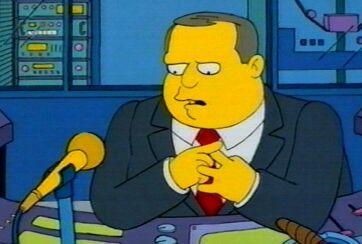
This seems to be another case of life-imitates-The-Simpsons — specifically, the episode where incarcerated attempted murderer Sideshow Bob calls into (the obvious parody of) Limbaugh's program and casts himself as a conservative unfairly railroaded by the liberal justice system. Limbaugh turns him into a martyr. See this video, starting at approximately 4:40 and continuing for about two minutes

Back In 2003, Ctd

A reader writes:

You're justified in pointing out your opposition to Medicare D and the energy bill in 2003 as evidence of your longstanding fiscal conservatism. I think an honest accounting, however, would also need to justify your support of Bush's budget-busting tax cuts as well (which you were still supporting and defending at least as late as 2006). What principle justifies exploding the deficit for the purpose of giving cash to rich people but condemns it for giving prescription drugs to old people?

Well here goes, with a quick answer:

Because in 2000, we had a growing surplus and I was alarmed it could be siphoned off into more entitlement spending, and naively believed the tax cuts would prevent this. I did not realize that the Bush administration would both cut taxes and explode spending and launch two massive wars off-budget. That's why I endorsed Kerry in 2004. I still believe that prescription drugs for the retired should be means-tested, as healthcare spending has been distorted by politics to favor the affluent retired rather than the working poor.

The explosion in medical costs since 2000 or 2003, along with the brutal recession, and a greater awareness of the real suffering this has created, has also convinced me that systematic reform is necessary, as long as it is fiscally responsible. After a decade of stagnant wages, and dramatically rising inequality, this conservative, persuaded largely by Obama, has come around to favoring universal access to insurance as a core matter of re-balancing the polity for social stability and helping an increasingly beleaguered middle class, whose vibrancy I regard, following Aristotle, as a key element in social order.

Getting Smaller?

The Leveretts sum up their trip to Iran:

Conversations and observations in Tehran confirm our assessment that the Green Movement’s social base is shrinking, not growing.  We met a number of young people who claimed they had supported Mousavi’s presidential candidacy (and, in some cases, said they had participated in demonstrations against the results in the first few days after the election) but who now say they are deeply disappointed in Mousavi—in particular, for having continued protesting against the outcome after failing to produce evidence of electoral fraud.

I’m not impugning their evidence; but I don’t believe it is in any way indicative of the broader support for fundamental change.

Was Ugandan Homophobia Imported?

Lexington sums up Philip Jenkins' argument:

Gay-bashing in Uganda was common long before any American preachers showed up and gave unpleasant speeches. Rivalry between Islam and Christianity for adherents ensures that preachers of both faiths compete to offer the most anti-gay vision, because that is what a lot of Ugandans want. As in many parts of Africa, openly gay people risk being lynched. The idea that Africans are passive puppets waiting to be told what to do by Americans is both wrong and insulting, says Mr. Jenkins.

Two things I'd add: this was given legitimacy and a spark from the American Christianist right; and there is also in Africa an emergent gay rights awareness, and a fledgling gay rights movement. I think assuming rank homophobia among all Africans is too broad a brush. In Africa, it's now America in the 1950s. I believe Africa's movement toward greater gay awareness in the 2010s will happen more swiftly than in America in the 1950s, not least because of the international examples that now abound.

Has The GOP Peaked Too Soon?

Steve Lombardo's thoughts:

T]his is going to be a very good year for the GOP. But there's a big difference between gaining 25 seats in the House and gaining 40 seats: picking up 40 seats would give the Republicans a narrow majority. Call it the "15 seat gap," and it's almost entirely dependent on a) perceptions of the economy and b) perceptions of the President's performance. It's clear that an electoral wave has been building since last fall. The problem for Republicans is that at some point a wave must crest. And so the question that begs to be asked is this: are we seeing the crest of the wave now or is it still gaining strength and getting bigger? There is conflicting data on this.

With the Massa implosion, the revival of healthcare's fortunes, the Cheney-Kistol over-reach, the fact that the public thinks Obama is being more reasonable than the GOP, the relative buoyancy of Obama's ratings, his continued success against al Qaeda, withdrawal from Iraq … I'm much more bullish on the Dems this fall than most. I could be wrong of the economy swoons again, and if the Dems cannot pass healthcare.

But in many ways, the narrative on healthcare is now working to Obama's advantage. He's been badly bloodied, but if he endures and wins, that makes his victory look like that of an underdog. That always plays better than the man who walks on water.

Reality vs The WSJ Propaganda

From the Wall Street Journal today, by Scott Rasmussen, Republican pollster, and Doug Schoen:

One of the more amazing aspects of the health-care debate is how steady public opinion has remained. Despite repeated and intense sales efforts by the president and his allies in Congress, most Americans consistently oppose the plan that has become the centerpiece of this legislative season.

In 15 consecutive Rasmussen Reports polls conducted over the past four months, the percentage of Americans that oppose the plan has stayed between 52% and 58%. The number in favor has held steady between 38% and 44%.

And yet the latest YouGov poll, reflecting the direction of many others, now shows a majority favoring reform, 53 – 47, as I noted yesterday. And Pollster's poll of polls, excluding Rasmussen's outlier numbers, favoring the old, white and Republican, show a dramatic rise in support this past month, as the consequences of getting nothing at all begin to sink in:

Even if you include Rasmussen's consistently outlier polling, as Chait notes, you get this: