The View From Your Window

paris-654pm

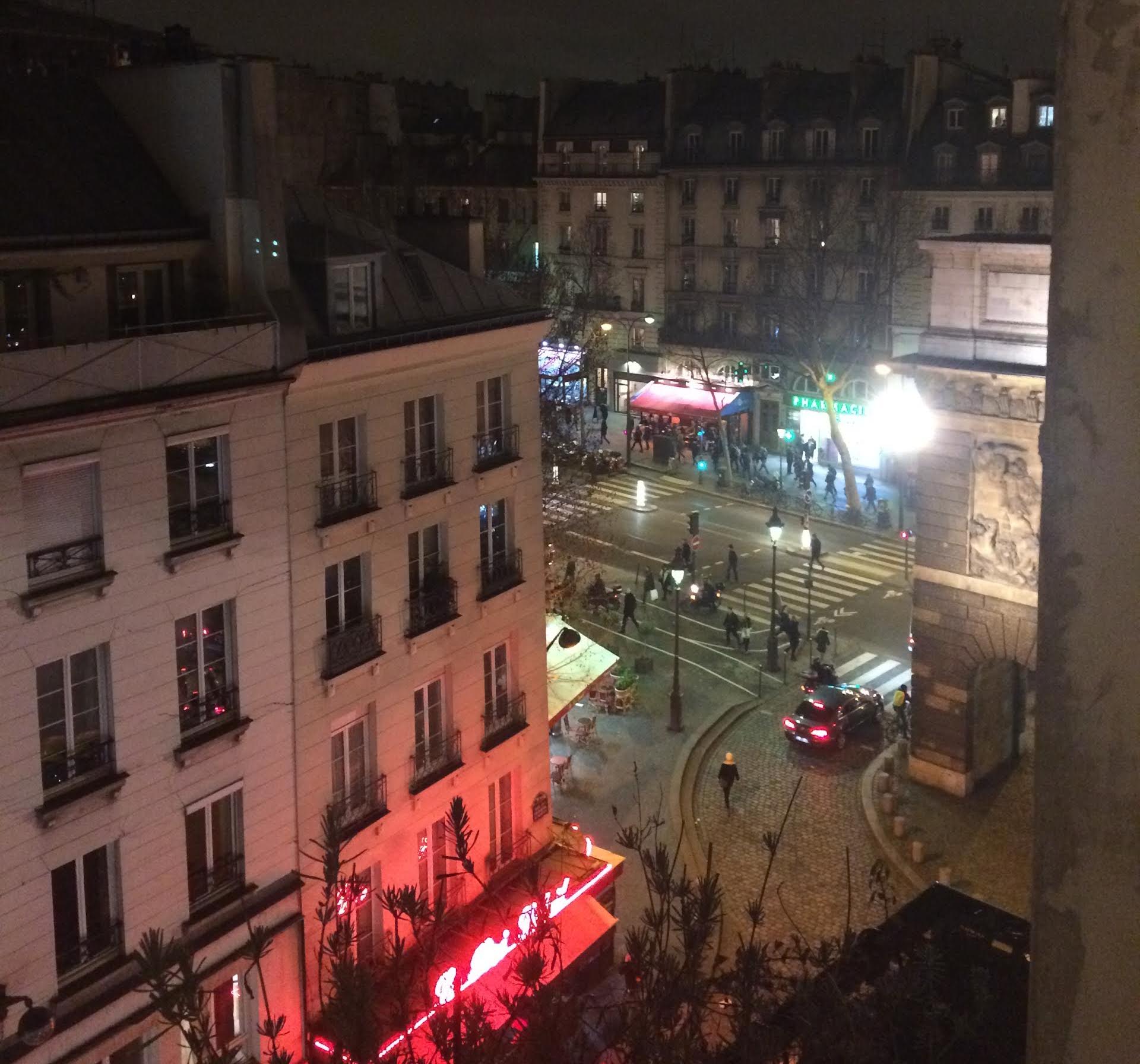
Paris, France, 6.54 pm. The reader adds:

The people in the street are all on their way to Place de la République to stand in solidarity with Charlie Hebdo. People have been walking past for a good hour, all in one direction. On a day like this, even more than ever, please don’t stop asking difficult questions and looking for those truths in front of your noses.

What We Want Data Trackers To Tell Us

Anne Helen Petersen identifies a major reason why tracking devices have taken off:

The future will be quantified … because these devices promise the latest iteration of what we’ve always sought: happiness. Which, at least in the 21st century, doubles as simplicity. A life in which your heartbeat and respiration and location dictate when your house turns off and on; a life in which the guesswork of eating and exercising and the mysteries of our bodies could be eliminated. That promise of ultimate, seamless simplicity — and the happiness that supposedly accompanies it — will be too much, even for the most suspicious and privacy-conscious among us, to resist.

That presumes, however, that happiness is rooted in transparency. That knowledge is a source of peace; that being able to see and send every heartbeat is the ultimate in intimacy. That a life made of data — a life that is readable and, as such, changeable — is life at its most optimized.

Quote For The Day

FRANCE-ATTACKS-MEDIA-DEMO

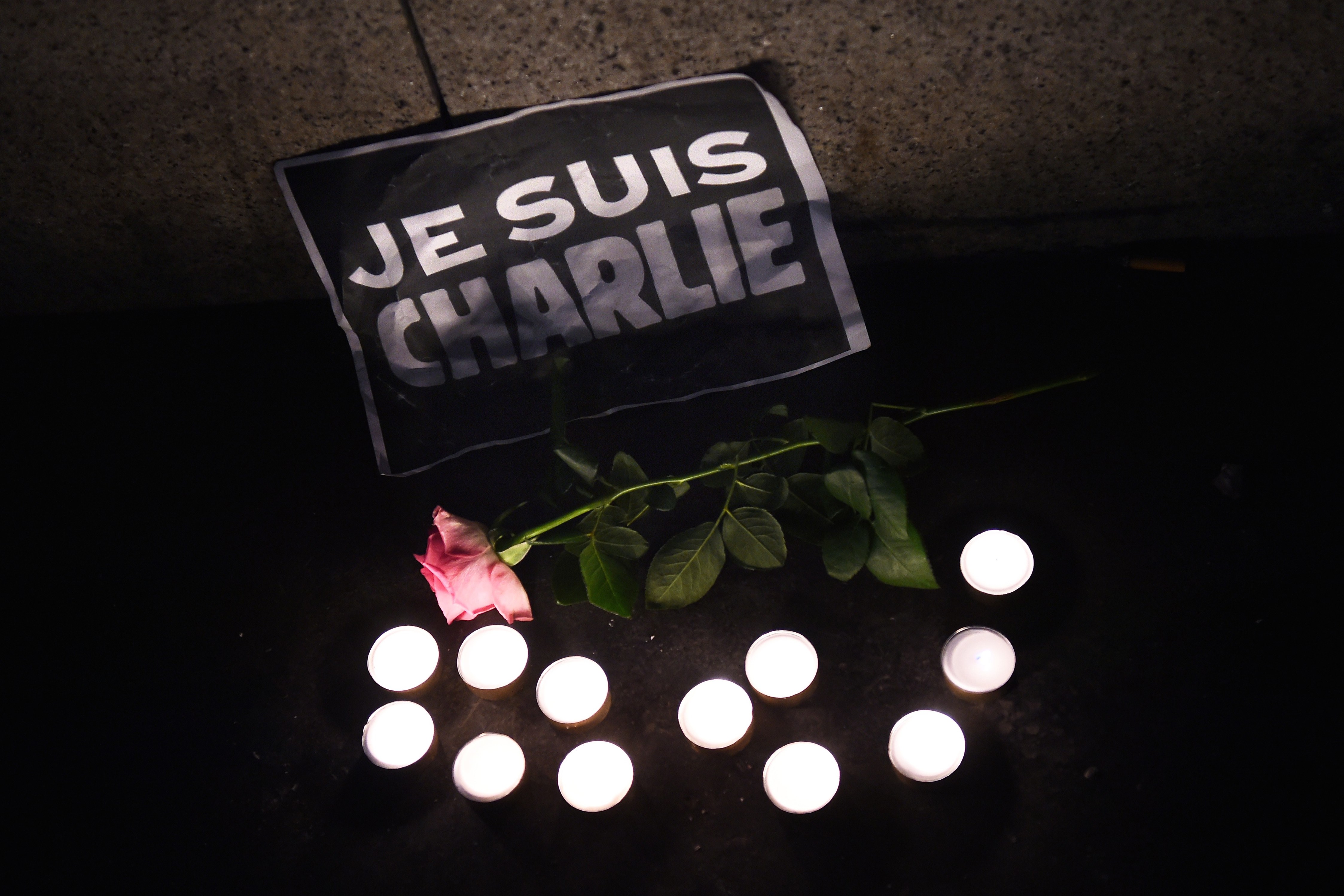
“I am not afraid of retaliation. I have no kids, no wife, no car, no credit. It perhaps sounds a bit pompous, but I prefer to die standing than living on my knees,” – Stephane Charbonnier, the publishing director of Charlie Hebdo, killed this morning alongside 11 others.

(Photo: Candles, a rose and a sign that reads in French “I am Charlie” are placed on the ground as people hold a candle lit vigil at the Old Harbour in Marseille, on January 7, 2015, following an attack by unknown gunmen on the offices of the satirical weekly, Charlie Hebdo. France’s Muslim leadership sharply condemned the shooting that left at least 12 people dead as a “barbaric” attack and an assault on press freedom and democracy. By Anne-Christine Poujoulat/AFP/Getty Images)

Houellebecq’s Nightmare

Charlie-Hebdo-Secondary2-320The massacre at the offices of Charlie Hebdo this morning coincided with the publication of controversial author Michel Houellebecq’s latest novel, Submission, which today’s Charlie either lampoons or praises (or both) in the cover seen to the right. Today’s attack was so clearly planned and premeditated that it likely wasn’t a response to Houellebecq’s book or Charlie‘s cover thereof, but there are plenty of parallels between Submission, which critics have derided as an anti-Muslim screed, and the offensive material that made the satirical weekly a target for Islamic fundamentalists. Ishaan Tharoor explains what the book is about:

“Submission” tells the story of France in the near future — 2022 — where a Muslim wins a presidential election against a far-right candidate and presides over the Islamization of French society. Persian Gulf monarchies pump in funds into new Islamic schools; teachers at the Sorbonne are compelled to convert to Islam; women slowly disappear from the workplace; polygamy becomes legally permissible. …

Houellebecq says his book leaves “unresolved” the question of “what we are meant to be afraid of” — Islamists or nativists. Ironically, the rule of a Muslim president in his book leads to stability and an improved economic outlook for France. But the premise certainly feeds into an already overheated conversation in Europe and sketches the disturbing end point for a polarization already taking place, even if its predicted outcome is completely implausible.

Bershidsky discusses how Houellebecq’s paranoid vision of the future, which far-right leader Marine Le Pen called “a fiction that could one day become reality”, fits into France’s ongoing culture war:

The point “Submission” makes isn’t so much political as cultural. It turns the integration debate on its head. Many in Europe want Muslim immigrants to merge into the host society on its terms. This is especially pronounced in France: the country has a profound shortage of mosques, and it bans wearing of Muslim face-covering scarves in public. What, the novel asks, if the French were told to integrate with the Muslims on the latter’s terms? What if the traditional parties had to join a coalition with an Islamic element? And what if ordinary people had to accept some Muslim traditions as part of living in a Muslim-run society — adopt polygamy, for example, bar women from working or convert to Islam to be able to teach school or college? Houellebecq posits that the French would submit. Why not, if unemployment among men is eliminated in the process and men could have three wives instead of resorting to prostitutes? …

No wonder the European far right portrays integration as a zero-sum game, in which one side must submit to the other — after all, isn’t that what the Muslims are after?

Submission is currently number one on amazon.fr’s bestseller list, and today’s events aren’t likely to hurt sales. But Houellebecq also faces some harsh criticism for what his detractors are calling a contribution to the wave of right-wing nationalist xenophobia currently making European Muslims nervous:

One German newspaper critic warned the novel could be seized on by anti-Islam protesters in Dresden as proof they are right to voice concern. Laurent Joffrin, editor-in-chief of left-leaning French newspaper Libération, argued that the novel “will mark the date in history when the ideas of the far-right made a grand return to serious French literature”.

“This is a book that ennobles the ideas of the Front National,” he added. Alain Jakubovitch, president of the anti-racism group LICRA, said: “This is the best Christmas present Marine Le Pen could wish for.” Houellebecq retorted that he could “see no novel that has changed the course of history” and that besides, “Marine Le Pen doesn’t need this. Things are working pretty well for her already.”

But Jonathon Sturgeon notes that Houellebecq, who once called Islam “the most stupid religion” and the Koran “badly written”, has softened his anti-Muslim edge of late:

More recently, Houellebecq appears to have shed his own atheism and disdain for religion, including Islam. In a recent interview with The Paris Review, the novelist admits that his atheism hasn’t “survived” in recent years, and, against a statement he made about the Koran thirteen years ago, he concedes:

…the Koran turns out to be much better than I thought, now that I’ve reread it—or rather, read it. The most obvious conclusion is that the jihadists are bad Muslims.

Although the new novel won’t be released in the US for some time, it’s clear that Houellebecq doesn’t consider it an affront to Islam. On the contrary, he sees it as a thought experiment meant to reflect the absence of political representation for Muslims in France. … With no present English translation, it’s impossible to tell whether Houellebecq’s new novel is a skilled experiment in political modality, or a thinly veiled attack on religion disguised as a mea culpa. In either case, Houellebecq may have seriously misjudged the power of novels to affect history.
The Hobbler Lobby

A reader flags another excellent episode from Frontline:

You guys catch last night’s episode on the NRA?  If not, amazing bit of work (as per the usual from them). I know the Dish usually likes to steer clear of this issue, but it’s something that I can’t shake now that I have a small kiddo of my own.

Watch the whole episode here.

ISIS On The Run?

Daveed Gartenstein-Ross lays out the evidence that the jihadist group is losing steam:

The most obvious sign of ISIS’s decline is that the group is no longer conquering territory, seizing no major towns or cities since Hit (and this hasn’t been for lack of effort on its part). ISIS continues to capture villages from time to time; for example, on December 27 it gained control of 14 villages in Anbar after Iraqi security forces withdrew from the area. But those villages aren’t equivalent to a major urban area and had been taken from ISIS by Iraqi forces just two days earlier. In October, ISIS advanced ominously on the Syrian city of Kobane; the French philosopher Bernard-Henri Levy declared in The New Republic that “Kobane will fall. In a matter of hours.” It has yet to fall, and Kurdish forces now appear to have the advantage, though the town remains contested.

ISIS has even been losing ground, albeit unevenly. In December, the group pulled its forces from Iraq’s Sinjar district, home to one of ISIS’s main resupply routes from Syria into Iraq (the other being Tal Afar). This has threatened to isolate ISIS-held Mosul.

But Lina Khatib doubts ISIS will disappear any time soon:

What is likely to change in the coming year is the way the organization operates.

The year 2014 saw a number of terrorist attacks in countries outside Syria and Iraq that were linked to the Islamic State by the assailants, even though the attacks were not necessarily directed by the Islamic State itself. In many of these cases, the Islamic State gave its blessing to the attacks after the fact, with the latest example being the lone terrorist attack in Australia in December 2014. These scenarios are likely to lead to more copycat incidents across the globe, especially by groups and individuals pledging allegiance to the Islamic State in a bid to gain power, notoriety, and resources. As the Islamic State embraces more and more such entities, it will be forced to change from a centralized organization into a franchise. Transformation rather than extinction, then, is the likely scenario for the Islamic State in the coming year.

And even if ISIS’s fortunes have taken a turn for the worse, that alone doesn’t necessarily mean America’s war against them is going well. Nancy A. Youssef points out that the Pentagon doesn’t know how many ISIS soldiers, or civilians, it has actually killed. What’s more, they don’t seem all that concerned about it:

[P]rogress in this war continues to be measured on fluid standards—where ISIS is trying to go, whether it can go there, and if local forces can fend them off. It is not a decisive war, with a single, signature victory, but a war of attrition. But there is no consensus about what the attrition of ISIS looks like. Success—and failure—is in the eye of the beholder. In the northern Syrian city of Kobani, for example, which, according to TheWall Street Journal, has seen 31 percent of U.S. and coalition strikes, Kurdish and local forces appear to be taking back parts of the city. But how much they have regained or how durable their hold is remains unclear. Kirby said that while the Kurdish forces control the majority of the city, it “remains contested.”

Breaking the will of ISIS, the military argues, is not a statistic. And too much of a focus on numbers can obscure strategic truths. Take the chief metric of the war in Vietnam—body counts, which ultimately did not answer whether the strategy was working.

Face Of The Day

Global Reaction To The Terrorist Attack On French Newspaper Charlie Hebdo

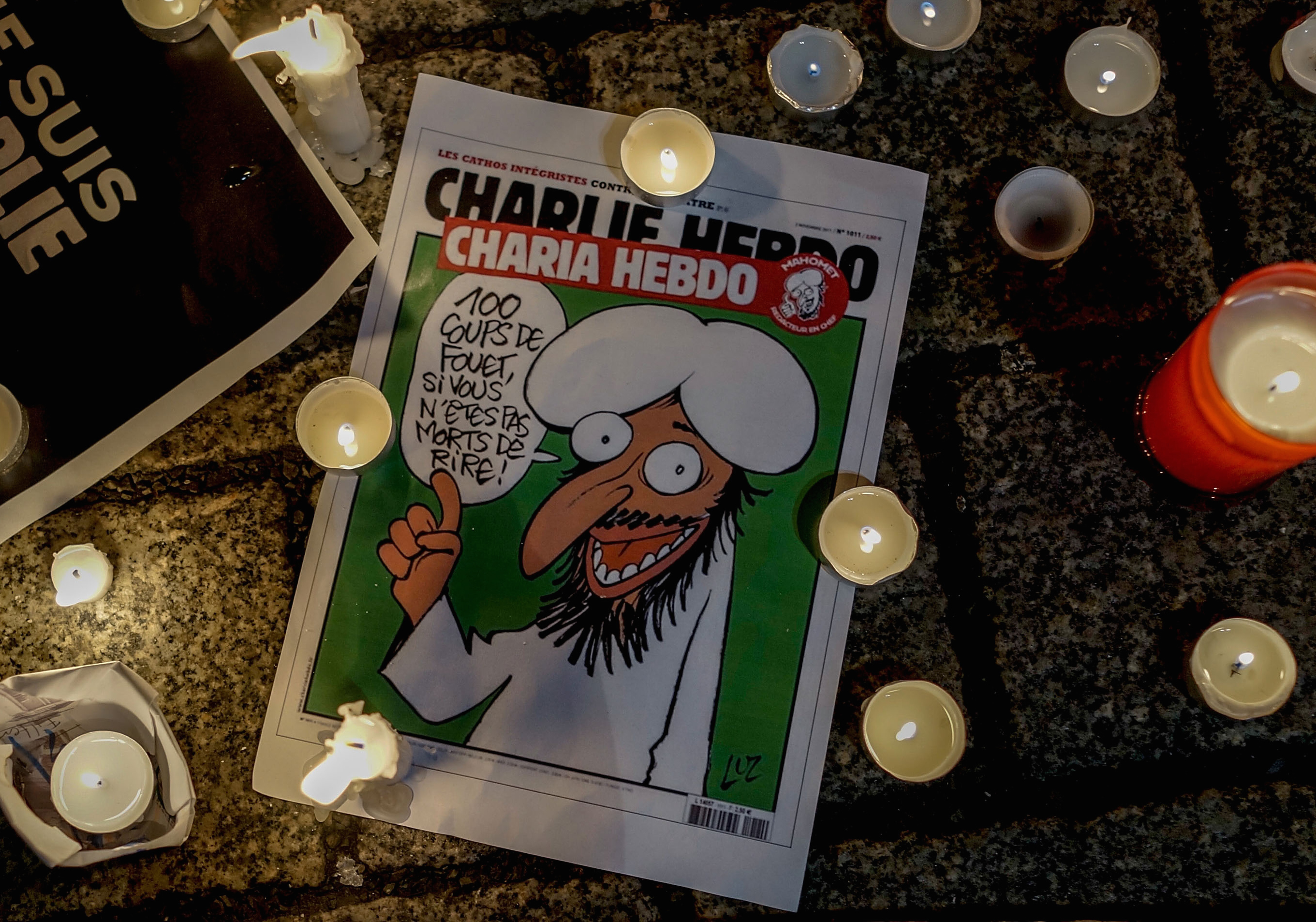
A cartoon lies on the ground while people gather at a vigil in front of the French Embassy in Berlin, Germany following the terrorist attack at the Charlie Hebdo offices in Paris on January 7, 2015. By Carsten Koall/Getty Images. A voxplanation of the edition seen above:

In 2011, the magazine published an article “guest edited by Mohammed,” calling him “Charia Hebdo.” On the cover, a grinning, bearded figure promised “100 lashes if you don’t die of laughter.”

After that issue was published, the magazine’s office was firebombed and its website was hacked. The attackers posted a notice on the hacked site that read, “You keep abusing Islam’s almighty Prophet with disgusting and disgraceful cartoons using excuses of freedom of speech. Be God’s curse upon you!”

Rather than capitulating to the violence, the magazine lampooned it.

An Actual Nanny State?

Nico Hines passes along news that the British government is considering some extreme lengths to protect young children from their Jihadist-sympathizing parents:

Alarming images of young British children pictured with weapons in the so-called Islamic State prompted officials in London to say they would consider taking into care the offspring of men and women who had travelled abroad to join ISIS. Then, on New Year’s Eve, police took the two children, who landed at Luton airport with their mother, under child protection laws.

Plans drawn up by the Home Office would further extend the remit of child protection officials to include toddlers at risk of radicalization on home soil.  A 39-page document that accompanies the Counter-Terrorism and Security Bill being considered by parliament says nurseries and early childcare providers, as well as universities and prisons, have a duty “to prevent people being drawn into terrorism.”

Charles C. W. Cooke admits that, in this particular instance, “on the face of it, the state may well have a case here.” But he’s worried about where this leads:

All in all, this does not quite come up to the level of asking the citizens to inform on their neighbors, but it is still a little too redolent of the “see something, say something” approach for my tastes. It is one thing for a nation in crisis to encourage the citizenry to be on the lookout for German spies, or for Irishmen boasting about planting bombs, or wannabe martyrs who are using their local mosque as a recruitment and training tool; but it is quite another for the state to recruit as its informants those men and women who have been charged with taking care of the country’s toddlers. Are staff “supposed to report some toddler who comes in praising a preacher deemed to be extreme?” the Conservative MP, David Davis, inquired derisively in the Telegraph this week. “I don’t think so.”

In all likelihood they will not, which raises a rather important question: What, exactly, does the government expect will change under this heightened level of suspicion? Had a child come into a British daycare a few weeks ago boasting that his parents were hoping to blow up a subway train or to move the whole family to Mesopotamia in search of honey and virgins, would his teachers not have made further inquiries?

America’s First Bullet Train

California broke ground on it yesterday. Scott Shackford is against the project, which is estimated to cost $68 billion:

The state only has $12 billion on hand for the project and is planning for another $8 billion. The rest is absolutely nowhere to be found. California got $3 billion from the Obama administration as part of the stimulus package, but it’s pretty safe to say they’re not going to see another cent from the federal government for at least the next two years. There is no sign of any private investment coming. The California High Speed Rail Authority is taking the “If you build it, they will come” mantra as a permanent motto. Its chairman, Dan Richard, is hoping they can raise money from selling advertisement and real estate development rights along the route or that the feds will chip in again later.

Katrina Trinko raises other objections:

Backers say the train will be able to make the trip between San Francisco and Los Angeles in under 2 hours, 40 minutes. However, according to a 2013 Reason Foundation study, it’s likely the trip will ultimately take around 4 hours (and sometimes closer to 5 hours) for various reasons (for example, the high-speed train will share tracks with slower trains). To put that into context, consider this:

a flight from San Francisco to Los Angeles is about 1 hour, 15 minutes. Driving, if there isn’t traffic, takes a little under six hours—more time than the train would take, it’s true, but you also have a vehicle at the end of your trip.

Update from a reader:

Sure, a flight between LAX and SFO might take 1 1/4 or 1 1/2 hours, but that does not take into account the hours required for checking in, going thru security, boarding early, and possibly baggage claim at destination, to say nothing of transit from the airport to the city proper.

Eric Holthaus believes that “it’s probably better to just focus on improving the transportation systems we already have, rather than creating a whole new one from scratch”:

Given the incredible pressure that global warming is inflicting, we can’t waste precious resources on high-speed rail. It’s impractical to hope that truly high-speed rail—the kind that will compete with air travel—will arrive in time to do much good.

Instead, limited public transportation funds should be prioritized for climate-friendly projects that will pay off more than high-speed rail in the same time frame. Some options for politicians: 1) Expand the use of upscale electric buses, 2) support self-driving vehicle technology, and 3) regulate airline emissions.

Fallows, on the other hand, supports the project:

1) America is direly short on infrastructure; the financial and political resistance to remedying that is powerful (for reason Mancur Olson once laid out) and usually prevails. China is biased toward wastefully building infrastructure it doesn’t need. The U.S. is biased the opposite way. So when there’s is a real chance to build something valuable in America, I start out in favor of it.

2) The counties of the Central Valley of California, where the first stages of the construction will begin, are not just the poorest part of a rich state but also, taken on their own, would constitute the poorest state in the entire country. Of the five poorest metro areas in the United States, three are there. Most dynamic analyses of the effects of the rail project indicate that it would bring new jobs to a region that most needs them, while chewing up less farmland than normal sprawl and freeway expansion would destroy. Which leads to …

3) The state’s population is growing, and so is the demand for intra-state travel. Any other way of getting California’s 30+ million people from north to south, via cars on new (or more crowded) freeways or planes to new (or more crowded) airports, will be more destructive of the state’s finances, its farmland, and its environment than a rail system.