by Patrick Appel
Felix Salmon takes aim at payday loans.
by Patrick Appel
Felix Salmon takes aim at payday loans.
by Patrick Appel
Emily Hager reports on a speech by Ahmed Rashid, who Tom Ricks calls "the single best journalist on the Afghan war and on Pakistan as well":
Given the pressure to end the war coming from Western countries, Rashid believes a true defeat of the Taliban will be impossible — so he stressed that efforts towards serious negotiation should begin now. The key partners, he said, can only be the Afghan government and the Taliban.
Why would the Taliban go for a negotiated solution, with the Western withdrawal date practically set on the calendar? First, Rashid said, the Taliban is tired. They are using forced conscription when they go into some villages in Afghanistan — a sure sign of recruitment troubles. Second, unlike the Soviets, Western forces will not abandon Afghanistan in one day. As long as there are some Western forces in the cities, the Taliban will never take them because NATO firepower is so overwhelming. That means a military takeover by the Taliban would still be far off, even if Western forces began to withdraw. Third, the Taliban has been dependent on — and manipulated by — Afghanistan's neighboring countries for years. Rashid believes the Talibans are getting tired of what he called those countries' "micromanagement." By heading to the negotiating table, the Taliban might get a chance to put their demands first.
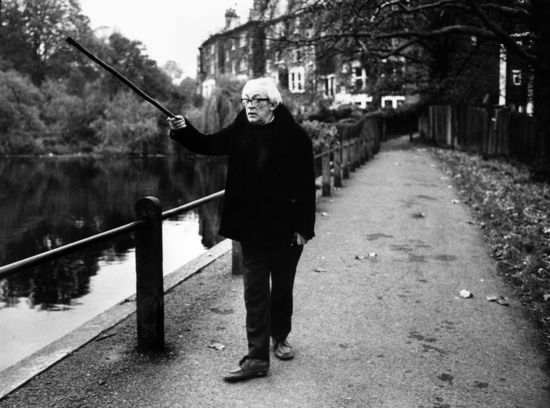
by Alex Massie
Generally speaking it's not good news when your election manifesto ends up being described as "the longest suicide note in history". That was Michael Foot's fate in 1983, however. Foot, who died today aged 96, now seems to belong to another age entirely. If he's remembered for Labour's disastrous defeat in 1983 in which the party came close to being beaten into third place by the fledgling SDP-Liberal Alliance, then that's less than he deserves.
As the tributes paid to him today attest Foot was a man and a politician one could admire regardless of one's own political preferences. A great parliamentarian and political orator, he was a very English kind of romantic radical, steeped in history and literature (and thus here too rather different from many of our modern breed of politicians); Byron, Hazlitt, Shelley and Swift were some of his heroes.
And actually, when you look at some of the policies advocated by that infamous Labour platform in 1983 it's startling to think that, as Labour promised then, the government does now own some of the largest banks, nuclear disarmament (or at least reduction) is back on the agenda (in Washington anyway) and the idea of witdrawing from the European Union remains alive and a vociferously held, if minority, view. Perhaps politics really is a cyclical business that runs on irony.
So, albeit without the threat of war, is the issue of the Falkland Islands. Foot's furious denunciation in the Commons of the Argentine invasion helped prevent the Labour party from an even worse, potentially terminal, defeat in 1983. The massacre would have been much worse but for that initial, robust stance. Not that Foot's position should have surprised: he had, after all, been one of Neville Chamberlain's fiercest critics.
Foot did his party, and thus the country, another service: he prevented the wholesale takeover of the Labour party by the hard left. A takeover, which if successful, could also have destroyed the party for good. The price of all that feuding was that he was the leader of a more or less unleadable party but, viewed all these years later, the beginnings of Labour's long-haul back to respectability began with Foot's holding the soft-left just about firm enough to withstand the challenge from the hard-left. It was a close-run thing, mind you.
Above all, he was, and remained to the end, a decent man with whom it was possible for opponents (on the right anyway, if not always on the left) to have honest and respectful disagreements. He was, in other words, what a parliamentarian should be.
Among the tributes and reflections paid today, these from Alastair Campbell, Jon Snow, Dan Hannan Danny Finkelstein and John Rentoul are especially good. The Telegraph's obituary is here and the Times's here.
Finally, here is Foot in 1942 (three years before he entered parliament) when he was Acting Editor of the Evening Standard and speaking in defence of the Daily Mirror's right to criticise Churchill's wartime government. It's rather good and a biting piece of mockery. Liberty, even in wartime, you see, matters. (The Mr Morrison referred to is Herbert of that ilk, grandfather of Peter Mandelson, the current Business Secretary):
by Chris Bodenner
The Catholics get their own atone phone:
A 'pay-to-confess' telephone hotline for Catholics too busy to go to church has been condemned as 'utterly unacceptable' by bishops in France. The service – called the Phoneline to the Lord – charges users 30p a minute to confess their sins to an automated answering machine.
(Hat tip: Balk)
by Chris Bodenner
Sarah Palin talks to Jay Leno about the "Family Guy" controversy:
"I commented and then that gets out there in the blogosphere, it gets out there in the different forms of the mediums that we have today. And then it’s left there, not an opportunity for me to follow up and kind of elaborate on what I really meant and what I really thought of the thing.” Before Mr. Leno went to a commercial break, Ms. Palin said that a fuller opportunity to discuss the incident would have led to a “much healthier dialogue.” After the commercial, she did not expand on her remarks.
The New York Times had previously sought comment from Ms. Palin about the “Family Guy” episode and Ms. Friedman’s response to her, but neither her press representative nor her political action committee replied to requests.
And for the record: After Palin Facebook'd her comments on a Tuesday morning, "The O'Reilly Factor" – the highest-rated cable news show on television – gave her 5 minutes to elaborate that evening.
by Jonathan Bernstein
Bill Halter is probably not going to be the next Senator from Arkansas. He'd have to knock off an incumbent (Blanche Lincoln), which would be I think a fairly surprising upset, and then he'd still be a longshot in the general election — Arkansas isn't an especially friendly place for Democrats these days.
That said, by endorsing the public option he's providing useful evidence that a future Democratic Congress is very likely to add a public option to health care reform, or at least they will if the current Democratic Congress manages to enact health care reform this year.
In fact, I expect virtually every Democrat in contested primaries during this and (if still not enacted) the next campaign cycle to support the public option, at least in any district in which Democrats have a chance to win. The main exceptions will be incumbents such as Lincoln who already voted against it…and I won't be shocked if she switches. In a Democratic primary, I don't see any potential downside. Liberals love it, and for better or worse Democrats don't believe that it will be a general election liability.
The other part of this is that the public option should be eligible for a reconciliation bill, so it won't take sixty Democrats to get it done.
So for all you public option fans out there: it ain't gonna happen this year, but if the Democrats hold Congress there's a good chance that it will be law by the time the exchanges are up and working. Assuming, of course, that the bill passes.

by Chris Bodenner
Called Skinput, the system is a marriage of two technologies: the ability to detect the ultralow-frequency sound produced by tapping the skin with a finger, and the microchip-sized "pico" projectors now found in some cellphones. The system beams a keyboard or menu onto the user's forearm and hand from a projector housed in an armband. An acoustic detector, also in the armband, then calculates which part of the display you want to activate.
by Chris Bodenner
Gabe has footage of the film critic with a new Hawking-like device that uses hours of audio from his TV and DVD commentaries.
by Alex Massie
There is something almost admirably bold or shameless* about Labour's campaign in this election. Douglas Alexander who combines the roles of Gordon Brown's Mini-Me and Labour's general election co-ordinator, spoke at the LSE yesterday and outlined, one understands, some of the "core" principles dividing lines upon which Labour plan to base their attack. These are:
1. Security versus Tory Risk
2. Protecting Frontline Services verusus Tory Cuts
3. New Industry and Jobs versus Tory Recession
4. Many versus The Few
Selling this to the electorate is a risky business. In the first place it asks punters to forgive all that is past and consider it of no account while threatening an even worse future if the Conservatives get in. To take these in order:
1. There is no security at present because the government is running out of money. Sure, Labour suggest, the patient has cancer but imagine how much worse it would be with a different doctor? Some consolation, given that the existing doctor's misdiagnosis has exacerbated the situation in the first place.
2. A simple untruth. Alistair Darling will be forced to deliver an austerity budget later this month. Cuts are coming regardless of the election result and all that remains to be decided is the extent and nature of said cuts.
3. Anyone listening to this argument might have to pinch themselves. Haven't we just been through a recession the Chancellor himself said was "the worst in 60 years"? Why, yes, we have.
4. Students of American politics will recognise this as a classic piece of Shrumism. And that's no surprise given that Bob Shrum is an old friend of Gordon Brown's and one of his closest advisors.
This latter leads one to wonder whether the Curse of Shrrum can cross the Atlantic. Shrum, who has, if memory serves, worked on eight losing Democratic presidential elections, plays an amusing cameo in Andrew Rawnsley's new book, The End of the Party, an aptly-titled chronicle of Labour's second and third terms.
Rawnsley, who is impeccably-connected in Labour circles, tells the story of Brown's speech to the Labour party conference in 2007. This came at time when it seemed as though Brown might call an early election – one that, at the time and in retrospect, he would probably have won:
Gordon Brown opened his speech to the conference with a jab at humour. "People say to me: 'Would you recommend this job to anyone else?' I say: 'Not yet.'" He continued with the projection of himself as a "father of the nation". "Tested again and again," he said of the summer terror plots, floods and outbreaks of animal diseases. "The resilience of the British people has been powerful proof of the character of our country." What he hoped to suggest was that his handling of them was powerful proof of why he should remain as Prime Minister. The speech was rewarded with a prolonged standing ovation from a Labour party currently happy to worship the man who had put them back ahead in the polls. The overall media conclusion was that Brown was a leader in command of his party and ruthlessly preparing the ground for an election.
Rupert Murdoch, though, did not think there should be an early election and was using his biggest-selling daily organ to try to prevent one. "Not his finest hour" was the verdict of the Sun, which attacked Brown for dismissing the calls for a referendum on the EU treaty. Brown's anger about that was as nothing compared with his reaction on Wednesday evening, when he learnt of the coverage in the Times. Danny Finkelstein, the paper's comment editor, a former speech-writer to John Major and a keen student of American politics, had been struck by the familiarity of many phrases in Brown's speech. Finkelstein confirmed his suspicions by Googling any line that sounded like a speech-writer's phrase. Brown said: "Sometimes people say I am too serious." That was awfully similar to a sentence used by Al Gore in 2000 when he accepted the Democratic nomination: "I know that sometimes people say I'm too serious." Finkelstein identified several examples of phrases recycled from speeches by Gore and Bill Clinton, both former clients of Bob Shrum, adviser and speech-writer for Brown. When Finkelstein posted it on his blog that afternoon, the deputy editor of the Times, Ben Preston, thought it would make "a great splash" for the next morning's paper.
When Brown learnt that the Times planned to lead its front page with how he had rehashed American phrases, he was "incandescent", says a member of his inner circle. From his suite at the Highcliff, he rang complaining to Preston and Robert Thomson, the editor of the Times. "It's a Tory plot," he raged, trying to bludgeon them into pulling the story. "This won't be forgotten." He was maddest of all with his own team. Brown went berserk with Bob Shrum, whose long friendship did not protect the American from a ferocious blast of Brown's temper. "How could you do this to me, Bob?" Brown screamed at a shaking Shrum. "How could you fucking do this to me?" Then the Prime Minister started yelling at the other aides present: "Just get out! Just get out of the fucking room!" Sue Nye became so alarmed that she felt compelled to come into the room to protect the unfortunate Shrum.
Brown continued to rage about it in private for days afterwards. "It totally threw Gordon off," says one of his inner circle. "When he should have been thinking about the election, he was boiling about this."
(See Danny Finkelstein's column today for more on this. As is always the case Danny's column is a must-read and if you're interested in British politics you should follow his stuff. His blog is here.)
But, my, poor Shrum! Blamed for poor Gordon fluffing and funking the moment that was, as was apparent at the time and is even more so now, his best chance of winning a popular mandate of his own. Such, you may say, are the wages of sin and all that and perhaps Shrum's exhausted, flabby rhetoric deserves to be put in the mouth of a charmless misanthrope** such as our current Prime Minister. But still, even Shrum might deserve a break from time to time though we should also be thankful that he's not, you know, a racing tipster or holding down a serious, valuable job like that.
*Saying this should not be construed as an endorsement of the Conservative party, nor as a suggestion that they might be shamelessness-free themselves.
**Is there such a thing as a charming misanthrope? You tell me at alexmassieATgmail.com
by Patrick Appel
David Ropeik analyzes global warming polls:
Nearly five times as many people in the United States are more worried that climate change will affect polar bears and plants than are worried about themselves. Small wonder, then, that the study found more support for generic ways of dealing with climate change, like funding renewable energy research, and less support for ideas that suggest concrete personal costs, like increasing the gasoline tax by 25 cents.
 The Dish