Dissent Of The Day

A reader writes:

I'm disappointed in your Clinton quote of the day. Might you not have also indicated that this "quote" was according to a new book by Mark Halperin?  Not crediting the quote to this potentially biased book gives the illusion that it is an authenticated, perhaps written or recorded utterance from a former president.  This is not gospel, and utterly lacks context.  The context in which it was passed along is one thing you could have, and should have provided.

I sometimes presume readers can click links. But I'll try and ensure more context in future for quotes merely reported by others and not unequivocally in the public record.

Fact-Checking Getty, Ctd

A reader writes:

I was glad to note that someone wrote in to clarify the Getty information concerning the Orthodox Patriarchate and the Feast of Epiphany. BUT (you knew that word was coming, didn't you?) your writer failed to correct a minor error made by many people in Western Christendom.  The Orthodox church does not ever celebrate a 'mass'.  It is a liturgy. The word 'mass' derives from the Latin uttered by Western (i.e. Roman Catholic) priests at the end of a service, Ita, missa est,  meaning "Go, it is completed". Since Eastern liturgies are always celebrated in the language of the area or in Greek, the term 'mass' never applies and should not be used as it conflates the Eastern and Western churches.  Please use the term liturgy.

As a religious studies major, I was compelled to correct this for you.

The Big Lebowski, By William Shakespeare

Begin scene:

WALTER
Nay! I do protest, and draw my sword;
It shall teach thee to disobey my word.
Mark none but none into that bowler’s frame,
Else thou shalt enter into a world of pain.
A world of pain, think upon’t; unhappy world!
A lake of fire, rich with damnèd souls,
Gulfs of anguish ‘twixt vales of agonies.
Mark me; we stand at twisted, jealous gates
Of cast-iron, above which, in vulgar tongue, reads
“Here is a world of pain, thou enterest thus.”

My steel before thee, ‘tis the last of keys
That might could lock these doors, and keep thee
From this world of pain, or with one flick
Ope its mashing maw, and summon winds
To cast thee down within; an excellent key!
Farewell to earthly delights, farewell to friends,
To fellowships and follies and amends.
The choice to spare thy passage through these trials
Is thine alone; take heed, I entreat thee,
And turn thy back upon this world of pain!

Un-embeddable original scene here.

How To Fix America

Fallow’s cover story, “How America Can Rise Again,” is well worth reading. A couple early paragraphs to whet your appetites:

Today’s fears combine relative decline—what will happen when China has all the jobs? and all the money?—with domestic concerns about a polarized society of haves and have-nots that has lost its connective core. They include concerns about the institutions that have made America strong: widespread education, a financially viable press, religion that can coexist with secularism, government that expresses the nation’s divisions while also addressing its long-term interests and needs. They are topped by the most broadly held alarm about the future of the natural environment since the era of Silent Spring and the original Earth Day movement.

How should we feel? I spoke with historians and politicians, soldiers and ministers, civil engineers and broadcast executives and high-tech researchers. Overall, the news they gave was heartening—and alarming, too. Most of the things that worry Americans aren’t really that serious, especially those that involve “falling behind” anyone else. But there is a deeper problem almost too alarming to worry about, since it is so hard to see a solution.

Nepotism Watch

If Liz Cheney were not her father's daughter, why would she be on the Sunday talk shows? Why is she added to ABC news' roster? What experience does she have in journalism or government? Why is she brought on to spout the kind of extremist, partisan paranoia that alone can make her father's incompetence and failure to defeat Jihadist terror admirable?

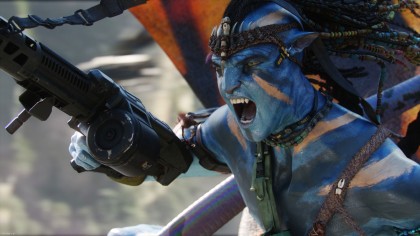
“A Pretty Nice Cognitive Vacation”

Jake_flying_Great_Leonoptyrex

Jonah Lehrer enjoyed Avatar:

At its core, movies are about dissolution: we forget about ourselves and become one with the giant projected characters on the screen. In other words, they become our temporary avatars, so that we're inseparable from their story. (This is one of the reasons why the Avatar plot is so effective: it's really a metaphor for the act of movie-watching.*) And for a mind that's so relentlessly self-aware, I'd argue that 100 minutes of self-forgetting (as indicated by a quieting of the prefrontal cortex) is a pretty nice cognitive vacation. And Avatar, through a variety of technical mechanisms – from the astonishing special effects to the straightforward story to the use of 3-D imagery – manages to induce those "synchronized spatiotemporal patterns" to an unprecedented degree. That is what the movies are all about, and that is what Avatar delivers.

The movie gave Caleb Crain a headache:

Some might protest: But what about Avatar's anti-imperialism and anti-corporate attitudinizing? They're red herrings, in my opinion, planted by Cameron with the cynical intention of distracting the viewer from the movie's more serious ideological work: convincing you to love your simulation—convincing you to surrender your queasiness. The audacity of Cameron's movie is to make believe that the artificial world of computer-generated graphics offers a truer realm of nature than our own. The compromised, damaged world we live in—the one with wars, wounds, and price-benefit calculations—can and should be abandoned. All you need is a big heart, like Jake Sully (Sam Worthington), the movie's war-veteran hero, and the luck of being given a chance to fall in love.

In Praise Of Darwin

Steven Shapin has an article on the surprising amount of ink, pixels, and events used to mark Darwin's 200th birthday last year.  Douthat summarizes:

Shapin’s own explanations for all this Darwiniana include the new atheism’s recent “crusade against rampant religiosity,” the desire to recruit the great naturalist as a patron saint for the anti-global warming cause, intra-academic battles over evolutionary theory, and (most importantly, perhaps) Darwin’s status as the rare great scientist who was also personally admirable, even by the exacting standards of modern political correctness.

The sneering tone from Ross seems disappointing to me. Notice how the smears accumulate for one of the most revolutionary and influential thinkers of the past two hundred years:

It’s a clear-eyed and wide-ranging tour of what “Darwinism” means today — at once an unchallenged scientific paradigm and a wildly contentious theory of everything; a Church militant warring against creationists and fundamentalists and a debating society of squabbling professors; a touchstone for the literary intelligentsia and a source of secularist kitsch.